 In talking with others about this idea, I have received quite the array of feedback. Someone commented about how a change like this would affect tradition. Many people commented on how we are using technology in many other areas, so why not use technology in this one? One person mentioned the possibility of eliminating voting and using statistics and random assignment of the population to get us a true representative government (as shown here), others disagreed with that idea. Those who disagreed felt that we didn't want a "fully representative" government. This brought up interesting ideas about what we want when we say we want a voice. Do we actually want one? Or do we just enjoy the idea of it without actually putting it into practice?
Showing posts with label posted by Joseph P. Show all posts
Showing posts with label posted by Joseph P. Show all posts
Saturday, April 18, 2015
Online Voting - Would You Vote For It?
I am calling for voting in elections to be placed online (see me actually calling for change here). I first wanted to change this because I have seen first hand what happens when there is too much of an opportunity cost to vote--people just won't vote (as shown in this post).
 In talking with others about this idea, I have received quite the array of feedback. Someone commented about how a change like this would affect tradition. Many people commented on how we are using technology in many other areas, so why not use technology in this one? One person mentioned the possibility of eliminating voting and using statistics and random assignment of the population to get us a true representative government (as shown here), others disagreed with that idea. Those who disagreed felt that we didn't want a "fully representative" government. This brought up interesting ideas about what we want when we say we want a voice. Do we actually want one? Or do we just enjoy the idea of it without actually putting it into practice?
Thursday, March 26, 2015
When Did Consumerism Overrule Democracy?
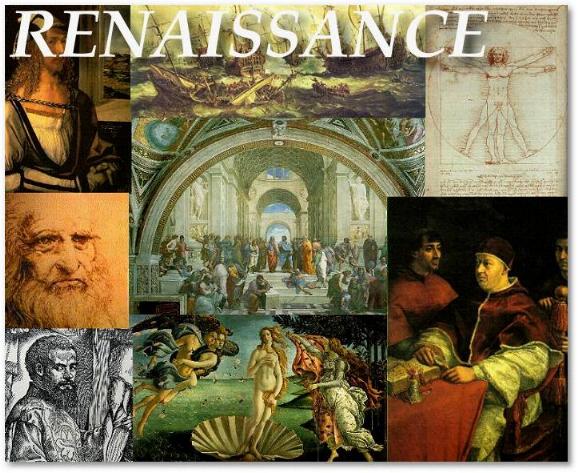 |
| So much happened during the renaissance, Any ideas how it can relate to Voting? |
Voting
Renaissance-
??? Anyone have an idea?
Enlightenment-
The French and American revolutions were fought because the
people wanted to have a say in what the government does to them.
Industrialization-
Marx thought that capitalism failed, and thus the government
would need to take the power away from the people. Take power away from the
people means taking away their vote.
1800’s-
Poll taxes were introduced to prevent poor people (mostly
the recently freed slaves) from voting.
 WWI-
Women were given the right to vote after showing how much
they could help during the war.
Early Modern-
Calvin Coolidge said that an americans importance to his
country is not as a citizen but as a consumer.
Modern-
Consumerism swells while the percentage of registered voters
who vote abates.
Monday, March 23, 2015
Seattle and His Chief Audience
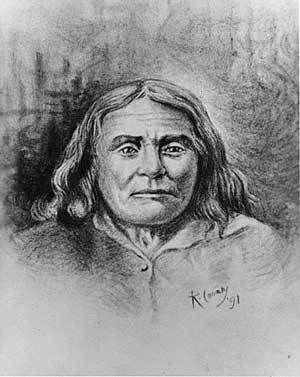 Chief Seattle must have had ideas of the genocides occurring
throughout the world when he delivered this speech. Considering that Native
American tribes were being obliterated by the United States, and many other
nations were being wiped out by other imperialistic world powers, no hope
existed for Chief Seattle to fight. The only hope he had was to try to get the “white
people” to have enough fear and respect for the natural world so that they
might allow the “red people” to live on in peace.
One of the most effective rhetorical strategies Chief
Seattle uses is to utilize similes to connect his people to the natural world. Phrases
such as “our people covered the whole land as the waves of a …sea cover its
shell floor,” and “our people are ebbing away like a fast receding tide” help
the audience to connect this tribe to the natural world, something that the
chief is trying to get them understand.
Chief Seattle recognizes that the end is near for his
people, and his audience is not just the white people. He is considering making
a peace treaty with them even though some of his people want to fight on. He is
trying to teach them that they can live on through this natural world too.
Indeed, he uses antanaclasis to show those who would fight what will happen to
them—that their hearts will turn as black as the paint on their faces.
In the process of trying to convince the white man to let
them live in peace, he is also convincing his people to allow themselves to
live in peace. This was a man who knew how to control his audiences.
Tuesday, March 10, 2015
Bloody Knuckles, the War Has Already Started!
 Russia was at war with Japan, and Japan was soundly
defeating the Russians. Even though the Russians were badly losing, their tsar
Nicholas II refused to end the war. Many soldiers were needlessly dying. On top
of that, the working class of Russians were being treated very poorly.
Lenin blames the rich capitalists for every ill of society.
Without regard to anything else, he piles hate on top of them, blaming them for
“rivers of blood”, exploitation, and making “the government and army their servants….” Blood is strongly alluded to in this piece. Being engaged in
a war, the people of Russia would have very tangible ideas associated with
blood. Lenin refers to the capitalistic, rich owners of capital as “blood-suckers.”
Imagine having an enemy shed the blood of your son or brother, how would you
feel about being oppressed under a “blood-sucker”?
Tuesday, March 3, 2015
Millennials of all lands, Vote!
There are many issues with our current system of voting, but one of the primary ones is that there is a restriction on who can vote. People who do not have the time to stand around in seemingly endless lines aren't allowed to vote. The idea that people should vote because they have the ability to vote is a priceless enlightenment ideal, but it needs to be updated to the modern age.
Thursday, February 26, 2015
Down The Rabbit Hole
In the search for how to make voting easier so that we will
get a government that more fully represents the people, I looked into many
ideas, including the good, the bad, and the outright radical.
In the search, I stumbled upon a journalist working in Detroit.
When describing his feelings about voting on the internet, he expressed worry
about what it could lead to, “#DownTheRabbitHole” has he put it. Opening voting
up to the internet could easily lead to politicians taking control of the
voting process. This is a valid concern, but is it all that different from the
idea that there are politicians today tinkering with the voting process?
In communicating with an analyst in Denver, I discovered a
much more radical solution. Dissolve the legislative branch of the government,
and draw a random sample of citizens each year to fill those seats. Statisticians
would love the idea, for this “sample” would be the best estimation of the “population”
that is possible. If your name is drawn out of a randomization process, you go
work for the government in deciding legislation.
This would lead to a government that, statistically speaking
at least, would be a better representation of the people—which is exactly what
we would be trying to do with enabling voting online. Its feasibility, however,
remains an issue. What will the future hold? I suppose it is up to us, but we
need to vote to make it happen.
Monday, February 23, 2015
I Didn't Vote

November
4, 2008, I walked into my local Department of Motor Vehicles branch to do what
a good American citizen does, vote. After making it through the door I saw a
line that seemed to be longer than any I had before encountered. The wait to
vote was well over an hour. So I did the unthinkable, I walked back out the
door and went on to other activities.
But,
is it all that unthinkable? Every election millions of voters never show up, never
cast a ballot, and never vote. For me, it was a convenience issue. I didn’t
have the time to wait in line for hours, and I think millions of Americans have
similar issues. The system is simply too out dated to accommodate them.
Friday, February 6, 2015
Supervisors Do More Than Just Sit Around?
Great minds think alike. What does it mean when they don’t think alike?

When I started working at subway several of us were thrust
into the thick of things and we were supposed to figure things out. We had a
paper giving us a list of things that needed to be done, but no instructions on
how to do them. Each person had a different opinion, and each person knew his
or her opinion was the right one. When someone tried to take authority and
govern the others, we would shoot them down and someone else would try to lead.
But with no true leader, we were running around with our heads cut off.
That first night it took us over an hour to close. The next
time we worked we had a better idea what we were doing, but we still didn’t
have a leader to direct us. Several jobs were done multiple times because of
lack of communication, and some didn’t get done because nobody wanted to do
them. I mean after all, when it is cold outside who wants to go pull all the
bread out of the freezer, go down a steep ramp, and put it in the fridge? Once
again it took us awhile to finish.
 |
| This is pretty much sums up what it felt like happened to our supervisor |
The next time we had a crew supervisor. It was one of us
from before, but now he was invested with authority. We respected his
authority, did what he asked, and finished work much earlier that night. There
were no arguments, it was just follow what you are told so everyone can get out
of there as quickly as possible.
Who knew, supervising was more than just being paid to watch
others work.
Monday, February 2, 2015
That We May All Be A Part Of THE CENTAUR

“He who lives everywhere, lives nowhere” So said Charles J.
He said this in response to my point that sprezzatura is in and through all
things in the renaissance. It made me ponder as to the home for each concept,
as well as which one is chiefest among them.
I now want to compare the renaissance to a centaur.
Tuesday, January 27, 2015
Why The Protestants Choose Death Over Life
“And in…all the travels and tribulations of this Church of
Jesus Christ…, Courage, brethren; and on, on to the victory!” –Joseph Smith
 |
| The Catholics were burning many of the reformers alive. |
When there is a reformation happening, there is much
persecution. The early saints of the LDS Church faced a vast enemy, full of
hatred for them. Those saints needed not only a strong leader, but also a
leader who could inspire them through their difficult times.
Tuesday, January 20, 2015
Haters Gonna Hate: Why Audience Is Important
The hate group, the swing group, and the love group; these
are how modern companies classify customers’ opinions of their products.
Because it is hard for a company to switch someone from the hate group to the
love group, companies tend to have their advertising directed at the swing
group. We could consider the customers to be the company’s audience.
 |
| People are classified by their opinion into these 3 categories |
In reading the debate between Erasmus and Luther, it is easy
to see who the intended audience is. Erasmus is targeting the swing group, and
Luther is targeting the hate group (at least the head of the hate group).
Thursday, January 15, 2015
Of Social Media
 When wondering whether or not clothing has benefitted
mankind, Montaigne theorizes, “Now, all other creatures [are] sufficiently
furnished with all things necessary for [their] support,…it is not to be
imagined that we…are brought…defective…and in such a state as cannot subsist
without external aid.”
Tuesday, January 13, 2015
Light In Their Eyes
 There is a story told of how a group of Latter-day Saint
youth was going on a trip to Jerusalem. In order to gain access to the area the
group needed to sign a form saying that they would not proselyte. During a
meeting between the group leaders and their Israeli liaisons, one of the
liaisons said that he was not worried about the students proselyting, but
wondered about how to turn off the light in their eyes.
Last year, I discovered a way to do just that in myself. A
series of unfortunate events led to an understandable state of despair. Feeling
the walls enclosing and needing to breathe I set out for the highest place I
had easy access to, the roof of my residence. I needed my mind to hearken back
to a simpler time, a time where the cares I currently had could clear. I pulled
out my phone and searched for a picture of the rising sun. After a bit of
searching, I found it- a picture I had taken of a remarkable sunrise months
before. That sun brought warmth to my soul. As I sat staring at this picture
yearning for the light of that sun to permeate my life, it faded away and left
behind in the spot where the sun had been was the reflection of my eye. The
reflection had been there the whole time I stared at the screen; it was just
filled with light before. As I sat there and stared into my own soul it was
made clear, I must not lose the light that is in my eyes.

This voyage of discovery took me not only into a world where
I learned how to lose the light in my eyes, but through a world where I learned
how to gain it back.
Thursday, January 8, 2015
Reborn from the ashes

Tuesday, January 6, 2015
The Mafia and My Familia
It
is hard to pinpoint the origins of the mafia, their whole existence is built
on secrecy. One of the oldest mafias is the Camorra
of Naples. They began at least 3 centuries ago, perhaps even more. They started
by controlling gambling businesses, then branched out into other “activities”.
Sometimes their gangs would be built along boundary lines, and sometimes along
familial lines.

My
own family line comes into contact with the mafia through my great grandfather.
He was dropped off at an orphanage in Italy when he was only a week or two old.
When he was nine years old the mafia bought him, sent him to the United States
and made him pay them ten percent of all that he earned. He continued to pay
them until the day he died.
On
one hand it is easy to see the misdeeds that the mafia does, after all, my
great grandfather paid them many times over for the money they spent to send
him to the states. But on the other hand the mafia has played an essential role
in helping many people, albeit in a roundabout way. As The Best of Sicily magazine puts it, “The Mafia was not a cause of
Sicily's social problems so much as a reflection or symptom of them.” Without
that mafia, my family would be locked in a downtrodden part of Italy.
Monday, December 15, 2014
Keeping Honest People Honest: Why Accountants Matter
There
is a story told of a man who sets out to build a thunderous tower, one that
will stand the test of time. He toils and travails for much of his time,
exerting and expending much of his energy. As he works, he lets dreams of
fortune outmuscle ideas of reason. You see, when he set forth to build, he
never accounted for what he would need to finish the work. As such the building
was never finished and the man went bankrupt. His lack of preparation was his
downfall. Unfortunately, many people today display similar lack of foresight
when choosing to work in the field of accounting. Numbers they can crunch, but
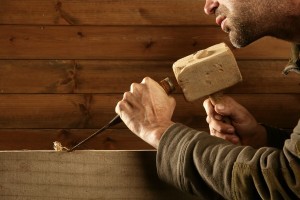 communicate they cannot. In modern accounting you must be able to speak benevolently
about many subjects in order to effectively lead a company.
Friday, December 5, 2014
What The Accountant Must Take Into Account
Audience:
 He/she will take a
lot of technical classes, particularly aimed at teaching them a new language –
accounting. Communication revolves around gathering data and the financial
statements. Accounting has always revolved around counting and ensuring the safety
of what you have, and more recently has taken on the new dimension of cost
accounting, which is essentially accounting to help make decisions. Whereas
with the original purpose it was possible to be an introverted person and still
be a successful accountant, with all of the relationships in modern accounting
it is the extroverts who excel. Unfortunately the curriculum is focused on the
technical side of accounting, as such internships are an essential part of the
education process. It is there that more of the interpersonal skills necessary
for the job are taught. In sum, personal communication is learned in the field
through internships, written communication (the financial statements are the
written communication) is learned in the classroom.
(Follow the break for more Info)
Wednesday, December 3, 2014
For whom the Accountant First Tolled
How does an owner get workers to act in the best
interest of the owner and not the interests of the workers themselves? This is
the question that accounting has sought answers for from its inception.
| Babylonian agents needed to account for their sales to the owners of the property |
The earliest accounts of accounting are from ancient
Babylonia. As businesses became bigger than just what the owner could sell,
they started hiring agents, people to sell their things on the owner’s behalf,
similar to how CEO’s run a company today for the owners (the stockholders). In
ancient Babylonia there was a law which “required…an agent selling goods for a
merchant [to] give the merchant a sealed memorandum quoting prices” (Chatfield
5). Essentially the law required that when someone bought something from an
agent, the purchaser wrote down the price, sealed it, and gave it to the agent.
The agent then needed to deliver that memo, still sealed, to the owner. This
way there was less ability for the agent to steal from the owner, and the owner
was able to know exactly what price the items were sold at.
The ancient Greeks had other ways of ensuring the
well being of the money. First, they had government revenue accounts that they
public could see. Literally the writing was in a public place and it showed how
much money was in the account. This way there was transparency, it would be
difficult to steal without someone noticing. As another safeguard whenever
someone was released from the public treasury, their own personal accounts
would be audited. This way it could be discovered of that person stole while in
office.
Today accounting still takes on the role of trying
to get the workers to do what is best for the company as a whole, but that is
only part of what it is today. The other side of accounting today looks
forward, not backwards. And this change happened during the industrial
revolution.
| Ancient industry was almost exclusively farming |
In ancient times, when farming was most of the
industry, there weren’t questions about how much should be produced, or what
direction should the company go. It was just go make food. But with the
industrial revolution came new questions. If we produce too much, then the market
price crashes and we lose money, so how much should be produced? Or if the
costs go up as we make more items, where should we stop producing to still make
a profit? Such questions never occurred before, and thus a new side of
accounting was born. Now, in addition to looking back, accountants look
forward.
Works Cited
Stocks, Kevin. Personal Interview. 3 December 2014
Chatfield, Michael. A History Of Accounting Thought. Hinsdale: The Dryden Press, 1974. Print.
Monday, November 24, 2014
Gratitude for the Glorious Game
Tuesday, November 18, 2014
Does St. Augustine like Anthypophora? Yes, he does.
Anthypophora is when you ask a question and then immediately
answer it, or raise an objection and then resolve it. In De Doctrina Christiana St. Augustine states that “the speaker ought
to be especially careful to give assistance to those who cannot ask [their
questions]” (Book IV, Paragraph 25]. The reason for this is because when giving
a speech it is inappropriate for the audience to ask questions, so the speaker
must take care of that for them.
In his “Sermon 211 for Lent” he points this out by saying
this is his time to speak and their time to listen in silence. As such he
raises many objections/questions and then resolves them. Among them are
- Paragraph 2: Perhaps we think darkness is like being shut in prison.
- Paragraph 3: Perhaps you want to forgive your brother, but he won’t accept it.
- Paragraph 6: There are many here, one example is “Am I going to say ‘go…beg pardon of him?’ no.”
 | ||
| An unanswered question could leave someone feeling left out |
By raising these issues and then answering them he is doing
his audience a favor. He is following his own rule for addressing large crowds.
The effect is to ensure that everyone is learning, for if someone is stuck and
cannot get past an issue, that person will not be able to follow along as the
speaker continues for he will have a bad taste in his mouth and will sour at
the speech being given. This would be a lament for the speaker. For his desire
is to teach, and if he is turning them off by not answering their questions
then they cannot learn what he is there to teach them.
Subscribe to:
Posts (Atom)