Showing posts with label style and delivery. Show all posts

Saturday, November 8, 2014

Style and Delivery in Accounting

Among the biggest firms, clients will need to pay an average of $300 dollars an hour for accounting services. For clients that have large tax returns, which are literally one and a half feet tall when everything is printed out and stacked together, the firm can receive into the hundreds of thousands
 in revenue. Naturally, these clients have tremendous leverage over the firm in the sense that they can easily take their business to another firm if the previous does not meet their expectations. This bargaining power engenders tremendous focus on positive, client relationships. The firm will do everything they can to ensure that they maintain a healthy association with all of their clients – especially large ones.


Michael the a tax manager for PricewaterhouseCoopers has longer had the Walt Disney Corporation assigned to him to ensure that their corporate tax returns are always filed on time and accurately. Michael thoroughly enjoys working with Disney as they almost never have any issues with how they have classified and reported their income. This proficiency means that despite Disney’s extraordinary size, filling out the tax returns is not overly complex. However, Michael is a diligent employee and always double checks.
On one unfortunate day he discovers an error – a gross error—an error of such blatant magnitude and nature that it would have unlikely been missed by the usually meticulous Disney tax preparers.  Perplexed, Michael sends a quick email to his contact at Disney inquiring about the discrepancy. He receives a reply in a uncharacteristically short period of time that indicated he should not worry about the supposed error because it is not an error due to xyz explanation. This made Michael even more concerned. Not only would such an inquiry much more time to investigate than Disney took to respond, very suspicious, but also the explanation made no sense. Michael drafted another email that explained the error and politely elaborated on the proper solution. Again, Disney responded quickly and tersely. They adamantly reaffirmed their position and offered no further explanation. Michael knew he would need more authority in his next correspondence. He called an IRS hotline, available exclusively to the top accounting firms, received congruent advice. He the drafted the following email:

Dear Sarah:
Thank you very much for your prompt correspondence over the last few weeks. I am again writing regarding the allocation of income discussed in previous emails. I apologize for any annoyance caused by my persistence on this matter. I assure you my sole concern is to ensure that Disney avoids any penalties associated with inaccurate filling.
Regarding, the allocation of interest income generated by off-shore, related entities – specifically those related to Disney Cruise Lines must be reported as ordinary income. The internal revenue code very clearly states that all revenues received for engaging in the normal course of business must be classified as ordinary income not income received from capital gains despite the fact that Disney Cruise Lines is a capital investment that exists independent of The Disney Corporation. Furthermore, I called the IRS to receive further clarification about the proper allocation of this income and they confirmed the above opinion.
We cannot sign the return until the income has been reclassified. We are very grateful for your understanding and again apologize for any inconvenience caused.
Sincerely,
Michael the Manager


The above situation was handled well because Michael remained polite and unassuming. Though it seemed very suspicious that such a big firm that is usually very familiar with the tax code should make such an egregious error and not fix it, Michael did not make an assumptions or accusations. 

Instead, he calmly investigated the matter and presented his case to the extent that either Disney would have to file a return without PwC and likely receive a penalty, or they could change the way they classified their income. Respectful style and appropriate delivery are paramount.


Friday, November 7, 2014

Translating in style (and delivery)

We see our unnamed protagonist walking down the street and into the front door of a large skyscraper in an otherwise undefined city. He takes the elevator to the tenth floor and exits to his right where the generically named translation company he works for is situated. He's been working there for a few years now, and is experienced with the busy workload that will follow that day.

He gets to his office and sits at his desk before reviewing the projects that needed to be acted on. The first up is a children's book that needs to be localized for world-wide distribution. upon opening the book, the protagonist reads through the short story and gains an understanding of the context used here. He then pulls up a typing program and begins to separate the context, page by page. Some
sentences translate very easily into it's counterpart. Others require more indirect translation, and our translator is sure to use rhetorical evidence so that the children will understand the story regardless of the idiomatic differences. He is also sure to maintain middle style and simple words throughout the piece, thereby insuring the book's entertainment value will not be hindered in its translated form.


With that project finished in under an hour, our protagonist then turns to a bill currently in the works at congress. Since the bill will deal with the purchase of foreign products, a copy has been requested in that specific language. The protagonist cracks his fingers and gets to work, splicing the document piece by piece. This assignment is much more complex and our hero is only given the first number of pages to translate today. The judicial form of the document isn't as stingy about idealistic phrasing as the children's book was. Thus, the translator chooses to make as direct a translation as possible, focusing on clarity for the official status of the document. He makes sure that correctness is also applied and that nothing is worded improperly. The process is much slower and the translator occasionally peers into a dictionary designed for governmental phrases. Each sentence must be put into a low style as well and inform the foreign party of the matter at hand. It is a long, arduous process.


After a lunch break, the translator completes his section of the document as three o'clock rolls around. Noting the time, he leaves the office and heads to his car. He is acting as interpreter for the mayor this afternoon during a ceremony with a visiting foreign official. He drives to town hall where the meeting is being held. During the ceremony, the foreign official gives a prepared speech. the Protagonist stands next to him and becomes the mouthpiece for the audience. Since the event is joyous, the translator has to maintain a cheerful and respectful tone to fit that of the actual speaker. He also is sure to emphasize ornateness within the epideictic literature, displaying the necessary ethos that his client needs. It isn't all a walk in the park however. On more than one occasion, the official gets off topic as well and the interpreter finds himself using his quick thinking to accurately portray the sudden ad-lib. Fortunately, everything goes smoothly and the ceremony is a success. The Mayor even comes after to thank him for his diligent work and give a few more job requests for his company in the upcoming weeks. This is discussed respectfully, but with good heart and light jargon is equally involved.

The day is finally over. Our protagonist returns home where his wife is busy making dinner. He helps finish preparations and the two of them sit down to eat. Starting off the conversation, he begins to discuss with his wife all of the things he had done that day and the varying factors of rhetoric that were displayed that day.
The End


Style and Delivery for Accountants

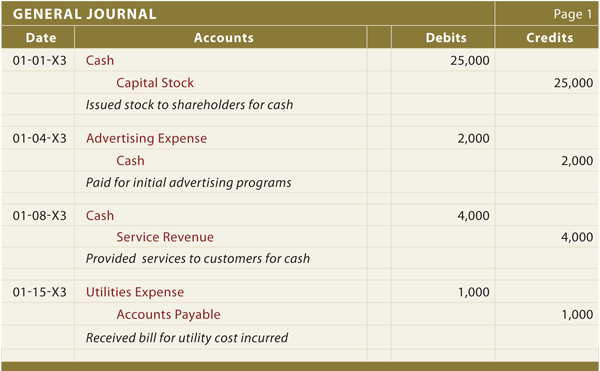
Accountants like fewer things more than standardization, neatness, and conciseness. That is why when Charlotte creates her daily journal entries she follows the standard format that is taught to beginning accounting students. She lined the debits along the left hand side, and the credits along the right, making sure that both sides equaled each other. The note that explained every expense was a brief sentence giving just enough information. Because she follows the basic, yet efficient format every time she does a journal entry, Charlotte can easily spot the errors that she did, and can correct them before she submits the journal entries for approval from her boss. This format is also efficient for her boss because there is a very specific format that leaves room for very few errors. The errors, if any are easily spotted and allows her boss to focus her time more on other important matters. 
As Michael prepared for his presentation with the CFO of the company, he knew that he had to appear and act confidently in his location not only through the financial statements that he was presenting, but also through his body language. He made sure that he showed up to work that day in a more formal business suit than his usual slacks and a button up collared shirt. He also made sure that he was properly groomed, with his hair cut and nicely combed. First impressions are everything, which is exactly why he gave a firm handshake and had eye contact when he first entered the conference room and met the executives. On his financial statements he had all the numbers balancing, and had very ratio broken down, ready for the executives to analyze and ask questions about them. Michael had studied the financial statements and rehearsed his answers beforehand, so the people in the meeting would see that he knew what he was talking about. He had strong answers ready which would portray his confidence in his location and their financial success over the past three months. In the end, the firm would be highly impressed and give his location more financial responsibility. 

Style and Delivery in Speech Pathology

The goal of a speech pathologist is to teach others how to communicate. In class, we have studied that style is the how of speech. So really, you could say that speech pathology is a low style of communication (between patients and therapists) focused on improving an individual's ability to apply style while communicating. The situation of the client determines the method used to increase style application and thus improve quality of life. Though each therapy is unique, there are a couple of constants I have identified in regards to style on the part of the speech pathologist:

  1. Low Style
Speech therapists must maintain a low level of style while communicating with clients. The goal is to teach effectively so that the individual can learn the skills they lack. For example, individuals on the autistic spectrum often have a hard time interpreting facial expressions. Thus, a therapist can use appropriate facial expressions to try and reinforce what is being taught. For example, picture flashcards depicting different emotions may be shown to help teach the principle, and then reinforced by the therapist through smiling when answered correctly.


      2.  Clarity
This is highly emphasized by speech pathologist. Not only clear, informative expression  with families and insurance companies, but clarity when interacting with the individual. A medical vocabulary is very necessary when communicating for insurance needs; but, to an individual with the cognitive ability of a seven year old,  simpler terms and instructions will be more effective.

Sometimes as a speech pathologist, written communication will be necessary. Because in my field there is a high emphasis on oral communication, I am still learning and identifying ways in which I will rely on written communication. In previous posts, I have mentioned documentation and insurance as possible sources of written communication. I'm not entirely familiar just yet with how that all works or is structured. So, for the purpose of this post, I have focused on the use of written communication in therapy. First of all, literacy is one means of assessment speech therapists use to identify an individual who may need therapy (where there are reading and writing problems, speech problems are likely to follow). There is also one type of therapy that I know for sure relies on written cues:

  1. Aphaisa
Aphasia refers to the language displacement suffered by individuals recovering from a stroke. After a stroke, these individuals have varying degrees of ability to comprehend language and also produce it. They rely heavily on verbal cues (often needing another person to be able to fill in the blanks or suggest keywords to help them express their ideas, very similar to the tip-of-the-tongue phenomenon). However, the girl in the video, Sarah, who suffered a stroke at the age of 18, writes down the first letter of the word she knows she wants to say and the visual of seeing the first letter helps her locate and produce the word. Pictures (I consider written communication) are another means used to help these individuals increase their speech output and understanding. In the video, Sarah shows just how difficult it is for her to describe what is going on in the picture.  (4:10-7:52 relate to what I was talking about in this post with written cues and describing a picture)   

Style and Delivery In Material Engineering

Mr. Osman has been invited to a meeting to suggest and advice on the materials and techniques of manufacturing a new high-end lower receiver for a modular AR-15 platform which is planned for release in several months. He dresses professionally in dress slacks and a blue oxford shirt to ensure that the advice which he will offer isn't somehow discounted by his appearance. There will be employees from several sectors of the company in the meeting who will all make comments concerning the upcoming release. Defining unusual terms is an effective way for him to more effectively explain the information. As he speaks in the meeting Mr. Osman clearly delivers the information concisely and without too much technical jargon so all in attendance will benefit. He will mostly use low style because he is is teaching about what they must do to produce the product. 

“We anticipate that because of the
 high-end appeal, the lower and upper receivers should be milled
entirely out of a high grade material such a billet aluminum on a CNC milling machine. Since CNC machine are designed to precisely craft somewhat intricate forms from metal it would be the optimal route to take. CNC machining will ensure quality and durability, and precision, which are absolutely paramount when we are dealing with a product with a great number of interlocking parts like this one.”


If Mr. Osman were asked to submit his comments in writing about which of several techniques could be uses to produce a new product his technique would be similar. Explanation of the processes involved in production and what their benefits are to the product is the goal. He would stray from technical jargon which would only confuse people, while still giving enough information to convey what he needs to. Definition is a topic of invention which benefits this type of explanation. Mr. Osman must avoid making anyone feel stupid by assuming they know what he is talking about.