 The holiday known as Thanksgiving is a day set apart for
giving thanks to God. (Definition) So often we have heard about gratitude yet
we still have not mastered this divine attribute. “Count your many blessings,
name them one by one. Count your many
blessings, see what God hath done.” (Repetition) How often do we focus on our
wants? Much more than we do with that which we already have. (Anthypophora) Often
forgotten are the possessions that are of the most importance – a friend, a
family, an example, the gospel, a body, a perfect plan, and the ability to feel
and love. (Asyndeton) To a remembrance of that which is good
Thanksgiving brings us. (Anastrophe) Thanksgiving, you make us better, bring us
closer to God, and help us to recognize our blessings. Why must you only come once a year?
(Apostrophe) Giving thanks is nutrition for our souls. (Metaphor) Our spirits
are uplifted and edified when realizing all that we have been given. If we give thanks, then more happiness is
ours because we are satisfied with what we have. (Cause and Effect) All the happiness in the world can be ours if
we give thanks. (Hyperbole) Gratitude is a quality of a true follower of
Christ. Let us remember this
Thanksgiving all that we have been given and be grateful always.
The holiday known as Thanksgiving is a day set apart for
giving thanks to God. (Definition) So often we have heard about gratitude yet
we still have not mastered this divine attribute. “Count your many blessings,
name them one by one. Count your many
blessings, see what God hath done.” (Repetition) How often do we focus on our
wants? Much more than we do with that which we already have. (Anthypophora) Often
forgotten are the possessions that are of the most importance – a friend, a
family, an example, the gospel, a body, a perfect plan, and the ability to feel
and love. (Asyndeton) To a remembrance of that which is good
Thanksgiving brings us. (Anastrophe) Thanksgiving, you make us better, bring us
closer to God, and help us to recognize our blessings. Why must you only come once a year?
(Apostrophe) Giving thanks is nutrition for our souls. (Metaphor) Our spirits
are uplifted and edified when realizing all that we have been given. If we give thanks, then more happiness is
ours because we are satisfied with what we have. (Cause and Effect) All the happiness in the world can be ours if
we give thanks. (Hyperbole) Gratitude is a quality of a true follower of
Christ. Let us remember this
Thanksgiving all that we have been given and be grateful always.
Showing posts with label amplification. Show all posts
Showing posts with label amplification. Show all posts
Tuesday, November 25, 2014
To thank is to bring happiness
The holiday known as Thanksgiving is a day set apart for
giving thanks to God. (Definition) So often we have heard about gratitude yet
we still have not mastered this divine attribute. “Count your many blessings,
name them one by one. Count your many
blessings, see what God hath done.” (Repetition) How often do we focus on our
wants? Much more than we do with that which we already have. (Anthypophora) Often
forgotten are the possessions that are of the most importance – a friend, a
family, an example, the gospel, a body, a perfect plan, and the ability to feel
and love. (Asyndeton) To a remembrance of that which is good
Thanksgiving brings us. (Anastrophe) Thanksgiving, you make us better, bring us
closer to God, and help us to recognize our blessings. Why must you only come once a year?
(Apostrophe) Giving thanks is nutrition for our souls. (Metaphor) Our spirits
are uplifted and edified when realizing all that we have been given. If we give thanks, then more happiness is
ours because we are satisfied with what we have. (Cause and Effect) All the happiness in the world can be ours if
we give thanks. (Hyperbole) Gratitude is a quality of a true follower of
Christ. Let us remember this
Thanksgiving all that we have been given and be grateful always.
Beep, beep!
Would the world be better off without the confining rules of
the road? Most certainly not! [anthypophora] What would ensue would be
detrimental to everyone, drivers and walkers alike [division]. Chaos, danger,
blaming! [asyndeton] That is what would happen.
This Thanksgiving, I am grateful for the rules that guide
road conduct. I’m am grateful for the happy green lights [personification], the
cautious yellows [metonymy], and the warning reds. I am grateful for the yield
signs and right of way laws that allow me to get to and from work without
question about who can drive, where, and when.

I am grateful for clarifying ambiguity, the ability to
correctly place blame in the instance of collision, and for the steps that keep
me safe and sound and free from the guilt of causing an accident. It is no
small thing to get into an accident and be unsure about fault [litotes]. With
all the gazillion [hyperbole] idiotic things that I see happen on the road WITH
the laws, I would hate to see what would happen without them!
If I had the choice of any car, I would not be driving my
frail, little, and old Geo Metro, Leonard, but as it is, he’s all I’ve got and
I’m glad to know that I am a bit more [degree] safe because of the laws.
Thanksgivings Point of View

I am not just a day on a calendar
(opposition), I am more than a table spread with bounty of turkey, stuffing, potatoes
mashed, and pie ( description/ degree). Behold, my name itself denotes my anointing,
holy day, indeed, open wide door (apostrophe), let loved ones enter, greet
those whose presence and well being brings warmth to your soul, embrace, laugh,
share in memories passed. Am I a mere day? No, I bring love and a grateful
heart (anthypophora ).
Though I my time
is but a few 24 hours, the power of my presence precedes my coming and lingers
long after I have departed. My colors are the leaves of autumn, the drawing of a hand turkey, the contrast of white cream whipped atop of a moist pumpkin pie. I am found whenever blessings are counted, wherever there is appreciation uttered. I am thanksgiving. (personification)
Thank you, taste.
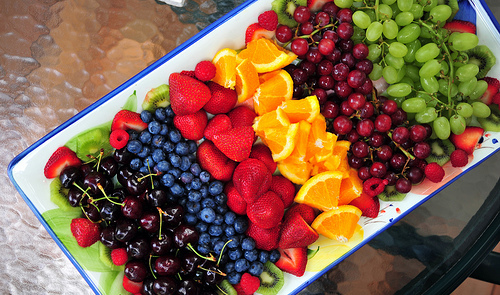
The bright orange skin of the small orb you peel glistens back at you, a fresh scent accosts your nostrils as juices coat your skin; then, the long awaited moment approaches, and you place the beautiful little segment of orange fruity flesh (alliteration) on your tongue. Taste, how grateful I am to have you (personification). You make possible the enjoyment of every meal (hyperbole), most especially the blessed spread of Thanksgiving, that most blessed day of thanks (repetition). You are the angelic hallelujah (alliteration) of this mortal plain, the aurora borealis of the senses (metaphor), God's most precious gift (hyperbole). Whenever we part I anxiously look forward to our reunion; goodbye, until we rejoice again together (personification).

Give Me Thanks
 "O Blessed Bird," you cry, drawing near to
me with your lips while your hearts are still far from me [imitation]. So easily you
forgot to give—where are these, my blessings [anastrophe]? A missing
head, a lack of feet, and crispy skin bereft of plume. This is not a gift, nor is it a way of
thanking me [litotes]! It is an outrage! To slaughter me though I be innocent, then
devour my flesh. Such an act is a
crime—a sin! "To be used
sparingly," and "only in times of winter, or of cold, or
famine," God commands regarding this abominable act [epicrisis]. Yet here I
stand, if I had the legs, preaching to you pudgy pigs [alliteration]! Even so, I,
myself, have been made fat with the stuffing plunged up my nether regions. Disgusting!
Vile [exclamatio]! And then you make me stew in the filthy
drippings of my own corpse! Wretched
beings! Would that I were returned to
the Mother Earth and spared this ignominious fate [personification]. I am the
dirt you till, the air you breathe, and the water you drink [prolepsis]. Wilt thou have mercy and finish the
deed? Why doth this fowl occurrence
recur year after year [paronomasia]? Is this not enough? Must my kind never find rest [pysma]? Brothers, sisters, those fallen prey to the
ravenous beast known as man: cry not, for the end is soon upon us. O sweet release [apostrophe]! Come, gather
us under thy wings!
"O Blessed Bird," you cry, drawing near to
me with your lips while your hearts are still far from me [imitation]. So easily you
forgot to give—where are these, my blessings [anastrophe]? A missing
head, a lack of feet, and crispy skin bereft of plume. This is not a gift, nor is it a way of
thanking me [litotes]! It is an outrage! To slaughter me though I be innocent, then
devour my flesh. Such an act is a
crime—a sin! "To be used
sparingly," and "only in times of winter, or of cold, or
famine," God commands regarding this abominable act [epicrisis]. Yet here I
stand, if I had the legs, preaching to you pudgy pigs [alliteration]! Even so, I,
myself, have been made fat with the stuffing plunged up my nether regions. Disgusting!
Vile [exclamatio]! And then you make me stew in the filthy
drippings of my own corpse! Wretched
beings! Would that I were returned to
the Mother Earth and spared this ignominious fate [personification]. I am the
dirt you till, the air you breathe, and the water you drink [prolepsis]. Wilt thou have mercy and finish the
deed? Why doth this fowl occurrence
recur year after year [paronomasia]? Is this not enough? Must my kind never find rest [pysma]? Brothers, sisters, those fallen prey to the
ravenous beast known as man: cry not, for the end is soon upon us. O sweet release [apostrophe]! Come, gather
us under thy wings! Saturday, November 15, 2014
Who shall separate us from the love of Christ?
While reading one of my favorite passages of scripture in
the Bible, I started to notice some patterns and rhetorical devices that we had
learned in class. Here is the passage of
scripture in Romans chapter 8:
35 Who shall separate us from the love of Christ? Shall tribulation,
or distress, or persecution, or famine, or nakedness, or peril, or sword?
36 As it is written, For thy sake we are killed all the day
long; we are accounted as sheep for the slaughter.
37 Nay, in all these things we are more than conquerors
through him that loved us.
38 For I am persuaded, that neither death, nor life, nor
angels, nor principalities, nor powers, nor things present, nor things to
come,
39 Nor height, nor depth, nor any other creature, shall be
able to separate us from the love of God, which is in Christ Jesus our Lord.
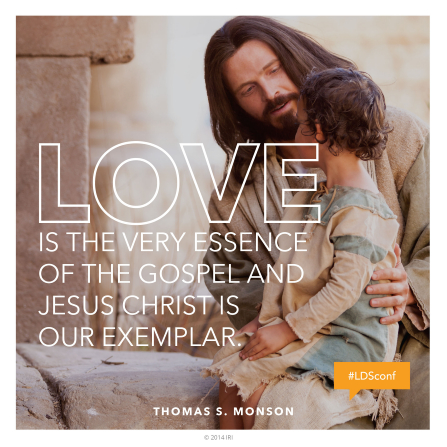 The passage starts by asking a question that is then
answered which I remembered to be a rhetorical device. I looked it up on Silva Rhetorica and this is
known as anthypophora, a figure of reasoning in which one asks and then
immediately answers one’s own questions.
This makes us as readers contemplate if there really is anything in the
world that can separate us from Christ’s love.
He goes on to state that nothing can separate us from the love of
Christ.
The passage starts by asking a question that is then
answered which I remembered to be a rhetorical device. I looked it up on Silva Rhetorica and this is
known as anthypophora, a figure of reasoning in which one asks and then
immediately answers one’s own questions.
This makes us as readers contemplate if there really is anything in the
world that can separate us from Christ’s love.
He goes on to state that nothing can separate us from the love of
Christ.
What is interesting about how the question is answered is that
the answer is elongated. There is an
obvious use of division in describing what could potentially separate us from
Christ’s love but in verses 38 and 39 we see the repetition of the word “nor”
at the beginning of the phrases and this is known as anaphora. This repetition makes us repeatedly consider
all the possibilities that could potentially separate us from his love which he
negates and states that none of these could succeed in taking away Christ’s
love for us. It makes his love much more
powerful through this use of anaphora and division.
Subscribe to:
Posts (Atom)