Showing posts with label engineering. Show all posts

Wednesday, December 9, 2015

The Road to Innovation Starts with Regulation

“I can’t work any more fifteen-hour days,” sighed Jack, a seasoned electrical engineer working for Chrome Semiconductor. Chrome was a fairly young startup company, and their CEO, Stan Shwartz, had specifically hired Jack to lead their research and development division. When Jack accepted the offer, he was promised a large lab, a generous budget and freedom to choose his hours in order to be with his family more. Instead, Jack became overly familiar with “budget cuts”. He spent more time in the lab each day while his fellow engineers were constantly being replaced with "marketing consultants".

Jack heard his phone buzz. He looked down and read an urgent memo from Stan: “Great news! Apple has offered to buy out Chrome! Isn’t that great! No more long hours for anyone”!

He was right. None of the engineers would have to worry about overworking. By next week, they’d be looking for new jobs, hoping their “compensation package” would support their family. In the meantime, Stan and everyone else in management would be buying new houses. Jack stared at the wall. He began to wonder how his wife would take this, again.


Friday, October 23, 2015

Communication and Persuasion in Electrical Engineering

Whether you're reading this on your laptop, tablet, or smartphone, you can thank electrical engineers. Companies such as Google, Apple, Microsoft, and Intel mainly consist of electrical engineers and are largely responsible for the information age in which we live.

Electrical engineering often carries a stigma: socially inept brainiacs who spend their lives bleaching their skin behind a computer screen. While product development forms a large part of their job description, it wouldn't be possible without proficient communication and persuasive skills.

In product development, judicial oratory dominates. Electrical engineers tend to work in teams. They communicate in many cases on a global basis through means of email, calling, video chat, and in person. They hold conferences, submit reports, and research together. Because engineers can come from so many different cultural and technical backgrounds, understanding and being sensitive to your co-workers is a must.

Many engineers, in fact, are very capable of managing crucial conversations, where emotions and stakes are high. Those who can't often make poor, impulsive decisions, which can lead to production delays, bugs, and lower quality products, which ultimately cost the firm more money.


Electrical engineers that focus on business development are very proficient in legislative oratory. Apple, for example, pays hundreds of millions of dollars for wireless testing equipment each time they roll out a new iPhone. They could easily find a cheaper vendor. It is far more important for them, however, to contract with a reliable and committed engineering firm. In this case, building healthy relationships through rhetoric is just as important as the product itself.

My dad is an electrical engineer who specializes in business development. While growing up he would take me with him to his international conferences where I could see firsthand how engineers literally sell their ideas through rhetoric. It became my dream to innovate just like them.

Tuesday, September 1, 2015

Building the Greek way

I love to build crap. Literally. Whatever it is, I'll build it for you. It may not not turn out how you want it, but I'll enjoy doing it! I'm pretty sure I was building spaceships with legos before I could walk or talk.

We all know how prominent Greek literature, art, architecture, and even cuisine are. But I had know idea how great they were at inventing, developing, innovating, and building. Interestingly enough they're credited for creating some of our most basic tools, such as cranes, thermometers, alarm clocks, and even central heating! It fascinates me how long these things have remained a cultural necessity. As an engineer, thats what I want to accomplish.

I am currently studying electrical engineering and can't wait to start my own tech firm. Seeing so much Greek influence in modern day engineering motivates me to reach that potential and be just as inspiring someday.
My friends and I trying to build a robot arm. It didn't work so we ended up throwing a claw on a remote control helicopter.

Friday, December 12, 2014

What Every Engineer Should Know…


     In an increasingly more technical world, it is not surprising that the topics of history and rhetoric take backseat roles in the engineering field. I wish to address this notion and to dispel the idea that you can get by as an engineer tinkering away in a cave. Engineering is an art, even a virtuosity. The Oxford Dictionary says the word ‘engineer’ stems from the Latin word ingenium, which means ‘talent,’ or ‘cleverness’. This title is awarded to those who have become familiar with manipulating math and material to create solutions. A long list of college text books ranging from numerical methods to thermodynamics quickly draws the attention of the avid learner. Others less mathematically inclined may gasp in horror and quickly reevaluate their lives. You might ask, “Is being a math whiz the only way to become an engineer?” It certainly helps, but in reality, I think a different qualifying question should be asked: “How will a knowledge of history and writing assist me in becoming an engineer?”

Historical Context
    Understanding the historical context of any conundrum can offer us new insight into better solutions. I like to think of all great ideas as giant trees that began as tiny seeds. Many years ago, these seeds were planted in response to a question or observation. Through inspiration and perspiration, these seeds pushed their way to the surface and gained root. The names of Leonardo da Vinci, Isaac Newton, Thomas Edison, and Albert Einstein might sound familiar as the founding forefathers of modern engineering techniques. However, even the greats had honorable predecessors. Have you ever heard about Amenhotep and his prosthetic toe, or Vitruvius and his description of the Vitruvian Man? Da Vinci actually based his Canon of Proportions on the idea of the Vitruvian Man (Leonardo). Every generation builds on the previous.

Example of Historical Development
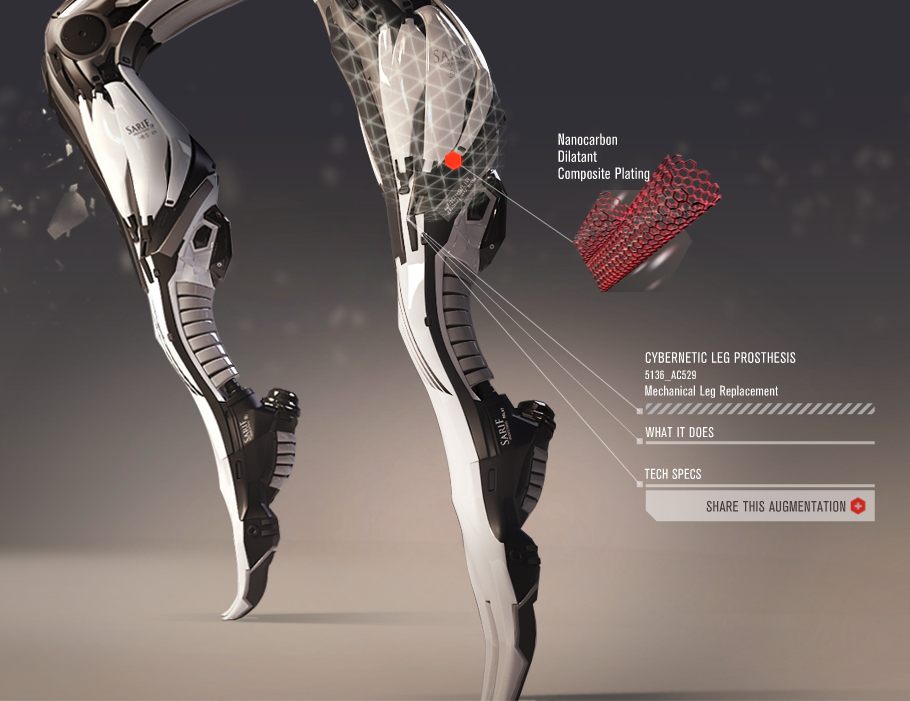
    Take prosthetics for example. Missing appendages has been an issue all ages have experienced. Understanding how our ancestors tackled this dilemma gives the engineers of today a leg up. One of the earliest known examples of a prosthetic device can be observed in the Cairo Museum where the prosthetic toe of Amenhotep II is preserved. The Greek historian Herodotus recorded an instance in 484 BC where a prisoner escaped by cutting off his leg and hobbled off on a wooden leg. The Roman general Marcus Sergius led his troops into battle with an iron prosthetic hand in 218 BC. His left hand wielded a sword while his fake hand was adorned with a shield (Thurston). Fast forwarding to modern times, there has been tremendous research performed in recent years which has exponentially helped progress the development of prosthetic limbs. Within the past 20 years, methods have been developed where prostheses can be attached directly to amputees’ bones. In addition, electrodes attached to nerves and muscles offers amputees neuromuscular control of the prostheses (Pitkin).

The Stereotype
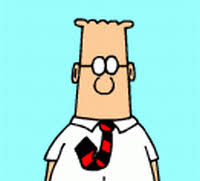
    Before you get the impression that just being creative and smart will earn you the next Nobel Prize, I need to mention a few things on living in today’s world. The elation of a grand discovery can quickly be crushed by something as artless as awkwardness. Ineffective communication has effectively trampled the dreams of many an engineer. Poor souls. They fall under the stereotype that has of late defined those of the engineering field: smart, nerdy, and very awkward. As one television series depicts, young Dilbert is a curious fellow who takes broken things apart and puts them back together in working order. His concerned mother consults a doctor, who diagnoses Dilbert with “the knack,” which he defines as “the supreme understanding of all things electrical and mechanical, along with utter social ineptitude.” He will never lead a normal life, because he will be an engineer (Knack).

Communication in Engineering
    Communication and persuasion are a huge part of engineering. There are countless scenarios in which a knowledge of rhetoric and presentation is crucial to producing results. Opportunities for communication are present in all kinds of situations, including interviews, oral presentations, memos, technical reports, process sheets, engineering drawings, proposals, emails, etc. Unless you invented some sort of mind-reading machine, you will have to explain your ideas to someone else. Even if you had invented a mind-reading machine, you would have to convince someone to finance it. Rhetoric in the engineering field has two parts: stating truth, or at least an approximation of it, and encouraging others towards action.

Bob
    Here is a case study. Bob is an engineer for SmartLife, where he performs safety inspections. SmartLife has been struggling financially the past year, so it has implemented budget cuts. Bob is performing one of his inspections one day when he observes some small cracks forming in the base to one of the power generators. These cracks will cost a lot to repair. Using his great rhetorical prowess, he would help his supervisors to understand the advantages of repairing the cracks. His approach is crucial, because if he fails to convince them, one problem will lead to another. Knowing how to say the right words at the right time will help him. In this context, Bob would present himself in a deliberative manner to encourage a response and action.

Personal Experience  
    I have a personal experience that taught me the importance of communication. During an engineering career fair, companies from all over the country were taking resumes and scheduling interviews with intern aspirants. I showed up in my nice business casual clothes and realized I had no idea how to sell myself. Mowing the neighbor’s lawn was about as much work experience I had ever had, and I felt out of my class. I cautiously approached a biomedical company representative and told him I am interested in prosthetics. “Well,” he said, “we don’t make prosthetics. We make heart valves.” At that point, I didn't know how to recover myself, so I proceeded awkwardly asking him about his company. At the end of a brief discussion, he politely told me that maybe I should think about what I want before I do anything else. I felt like a fool. With this experience in mind, I now reflect on ways I can show others who I really am, what I do know, and how I can help.

Conclusion
    It may seem to be a lot to ask of an engineer to be good with both numbers and words, but I hope that you now see a need for being well rounded. Overall, engineering can be simplified to two classifications: acquiring knowledge about things, and then making things happen. It is a process beginning with keen observations and brilliant ideas which lead to fruition. I hope all engineers will take this advice to heart.

References
“Knack, The.” Dilbert. United Paramount Network. CTT, Culver City. 25 Jan. 1999. Television.
Leonardo, da Vinci, 1452-1519. The Proportions of the Human Body According to Vitruvius (the Vitruvian Man);              Ideal Man in Circle and Square; Study of Proportions; 1509. Web.
Pitkin M. Design features of implants for direct skeletal attachment of limb prostheses. Journal of biomedical                     materials research. Part A2013; 101(11):3339-3348. doi:10.1002/jbm.a.34606.
Thurston A, Thurston. Parã and prosthetics: The early history of artificial limbs. ANZ J Surg. 2007; 77(12):1114-9.


Wednesday, December 3, 2014

A Pirates Dream

       From the beginning, people have procured means to improve the quality of their earthly sojourn.  Many products of today have origins that go back to even before the days of ancient Greece and Rome.  I am a biomechanical engineer, and understanding the engineering techniques from millennia ago helps us to create new devices that can enable the physically handicapped today.  I want to draw your attention to the improvement of prosthetic limbs over the years. 
              
         It is easy to imagine a pirate walking around with his peg leg, but how about the King of Egypt, or a Roman general?  One of the earliest known examples of a prosthetic device can be observed in the Cairo Museum where the prosthetic toe of Amenhotep II is preserved.  The Greek historian Herodotus recorded an instance in 484 BC where a prisoner escaped by cutting off his leg and hobbled off on a wooden leg.   The Roman general Marcus Sergius led his troops into battle with an iron prosthetic hand in 218 BC.  His left hand wielded a sword while his fake hand was adorned with a shield. (Thurston)
              
     During the medieval ages, prosthetic limbs were generally crude devices.  Picture the pirate on his wooden peg leg with leather straps and his hook for a hand.  Most of the advances in the quality and fabrication of these devices were brought about during war times.  Better materials were developed, functionality was improved, such as joints and flexibility, and also medical procedures became available. 
              
          Fast forwarding to modern times, there has been tremendous research performed in recent years which has exponentially helped progress the development of prosthetic limbs.  For example, within the past 20 years methods have been developed where prostheses can be attached directly to amputees’ bones.  In addition, electrodes attached to nerves and muscles offers amputees neuromuscular control of the prostheses. (Pitkin)


               There are still many issues with current prosthetic standards that need to be addressed.  Some areas of future research concern the longevity of the devices, identifying materials that are safe for implanting, and improving the mechanics to more closely resemble regular human motion.  Prosthetic devices are also expensive and many amputees cannot afford the luxury of purchasing one.  As a member of the BYU 2ftProsthetics Club, I work with others in making inexpensive prosthetic legs that we can distribute to developing countries.   Prosthetics have come a long ways, but there are still many advances to be made.

References

Thurston A, Thurston. Parã and prosthetics: The early history of artificial limbs. ANZ J Surg. 2007; 77(12):1114-9.

Pitkin M. Design features of implants for direct skeletal attachment of limb prostheses. Journal of biomedical materials research. Part A2013; 101(11):3339-3348. doi:10.1002/jbm.a.34606.


Friday, November 7, 2014

Style and Delivery in Engineering

Robert McDaffry is the project engineer of an aerospace engineering firm, Aeronozzles, Inc., which supplies fuel nozzles to military and commercial aircraft platforms.  He is responsible for project execution and customer satisfaction.  Recently a customer, Lucky Flights, has approached the firm and complained about the missed deadlines for a shipment.  In this situation, McDaffry has to address at least two specific audiences: his company employees, and the disgruntled client.  

For the first, McDaffry first needs to locate the source of the delays and address it.  Due to the diversity of the employees, he must be able to communicate to a wide variety of functional areas, such as Operations, Marketing, Planning, Finance, and Quality Assurance.   Apparently several people in Quality Assurance have been under the weather, so the few remaining have been swamped trying to meet the deadline.  Because deadlines are important and customer satisfaction more important, something needs to be done.  However, being the responsible project engineer that he is, McDaffry understands the importance of company morale as well.  After calling a group meeting with Quality Assurance, he might try to appease the demands of deadlines, and to be compassionate at the same time, by addressing them in this way:

“I’ve called this meeting to address a few items of business.  Up to this point our company has had a great reputation of being punctual and exact in our performance.  Due to obvious circumstances, we had a hiccup recently that aroused some dissatisfaction with one of our clients.  I understand that this group had been understaffed as of late.  It is my fault for not addressing the situation earlier.  In order to thwart the evil designs of the flu bug in the future, I think it would be wise of us to take necessary precautions.  Do your best to stay healthy and I’ll get you the help you need if it’s required.”


The sign of a good leader is being willing to take responsibility when things go wrong.  It would have been easy for McDaffry to accuse QA of being slackers and unhygienic, but by taking the blame he builds his ethos.  He shows understanding, which would in turn spark a desire of the employees to work that much harder.  In addition, he addressed them as equals by using pronouns such as “we” and “our”.

McDaffry still has to speak to the disgruntled client.  He might say this in a letter:

Lucky Flights:

With respect to the delayed shipment of the custom fuel nozzles that you ordered, we express our humblest apologies.  Aeronozzles has always valued your cooperation and emphasized customer satisfaction.  As we wish to retain these relations, we offer these future services to you free of charge…

Respectfully,
Robert McDaffry
Project Engineer
Aeronozzles, Inc.

When addressing the client, McDaffry does not give excuses or offer any explanations as to the nature of the delay.  Doing so would make Aeronozzles seem incompetent or negligent with its affairs.  Lucky Flights isn’t looking for excuses, they want results.  In order to preserve the relationship with Lucky Flights, McDaffry acknowledges mistakes and offers amends. 


Saturday, November 1, 2014

Conflict Issues and Special Topics of Invention in Engineering

A Point of Conflict in Engineering
A lot of conflict arises when it comes down to inspections.  Just like a college student during cleaning checks, there can be a lot of tension when an inspector comes to visit a large power plant.  Even small imperfections in some equipment can be costly.  However, some of these imperfections, if left unchecked, can be catastrophic.  Thus, the conflict is between money and level of risk.

Topics of Invention in Engineering
Imagine a small power plant company, called EnergyGive, has a monthly safety inspection performed by one of their engineers, Bob.  EnergyGive has been struggling financially the past year, so it has implemented budget cuts.  Bob is performing one of his inspections one day when he observes some small cracks forming in the base to one of the power generators.  These cracks will cost a lot to repair.  He may say something to this extent to his superiors:

          “We have been under compliance for the past several inspections.  This month I have observed possible issues that can impede future success.  There are small foundational cracks forming at the base of Generator D.  In order to remain under compliance, these cracks need to be addressed as soon as possible.  If nothing is done, these cracks can propagate and cause equipment failure.  I have investigated the reparation costs, and it would be prudent to address this issue in a timely manner before those costs increase.”

Analysis:

Bob made sure that his superiors understood the advantages of repairing the cracks.  In this context, it was crucial that he present himself in a deliberative manner to help encourage action.  He emphasized the future problems that could arise using an antecedent/ consequence common topic of invention.  Additionally, he refers to compliance, which is following prescribed standards set by governmental agencies, in connotation to law.

Friday, October 24, 2014

Communication and Persuasion in Material Engineering

Material engineers are experts on the materials which are used in the productions of goods. They know the specifics of raw materials and how they will perform when used in manufacturing. They use their knowledge of materials to either make the process of manufacturing cheaper or improve the quality of a product. They work with other engineers as well to see what requirements need to be filled and which material or process can be utilized. Material engineers work with other engineers in the manufacturing of goods, and have to communicate which material would be better suited to the requirements. They usually work closely in several areas of production and often find solutions to problems in the manufacturing process by focusing on the materials best suited for the application.

Material engineers may be asked which material should serve as a proposed upper receiver in a new Ar-15 prototype. Taking their knowledge of  materials the engineer will consider the stresses involved with that certain piece, and decide it should be milled from billet aluminum. However machining is slow and expensive, and billet aluminum is not the cheapest. The engineer would then have to communicate to the people spending the money on the machines and the material why those materials and processes are necessary.

billet aluminium 
The engineer will use figures and facts to convince the manufacturers of how they should proceed. In this case the form is very much deliberative because it is focused on setting future policy based on what is advantageous. The use of deliberative oratory is clear because the engineer is trying to persuade or dissuade the manufacturer.

While I don't have much experience in the field myself I have several friends who occupy themselves with this profession because I already have an interest in all of this. I have been thinking about entering the field myself (so this was an informative post for me as well) I interviewed them on about what they do, and I looked up some of the responsibilities material engineers have.