Showing posts with label sweep_the_earth. Show all posts

Friday, September 12, 2014

trust us, what we say can help you! -Elder Bednar & Socrates

One of the most fascinating aspects of both Elder Bednar’s speech and Socrates’ dialogue is the implementation of conceit in their argument. Conceits are extended metaphors that pervade the entirety of the discourse. They are powerful vehicles for achieving the end goal of all rhetoric – a call to action.

Nevertheless, to understand the real value of the conceit, we must understand what the speakers want the audience to do. 

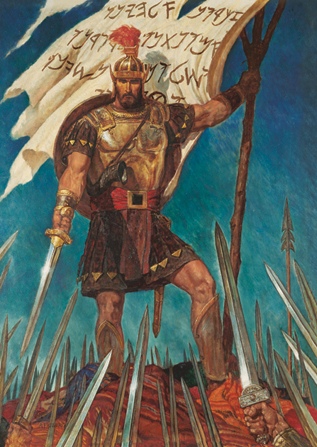
On the one hand, Elder Bednar who wants to spread the gospel throughout the world. Therefore, he wants each person in the audience to be more active in spreading the gospel. On the other, Socrates, a proponent of techne, wants his audience to understand the potency of techne in their own lives. Socrates tries to persuade people to develop techne because of its inherent value. To better illustrate the extent to which he wants to spread the gospel, Elder Bednar integrates a conceit in his rhetoric of a flood that could sweep the Earth with the gospel. This conceit helps address one of the biggest concerns that Elder Bednar things (and rightly so) the audience has with spreading the gospel – inconsequential efforts. However, this conceit helps Elder Bednar prove that if everyone who heard that speech did a comfortable amount of sharing on their social media accounts, we would see tremendous, consequential results. 

Socrates did essentially the same thing. Throughout his dialogue, he compares evilness to ugliness. He does this to help create an aversion to evil actions (poverty, disease, etc). Unfortunately, as averted from ugliness as the audience may be, it will regardless befall everyone. This condition engenders a desire for a cure. The cure, Socrates argues, is the arts or techne. By helping the audience understand that the arts can cure the inevitable ugliness or evil in life, he fosters within the audience a desire to develop a techne. Thereby, he, and similarly Elder Bednar, realize the goal of rhetoric – call to action.
Go forth and serve...some rhetoric!

In trying to motivate us to do something, Elder Bednar employs epideictic oratory talking about the virtues of communication. He breaks his message down into various parts and then uses testimony of others to highlight his points.
  • He used the testimony of past prophets to give authority to his message.
  • He used the examples of the church to show that this is not just something he is asking us to do, but to show that the church itself is getting involved.
  • Elder Bednar, leading the troops in the digital age.
    (you know you thought the same as you watched)
  • He used the ideas of church members to highlight that anyone of us can use social media; it need not be hard or time consuming.

Perhaps what impressed me the most was that even though I was watching this for an assignment, by the end of the video I was excited to get out there and start posting things online. He had the authority, he had the logic, then he plead for us to take it from a slow trickle to be a flood, if that didn’t get you excited for battle with the adversary, I don’t know what will.

Contrast this to Socrates who uses judicial oratory to show the injustice and wrongness of the study of persuasion. Socrates knows that he has an audience, and he wants to tear down rhetoric to show that it is not fit for the use of man. He works hard to use logical arguments to catch a master sophist off guard. He shows the crowd that Gorgias goes back and forth on the justice and injustice of rhetoric and thereby tries to show that it is not a techne and as such deserves no place.


I think Elder Bednar would disagree with Socrates about the goodness of rhetoric. From Elder Bednar’s perspective, Socrates is throwing out the baby with the bath water.

The Persuasive Art of Teaching

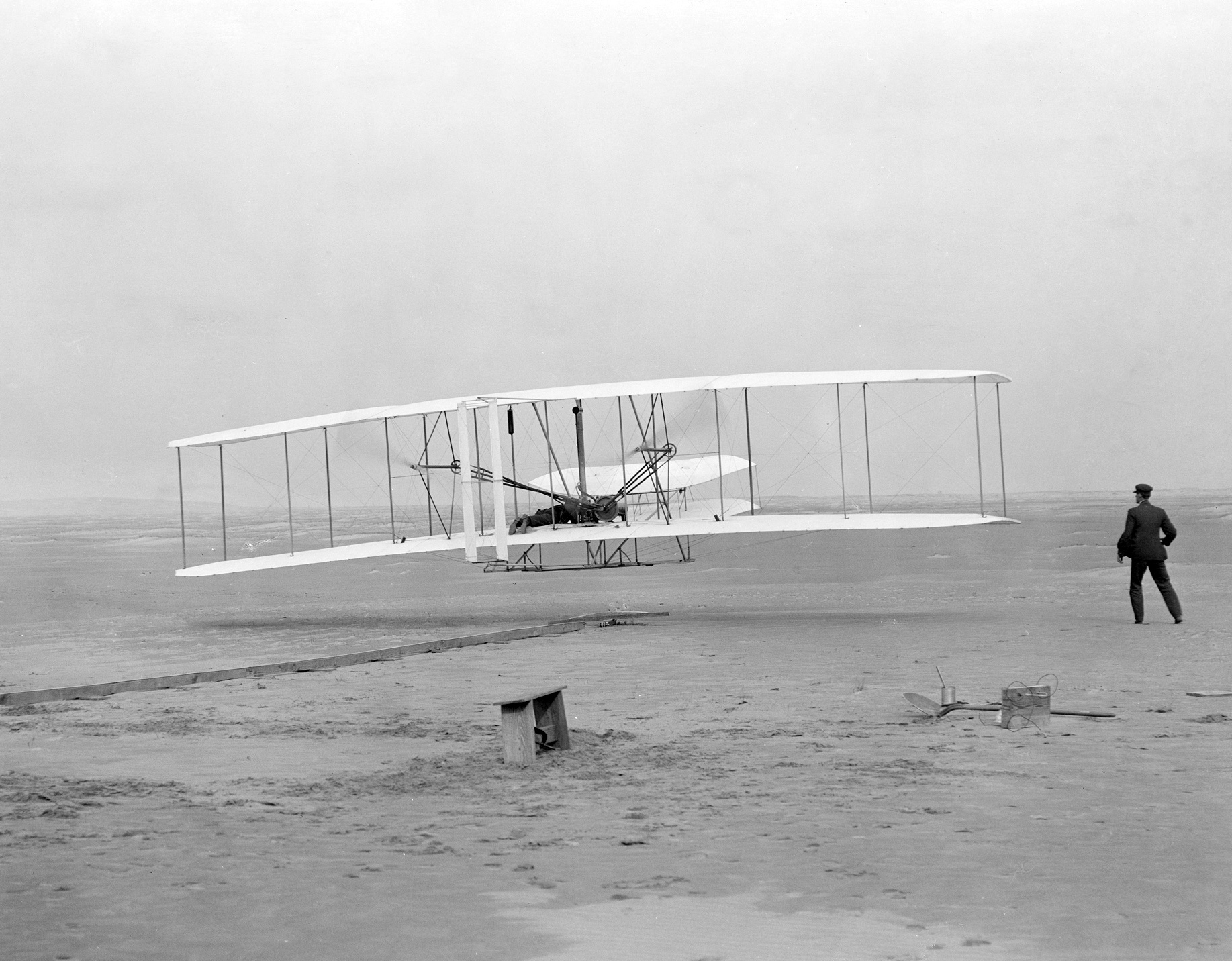
I firmly believe that few things in our world were created with harmful intentions. However, I'm not oblivious to the fact that there is often a gap between intent and ultimate use. For example, Orville and Wilbur Wright intended their airplane to be used as a new means of transportation, not a bomb delivery service as it was subsequently used in the war. Or, individual medicines created for the preservation of the body that are now used in harmful combinations and illegal activities. Gorgias said that when skills are used poorly the teachers “aren't the ones who are corrupt, and the art is not to blame…” (pg 41).
The Wright Brother's Airplane
I agree with this quote to a point. While the teacher is not to blame, the teacher has a duty-- a duty to teach and emphasize the good. As the sophist he claims to be, Gorgias of all the people should be using the most convincing and uplifting form of rhetoric; and yet, it was Socrates who was most persuasive. He would note an improper use and then proceed to suggest a correct application. This then emphasized a good use of rhetoric. Elder Bednar also utilized such tactics in his talk. Both men first established their ethos by quoting prominent voices on the subject (read Macey R’s post, she has an awesome “drip” analogy that explains this means of establishing ethos). Once they have in a sense, “proven” themselves knowledgeable, they proceeded to offer guidance and correction tailored for their specific audience. For example, Elder Bednar was speaking at education Week which incorporates a large span of age groups. He took the time to explain what Facebook, Twitter, Instagram, Pinterest, and YouTube was and their righteous applications in the church. Another good use of rhetoric. Ultimately, “teacher” is not a label that needs to be professed, it should be obvious in the manner that the material is presented. By evaluating the use of rhetoric Socrates and Elder Bednar stand out as true teachers and rhetoricians.

Thursday, September 11, 2014

Drip. Drip. Drip.

Katie mentioned at the end of her post that Elder Bednar quoted prophets to strengthen his argument.

Indeed, Elder Bednar quotes five prophets at the beginning of his talk to improve his ethos. Each quote adds a drop of strength to his argument that Church members should "flood"the world with the gospel.

As members of the Church, we revere the prophets. So hearing Elder Bednar quote Brigham Young, "Every discovery in science and art . . . has been given by direct revelation from God," strongly affects us.


Brigham Young? He was, like, the prophet after Joseph Smith.

That means he's old.

That means he knew about technology long before our time.

That means prophets know stuff, and that Elder Bednar knows that prophets know stuff.

That means we should listen to Elder Bednar.

This is essentially what goes through our minds as we hear that quote from Brigham Young. Drip. And then again when we hear the voice of Spencer W. Kimball. Drip. And again as we watch our beloved Gordon B. Hinckley. Drip.


Socrates makes reference to leaders in his argument, too. He recounts how he personally heard Pericles, a prominent political figure, speak (p. 40). Then, he alludes to the writings of a known philosopher, Anaxagorus (p. 49). They must have been figures of import; otherwise, Socrates wouldn't have mentioned them.

At first it appears that this isn't as effective as Elder Bednar's drip-drip-drip strategy at the beginning of his talk. Perhaps, though, it is more effective for Socrates' audience. By mentioning these famous leaders throughout his argument, Socrates reminds his audience that, "Hey. I've listened to Pericles. Drip. I've studied other philosophers. Drip. I know what's up."

Thus, this rhetorical strategy of testimony helps strengthen the ethos (and therefore the arguments) of both Elder Bednar and Socrates.


Bednar's lesson from Socrates

In Plato's Gorgias, and in Elder Bednar's speech "To Sweep the Earth as With a Flood" similar rhetoric appeals are used in order to convey their messages persuasively to their given audience. 

Socrates uses logical appeals and reason to show the flaws there are to rhetoric while questioning Gorgias, a sophist. For example, on page thirty seven Socrates states "Don't arithmetic and the person skilled at arithmetic teach us as many things as have to do with number?" Socrates points out that someone like a mathematician who is skilled and learned of a specific subject is just as capable, or better qualified to teach others about their techne, which adds to his argument that rhetoric has many flaws. Just like Socrates used reason and logic, Elder Bednar uses logical appeals through his use of multiple statistics about the use of social media when spreading the gospel. For example, he tells us that the "Because of Him" video that the church created was "viewed more than five million times during Easter week in 191 countries and territories of the world." In both instances, the use of the logical appeal gives their audience a clear reason to believe their claims being made.

Bednar also establishes this ethical appeal at the beginning of his speech by replaying many videos of church leaders explaining how future technological advances will unite the church and bring the gospel to millions around the world. This was a wise way of establishing his ethos because he did so in two ways. First, he quotes respectable men who church members trust which connects him to their honored character. Second, the videos show his credibility to the subject of technology use because he uses technology to prove his point. Socrates uses a similar approach by using oral rhetoric, Gorgias' main expertise, to prove to Gorgias that rhetoric can be flawed. Gorgias gets pushed into a corner because of some of the points that Socrates brings up which adds to his credibility and ethical appeal.


Wednesday, September 10, 2014

"Brothers and Sisters"

Perhaps as members of the Church, we all too often overlook or take for granted the audience we become a part of when someone begins their talk.  So it is with Elder Bednar's "To Sweep the Earth as with a Flood."  Opening with "Brothers and sisters," the simple three-word phrase immediately kindles a sense of belonging and familiarity among members while simultaneously creating that familial bond with those not of the faith.  This is both an excellent and effective means of demonstrating ethos—and even pathos somewhat—as this phrasing not only shows equal standing among the speaker and audience, but also connects the two. 

Through this opening establishment, Elder Bednar then goes on to talk about the overwhelmingly positive potential contained within social media, namely all of the many networking services available (Facebook, Pinterest, etc.) and their corresponding utility.  In a matter of seconds, information can travel from point A to point B through Z, regardless of geographical location.  By this, Elder Bednar focuses on the virtue of modern technology and media in this epideictic oratory. 


Still, as in the case of Socrates, to show that his laud is not blindly given, Elder Bednar addresses some of the weaknesses and flaws in the system he so praises.  With Socrates, he initially opts to be friendly and visibly interested in what wisdom Gorgias has to offer, ensuring that best intentions are meant before cautioning and questioning the "perfect" validity and coherence of the wisdom for which the rhetorician is so widely acclaimed.  With this gentle reproval, both Elder Bednar and Socrates humanize with their audience by acknowledging fault, both in themselves and in their subjects.  By using communication and going into the mechanics behind it, both speakers adequately convey their messages in a way that listeners can follow without naiveté.  

Assignment: Rhetorical Analysis of David A. Bednar's "To Sweep the Earth as with a Flood"

The purpose of this assignment is to practice rhetorical analysis using terminology learned to date, and to consider this contemporary public speech in light of classical Greek rhetoric and philosophy.

Steps:

  1. Watch and read the address delivered on August 19, 2014 by David A. Bednar, "To Sweep the Earth as with a Flood." 
  2. Review the rhetorical concepts studied to date and use these (selectively) to analyze the speech and/or its contexts (which can include the live event, the video recording, or the written transcript). 
  3. In a post of close to 300 words, present your analysis within a short argument that relates the ideas or the methods in Elder Bednar's speech to the ideas or methods used by Socrates in Plato's Gorgias. Consider that communication is both a means and a topic (for both Plato/Socrates and for Elder Bednar).
  4. Use an illustration or picture if possible. This could even be a photo of your marked-up version of either text.
Due: Friday, September 12, 2014 by 10:00pm (initial posts). Comments can follow.