Showing posts with label rhetorical analysis. Show all posts

Saturday, November 14, 2015

Assignment: Analyzing Biblical Eloquence

My students are reading St. Augustine's On Christian Doctrine. Augustine discusses and analyzes the eloquence of scripture. We will do the same. Here is their assignment for Tuesday, November 17:

Find an eloquent or poetic passage from the Bible which you comment on rhetorically. Look for passages that are appealing not because of their content or doctrinal importance necessarily, but because of their pleasing expression. The passage you choose should be paraphrased and/or quoted and briefly analyzed. This can be a single verse, a passage, or even an entire chapter.

Title your post "Biblical Eloquence in [passage reference]"
Use the label "biblical eloquence"

In essence, I'm asking you to do something similar to what Augustine models in Books III and IV when he observes and analyzes scriptural eloquence. For a specific example of him doing this, see Book IV Chapter 7 (pp. 77, paragraph 11 in the PDF).

Be sure that you both identify one or two rhetorical elements and then discuss their significance -- why the rhetorical elements are needed for the author or speaker to make his or her point, or why knowing these rhetorical aspects improves our ability to understand that passage, or what the function or effect is of this form of expression. See the two example posts below as a guide, or browse through the completed posts of prior students.

Thursday, September 10, 2015

Assignment: Analyzing the Encomium of Helen

There are a few purposes for this assignment (due Monday, 9/14/15). I want my students to
  • understand the respect the ancient Greeks had for the power of speech and persuasion
  • become familiar with three genres of speeches from antiquity
  • begin practicing rhetorical analysis
Was Helen of Troy Persuaded, or Persuasive?
First, go to Silva Rhetoricae and read the sections about the Branches of Oratory (see the menu on the left side, and go through each of the three types listed there). Be ready for a quiz on these.

Next, you will read a short speech, the Encomium of Helen by Gorgias. Here is the background on that speech. Gorgias was one of the earliest sophists, those "logographers" and itinerant teachers who sold their services training people to compose speeches (or doing it for them). The sophists would often advertise their services by showing off their abilities in practice speeches. That is what this speech is. Obviously he isn't defending the real Helen, who lived 800 years before Gorgias. But everyone knew the story of Helen of Troy from the Iliad. Gorgias set himself the task of defending Helen as though she were his client in court. Wow! If you can convince people that the woman who started the Trojan war was innocent, wouldn't that be someone you'd want to hire to help you in your own legal cases? 

Tuesday, March 24, 2015

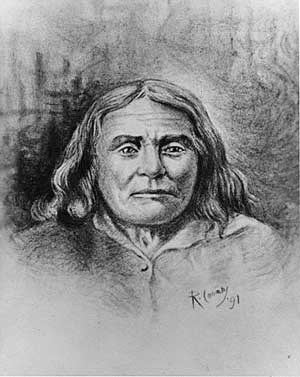
Chief Seattle's Similes and Metaphors

                As I served my LDS mission nearby and on many of the reservations that may have been part of the offer which Chief Seattle addresses in his speech, I thought it was more than appropriate for me to do some rhetorical analysis on his words.
                Chief Seattle’s address is chalked full of beautiful metaphors and similes. Because this document was not only translated twice before making it to English I am not sure how much of these wonderful sayings are in an essence the original words of the Chief, but it is certainly the foundation of how he builds his argument. He does a great job at analyzing the past and building his speech to the current moment giving his speech both a judicial (review of the past) and epideictic (present issue) feel.


The name of Chief Seattle's Tribe
          He touches on some of the ideas of “self-development without interference” which we discussed in class the other day, in regards to his people and the new settlers in his area. He uses these liberalistic ideals to compare and contrast his argument, to make a list of pros and cons, and to eventually state what it would take for him to agree to the terms of the reservation deal. It is evident more than anything else at these points that Chief Seattle paid good attention to the Kairos of the situation at hand. There were likely many opinions as to what should be done with regards to the offer from the “white men”, and it is clear from this speech that the Chief was very tactful and careful to not step on anyone’s toes, or rather not include any possible thoughts that his tribe may have had. 

The Fate of the Red Man

Chief Seattle's speech in 1854 uses some of the best rhetorical strategies in calling for justice towards his Native American people. He immediately poses himself as a very authoritative and wise figure through his use of his cautionary tone towards the Americans.  The purpose of his speech is to call for his people to be treated justly and fairly, and to describe the fate of the Native American people if they are not treated in the same manner. He uses a lot of pathetic appeal, appealing to emotion. His tone is very ominous as he describes the sad fate of the Indians. He also uses a lot of rhetorical tools to drawn attention to this idea of his people being a poor, and forgotten civilization. This places even more emphasis on his pathetic appeal. In terms of his rhetorical strategy and the tools he uses to accomplish this, the Chief's speech is full of figurative language and imagery. In the very first sentence out of his mouth, he personifies the "yonder sky" which "has wept tears of compassion."


He uses a lot of comparisons and simlies. He says, "My words are like the stars the never set." He is establishing that you can rely on him as a leader and a speaker, just as one relies on the stars for direction. But his stars never set. He relates the white men "to grass on the vast prairies," while the red men are few, "resembling the scattering trees of a windswept plain." He also uses a lot of parallel structure to prove his point and show the truth of his words: "every moon, every valley," "a few more moons, a few more winters." I think it is interesting how all of his figurative language is related to nature. The Native Americans are known for having a culture that is deeply and religiously connected to Mother Earth and nature around us. I thought the imagery he chose to put in his speech was very indicative of this spiritual connection the Indians have with nature - that they relate their own people to it.

It's up to you now

Pictured is the treaty with the Delaware Indians
Chief Seattle gives his address shortly before the purchase of his tribe’s lands and territory by the United States of America.  He reminds his people of the overwhelming tide of the ‘palefaces’ sweeping over their lands with powerful imagery.  His most commonly used tool in his rhetoric is imagery and simile.  He connects the powerful struggles in nature with his own people’s trial as they are overcome by the invading white men.  With these natural and even elemental comparisons, it is easy to relate with the native tribe as they are overpowered by these forces. 

With Two Intents

With the introduction of factories into the Americas, industrialization began to grow at an exponential rate. Progressives started to induce change in a multitude of aspects within their lives. Nationalism initiated a feeling of superiority in their way of life. These feelings in turn justified their expansion westward now known as manifest destiny. Knowing that their way of life was threatened, Chief Seattle made a brilliant appeal to the the white man through an intelligent use of simile.

Monday, March 23, 2015

All Things Share the Same Breath

Chief Seattle gave a famous speech in January 1854 in what is now downtown Seattle, when he was in his late fifties or early sixties. Dr. Henry A. Smith, a settler and amateur poet who was present and detailed notes at the time, transcribed it. But Smith didn’t speak Lushootseed, the language in which Chief Seattle gave the speech, and he waited 30 years before he transcribed his notes about the speech. Smith’s “Chief Seattle” speech, as he rendered it from his notes, contains 19th-century rhetorical elements that make it sound like he created some of it. Smith admitted in his introduction to the speech that his version of it was “a fragment of [Chief Seattle’s] speech, and lacks all the charm lent by the grace and earnestness of the sable old orator, and the occasion.”

Although Chief Seattle directs his speech at the “white man,” his audience for his speech can be found to also be for his people as well. He tells his people to not fight, for “[they] would have everything to lose, and nothing to gain.” Chief Seattle uses many persuasive techniques in his speech including powerful imagery, striking similes, cautionary notes, and an ominous tone conveyed in parallel structure.

An example of power imagery and a simile is found when he compares the roles of the white men and his people: “Some grim Nemesis of our race is on the red man’s trail, and wherever he goes he will still hear the sure approaching footsteps of the fell destroyer and prepare to meet his doom, as does the wounded doe that hears the approaching footsteps of the hunter.” This creates a greater sense of vulnerability for his people, and makes the white man sound incredibly dangerous.

Many genocides and wars contributed to the 19th-century era that possibly could have led to this cautionary speech. He was well aware that Native American Tribes were not surviving well amongst others in the US, and he wanted to change that. Through his ominous tone, he conveys his message well and his speech becomes famous for providing his views on how all men should live, share, and survive in the natural world.

Seattle and His Chief Audience

Chief Seattle must have had ideas of the genocides occurring throughout the world when he delivered this speech. Considering that Native American tribes were being obliterated by the United States, and many other nations were being wiped out by other imperialistic world powers, no hope existed for Chief Seattle to fight. The only hope he had was to try to get the “white people” to have enough fear and respect for the natural world so that they might allow the “red people” to live on in peace.

One of the most effective rhetorical strategies Chief Seattle uses is to utilize similes to connect his people to the natural world. Phrases such as “our people covered the whole land as the waves of a …sea cover its shell floor,” and “our people are ebbing away like a fast receding tide” help the audience to connect this tribe to the natural world, something that the chief is trying to get them understand.

Chief Seattle recognizes that the end is near for his people, and his audience is not just the white people. He is considering making a peace treaty with them even though some of his people want to fight on. He is trying to teach them that they can live on through this natural world too. Indeed, he uses antanaclasis to show those who would fight what will happen to them—that their hearts will turn as black as the paint on their faces.

In the process of trying to convince the white man to let them live in peace, he is also convincing his people to allow themselves to live in peace. This was a man who knew how to control his audiences.

Tuesday, March 10, 2015

God and the State

In my reading of “God and the State” by Mikhail Bakunin, I noticed some interesting ways that Bakunin used rhetoric to appeal to the reader.

Of course, one of the things that interested me the most was the content of “God and the State”.  However, part of what drew me in was the rhetoric.

For example, Bakunin spent a large amount of time at the beginning explaining, essentially, why God is bad.  He even specifically mentioned Christianity as being the best at the whole concept of religion.  That concept, as he explained, is the idea that religion is all about the “impoverishment, enslavement, and annihilation of humanity for the benefit of divinity.”

Bakunin then went on, using pathos extensively to describe the abomination known as religion.  He stated “If God is, then man is a slave” and “All religions are cruel, all founded on blood”.  He really makes the reader visualize religion as he does: a corrupt abomination that enslaves mankind.

To a certain degree, I almost agreed with Bakunin about religion.  He even specifically cited Catholicism in his writing, and, knowing the history of Catholicism, it makes sense that he would have such a negative view of religion.  I think Bakunin did a great job focusing the reader on how he really felt about religion, and I think he did a great job getting the reader to believe as he did.

Bakunin also did a fantastic job using logos in “God and the State”.  He spent a large amount of the text describing his disdain for authority.  The idea of authority is also one of the reasons Bakunin hated religion.  Bakunin was an anarchist, so his focus was on going against authority.

Bakunin illustrated very well his reasoning why he was against authority.  First of all, as Bakunin explained, he didn’t like religious authority, because of how he felt it enslaved men and didn’t allow them to be free or to progress.  He was also against too much scientific authority, or one small group of scientists with very specific knowledge that would then only focus on keeping itself in power.

This reasoning led up this his final point, which is that he wasn’t entirely against authority (as he says), but that he preferred to only have groups of specialized scientists in different areas of expertise who he could refer to when necessary to make a judgment.  Even then, he would make sure to consult with multiple people within a particular field, and then he would make a decision as to what he believed personally.  This was the only kind of authority (if you can call it that) that Bakunin believed in.

While I disagree with Bakunin on a lot of what he wrote in “God and the State”, he has some valid points, and he did a great job getting those points across in a powerful, convincing way.

Inciting Class Warfare

Emmanuel Joseph Sieyès was a political player in all of the stages of what we commonly refer to as the French Revolution, even up to helping Napoleon overthrow the Directory on which he was serving in 1799 at the revolution’s end.  Before the Third Estate declared for itself a National Assembly and began leveling l’ancien regime, he wrote “What is the Third Estate?” and it was dispersed in pamphlet form to the educated and wealthier members of the third estate in France. 
The document’s tone was indignant and it made an appeal to logic by comparing the privilege and idleness of the aristocratic class to the political disadvantage and industry of the Third Estate.  It does not fail to subtly explore the economic possibilities of putting the Third Estate into government.  It reasons that the nobles ruled to their benefit and to the detriment of the deserving upper middle class.  He asks the question: “What is a nation?” and then answers with the idea that it is “a body of associates living under common laws and represented by the same legislative assembly, etc.”  When he follows up that general definition by calling out the nobles for being above the law that they make for the Third Estate he establishes the idea that the nobles and the Third Estate effectively belong to a separate class.  By making a distinction between the lands owning nobles and the other educated and productive people of France Sieyès sets up who is to be rebelled against. 

DOWN WITH CHIANG KAI-SHEK! LONG LOVE NEW CHINA!

On October 10th 1947 Mao Zedong presented The Manifesto of the Chinese People’s Liberation Army as a means of analyzing the political circumstances of the time. There had been a series of events leading up to this manifesto beginning back in the 1920s. When Sun Yat-sen, the leader of the Kuomingtang (KMT), the Chinese Nationalist Party, passed away Chiang Kai-shek took his place. Unfortunately, unlike Sun, Chiang was unable or rather unwilling to maintain good relations with the Chinese Communist Party (CCP).


Chiang desired to wipe out the CCP and so he began a civil war, but this civil war was poorly timed. Not long after it began Japan invaded China forcing the Nationalists and the Communists to form a truce. After the Japanese surrendered the two parties refocused their anger on one another. For a time Chiang received aid from the United States as the attempted to help negotiate an alliance between the two parties. This upset the CCP even more.

Mao Zedong, the leader of the CCP had recently come across some Marxist literature which inspired him to write the manifesto. The words he used were powerful and the manifesto had a great effect on the people. It rallied the people behind Mao and it ultimately led to Chiang’s evacuation to Taiwan.
Mao begins by sharing a narrative of the status of the war. He reminds the people of the strength of his Red Army and their superiority over Chiang’s army. “Wherever our troops go, the enemy flees pell-mell before us…”

He continues on by bringing shame to Chiang Kai-shek’s name by accusing him of being “…devoid of all gratitude… traitorous, dictatorial and against the people.” This is a theme that we see repeated throughout the manifesto.

Mao then quickly sets forth 8 policies that he plans to put into effect. I believe this has an immense effect on the people. He is not only saying Chiang is bad, I am good, follow me. He took the time to present his plan to the people and he appeals to their desires and emotions by proving to them that he supports them. He said, “We are the army of the Chinese people and in all things we take the will of the Chinese people as our will.”


To end, Mao uses his powerful words once more to enthuse the people and to invite them to join his great cause. He explains that they “are shouldering the most important, the most glorious task in the history of [their] country’s revolution.”

Monday, March 9, 2015

Foolishness for Freedom

Jean-Paul Marat was a radical journalist in France during the time of the Revolution. He was a friend to the people and was known for his fierce tone in his writing against the new leaders in France. His speech "Are We Undone?" focuses mostly on this fierce and passionate tone to ignite fury and change in the people.


Marat is trying to stir the people up to anger as he informs the people that the King and the monarchy are going behind their backs and forming alliances with other armies that, according to Marat, will come in and destroy the French people. He uses a sarcastic tone, mocking the King as he refers to him as the "good King." Rhetorically speaking, Marat is very away of who his audience is - all the people - and calls his speech an appeal to all citizens. Because he is speaking to the general audience, he has to find a way to make his speech personal to every single member of his audience so they all feel the need to take action in Marat's cause. He uses a lot of strong figurative language to hit his point home to the heart of every man. When talking about the enemies that will soon invade France due to the monarchy's betrayal, he writes: "They will murder you without compassion, they will rip open the bellies of your wives, and in order to choke within you the love of liberty, their bloody hands will explore the entrails of your children to find their hearts." This strong language causes every single man to consider the danger his own family could be in.

Marat is also very clever in his emotional appeal to the people. He uses his words and rhetoric to make the people feel foolish in letting the King get away with this tyranny. Marat has to walk a fine line, however. If he makes the people feel too foolish, they will not want to listen to his words. But he makes sure that the people realize that it is not he that has made them feel foolish, but it is the King's fault. By making the people feel that the King has mocked them, he ignites them more quickly to anger against the King. Asking rhetorical questions helps him in this very clever rhetorical trick: "Can you believe it?" he asks his audience. "Your General, who has neglected not a single means of corruption, has just organized an entire battery of artillery, against the will of all the districts, in order to destroy you."

By using these rhetorical means in his speech, Marat rallies the people together, not to be foolish, but to reclaim their freedoms.


Stand For What You Believe In

In 1976, the Czech psychedelic rock band, the Plastic People of the Universe, were arrested and tried by the Czech Communist government. The government convicted the band for disturbing the peace, with the band members serving 8 to 18 month sentences. In response to the arrest of the band, a group of Czech artists, writers, and musicians, including Vaclav Havel, circulated a petition for their freedom, known as the Manifesto of Charter 77. Charter 77 was not a formal political party, but instead functioned as an advocacy group for human rights. In 1975, the Czech government had signed the Helsinki Declaration, which included guarantees of human rights and individual freedoms. However, the Charter states that these basic human rights exist on paper only. The Czechoslovak government condemned all of the signers of Charter 77, several of whom were tried and imprisoned. However, Charter 77 can be seen as the first public action of a move from communist regime to democratic rule.

The audience for Charter 77 can be seen as everyone in Czechoslovakia during that particular time. It was mainly to get the Government’s attention of what the people felt was happening with current rule, but also to inform the people themselves. The audience today can be anyone who feels they should stand up for what they believe in. It gives us hope that courage to express your views exists and can be successful.

The group of people who wrote/backed Charter 77 were blaming the current government system for not backing up their words with actions. This is evidence of vituperation. For example, in Article 13 of the Helsinki Declaration, it states that everyone has the right to education. But numerous times, children would be prevented from studying because of their views or their parents views. Lots of emotion was put into this document. It was technically illegal, but Vaclav and lots of others felt strongly about “freeing” themselves from this Government who would not allow the people the rights they deserved. Repetition is used throughout this document in the form of these kinds of examples that all point out these basic rights, and why the people deserve better.

I could see Vaclav reading this document as a firm, direct speech to whoever was willing to listen, which I would assume would be a lot. It is a call to change, and that is what he did. This document would eventually lead to an overthrow of communism at the end of 1989 and the election of Vaclav Havel as President of the new Czech Republic in 1990.

Thursday, March 5, 2015

Analyzing the Rhetoric of Revolution

My students in rhetoric and civilization are currently examining revolutionary writings that range from the early Enlightenment up to the 20th century. I want them to recognize a pattern in these writings and speeches, the pattern of revolutionary rhetoric.

All students will be reading the Declaration of Independence, in which we can identify many of the traits of this genre of discourse. Then, each student (as assigned) will be responsible to do a rhetorical analysis of a specific writing from our text. They will take notes on their individual speeches, which they will discuss in small groups early next week (March 9th), and then they will formalize this into a blog post, a more polished rhetorical analysis.

I'd like to draw attention to several traits of this kind of discourse, so that these can be analytical categories to assist them.

Context
Revolutionary writings are always intimately tied to the historical setting and circumstances that give rise to the felt need to act and to speak. (See the rhetorical concept of kairos or the rhetorical situation). What are the larger or more proximate occasions that gave rise to this particular speech or writing?

Such writings, at least since the Enlightenment, also seem to have an international or global context to them. Revolutionaries look beyond national boundaries, often, just as they look beyond class divisions -- both for trends that justify their current actions and for including those of the same economic status despite differing political affiliations.

Epideictic Oratory
Revolutionary rhetoric is typically epideictic in nature -- more oriented to the present moment, and often employing two common modes of epideictic speech, encomium and especially vituperation (speeches of praise and of blame). It is often filled with complaint and blame. Who or what are the people or factors that are blamed?

Tuesday, January 27, 2015

Going on a Guilt Trip...

Since its rise in the sixteenth century, Calvinism has carried with it a certain connotation of doom and gloom. With the doctrine of predestination and the severity of the punishments described for the unrepentant, it is easy to see why. 

In this particular sermon, John Calvin uses clever rhetorical moves to capture the interest of his audience. The rhetorical move that he uses most in this sermon is pathos. He does this by relating himself and his audience to ancient Christians and the persecutions that they suffered, thus guilting his audience into reexamining their own lives.

He starts the sermon by quoting Paul..."Let us go forth from the city after the Lord Jesus, bearing his reproach." By starting his sermon in this manner, Calvin is grouping himself and his audience in the "us" that Paul established. He creates a tone of camaraderie with the ancient apostle and ascribes himself and his followers to his teachings.

Calvin moves away from the ancient to the present and discusses the persecution and reproaches that modern Christians ought to endure patiently. He reminds his audience that they don't even deserve the grace that God gives them, and that surely it should be no big deal to suffer some persecution. This is a move that flavors strongly of pathos--one could call it a guilt-trip. 


Calvin finishes his sermon by again returning to the ancients and their sacrifices: "In ancient times vast numbers of people, to obtain a simple crown of leaves, refused no toil, no pain, no trouble..." Again, by calling up the ghosts of ancient saints, Calvin shows his audience what is expected of them in their present time. He appeals to their emotional ties with the scriptures and with the saints to encourage them to suffer persecutions willingly.

Calvin, Calling it Like it is

Calvinism was widely rejected for its strict, rigorous practices. When this sermon was given, he was banned from Paris in 1533 and 8 years later relocated to Geneva. If I were him, having been exiled would make me a bit more bitter and more determined to continue with my cause. This comes through in his open and determined tone, as explained later in the post.

As opposition to Calvinism grew, he felt the need to write this sermon on suffering persecution. This is just a sermon, its not a specific type of genre because it is just Calvins own thoughts. Calvins ethos was very straightforward and stern. He was fearless in advocating his beliefs…I imagine a more extreme take on what Paul said about being “unashamed in the Gospel of Christ.”

This reflects in his bold tone through the questions he asks, such as, "Are we so delicate to be unwilling to endure anything?” and “Since we know that unbeliever are blind, ought we not to have better eyes than they?” Words like “blind” and “so” (describing delicate) display his fearlessness to obey God at all costs. His intentions are to help followers feel the motivation and strength they need to continue true to their faith despite the persecutions they suffer. The main idea of the sermon is to help fellow Calvinists learn from the fearless Apostles of the Bible and see that they too were “counted worthy to suffer infamy and reproach” for the Christian cause. 
 
Calvin begins the sermon with a short introduction and a couple examples of how the Apostles also suffered, and then Calvin brings the focus to his audience. He shifts to use us and our more often so as to help the audience feel united in their cause. This in turn helps Calvins appeal to the audiences emotion. By hearing this sermon, they are able to feel his confidence in their ability to live vigilantly for God. He also appeals to their emotion of guilt when he says, If we act otherwise, our ingratitude is insupportable. In other words, their disobedience is an act of ingratitude. 

With the examples he uses and the unity he instills in his audience, Calvins sermon is a persuasive appeal to motivate his followers to continue strong in their faith as obedient and faithful Calvinists.

Two Options for the Sinner: Repent or Burn

Whilst reading Calvinist Jonathan Edwards sermon on hell fire and damnation for the sinful, it was hard not to imagine this actually happening to a sinner. The imagery painted throughout this sermon really solidifies in one’s mind the torment and suffering that comes from sinning and facing the wrath of God. This view is much different than the one that I believe in, a loving Heavenly Father, but Edwards is trying to get a single point across here, and that is the issue of committing sin and not repenting. His audience is the sinners, and those that choose not to ask for forgiveness for their wrongdoings.

His objective with this sermon is to create a branded image of what it’s like for a sinner if they die in their sins. He uses the analogy of a spider dangling over a fire to a sinner dangling over a pit of hell fire. The tone that he uses is fierce and strong. He is attempting to provoke fear into the eyes of his audience so they can see the position they could end up in. There is a repetitive pattern of discussing God’s wrath and how He will show no mercy if one does not repent and come unto Him. If this speech was given orally, I could only imagine a crowd of wide-eyed, fear stricken people wondering if they have done enough to not be like unto the spider. Reading his words did enough for me to understand his point, being in person listening to this would have taken it to the next level and made it unforgettable.

The Great Awakening was a period of time with much religious commotion, and a preacher really need to stick out among the others to get attention. This is how Edwards stuck out, and got people to listen. Although I believe in a much more loving Heavenly Father, I can see where he is coming from, and the importance of repentance only become clearer after reading this sermon.

Blasphemy in Christianity

What word rings more sharply in a sermon than blasphemy?  


John Wesley, shortly after a renewal of faith in his life after hearing a reading of Luther on Aldersgate Street in London, began to travel the country by horseback and preach sermons across all of England.  Near the beginning of his preaching career in England he voiced his firm declaration that the doctrine of predestination was heresy.


To do so he began by declaring that God’s grace is “free in all” voicing that no goodness can come from man (assuring his fellow protestants he had not turned to a philosophy like Erasmus’).  He then argues that, given predestination: preaching is vain, service to fellow man is vain, and all good works are vain.  He does so in a tone of indignation as he demonstrates commandments from God to preach, serve and do good works.  This brings him to a climactic question: 

Is God a hypocrite?  He declares profane blasphemy: God is worse than the Devil, assuming predestination is true.

Monday, January 26, 2015

The God That Abhors You

How should one persuade another to repentance? Hellfire and damnation, proclaims Jonathan Edwards. In his sermon, “Sinner in the Hands an Angry God,” Edwards, an influential preacher of the Great Awakening (1741 C.E.), has a simple goal: crush the theological apathy from his audience’s mind and, as a replacement, inject an awful fear of God’s anger! Edwards makes his intentions crystal clear through his eloquent use of rhetorical devices, each device portraying his beliefs in a “retribution theology.”

Edward’s rhetorical argument builds off the concept of hell as well as the sinners who will occupy it, and he builds this argument within one consistent mode: dispraise. Edward repeatedly returns to his fiery depiction of these two concepts between his intermittent manipulations of pronouns. Every sentence and every phrase has “you” resting on the veritable chopping-block of condemnation. This preacher designed this language to engage every single audience member as a guilty perpetrator. His audience, whether they heard the sermon or read it, knows, inescapably, that Edwards is heaping his points against them. This isn’t a description of some figurative far off “sinner,” it’s clearly you.

He pricks our attention, in an inescapable way.

Then Edwards’ real work begins: abasing his attentive audience. He proceeds to persuade us to repentance by helping us see, by vivid imagery, the awfulness of our state. By dehumanizing metaphors, by exaggerated hyperbole, and by anaphoric evocations, this preacher ravages our emotions, pummels our pride, attacks our apathy, and blasts our beliefs with an exaggerated and sadistic God. Edwards’ God is depicted, quite elaborately, with an unmatched fury and a plan to devastate our heavenly tenements unless we “flee” to him with the humble outstretched hands of the supplicant.                

Rhetorical Analysis of a Sermon: Twelve Steps

The sermon has been a mainstay of public address in Christian history and beyond. As such, it is open to rhetorical analysis as much as to an assessment of its religious content or role. How does one analyze a sermon rhetorically? Here is a set of questions to ask when analyzing a written sermon. (Some additional categories would be used if one is viewing or participating as an original audience member.)

  1. What is the rhetorical situation?
  2. What is the genre?
  3. Who is the speaker? What is his/her character (ethos)?
  4. What about the audience?
  5. What are the speaker's intentions?
  6. What are the main ideas?
  7. How are the ideas arranged? What is the organization of the sermon?
  8. How does the speaker support his ideas?
  9. How does the speaker appeal to emotion (the persuasive appeal of pathos)?
  10. How does the speaker use language?
  11. What is the style and tone?
  12. How does the medium affect the message?