Showing posts with label Socrates. Show all posts

Tuesday, September 29, 2015

My name is Isaac and I am a Moron... Mormon

My name is Isaac. I am a BYU student, hoping to graduate with an economics degree in December 2016. I served my mission in the Baltics, and now am a referral center employee at the MTC, and I am a MORON...

One of the many things we do at the referral center is review the submitted Mormon.org profiles to make sure there are no errors like the one I wrote above. The sole intent of allowing members of the church to make Mormon.org profiles is so that they can share their spiritual experiences as well as thoughts, with other members or nonmembers who are wanting to know more about the church.

I have read many of these Mormon.org profiles. Although it is possible to feel the Spirit through writing, it is nothing like a good conference talk given by Elder Holland, or even by the very same person who wrote the profile. Hearing someone bear their testimony is very different than reading their testimony. This was something Kevin wrote about too, how it can be difficult to express spirituality through writing. I don't know if you have ever tried it, I would invite you to do so.

There are times when people will explain themselves, and the things they write are very confusing. Whereas in speech they could explain what they mean by their description. Others will say I had a time when I struggled with the church, and I still have questions today, and you can't help but wonder if they are struggling right now in their testimony. In writing you can't clarify those things.

Although it is possible to experience spiritual things through writing, like the Bible or Book of Mormon, there is no replacement for the power of a word of speech.

Tuesday, February 3, 2015

Connecting the Past and the Future


Socrates said, “The unexamined life is not worth living.”

That really makes you want to start examining your life, doesn’t it? While you examine your own life, it is probably helpful to examine the lives of the people who came before you as well. You can learn from their mistakes and successes and then move forward with your own life.

One of the most important themes of the renaissance is the idea of looking back to the past and applying it to the present. The best part of that is that it all connects together is ways we couldn’t imagine at first. The people of the renaissance looked back to the ancients—the Greeks and the Romans—to learn from them and to make advances based off what they knew.

Saturday, September 27, 2014

The Gettysburg Address, Greek Style!

History

What most impressed me about Greek civilization is the revere they gave their dead. Courtney did a great job of pointing out about how they celebrated those who died in battle. She mentioned when Thucydides points out about those who died at marathon. I was curious so I did a bit of research and it looks like that is referring to the battle of marathon which seems to be the turning point in the Persian war. They revered them because that is where their country was born, or at least flexed its muscles to show that the ideals that they stood for could withstand one of the greatest armies on earth. Certainly the Greeks had very high respect for that battle the way we revere those who fought in the revolutionary war.
Did Lincoln get his inspiration
from Pericles?


Rhetoric

Now, as my title says, this reminded me so much of the Gettysburg address. The arrangement of both speeches is essentially the same.
  • Talk about the founding of your country and ideals.
  • Talk about how what you say cannot honor these men anywhere near the sacrifice they have already made. 
  • Talk about the cause they were fighting for .
  • Encourage all those present to continue on in that cause.
As Macey R pointed out, this speech definitely has some deliberative points in it, and based on the situation I must say that I think it is right to do so. So did Lincoln.


Philosophy

First, I agree with Thomas that this speech shows aspects from each category, and rightly so. (He does a great job of showing why). Specifically though I wanted to comment on how he would fit in with Socrates. Remember, Socrates said “the unexamined life is not worth living.” As an Athenian he is always examining, and he points out that all Athenians should examine the politics, for to do anything else would be an injustice to their system. Alexander shows that the people are not arguing for the sake of arguing, but for progression. What better example can there be of a people examining their lives?

Friday, September 26, 2014

An Education to Greece

   History and Greek Civilization

Because history is the past of the winners, and Athens
definitely won to history, Pericles was right that future
ages will wonder at Athens.  We do so today.
           

            Pericles’s speech reveals Athenian civilization in two ways: the traditions and pride.  Pericles mentions that he does not want to give the speech because the bravery of the soldiers speaks for themselves. However, it is his duty to honor his ancestors and traditions. Pericles, though, focused much more on the pride and glory of Athens.  According to Pericles, Athenians have natural bravery instead of Spartan state-induced bravery.  The Athenians also pride themselves on working alone and not needing allies.  Athenians enjoy living in a world where beauty, things of the mind, bravery, politics, and service live harmoniously.  Athens is an “education to Greece” and "future ages will wonder at us.”  However, Pericles is only at least partly employing propaganda because Athens had its problems.  However, history is not the truth of the past but a reconstruction of the winner’s memories.  So Athens, the winner, is a golden city to Pericles.

Employing Ethos

            Pericles establishes his ethos mostly through emotional appeal.  Though he already had great ethos because he was a leading statesman in Athens, he mentioned none of his accomplishments during his speech, which actually increased his ethos.  He instead establishes ethos mostly through pathos.  When he says a speech is not necessary because of the bravery of the soliders, he is being sympathetic to the mourners.  He uses the word “we” instead of “you” to connect him with his audience.  Once he has the audience firmly on his side through his pathos, he is able to give the mourners advice to have more children, and they will take his advice.

Socrates vs. Pericles


Socrates would question even the most mundane
so he would definitely question the bravery of
the Athenian soldier. 
                        Socrates would have approached this funeral oration very differently than Pericles.  I imagine that he would attempt to discover if the dead soldiers were actually brave or only acting on orders.  He would question the mourners about their sons and brothers and their character.  He would not dote on Athens for more than half the speech but attempt to expose its corruption. Under his motto that “an unexamined life is not worth living” Socrates would bring the hard questions to light as opposed to Pericles’s epideictic, praising oration.

was most interested in knowing absolute truth.  I even conjecture that unlike Adam's thoughts, Pericles represented the Sophist thought.  Sophists were pragmatic, and Pericle’s advice to have more children and to women quiet were pragmatic thinkings taken from a difficult situation.  Pericles based himself in real life events, not in theory.

Friday, September 12, 2014

Building an Argument

Obviously, both Elder Bednar and Socrates are fascinated by the idea of communicating thoughts and ideas.  Both would agree that communication should be a means by which truth is discovered and expounded upon.              

After a long time of searching for the right word for it, I gave up.  Basically, Elder Bednar and Socrates use very similar methods of speech in their oratories, that method being a building up of an idea based on previously mentioned thoughts and ideas.  For instance, Elder Bednar establishes the importance of social media in spreading the Lord’s work by first discussing the concept of dispensation.  Then he shows the progression of technology over the past few centuries.  Finally, he shows how over the millennia, God has been preparing the world for global outreach through social media.  Similarly, Socrates slowly, yet surely, builds his argument against rhetoric as an art; first by establishing some simple definitions and then developing those thoughts into something quite elaborate.  Is there a rhetorical definition for this gradual process of developing an argument?


Socrates uses an incredible amount of procatalepsis.  It is fascinating how he anticipates possible counterarguments and others misconstruing his thoughts.  This is evidenced by his giving of questions to have Polus ask him.  Elder Bednar does the same by cautioning us to do more than just giving a one-time effort of sharing the gospel with others, but also not to become social media fanatics.   

Telling the Truth, the Whole Truth, and Nothing but the Truth

One of the first things that I noticed as being similar between Elder Bednar’s talk and the conversation between Socrates and Gorgias was the fact that both parties addressed their audiences. In Elder Bednar’s talk, this helped to establish pathos with the people listening. He used words such as “us” and “we” and that helped to create unity among those in attendance and help him more personally relate, even when being in such a large crowd. People are generally more likely to listen to someone’s thoughts if they feel a personal connection, and Elder Bednar established that connection very well. Socrates and Gorgias addressed the audience in a much different way. Instead of the audience being an integral part of the conversation (like Elder Bednar created, with the use of “us” and “we”), the audience was just that: an audience. They were bystanders, listening. At one point, Socrates’s and Gorgias’s conversation is halted as they recognize the audience’s presence (see pg. 42, line 458D). This acknowledgment reconnects the people to the conversation. It is not quite as inclusive as Elder Bednar’s talk, but it still creates the much-needed unity that creates pathos and involvement, which encourages people to listen more intently.

The fact that both were addressing crowds is also important to note, as it creates a need for epideictic rhetoric. In both cases, they were speaking to motivate and persuade. In Elder Bednar’s talk, he ended with praise of the character of the audience, the Church, and the Lord. Socrates continued in questioning (which seems a lot like blaming) Gorgias and rhetoric in general.


I also found a lot of similarities in Elder Bednar and Socrates in their search for truth and knowledge. Several times during both of their speeches, they turn towards the importance of truth and knowledge when making an appeal. Both focused on the necessity of having the information and truth before sharing opinions and false “knowledge.” 

The Persuasive Art of Teaching

I firmly believe that few things in our world were created with harmful intentions. However, I'm not oblivious to the fact that there is often a gap between intent and ultimate use. For example, Orville and Wilbur Wright intended their airplane to be used as a new means of transportation, not a bomb delivery service as it was subsequently used in the war. Or, individual medicines created for the preservation of the body that are now used in harmful combinations and illegal activities. Gorgias said that when skills are used poorly the teachers “aren't the ones who are corrupt, and the art is not to blame…” (pg 41).
The Wright Brother's Airplane
I agree with this quote to a point. While the teacher is not to blame, the teacher has a duty-- a duty to teach and emphasize the good. As the sophist he claims to be, Gorgias of all the people should be using the most convincing and uplifting form of rhetoric; and yet, it was Socrates who was most persuasive. He would note an improper use and then proceed to suggest a correct application. This then emphasized a good use of rhetoric. Elder Bednar also utilized such tactics in his talk. Both men first established their ethos by quoting prominent voices on the subject (read Macey R’s post, she has an awesome “drip” analogy that explains this means of establishing ethos). Once they have in a sense, “proven” themselves knowledgeable, they proceeded to offer guidance and correction tailored for their specific audience. For example, Elder Bednar was speaking at education Week which incorporates a large span of age groups. He took the time to explain what Facebook, Twitter, Instagram, Pinterest, and YouTube was and their righteous applications in the church. Another good use of rhetoric. Ultimately, “teacher” is not a label that needs to be professed, it should be obvious in the manner that the material is presented. By evaluating the use of rhetoric Socrates and Elder Bednar stand out as true teachers and rhetoricians.

Thursday, September 11, 2014

Are we talking about communication or are we communicating?

Both Elder Bednar and Socrates address the topic of communication and do it with an audience.  But how can we know what to believe when communication is a mean and a topic?  Doesn’t that all just seem a little confusing?  Through the use of ethos and logos, it is easy to trust both Elder Bednar and Socrates.

Elder Bednar establishes his ethos by first talking about the importance of prophets and then proving his point by going on to quote prophets, play audio recordings from prophets, and show videos of prophets speaking on the use of technology.  You can’t argue with that!  You also can’t argue with Socrates as he refutes the ethos of Gorgias.  I think even Gorgias started to doubt himself with all those questions.

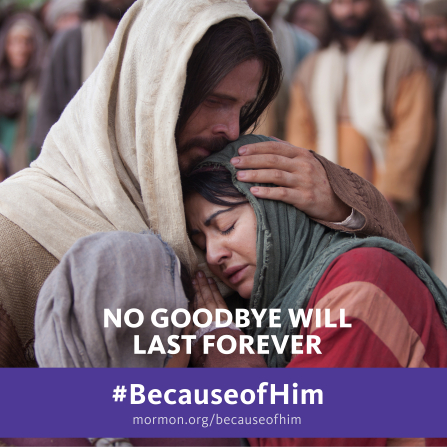
Socrates also uses lots of questions to reason and therefore uses logos which makes him even more believable.  Gorgias even agrees with Socrates multiple times and ends up contradicting himself.  Elder Bednar uses logos throughout the body of his speech by stating lots of statistics. The “Because of Him” video was viewed “more than five million times during Easter week in 191 countries and territories of the world”.  These statistics prove his point.


So now that we believe both Socrates and Elder Bednar what should we do?  Start communicating and questioning and flooding the world with knowledge, truth and light!

Different Styles, Same End


Through Instagram, I can challenge others
to post their favorite scriptures and spread
the gospel.  These are all the people I
challenged!


Both Socrates and Elder Bednar present to their respective audiences the dangers of communication in deliberative addresses.  The styles of Elder Bednar and Socrates are extremely different but actually lead to the same end: their audience cannot refute them.


I loved the #BecauseofHim movement and
 tweeted and retweeted about it often.
Socrates spoke directly to a very few people: Gorgias, Callicles, and Polus.  Because of this, there is a “back-and-forth” to the messages that Socrates gives.  People can refute him and do so constantly.   In contrast Elder Bednar’s audience is the entire world.  His message is that we can spread the gospel through social media in huge ways, so he obviously thinks that his own message, recorded on video for everyone to see later and for thousands of people to actually witness, will have a world-wide audience.  Because of this audience, there is no “give-and-take.”  He simply lays out his argument so no one can refute him to his face, but still might disagree with him.

I also love the hashtag #LDSconf.  It
helps create discussion with my
non-member friends.
Because the audiences are different, the persuasive appeals of ethos and pathos between Socrates and Elder Bednar differ.  Socrates increases his own ethos and pathos by shaming others.  He proves Gorgias, Polus, and Callicles wrong and contradictory in order to make himself look like the one for whom to turn for wisdom and uses outside references sparingly.  He appeals to emotion by making others feel shame for what they said.  The effect of this shaming creates a situation where no one can refute Socrates.  Elder Bednar, in contrast, showed clips of worthy prophets and apostles to increase his own ethos by association and used the motivating word of “exhort” to motivate people to action, which creates a spirit of good-will toward Bednar where one truly believes his argument enough to not refute him.  Therefore, both Bednar and Socrates create the same inability in their audience for refutation but through different means. 
Unlike my social media, Socrates could
only speak to a few people at a time.
That's why his approach to his audience is
different and much less pleasing than Bednar's.