Showing posts with label ancient rome. Show all posts

Tuesday, October 20, 2015

Sanitation Saves

Sanitation Saves 

“Mom, are you sure this waters sanitary? It looks questionable to me.” Not only was this said by the elephant in the movie Tarzan but I it was also one of the ancient Romans great concerns. The Romans were one of the first society’s to really worry about sanitation. To allow for better sanitation they built the first sewer systems. They even drained swamps to decrees the number of people getting malaria.

As a nursing major I get to see how these first sanitation steps have contributed to our health today. Today we have surgical rooms void of almost all bacteria. These first steps to health had their trials and errors. As Katelynn mentioned Romans would eat while lying on their sides to supposedly help their bowel. Of course this is not the case and as another student mentioned it even upsets a person’s bowels. But Despite some fallacies the Romans were really on to something. We have them to thank for some of the things we know today.


They were also very concerned with exercise and healthy living. Some would spend money on exercise and training rather than on a doctor. Thus we see the first steps to preventative care. They also tried to bring these concepts of exercise and clean water to the poor uneducated citizens. This is because often time the poor were roman soldiers and the roman society was very concerned about keeping their soldiers healthy. We can truly learn a lot from the Romans both about exercise and Health care preventatives. 

Sunday, October 18, 2015

Medical Trickle-Down

What does duct tape, a GPS, and a Jeep all have in common?  They were all invented first for military use and then were transferred over into civilian life.  Especially in a country with an emphasis on military prowess, much of our technological advancement is due military development.  This is not a foreign concept, though.  It was also common in ancient Rome.  

As I was researching Rome, I wanted to write about the medical life of the civilization.  Come to find out that most doctors in Rome were considered quacks, but surgeons were highly prized.  Most of the concoctions that the Romans tried to use for medicines were actually poisons, but they had a grasp on anesthetics.  Surgeons were employed extensively by the military and had tools and procedures that wouldn’t be changed for almost two millennia.  During surgical procedures, they would administer opium, henbane and mandrake to deaden pain and induce sleep.  All these medical advancements were due to Rome’s emphasis on its military.  Then, it became public in the civilian sphere.  Today, while we’ve come a long way from ancient Roman medical practices, we still have the same mentality.  It’s the military trickle-down effect.  All the research and development funding goes to the military because we have to protect our troops and from there civilians begin to build on it and diversify.  In more than two thousand years, our medical practices have changed, but our thinking hasn’t.   

Wednesday, December 3, 2014

Time Doesn't Change Much: The History of Business Consulting

When you look up the “history of business/management consulting” on the Web the earliest date that you will find is 1886. This is because this was the year that the first management consulting firm was founded (named Arthur D. Little INC.) Don’t let these sources fool you, business consulting goes back far beyond the 1880’s. In fact, business consulting has been done for thousands and thousands of years, it just hasn’t been officially claimed until the mid-1800s.

The old fashion version of Supply Chain Management?
Let’s go all the way back to Ancient Rome. During this era, a group of people or a “class of citizens” first to form the Roman Army cavalry called Equestrians. What does the army have to do with business consulting? Equestrians were high up on the food-chain of power and due to a number of policies, many of the Equestrians became businessmen. These warriors’ gone businessmen became experts in many different fields such as banking, exporting, governing etc.

As a result of their expertise and experience, these Equestrians became powerful assets within the world of financial administration. Those who chose to take the path of the Equestrians entered onto a fast-track to administration and consulting. In looking at what career paths these Equestrians took we are able to see a common thread of expertise. For example, the occupation of an exporter may be compared to the occupation of one who studies the degree of supply chain management today. In all occupations, people skills were essential. A similar knowledge and ability is required now
 to be a business consultant today as it was in the past (minus the military service of course).

Due to the status of an Equites, administration was a large part of his career path both in the military as well as in business. Similarly, in today’s world the most common degree attained by current business consultants is business administration/management. This is of significance to enter into the world of business consulting. To find success requires an elite understanding of the ins and outs of business as well as an ability to communicate, direct, and oversee business transactions.

The argument of the necessity of an academic understanding against on the job learning remains an important question. While the Romans felt on the job experience was sufficient, now days an academic study is often required for large success in the business administration and consulting world.

This understanding and these skills are important to develop but not enough. It has been said, “It is not what you know, but who you know.” This cannot be any more accurate. Yes, skill is important but just as Equestrians found success as a result of their status and ethos, so too business consultants find success through making connections or networking.


The world of consulting has furthered dramatically as a result of our ability to communicate as well as the immense opportunities for business and economics of our day. Ultimately, the concept of business consulting has lived for thousands of years and continues to accelerate exponentially today. 

Sources:
Paul Heathcote
Natural Knack Incorperated.

"The Roman Empire in the First Century: Equestrians." PBS. PBS, n.d. Web. 03 Dec. 2014. http://www.pbs.org/empires/

Leonhardt, David. "A Matter of Degree? Not for Consultants." The New York Times. The New York Times, 30 Sept. 2000. Web. 04 Dec. 2014.

Biology and Medicine Within the History of Civilization

The Distant Past
            As James mentioned, ancient Greek and Roman medicine were not as practical nor pragmatic as modern medicine.  True, diagnosis was not fully bereft of logic, but there was a decent amount of superstition as well.  The human body was the pinnacle of perfection, particularly the athletic body.  Blending religion into the mix, seeing as gods were to be of human form, creating monuments of giant, human figure and exercising came to be forms of worship.  Due to this, the study of the human body and all of its intricacies took heightened precedence.  Medicine and health were crucial topics of interest. 
            Hygiene was not entirely one of these important topics, though bathing held its own significance.  Even with the detriment of poor hygiene holding back greater progress in health and medicine, the ancient Roman refiners borrowed and expounded upon the knowledge of the ancient Greeks, improving public health tremendously.  Still, at the base of it all, the head of each household was in charge of knowing the most basic of remedies, including proper application of wine, vinegar, poppy juice, unwashed wool, herbs, and honey, to name a few.  This, coupled with skill in bandaging and stitching formed a solid basis to set as a standard for those of olden times. 
            Even more practical than knowing basic first aid was preventative care—something that is highly conflicted against itself in modern times.  Though the ancient Romans did not possess the immunizations and cautions of today, much more emphasis was placed on exercise and personal fitness.  Social norms and culture regulated and enforced this healthy practice, arguably to an extent even greater than the present day.  While the ancient Romans drained swamps to prevent breeding of malaria-ridden mosquitoes and maintained rigorous exercise to ward against injury and disease, this, combined with basic cleansing practices, was not enough to provide the protection of the here and now.  Yet, oddly enough, it is not disease or hygiene that threatens the general public of today, but the neglect of old practices of fitness and diet that bring the danger. 


The Recent Past
            Stepping back to hygiene and general wellness, it is thought by some that the people of today are actually a little too clean and a little too careful.  Of note, antibiotics, though intended to prevent sickness, are actually in some cases fueling our modern plagues.  Humanity has been evolving and progressing since before the ancient Greek and Roman times, and the current human status has more or less become stable with the microbiome.  Cleanliness is good, but anything in excess can prove to be detrimental.  Such is the case with the people of today.  One instance of this pertains to overuse of antibiotics, which kill both harmful and helpful strains of bacteria in the gut.  Excessively killing harmful bacteria via repeated use of antibiotics (and also other related practices) causes the immune system to become lax.  Killing beneficial bacteria is obviously not beneficial.  Problems abound at both ends of the spectrum. 

Blaser, Martin J., MD. "Modern Medicine May Not Be Doing Your Microbiome Any Favors." Interview by Joe Raedle. NPR Books. NPR Books, 14 Apr. 2014. Web. 1 Dec. 2014. <http://www.npr.org/2014/04/14/302899093/modern-medicine-may-not-be-doing-your-microbiome-any-favors>.

"Medicine in Ancient Rome". HistoryLearningSite.co.uk. 2014. Web.

A Pirates Dream

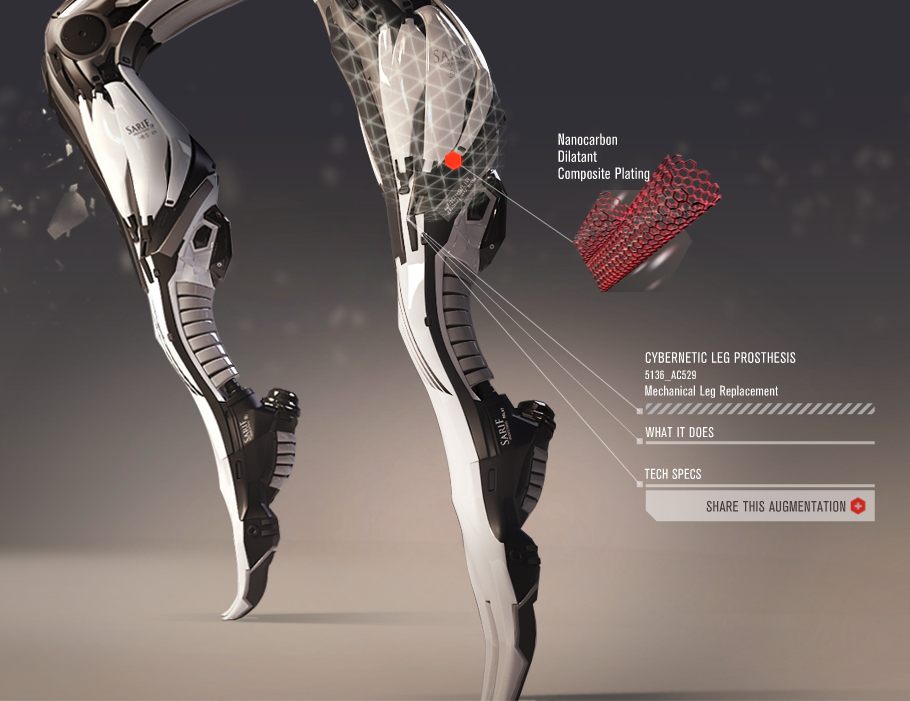
       From the beginning, people have procured means to improve the quality of their earthly sojourn.  Many products of today have origins that go back to even before the days of ancient Greece and Rome.  I am a biomechanical engineer, and understanding the engineering techniques from millennia ago helps us to create new devices that can enable the physically handicapped today.  I want to draw your attention to the improvement of prosthetic limbs over the years. 
              
         It is easy to imagine a pirate walking around with his peg leg, but how about the King of Egypt, or a Roman general?  One of the earliest known examples of a prosthetic device can be observed in the Cairo Museum where the prosthetic toe of Amenhotep II is preserved.  The Greek historian Herodotus recorded an instance in 484 BC where a prisoner escaped by cutting off his leg and hobbled off on a wooden leg.   The Roman general Marcus Sergius led his troops into battle with an iron prosthetic hand in 218 BC.  His left hand wielded a sword while his fake hand was adorned with a shield. (Thurston)
              
     During the medieval ages, prosthetic limbs were generally crude devices.  Picture the pirate on his wooden peg leg with leather straps and his hook for a hand.  Most of the advances in the quality and fabrication of these devices were brought about during war times.  Better materials were developed, functionality was improved, such as joints and flexibility, and also medical procedures became available. 
              
          Fast forwarding to modern times, there has been tremendous research performed in recent years which has exponentially helped progress the development of prosthetic limbs.  For example, within the past 20 years methods have been developed where prostheses can be attached directly to amputees’ bones.  In addition, electrodes attached to nerves and muscles offers amputees neuromuscular control of the prostheses. (Pitkin)


               There are still many issues with current prosthetic standards that need to be addressed.  Some areas of future research concern the longevity of the devices, identifying materials that are safe for implanting, and improving the mechanics to more closely resemble regular human motion.  Prosthetic devices are also expensive and many amputees cannot afford the luxury of purchasing one.  As a member of the BYU 2ftProsthetics Club, I work with others in making inexpensive prosthetic legs that we can distribute to developing countries.   Prosthetics have come a long ways, but there are still many advances to be made.

References

Thurston A, Thurston. Parã and prosthetics: The early history of artificial limbs. ANZ J Surg. 2007; 77(12):1114-9.

Pitkin M. Design features of implants for direct skeletal attachment of limb prostheses. Journal of biomedical materials research. Part A2013; 101(11):3339-3348. doi:10.1002/jbm.a.34606.


Tuesday, October 21, 2014

Touchdown!

Last week I got to go help clean up the stadium after the football game.  I wondered why it had to be soooo big. Then, as if Zeus had struck me with his thunderbolt, I realized that I could blame the Romans for having to stay up late.  Modern day football stadiums, and many other sport stadiums for that matter, are patterned after the amphitheaters of ancient Rome.


The stadium seems to be perfectly suited for packing people in and raising excitement levels.  Maybe it's the aerial perspective one gets, or the shirtless man next to you.  Perhaps its "the wave."  I can see the Romans doing that.

History Repeats Itself (Fashion Industry Motto)

"History repeats itself" is the perfect motto for the fashion industry. Our styles really aren't innovative or new. They are recycled styles that were dearly loved by those who came before. May I introduce to you the gladiator sandal! (But you probably already knew what that picture was of.) My guess is most girls have at least one pair of these in their closet, myself included. Fun fact, just as their name suggests, the style was in fact inspired by the ancient roman gladiators. However, their function is slightly different today than back then. In ancient Rome, these sandals were strictly worn by Gladiators fighting in the arena. (A simpler form of sandal was worn by the common people.) They were made out of leather and some even had studded soles. It is assumed that studded soles would help them navigate the sandy interior of the arenas (probably in a manner much like soccer cleats). Another example of ancient Roman footwear evident in our footwear today is found in the socks with sandals trend. Now, the common people in ancient Rome wouldn't be seen wearing such an unsightly combination. However, strips of cloth would often be put in soles to protect the feet while the sandals were worn. See? Like I said, just a recycled form of what those before us have previously enjoyed.

All Roads Lead to...

I was enthusiastic about connecting myself to the Romans through gymnastics because I work as a children's gymnastics coach. Then I found out that gymnastics originated in Greece...so that was a fail worthy of an epic tale.

Instead of sports, I'll talk about art. The two are close cousins, right?

Two summers ago I took an art history class and loved it. In Ancient Rome, sculpture and painting were considered high forms of art, but other mediums were also common: pottery, ivory-engravings, coins, mosaics (as Austin mentioned), and even architecture (as Thomas mentioned).
(Click here for more information)

"The main innovation of Roman painting compared
to Greek art was the development of landscapes"
But what I remember more clearly than the art history class is my mission to Santiago, Chile. There, I saw what reminded me of the Trevi fountain (see picture on Thomas's post , which serves as a well-known example of Roman sculpture and architecture. 

Neptune's Fountain in Chile, the
Trevi Fountain's relative. 

Family Values in Rome

The Morrison Family
The ancient Rome culture highly valued family. The oldest male, like a grandfather or an uncle, was the head of the family, and the father was the head of each individual family. The father was the provider for the family, and the mother would be the one who would care for the house and finances, along with the children.
This is very similar to how my family is run today. This summer my dad's side had a family reunion where everyone except two people on missions were in attendance. Just like in ancient Rome, we all acknowledged my grandpa as the head of the family, and he exercised his authority when he would call on someone every night to say the prayer before dinner. My grandma was a perfect example of the role of woman in the family. She would prepare every meal (most of it before the reunion even started), and made sure that everyone had anything they could possibly need.

With a big family comes big messes. Everyday different families were assigned to clean up after meals and activities. The fathers of each family were responsible for making sure their families (the kids mainly) were doing their part in the cleaning process. Everyone had their specific role and everything worked out great, just like I assume they did in ancient Rome.

Love and Love of Rome

It's the Colosseum!  Would you be one to
go watch the bloody spectacle?  (Photo courtesy of Winnie)
After many weeks since the earlier topic on ancient Greece, I have come back to the Greco-Roman world and my connection to it.  As mentioned in my older post, my girlfriend loves and has visited Rome.  Due to this, her enthusiasm has become contagious and I have found myself also drawn to this world of war and ruins. 


I would like to go see Trevi Fountain with
Winnie some day, hopefully soon!  (Photo also courtesy of Winnie)
Perhaps our reasons for being interested are different, but I must say that personally, I am most excited about the architecture.  Maybe this is due to my prior days of building Legos, but I plan on seeing these remarkable structures firsthand someday.  

Monday, October 20, 2014

Say it like the Romans

The Roman Empire was extensive, ranging from Britain in the North, Spain in the West, Egypt in the South and Asia Minor in the East.  Much of Rome's culture was spread around this vast territory, including the latin language. When the Roman empire began to lose power and withdraw form its outreaches the languages began to change from Latin to what we know today to be the Romance Languages, French, Spanish, Portugues, Romanian, and Italian.
They say if you speak one "Romance Language" you can speak them all. From my experience this is pretty accurate. I grew up in a home where my parents both spoke Spanish. Later I served as a missionary in Brazil and learned Portuguese. Living in Florida I had the opportunity to meet many people, who spoke Portuguese, Spanish and even French (mostly Hatian's).
To my suprise I could read and understand French as easily as I could Portuguese and Spanish. Later upon returning from my mission I began to read the Book of Mormon in Italian and found that though my pronounciation was a bit off I could understand it just fine. One of my life goals is to become fluent in all of the Romance languages. Obrigado, Gracias , Grazie ,  Merci , Thank you Rome!

The Bald Truth: The Link Between Rome and my Balding Family

My grandparents and me on graduation night.  Look at
their glistening noggins!

My dad with his lovely baldness, again on graduation night.
My family has an unfortunate history of baldness.  Both my grandpas are bald, as are all of my uncles except one.  My dad shaved his head when he was 27 because he was balding far too much.  My brother (age 16) with his flowing locks estimates that his hair is far "over the hill" as it were.  Here is some lovely proof that my family are just a bunch of baldies.


Julius Caesar, the man himself, was also a baldy. In 1991, a team of tonsorial (which means of or relating to hair-dressing) anthropologists, using the handy methods of isotopes and electronic microscopy, created a computer-enhanced picture of Caesar's hairline.  Dr. Emmeline Granger, the project head at U.C Twentynine Palms said that she was shocked that Julius Caesar was so bald that "the total absence of follicle apertures...seemed more consistent with granite than with human scalp structure."  In fact, Julius might have worn his famous Laurel wreaths to cover his baldness.  Rather than use Rogaine, he also concocted a mixture of mice, horse teeth, bear grease, and deer to put on his head.  He also is credited to the pioneering of the ever-beautiful comb-over.  Who knew my family had so much in common with this great figure of Roman history?