Showing posts with label Honor. Show all posts

Saturday, September 27, 2014

United we stand

History
“I am an American”, what does this phrase mean to us when we say it? Does it evoke feelings of courage and nobility? Does it bring us closer to our friends and neighbors? For Greeks, their nation was everything to them, each citizen part of a Democracy in which they could have a voice. They saw it as a duty and honor to be a part of their city. To the Athenians, their love for their country was something that sustained them, kept them warm, and emboldened them to make sacrifices and acheivements for a greater whole.

Rhetoric
As I read Pericles’ speech I couldn’t help but reflect upon the Kairos of the situation. As Adam points out, Athens was at war with Sparta and this was the first burial ceremony of the war. As a general, Pericles knows ceremony like this can weaken or strengthen the people’s support for the war. Pericles decides to do something a little out of the ordinary and change the decorum of his speech.
Like Thomas points out, he shifts the focus from the fallen soldiers and focuses the audience on the cause which these soldiers died for, Athens. Through his speech he personifies Athens with humanlike qualities founded upon virtues, hard work and sacrifice of the Athenians, he urges the Athenians to “fix your eyes every day on the greatness of Athens as she really is, and should fall in love with her “. Pericles helps the citizens to understand that Athens is embodied in each and every one of them, thus creating a sense of loyalty and responsibility.

Philosophy
As Thomas concluded, the speech as ideals flowing into all three groups of philosophy. As I read and reread parts of Pericles speech I think Socrates would have agreed with many of his views. Pericles obviously believes that there is a right and a wrong, that there exists both good and bad. In one part of his speech he declares that the fallen “have blotted out evil with good”. He also embodies that there are attributes that are superior than others, namely natural courage vs state inspired courage. Lastly Pericles brings up sacrificing lesser desires for greater desires when he complements the warriors for “more than [desiring] such things [as wealth] they chose to check the enemy’s pride. This, to them, was a risk most glorious, and they accepted it, willing to strike down the enemy and relinquish everything else (all lesser desires).”


Friday, September 26, 2014

Hybrids Survive

History as a Genre of Writing

After reading Pericles' Funeral Oration, I picked up on several key differences in custom that were chosen over what the "norm" was back in those times.  Pericles glazed over and outright skipped the glorifying of the fallen Athenian soldiers, so as not to dishearten those who had not participated in the war.  This was quite revolutionary to shift the focus of the fallen to the glory of the country and to keep everyone feeling more or less equal to one another at the end of the day.  As noted by Pericles, this was the opposite of what had been done before, but he still utilized history and a sense of patria to captivate the audience. 

Epideictic Oratory

Having read this section of Alexander's post, I felt the need to perpetuate the thought.  Some of the definitions for this type of speech found on the rhetoric.byu.edu site include "fit for display" and "ceremonial."  Thirdly and most obviously, the oration is loaded with high praise to Athens, the culture, the people, and individuals of all social standings, including those loved ones of the fallen.  Pericles does not simply restrict himself to honoring fallen soldiers as gods among men, but rather praises the whole for which those men bravely fought.  It is in this way that the speech is highly effective in influencing others, as it is all-encompassing to its listeners.  Everybody is made happier in some way. 

Philosophy

Through examining the thoughts of Katie, Alexander, and Adam, I found connections in Thucydides' work to all three groups of philosophy.  As a Sophist, Pericles did encourage more children to be born in order to lessen the post-war deficit.  In Socratic terms, the people of Athens did in fact debate for the sake of finding truth.  Pertaining to Pre-Socratics, Pericles explored the possibility that the principle of honor was the driving force or essence behind the Athenians' superiority.  I am sure that there could be a "best" answer, but more often than not, people's ideals and actions meld together across the varying realms.  This happens a lot in politics, as a rigid politician is highly unlikely to be reelected, while one who caters to the popular vote remains in office.  Stark black and white characteristics oftentimes cause critical flaws or weaknesses.  Understanding and potential are restricted, to say the least.  

Honor in all things

The great Greek general Pericles was renowned for his strength in battle as well as an orator. His famous funeral speech is his best known work of rhetoric, and one with an inspiring theme.

Athenians > Spartans

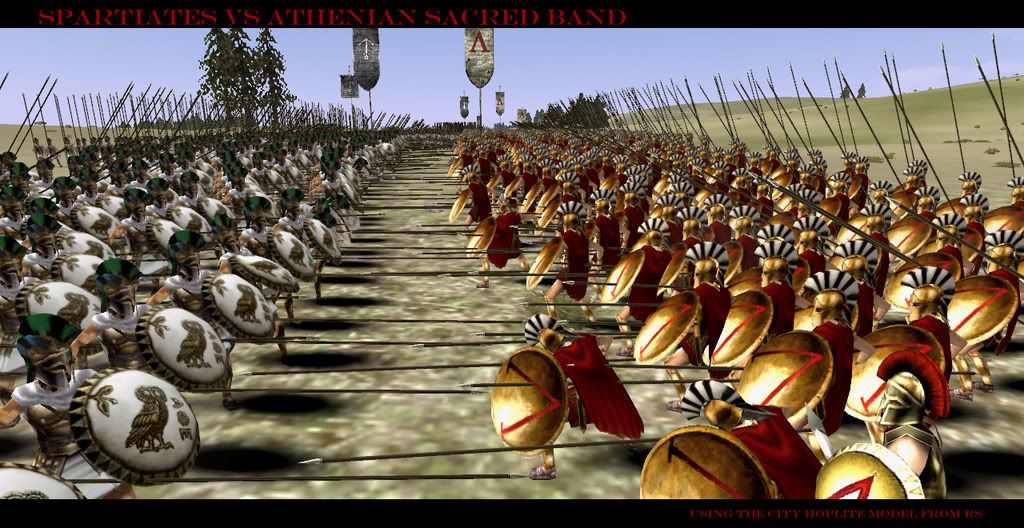
When looking at the background for his speech, this funeral took place during the first year of the Pelopponesian war. This war wasn't against the Persians, Egyptians or other foreign powers but instead against the Spartans, who were the enemy. Pericles uses this factor to raise morale for the Athenians. He references the severe training that the Spartans instill in their male children to make them powerful warriors and denotes that despite this brutal and intense learning, the soldiers of Athens are just as prepared to battle with the same drive as their enemies. The Athenians instead use courage and loyalty rather than sheer force and as such are greater than their enemies.

The Athenian Soldier: Integrity and Honor
Pericles is the war general of the Greeks and yet in his speech, he frequently avoids topics that would bring attention to him, choosing instead to appeal to his audience consisting of soldiers and relatives of soldiers. He tells them of the honor that it is to be a soldier, choosing to fight the enemy and be magnanimous in their role. Pericles continues in like manner to show the ideal of a true Athenian warrior, making his speech not only a tribute to those that had fallen, but as a rally to the living in the onslaught of this war.

Honor = Essence

Unlike Katie or Alexander, I found that Pericles' speech had many similarities with the Presocratics rather than Socrates himself. These philosophers were searching for the archon of the universe, each one emphasizing a specific concept. Should Pericles have been one, he would have based his theory of archon on ethos. He mentions that the Athenians aren't merely noble soldiers in battle, but also in their homes. He mentions how they frequently do good things to others without desiring something in return (a rather christian belief interestingly) which gives each men an air of integrity and nobility. The Athenians seem to be unique to this in Greek culture and he cites this as a reason to their own superiority. In all, his speech acts as if the principle of honor could be the basis of human essence.