Showing posts with label Rhetoric. Show all posts

Tuesday, September 15, 2015

Bad Weather to Talk About Death

Due to the recent downpours I have been walking through each time I leave a building on campus, this post by Courtney B caught my attention.


Her analysis included pointing out the different audiences Pericles addressed: the general citizens of Athens, the parents, the brothers and sons, and (briefly) the widows of the fallen soldiers.  It is my wish to build upon and refine what she discovered, specifically drawing attention to the different persuasive appeals employed and how Pericles observed decorum. 

In this epideictic oratory, Pericles appeals to ethos when addressing the general audience.  He seeks to establish the credibility of  his speech by brilliantly referencing the greatness of Athens.  When he first focuses in on a smaller audience, the parents, he changes tone and appeals more to pathos, speaking of the possible emotions they may be feeling and reminding them their sons died honorable deaths.  Then, when addressing the brothers and sons, he again changes and this time appeals more to logos, simply and logically explaining that they have a great task ahead and standard to live up to.  Finally, he gives some borderline sexist advice to the widows to "not be inferior" (which was completely acceptable to say in that time period).

Image result for rain

The second half of my post is dedicated to examining the audience Thucydides intended to address in writing his account of the Peloponnesian War, and how it influenced the genera causarum he chose to use.  Thucydides, commenting on his own writings, stated, "I have written my work, not as an essay which is to win the applause of the moment, but as a possession for all time."  A legislative oratory, for many reasons, would be unfitting for the task at hand to record history since history is about the past.  However, if the intended audience was the rest of mankind, he also couldn't write a judicial oratory, lest he be proved wrong, and his work discarded.  This is my reasoning for why he chose to write a epideictic oratory. 


Wednesday, September 9, 2015

The Lack of Words

Growing up, we make a lot of mistakes.  Heck, I think I've made more now that I'm out of the house than when I was still just a kid in it.  My parents were behind the majority of the reprimands, time-outs, yelling; all trying to change and shape me into a better person.  But quite honestly, I don't think it was done very well.  Not to say I'm not a better person because of if, but I'm saying there were more effective ways to punish children than to yell at or ground them.  I know because the one time my dad didn't do that is the time that I decided to actually change my behavior.

I won't tell you what I did, because it's quite embarrassing, but let's say it was an extremely important rule in our house: and I broke it.  I didn't think he was going to find out, as usual, but he did, as sometimes.  When he did, there was no storm.  No thunder, no lightning, no flood of yelling streaming into curses towards me and my disobedience.

There was silence.

We sat like that for over ten minutes.  Me dying for him to yell and get angry, but him just sitting there on the verge of tears, extremely disappointed.  That silent and emotional disappointment was so much more powerful than the anger.  The anger I could get angry at; I could get huffy and yell it wasn't fair, or that he didn't understand, etc. etc. etc.  But in the silence I could see how much he cared about me, and that's why those rules were in place.  In the silence I vowed to never break that rule again, and to try to be better about following his counsel and rules in the future.  From then on was I perfect?  No where near.  But I can say that from then on my dad and I had a much closer relationship, full of respect, that we still carry on today.

In this case, it was a lack of words that spoke the most.

Monday, April 20, 2015

stranger danger no more (on the web)


I type this fairly certain that you (the reader) have signed into a google account in order to access this blog site, and therefore know that I am preaching to the choir. That said, my request is reducing the number of anonymous human interactions we have online.


Friday, March 27, 2015

Integration of Mathematics into Social Science

Industrialization:
Industrialization was the beginning of Social Sciences being explored scientifically.
It also was the beginning of public education.
Though the scientific method was being applied to social science there was little computation involved and people didn’t have a need for it.
Bayes' theorem, an idea which would revolutionize statistics... one day.
We developed mathematical theory in this time which was not feasible to be used in research due to computation limits.


Romanticism:
Individuals became a greater focus in society and there was an increase in sympathy to the insane or disadvantaged of society.


WW1:
There are a greater and greater number of educated Europeans and Americans who are applying mathematics and science to industry and arms, social scientists focus more on poverty levels in their own nations (nationalism).

Tuesday, March 24, 2015

Hear our sufferings, we are the suffragettes

Political climate is everything to a speech writer. The situation facing present day feminists has nothing to do with suffrage, and rhetoric has nearly done a 180. The rhetoric that shapes women's issues about equality are inherent in the name of the movement: equality. Rejecting the "man-hating" label often ascribed to modern feminists is common practice, but was the last of either of these women's worries.

Susan B. Anthony and Cady Stanton used primarily emotional and argumentative rhetoric, based on principles they considered common sense. They drove their audiences to action by drawing attention to obvious oversights in the rhetoric of the time – most notably the opening phrase of the constitution.  Anthony went as far as saying the United States as it functioned was not a democracy, but rather a "hateful oligarchy of sex."

Verbally painting injustice and humiliation was the inclination of Stanton. She spoke of stripping women of their rights, ignoring their strong tendencies, and trivializing legitimate emotional concerns. Stanton was sticking it to the man, with hopes of her own "I voted" sticker for the future.

To half of a nation that was unjustly disenfranchised this sort of rhetoric would be like throwing sparks on tinder, but for a more conservative group of women it may have seemed simply hysterical. The commentary included in the book implied that she set a fire ablaze.

Fire in Firey Times for Sufferage

The Civil War Divisions
Women's Suffrage Before the 19th Amendment
In a period of time in which the United States was dealing with intense tension between the northern and southern states strong voices for women's rights had to be loud to be heard while everyone else who was discontent and shouting their opinions too.  In the states religion was being used to justify both sides of these issues and because the people of the United States were not yet so secularized and disillusioned with religion at many Europeans were becoming, their calls for change burned with the passion of religious fervor.  Appeal to authority from God and enlightenment ideals was a primary tactic of the women's suffrage writings I analyzed.  

Tuesday, March 10, 2015

Pathos for Peace


What truths do you hold to be self-evident?

Our discussions about revolutionary writings have indicated a central theme: most revolutionary action stems from the perception of a violation of some natural law given us simply for our humanity. (What or who or how these laws are determined is another topic for another day.) Rhetorical oration is powerful, but typically not powerful enough to incite revolution unless that rhetoric is founded in

Mahatma Ghandi abhorred violence and did everything he could to pass that distaste on to those who joined his cause. In his response to the non-violent-turned-violent protest in Ahmedabad, India, he used epideictic rhetoric to refocus the future motivations of his followers.

Where this address veers from the course of a traditional vituperatory rhetoric is where he places the blame. Ghandi does not vilify a third party; he has no King George. Ghandi blames those he is speaking to, and then himself, as responsible for nearly the same conduct they are protesting: harming another life. "Having done little to stop the violence we have been all participators in the sins that have been committed," he said to his followers. But "my responsibility is a million times greater than yours."

Having established his logic that their violence was senseless and not in their collective self-interest, he moves to a largely pathetic appeal. Ghandi understands that he is a largely loved and respected leader, and that his own suffering is more relatable than that of the strangers he cited in the opening thoughts of his speech. He uses this emotion as a motivator for those who resorted to violence to recommit to peace.

"I believe a seventy-two hours fast is easier for me than a twenty-four hours’ fast for you. And I have imposed on me a discipline which I can bear. If you really feel pity for the suffering that will be caused to me, I request that that pity should always restrain you from ever again being party to the criminal acts of which I have complained."

Inciting Class Warfare

Emmanuel Joseph Sieyès was a political player in all of the stages of what we commonly refer to as the French Revolution, even up to helping Napoleon overthrow the Directory on which he was serving in 1799 at the revolution’s end.  Before the Third Estate declared for itself a National Assembly and began leveling l’ancien regime, he wrote “What is the Third Estate?” and it was dispersed in pamphlet form to the educated and wealthier members of the third estate in France. 
The document’s tone was indignant and it made an appeal to logic by comparing the privilege and idleness of the aristocratic class to the political disadvantage and industry of the Third Estate.  It does not fail to subtly explore the economic possibilities of putting the Third Estate into government.  It reasons that the nobles ruled to their benefit and to the detriment of the deserving upper middle class.  He asks the question: “What is a nation?” and then answers with the idea that it is “a body of associates living under common laws and represented by the same legislative assembly, etc.”  When he follows up that general definition by calling out the nobles for being above the law that they make for the Third Estate he establishes the idea that the nobles and the Third Estate effectively belong to a separate class.  By making a distinction between the lands owning nobles and the other educated and productive people of France Sieyès sets up who is to be rebelled against. 

Thursday, March 5, 2015

Analyzing the Rhetoric of Revolution

My students in rhetoric and civilization are currently examining revolutionary writings that range from the early Enlightenment up to the 20th century. I want them to recognize a pattern in these writings and speeches, the pattern of revolutionary rhetoric.

All students will be reading the Declaration of Independence, in which we can identify many of the traits of this genre of discourse. Then, each student (as assigned) will be responsible to do a rhetorical analysis of a specific writing from our text. They will take notes on their individual speeches, which they will discuss in small groups early next week (March 9th), and then they will formalize this into a blog post, a more polished rhetorical analysis.

I'd like to draw attention to several traits of this kind of discourse, so that these can be analytical categories to assist them.

Context
Revolutionary writings are always intimately tied to the historical setting and circumstances that give rise to the felt need to act and to speak. (See the rhetorical concept of kairos or the rhetorical situation). What are the larger or more proximate occasions that gave rise to this particular speech or writing?

Such writings, at least since the Enlightenment, also seem to have an international or global context to them. Revolutionaries look beyond national boundaries, often, just as they look beyond class divisions -- both for trends that justify their current actions and for including those of the same economic status despite differing political affiliations.

Epideictic Oratory
Revolutionary rhetoric is typically epideictic in nature -- more oriented to the present moment, and often employing two common modes of epideictic speech, encomium and especially vituperation (speeches of praise and of blame). It is often filled with complaint and blame. Who or what are the people or factors that are blamed?

Tuesday, February 3, 2015

The Role of the Past: Essential or Prevalent?

“Ugly hell gape not! Come not, Lucifer! 
I’ll burn my books—” - Dr. Faustus,
(The Tragical History of the Life and Death of Doctor Faustus)

Dr. Faustus makes a fatal deal
            If someone as rooted in the humanistic ideals of the renaissance, as the fictional character of Dr. Faustus was, can turn on all of their vast knowledge they had gained to turn back to God truly the idea of returning to the past had perhaps the largest implications during the renaissance time period. Christopher Marlowe’s character is clear evidence that Psalm 42 (from the Vulgate Bible) had major relevance during the renaissance time period, which states in English “In the same way that the stag is drawn unto the sources of water, so is my soul drawn unto you, God.” In considering this, how big of an effect did the past have upon the other themes present during the renaissance? My initial conclusion was this: without the ideas of the past (Greek and Roman rhetoric, religious traditions of medieval and Christian eras) that the other major themes present during the renaissance such as exploration, humanism, and the rise of the reformation would have never came to be.

            With similar fire that Martin Luther had in his response to Erasmus of Rotterdam on the topic of free will, I brought these thoughts to my classmate’s attention. Of those of whom I was discussing the importance of returning to the past, Kekoa asked a question that forced me to reconsider my previous position, and reevaluate the important role that the past had during the renaissance. He proposed, “Is it really that the other themes would not exist without the role of returning to the past, or is it simply the most overlapping theme of the period, with respect to the other themes?” What a question! The studied carelessness of his question really pushed me into a corner, which soon opened up into a brand new space full of what was most likely a more appropriate idea concerning this theme of returning to the past.


Mount Ventoux
            Rather than being the keystone to the other themes of the renaissance, the idea and importance of returning to the past for many of the major figures during this time period was that of a basis to build their own ideas. Petrarch climb up Mount Ventoux is very illustrative of what the past’s role was in all the other themes of the renaissance. There Petrarch could see back and forth, past and future, and see things from a far, which allows the eye to pick out the good and leave the bad. Much of the returning to the past done during the renaissance and reformation was done in this light. Erasmus of Rotterdam clearly returned to reason over scriptural testimony in his address on free will. Erasmus is one who clearly had respect for and a desire to understand the rhetoricians of the past, giving much respect to the systematized rhetoric of Aristotle. The act of reflecting on the sources, and returning to the past completely shaped the way that humanistic ideas formed, as well as other themes present during the reformation and renaissance.

Monday, January 26, 2015

The God That Abhors You

How should one persuade another to repentance? Hellfire and damnation, proclaims Jonathan Edwards. In his sermon, “Sinner in the Hands an Angry God,” Edwards, an influential preacher of the Great Awakening (1741 C.E.), has a simple goal: crush the theological apathy from his audience’s mind and, as a replacement, inject an awful fear of God’s anger! Edwards makes his intentions crystal clear through his eloquent use of rhetorical devices, each device portraying his beliefs in a “retribution theology.”

Edward’s rhetorical argument builds off the concept of hell as well as the sinners who will occupy it, and he builds this argument within one consistent mode: dispraise. Edward repeatedly returns to his fiery depiction of these two concepts between his intermittent manipulations of pronouns. Every sentence and every phrase has “you” resting on the veritable chopping-block of condemnation. This preacher designed this language to engage every single audience member as a guilty perpetrator. His audience, whether they heard the sermon or read it, knows, inescapably, that Edwards is heaping his points against them. This isn’t a description of some figurative far off “sinner,” it’s clearly you.

He pricks our attention, in an inescapable way.

Then Edwards’ real work begins: abasing his attentive audience. He proceeds to persuade us to repentance by helping us see, by vivid imagery, the awfulness of our state. By dehumanizing metaphors, by exaggerated hyperbole, and by anaphoric evocations, this preacher ravages our emotions, pummels our pride, attacks our apathy, and blasts our beliefs with an exaggerated and sadistic God. Edwards’ God is depicted, quite elaborately, with an unmatched fury and a plan to devastate our heavenly tenements unless we “flee” to him with the humble outstretched hands of the supplicant.                

Wycliffe: Precursor to Reformation


     John Wycliffe was known as the “morning star of the reformation”, preparing the way for later reformers like Martin Luther. Wycliffe’s Sixth Sunday After Easter sermon I think is particularly unique in the way that he is able to tie in his bashing of the pope while discussing scriptures and other doctrinal topics that apply to a more general audience.

     Wycliffe uses multiple quotes from Christ as the basis of the “proof” for his argument. After explaining and expounding on Jesus’s words he is able to compare and contrast both how this could apply to the general population as a whole and how it is evidence that the pope and other priests are corrupt. This rhetorical approach is unique and leaves the main idea of his sermon up for “debate”… I use the quotations to infer that at the time Wycliffe’s approach might have been able to detour some of his detractors away from the real purpose of his sermon, but for us today it is clear that his message is primarily focused on the corruption of the Catholic Church and its leaders.

Smeagol: A dual personality character from Lord of the Rings
     Tone, which in this sermon is two-fold, also plays an important rhetorical role throughout. It’s as if he is almost a Sméagol like character, calmly explaining his doctrinal views of the Holy Ghost and the devils trickery, then going into an accusatory rage, pointing out the pope and other leader’s flaws and even stating that they have “killed Christ” from the church’s purpose. Wycliffe’s tone in this sermon is a good blend of the tones which Erasmus and Martin Luther used in their respective speeches on free will, which makes sense given Wycliffe’s position and time in history: both wanting to push his ideas of reform, but not incriminate himself to the point where he would no longer have the ability to give such sermons.  

Tuesday, January 20, 2015

Philosophy vs. Theology: Erasmus vs. Luther

"If any man will do his will, he shall know of the doctrine." (John 7:17)

            The Protestant Reformation brought major religious conflict to Europe and had two voices that came to dominate its arenas of debate and apologetics. These two voices argued at the heart of the conflict. Desiderius Erasmus and Martin Luther made irreplaceable arguments surrounding free will during the development of, what would become, Christian humanism. We will examine the effectiveness of the rhetoric within their written arguments to one another, and it is worth noting (for context) that Erasmus centers his argument on moral philosophy while Luther centers himself within theological dogma.

            Luther led a far-reaching theological movement against the authoritarian Catholic Church. His rhetoric, within his argument “On the Bondage of the Will,” takes a stance that is, in many respects, congruent with a Platonist’s (e.g. Luther says that Erasmus “attribute[s] more to free will than the Sophists hitherto did”). These introductory remarks—where Luther equates Erasmus to “the Sophists”—serves as a type of proof which is used to both discredit Erasmus as being the ultimate relativist (one who will say anything to win an argument and cares little for the “Truth”) and to position himself as one who believes in, and professes to have obtained, absolute “Truth.” In Luther’s mind, he is the man that escaped “Plato’s cave.”

            Erasmus, the man given the title “Prince of the Humanists,” remained open-minded while presented his arguments. Erasmus repeatedly addresses the logic behind open-mindedness—a critical concept within Humanism—while sharing his philosophical views. Erasmus does this not only to emphasize its importance, but, by discussing open-mindedness with his audience, he simultaneously invites the quality within us. Erasmus’ presents Christianity as a discernible morality and, in my opinion, employs a more persuasive use of rhetoric than Luther does.

            Where Erasmus presents scriptural proof of God's varied emotional responses to mankind's choices to validate his philosophies of free will, Luther presents his personal scriptural interpretations using those interpretations to speak for God. Luther presents these interpretations as incontrovertibly true which, coincidentally, is in complete harmony with the authoritarian practices within the Catholic Church. This was they very type of hegemonic manipulation he was seeking to reform. Luther—the veritable voice of religious reformation as a response to authoritarian repression—seems guilty, within his arguments, of the same thing he spent so much effort to condemn.


Monday, January 19, 2015

Obscurity vs Certainty: Erasmus & Martin Luther on Free-Will

           With topics of religion it is my personal opinion that the delivery and invention of one’s argument is often far more important than the truths or content therein. Erasmus & Martin Luther both take very different angles when making their arguments on free-will.

Erasmus

            Erasmus’s mode of argumentation, not even to mention his actual view on what he is arguing, is that of reason before scripture or doctrine. Erasmus uses his own to reason and logic to rationalize his arguments. Instead of scriptural references, he uses powerful analogies, such as the boy who can’t reach an apple without his father’s help, to really drive home his ideas… but he wouldn't let the untrained audience know that. There were loads of scriptures throughout Erasmus arguments, but their inclusion was primarily a tool used to balance Erasmus arguments of “man meriting salvation” and “God’s grace”. Martin Luther would later argue “Erasmus speaks out of both sides of his mouth”, which I think is a valid observation, although I feel that Erasmus did it quite effectively. Erasmus further used the scriptures for their uncertainty rather than to back up doctrinal truths. This uncertainty of the scriptures is another effective invention by Erasmus in building his two sided argument on the existence of free-will and God’s grace.
A key scripture argued/used by both Erasmus & Luther

Luther

            Because Martin Luther’s Bondage of The Will is in direct response to Erasmus’s argument his approach is quite different in many ways. Martin Luther focused wholly on divine truths back by the scriptures, counter arguing Erasmus use of scriptures. Luther focused on what he believed to be the certainty of scriptures, which he argued that if any verse seemed obscure it was due to the weakness of the reader, not the Word itself. He continues to use the scriptures as a foundation of certainty to back up his arguments and attack Erasmus’s. This method of Luther’s was clear when he said that Erasmus argues “like a man drunk or asleep” blurting out things here and there.

So who won the debate?


            As a Mormon I was able to see a little of truth in both arguments. Interestingly I felt more apt to side with Erasmus because of his rhetorical style, using both the scriptures and reason to back the duality of his argument. For Christian humanists & people of the reformation however might have sided more with Martin Luther as his argument was a little more “happy” or easier on the ears than Erasmus’s.  

Rhetoric at its Finest: Erasmus vs Luther

Erasmus and Luther blossomed out of the Renaissance with evidence of the class theme: What a Piece of Work is Man: Humanism and Rhetoric.They attempted to argue/persuade each other and others in their time and beyond how free will takes role in one’s life. 

 “I think there to be a certain power of free choice…by free choice in this place we mean a power of the human will by which a man can apply himself to the things which lead to eternal salvation, or turn away from them.” - Erasmus

Erasmus believed that all human beings possessed free will, and that the idea of predestination was not in sync with the teachings of the Bible. He believed the principles of the gospel depended on the existence of free will, and that grace only helped one to come to a knowledge of God.

"The essence of Christianity which you (Erasmus) describe -- is without Christ, without the Spirit, and chillier than ice ---" – Martin Luther

Luther responded that we are unable to bring ourselves to God alone; that sin disables us to do so. Therefore, there is no free will for humanity because any free will they might have is taken over by the influence of sin. He argued that people do not choose between good or evil, because they are naturally dominated by evil, and salvation is the product of God changing a person's heart. He held that arguing otherwise was insulting God, and would not make one Christian.

Looking at the two points of views, I can understand where each one is coming from. Erasmus tends to rely more on humanist principles, and Luther tends to rely more on Christian faith. These principles together create a bond called Christian Humanism. We do have free agency, which was a gift from God. We also have the gift of repentance, which we can use if we do choose sin and decide to change. We do need to choose good, but we can’t do it alone because everyone chooses evil at some point in their lives, and we need that extra help called the Atonement. Tying back to theme, this interaction and communication between the two is a great example of how rhetoric and humanism was used during the reformation.

Monday, December 15, 2014

Adapt and Survive

Schedule an Appointment
Rhetoric in medicine is just as crucial of a toolbox as these
            Since ancient times, the doctor has been an exemplar of rhetorical prowess. The issue often presents itself in the case of the greatest cause of detriment in a patient being the patient him or herself. Such a situation exacts tact from the doctor—of an amount that more often than not is a learned response. To those who have a desire to follow this path of the doctor, much needs to be laid out so as to grasp the best understanding necessary for success. Individual skill in the field of medicine has held equal, but different importance apart from the need for rhetoric. Still, one's own abilities fall short if the doctor cannot convince a patient to take a needed venue toward health. It is for this reason that aptitude in physical practice must be coupled with a more broadened scope in medicine, namely in the forms of historical knowledge and rhetoric, or the art of persuasion. A doctor may hold the antidote or solution to a patient's malady or injury, but it avails nothing if the patient doubts the credibility of the one trying to help him or her. This doubt or question of authority in a patient toward a doctor is paramount to overcome. Pure logic, though a powerful form of persuasion, is insufficient without proper context or explanation. Additional factual information in the form of referencing the past, along with calculated mannerisms, displays, and speech in the form of rhetoric, more effectively create a well-rounded and overall successful doctor.
Screening
            A dedicated study of the history of medicine is crucial to a successful life in the medical field. Doctors are required to have a vast pool of knowledge to pull from to help their patients recognize their symptoms, diagnose illnesses, and ultimately cure said illnesses. These skills allow doctors to work much more effectively through the form of preventative care, which is to cure an illness before circumstances become dangerous, lethal, or even apparent. Of course needing the skills to make quick decisions is important, but studying the history of medicine and mastering preventive care can be equally important. In many cases, preventive care can help spare countless patients a trip to the emergency room, thus increasing a doctor's efficiency by saving more lives.
            Referencing the past and studying the properties of illnesses and their corresponding remedies is what fuels the future in medical breakthroughs and creates great doctors of the present. For example, recent studies have shown that the excessive use of antibiotics, while performing their function of eliminating bacteria very efficiently, are naturally eliminating many beneficial bacteria in the human body as well. This in turn weakens various functions of the human body, and makes the immune system grow lax. While the recent breakthroughs in antibiotics have helped cure and prevent many diseases from growing too severe, they have also caused some problems which could have been avoided by more closely studying principles about health and disease prevention that date back to even the ancient Roman era. The ancient Romans, while having exercise and personal fitness as their biggest advocates for preventing diseases, lacked much of the modern remedies that we have available in our day; however, there are some principles to be learned from this that could have prevented many of the issues that are arising from excessive usage of antibiotics today. Romans focused on keeping the body's immune system strong, overcoming non-lethal illnesses and then growing stronger and adapting. Nowadays with the debut of widespread antibiotics, the body is overcoming illnesses that it previously could not, but the immune system itself is growing weaker with no conquerable bacteria in sight. Just as the body's muscles grow weak and fade away without any exercise, the body's immune system along with various other functions wane when not utilized properly. Studying all of the eras of human medicine and the principles behind them have many benefits, even today in the face of modern remedies that would have been considered miraculous back then.
Tell all the truth...but tell it slant?
Present Results
            Just like how knowing the history can help one be more prepared to go into the field of medicine, effective communication skills can also bring many benefits to the table. Just like how the typical white lab coat and stethoscope give off messages of confidence and prestige, there are many aspects of communication that doctors need to be wary of in order to be able to help their patients in the best way possible. One of the more important skills that fall under this category is persuasion. There are many people that are willing to give their trust immediately to a doctor due to the doctor's sacrifice of many years of their life devoted to the study of how to mend the human body and mind. Sometimes, however, a doctor needs to go the extra mile to convince a patient that their prescription is going to be beneficial to their case. Explaining to patients why their treatment is going to help heal their illness in a way that they can understand is an often overlooked but still crucial part of being a successful and trustworthy doctor. Doctors indefinitely have a greater understanding and vocabulary of medicine than the average person, but that knowledge will not be able to be utilized effectively if the doctor cannot pass it on to a patient in a way that will help them understand and act on that knowledge.
Discuss Solutions
Sometimes there is no easy way, but a doctor
must do what must be done
            Doctors need the ability to persuade their patients, but they also need to be wary of other messages that they can give off without saying anything. Doctors need to be the emotional anchor in times of crisis, therefore keeping calm and maintaining composure are some necessary communication skills. Imagine if a doctor were to panic upon hearing bad news or when things didn't go the right way. The credibility of the doctor would go out the window, and the progress in helping a patient overcome their illness would completely halt. Body language and other mannerisms go hand in hand with speech in being able to convey the thoughts of the doctor to the patients in ways that they can understand. The calm, educated demeanor of the doctor is in itself a way for trust to be built between the doctor and the patient. A furrowed brow is sure to raise alarm in a patient, but excessive smiling could also bring about unease and mistrust, though the doctor's intentions may be good. Doctors have studied medicine for a large portion of their lives and that in itself sends a powerful message; however, effective use of communication through things like body language allows for that knowledge and expertise to be utilized to its full potential. Doctors and patients need to trust each other and communicate in order to understand and solve problems together. This relationship of trust allows for effective communication of ideas and remedies that can save the patient's life. If the doctor and the patient can work together through the doctor's mastery of some key skills in communication, then the doctor can be a much more well-rounded and successful influence in their field.
The Verdict
            There are many factors to consider when pursuing an education and ultimately a career in medicine, whether that be the necessary technical skills, knowledge, or communication skills that will help one in that field to be a better doctor. Through studying the background and history of medicine, an aspiring doctor can draw knowledge from the people of the past to help solve the problems being faced today. Being able to effectively communicate with patients though mannerisms and speech, rhetoric can help patients understand their prescriptions and their symptoms to ultimately learn how to conquer them. Although not commonly brought up when one thinks of a doctor, history and communication are absolutely crucial to the success of aspiring doctors and act as unsung heroes in the war against disease.


Works Cited


Friday, December 12, 2014

A Special Sort of Science

It you're thinking about becoming a physician don't miss out on an opportunity to learn about the single greatest skill you could possess. A skill, though not found in your science text books, that will play a vital role in your success as a physician.

Attention All Pre-Psychology Professors!!!

Hello!
             Welcome to the world of psychology; a world where the mind is studied, behavior is analyzed, and human nature is described! As a future psychology professor, you will be responsible for teaching the next generation of psychiatrists and psychoanalysts the correct and ethnically sound way to understand, diagnose, and treat psychological disorders. You will need to understand the differences in the types of psychology and be clear and direct in teaching each of them so as to not show your biases. Professoring is not the same as teaching; you will have a body of students to address but you will also have publishers, faculty members, board members, and an entire scientific world that you will need to communicate with. In order to do this job correctly, there are a few things you will have to understand about being a professor in psychology.

What Every Engineer Should Know…


     In an increasingly more technical world, it is not surprising that the topics of history and rhetoric take backseat roles in the engineering field. I wish to address this notion and to dispel the idea that you can get by as an engineer tinkering away in a cave. Engineering is an art, even a virtuosity. The Oxford Dictionary says the word ‘engineer’ stems from the Latin word ingenium, which means ‘talent,’ or ‘cleverness’. This title is awarded to those who have become familiar with manipulating math and material to create solutions. A long list of college text books ranging from numerical methods to thermodynamics quickly draws the attention of the avid learner. Others less mathematically inclined may gasp in horror and quickly reevaluate their lives. You might ask, “Is being a math whiz the only way to become an engineer?” It certainly helps, but in reality, I think a different qualifying question should be asked: “How will a knowledge of history and writing assist me in becoming an engineer?”

Historical Context
    Understanding the historical context of any conundrum can offer us new insight into better solutions. I like to think of all great ideas as giant trees that began as tiny seeds. Many years ago, these seeds were planted in response to a question or observation. Through inspiration and perspiration, these seeds pushed their way to the surface and gained root. The names of Leonardo da Vinci, Isaac Newton, Thomas Edison, and Albert Einstein might sound familiar as the founding forefathers of modern engineering techniques. However, even the greats had honorable predecessors. Have you ever heard about Amenhotep and his prosthetic toe, or Vitruvius and his description of the Vitruvian Man? Da Vinci actually based his Canon of Proportions on the idea of the Vitruvian Man (Leonardo). Every generation builds on the previous.

Example of Historical Development
    Take prosthetics for example. Missing appendages has been an issue all ages have experienced. Understanding how our ancestors tackled this dilemma gives the engineers of today a leg up. One of the earliest known examples of a prosthetic device can be observed in the Cairo Museum where the prosthetic toe of Amenhotep II is preserved. The Greek historian Herodotus recorded an instance in 484 BC where a prisoner escaped by cutting off his leg and hobbled off on a wooden leg. The Roman general Marcus Sergius led his troops into battle with an iron prosthetic hand in 218 BC. His left hand wielded a sword while his fake hand was adorned with a shield (Thurston). Fast forwarding to modern times, there has been tremendous research performed in recent years which has exponentially helped progress the development of prosthetic limbs. Within the past 20 years, methods have been developed where prostheses can be attached directly to amputees’ bones. In addition, electrodes attached to nerves and muscles offers amputees neuromuscular control of the prostheses (Pitkin).

The Stereotype
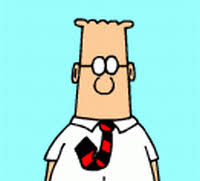
    Before you get the impression that just being creative and smart will earn you the next Nobel Prize, I need to mention a few things on living in today’s world. The elation of a grand discovery can quickly be crushed by something as artless as awkwardness. Ineffective communication has effectively trampled the dreams of many an engineer. Poor souls. They fall under the stereotype that has of late defined those of the engineering field: smart, nerdy, and very awkward. As one television series depicts, young Dilbert is a curious fellow who takes broken things apart and puts them back together in working order. His concerned mother consults a doctor, who diagnoses Dilbert with “the knack,” which he defines as “the supreme understanding of all things electrical and mechanical, along with utter social ineptitude.” He will never lead a normal life, because he will be an engineer (Knack).

Communication in Engineering
    Communication and persuasion are a huge part of engineering. There are countless scenarios in which a knowledge of rhetoric and presentation is crucial to producing results. Opportunities for communication are present in all kinds of situations, including interviews, oral presentations, memos, technical reports, process sheets, engineering drawings, proposals, emails, etc. Unless you invented some sort of mind-reading machine, you will have to explain your ideas to someone else. Even if you had invented a mind-reading machine, you would have to convince someone to finance it. Rhetoric in the engineering field has two parts: stating truth, or at least an approximation of it, and encouraging others towards action.

Bob
    Here is a case study. Bob is an engineer for SmartLife, where he performs safety inspections. SmartLife has been struggling financially the past year, so it has implemented budget cuts. Bob is performing one of his inspections one day when he observes some small cracks forming in the base to one of the power generators. These cracks will cost a lot to repair. Using his great rhetorical prowess, he would help his supervisors to understand the advantages of repairing the cracks. His approach is crucial, because if he fails to convince them, one problem will lead to another. Knowing how to say the right words at the right time will help him. In this context, Bob would present himself in a deliberative manner to encourage a response and action.

Personal Experience  
    I have a personal experience that taught me the importance of communication. During an engineering career fair, companies from all over the country were taking resumes and scheduling interviews with intern aspirants. I showed up in my nice business casual clothes and realized I had no idea how to sell myself. Mowing the neighbor’s lawn was about as much work experience I had ever had, and I felt out of my class. I cautiously approached a biomedical company representative and told him I am interested in prosthetics. “Well,” he said, “we don’t make prosthetics. We make heart valves.” At that point, I didn't know how to recover myself, so I proceeded awkwardly asking him about his company. At the end of a brief discussion, he politely told me that maybe I should think about what I want before I do anything else. I felt like a fool. With this experience in mind, I now reflect on ways I can show others who I really am, what I do know, and how I can help.

Conclusion
    It may seem to be a lot to ask of an engineer to be good with both numbers and words, but I hope that you now see a need for being well rounded. Overall, engineering can be simplified to two classifications: acquiring knowledge about things, and then making things happen. It is a process beginning with keen observations and brilliant ideas which lead to fruition. I hope all engineers will take this advice to heart.

References
“Knack, The.” Dilbert. United Paramount Network. CTT, Culver City. 25 Jan. 1999. Television.
Leonardo, da Vinci, 1452-1519. The Proportions of the Human Body According to Vitruvius (the Vitruvian Man);              Ideal Man in Circle and Square; Study of Proportions; 1509. Web.
Pitkin M. Design features of implants for direct skeletal attachment of limb prostheses. Journal of biomedical                     materials research. Part A2013; 101(11):3339-3348. doi:10.1002/jbm.a.34606.
Thurston A, Thurston. Parã and prosthetics: The early history of artificial limbs. ANZ J Surg. 2007; 77(12):1114-9.