Showing posts with label pride. Show all posts

Sunday, September 28, 2014

Pride, arrangement, and sophistry

History:
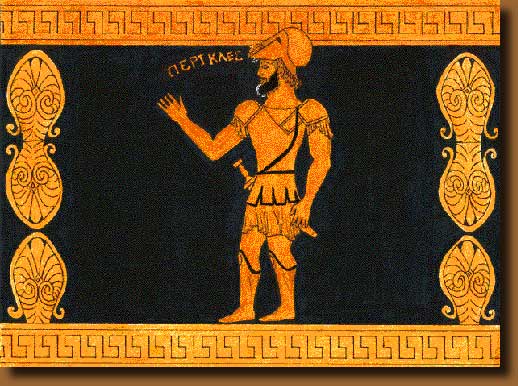
Like others (including Katie), I found, through Pericles’ speech, a strong sense of Athenian pride. Unlike Katie, though, I don’t feel that it was any more excessive than any other nation. I don’t feel that pride and tradition specifically characterize the Athenians. Pericles talks about the strength and tradition of Athenians and compares it with Spartans. Almost every culture, even today, does that same sort of thing. Think about it: the United States builds itself up and prides itself in its strength and military. The U.S. compares itself with other ‘inferior’ countries all the time. Even within the U.S. there’s competition among states. Texans (and Oregonians) pride themselves in their patriotism, sports, and almost every other aspect of the state. To sum it up, although this speech does make a compelling argument about the pride and tradition, and could very well explain the history of those people, I don’t think it is out of the ordinary for these characteristics to be a part of a community.
Rhetoric: 
I was very interested with the arrangement of Pericles’ speech. To go back to the history that I talked about earlier, pride is a central theme in both the language and in the arrangement. I noticed that although there is some deviation in that theme in the beginning, the theme always goes back to that. Here is a brief overview of the main points (to show the arrangement):
-          Intro of how he got information- personal experience that is credible
-          Shows reverence by suggesting that a speech might not be enough to honor the soldiers (persuasive techniques for arguing against what he is saying?)
-          Praise of the city
-          These men fought for this
-          You should too!
-          Men will be honored and remembered forever
-          So be like them.
-          Find comfort where you can, but stand up and be courageous.
The pride that he invokes and plays with really becomes powerful in encouraging the citizens to participate and be patriotic. It always circles back around to pride. This is a very persuasive technique.
Philosophy: 

I feel like Pericles embodies the sophists in many ways. Not only does he help to create and insight, but he also induces beliefs. Like other sophists, he focuses on the crowds and has an amoral (or relative morality) stance. His speech is long-winded and directed toward the large group. There does seem to be a bit of morality, but I feel that it’s more relative- he praises certain qualities that Athens has, but were other countries to possess those same qualities, they aren’t praised. In fact, it would be a bad thing (in the eyes of the Athenians). 

Pride and Plays

Historical
I agree with Katie when she highlights two important aspects of 5th century Greek culture : strong traditions and excessive pride. However, I found that Pericles' comments about wealth and poverty were incompatible with the proof of pride that appeared in other parts of the speech.
He explained that the Greeks were not proud of their money when he said,"We regard wealth as something to be properly used, rather than as something to boast about" (74). If he is speaking honestly, then the Athenians were not prideful due to their wealth. It appears they were charitable. What might account for their pride, then, if not their money? Their military?  Pericles speaks of the soldiers who gave up their possessions and participated in the military: "No one of these men weakened because he wanted to go on enjoying his wealth: More to be desired than such things, they chose to check the enemy’s pride" (76). 

Rhetorical
Courtney says that Pericles "comforts [the brothers and sons] that one day they may also be able to die for their country",  but I understood that it would actually be difficult for them to attain the level of praise that their brothers and fathers won. Said Pericles, "It will be a hard thing for you to get the reputation of having come near, let alone equaled, their standard" (78, emphasis added). Why did he say it so negatively? Because he knows his audience. He speaks to prideful men who are "liable to...jealousy" (78).
Pathos stirs up in the men a covetous desire to work harder, to defend, and to die for their country in the future. Thus they might obtain praise just as their brothers and fathers did. Pericles persuades them through pathos and reverse psychology to tackle that "hard struggle in front of [them]" (77) in order to earn equally admirable praise. 


Philosophical
Could Pericles' speech have been presented as a drama? Imagine the heart-rending burial ceremony; Pericles mounting his soap box and disputing the need for a speech; his exaggerated gestures and words that would reach every gazing eye and listening ear. I imagine him imitating the soldiers as they took their final breaths...I think Pericles could have pulled off a drama, even despite the lack of plot or supporting characters.

Was Pericles a good actor?

Democratic Organization

Democratic History

“Orgullo” was the first initial word that came to my mind when I read the famous funeral oration given by Pericles. “Orgullo” means “pride” in the spanish language. Although, most of the previous blog posts have mentioned the pridefulness of Pericles in his address towards the bravery of the Athenian civilization, I think it was most interesting when he talked about the type of democratic government that their civilization had established. When it all comes down to it, the Athenian civilization is the heart and mind of early day democracy. “Our constitution is called a democracy because power is in the hands not of a minority but of the whole people.” Little did they know, this ingenious form of government that they had established would have an enormous impact on many future civilizations to come. He can be prideful about all the things he wants but in reality, it’s the form of government that really deserves the attention.


Ethos is credibility 

Unbelievably intriguing is the only phrase I can use to describe the manner in which Pericles presents himself. It flabbergasts me the way he comes across as so arrogant and completely undermines the fact that he even has to address this audience. He makes kind of a mockery in the fact that people come up and make these epideictic oratory speeches when really it’s not necessary at all and it’s an overall joke. However, strikingly enough, I think this almost seems to make him more of a credible source. It makes it seem like he is being more real with the people because he has nothing to lose. In a very strange sense, I feel like he became more credible just because he showed that him speaking isn’t even necessary. Though this is a different way to build his ethos, I would argue that it worked in a unique way.


Philosophy


It didn’t take me long to realize that I absolutely agree with Macey Richardson’s post. I think that Pericles absolutely took a more sophist stance as he tried to persuasively boast about Athens and it’s greatness. Macey Blazeard as well piggy backed off of Macey R and I would definitely suggest that Pericles standing on a platform is great symbolism of his previously mentioned “orgullo”. 

Saturday, September 6, 2014


Pride and Power: Appeals to the Greeks

In Book two of the Iliad, it seems as though there were two major themes that the rhetorical and persuasive speeches gravitated towards: the pride of the audience and the emphasis of hierarchy. These two themes will be the focus of this posting.

Pride
The pride of the Greek warriors seems to be one of their major weaknesses; for it is often this pride that can be manipulated by their leaders to convince them to charge into hopeless situations. When all of the men are rushing back to their ships, anxious to see their families again, Ulysses is able to manipulate them into staying and fighting. The interesting part is that he calls the respectable people cowards, in a typical appeal to pride, but he attacks the common men with almost the opposite assault on one’s pride. Rather than just calling them cowards and asking where their courage has gone, he also tells them that they have never been of worth. Even to a common man this would have been highly offensive and such a man would feel the need to prove his worth. In this society war was one of the only ways for men to prove themselves, so they literally ran back to the battlefront. This strategy of Ulysses shows that he had an excellent grasp on how to rhetorically convince different audiences.

Hierarchy
The social power order was very evident in the interactions between the characters in this passage. The most obvious example of this was in Agamemnon’s staff. While his staff was not a spoken rhetoric, it symbolized the authority he had over the men. When he went to address the army he brought the staff to remind them why he was in charge. Then, when Ulysses decided to convince the men to stay and fight, he retrieved the staff and, in some cases, even beat the men with it. This leads to an interesting dynamic, one that I believe was also recognized by Katie Johnson in her posting about Agamemnon’s actions. If Agamemnon told the men to leave, why did he let Ulysses take his ancestral staff to convince them to stay and why did he tell them to leave in the first place? I believe the second question has to do with Agamemnon’s military strategy, but the first can be answered on page nineteen. Agamemnon tells his counselors that he is going to tell the men to go home but that he wants them to convince the armies to stay. I believe that this may be his way of increasing loyalty. He wanted the men to think that he was their nice commander that would have let them go home to their families but they chose to stay and fight. The men will fight with more conviction if they believe that it was their decision to be there than if they see themselves as being forced to stay. But that is just my theory; does anyone have any other ideas?