Showing posts with label posted by Dylan P. Show all posts

Tuesday, December 15, 2015

Final Exam Essays: Dylan Parkinson

Short Essay: Religion and Rhetoric

Nowadays, rhetoric typically has a negative connotation. Mostly because of reporters and other media users calling out politicians for their 'political rhetoric' which usually just means blatant lies hidden by tricky speeches. But rhetoric hasn't always had a negative connotation; in fact, there was a time when rhetoric was taught and employed in Christian churches. One of the first to introduce the study of rhetoric to Christianity was Augustine. 

Augustine lived late in the Roman period and was not born a Christian. He was a rhetorician by training and imperfect by birth. As he learned more of the Christians he said that they lacked eloquence and would not join them for that reason. But when he learned about the forgiveness that Christ offers, he was converted. Fortunately, Augustine didn't throw out everything he had learned about rhetoric; instead, Augustine applied rhetoric in Christianity becoming a pioneer of good people speaking well. 

Augustine taught a few things in de doctrina christiana that are ring true to Christians everywhere, even in our day. 1) He taught that the bible teaches us through figurative and literal speech. If the literal interpretation is not correct, then the figurative must be. 2) He taught what an incorrect interpretation of scripture is: Any interpretation that does not lead toward the love of God or fellow man is incorrect. 3) He taught that every preacher has three functions: to teach, delight, and move; these functions are an adaptation of classical rhetoric. Now, how are these three lessons being employed in our day?

General conference is a great way to see how these three lessons have influenced Christian speaking in our day. We hear church leaders teach delight and move at least once every six months. Consider the meme to the right. The bible calls us to 'fear God' and yet Elder Bednar teaches that fear turns to love. Clearly, Elder Bednar understands that the bible may teach figuratively and literally and that we must interpret in such a way to increase our love of God and fellow man.


Tuesday, December 8, 2015

Why Localization Trumps Translation


globalization
What is the difference between localization and translation? Ask every professional in the field and you’ll get a different answer from each one. Why? Because localization is an old idea taking on a new identity. Localization, the adaption of a product from its source culture to a target culture, is a process that enables companies to enter new markets without getting ‘lost in translation.’ The discrepancy is not that there are differences, but which encompasses the other. Some say that translation encompasses localization and others say that localization encompasses translation. The newer more tech savvy generation seems to agree that localization encompasses translation. The older demographic tends to disagree with translation becoming a byproduct of something newer arguing that because translation is older, it encompasses localization. But I argue that although translation is more well known, localization encompasses translation, because translation is only one step in the bigger process of localization.


Tuesday, December 1, 2015

Annotated Working Draft of Final Project and Hot Spots in Localization

Component Assignments
  1. Communication and Persuasion in Localization
    Localization is the art of persuading a different audience that the product was made for a specific locale. Localizers communicate effectively when they translate/adapt a product to a specific locale.
  2. Storytelling in Localization
    In localization a typical story told is that of a mistranslation having negative effects on the audience. The story of Diego illustrates how this typical mishap is related.
  3. Localization in the History of Civilization
    The history of translation goes all the way back to the tower of Babel in the Bible. The stories of the language barrier separating people and lifestyles abound in the many ancient and modern civilizations.
  4. Institutional Authority and Communication in Localization
    Kekoa's story illustrates the idea that the ATA may endorse you for quality translation, but that doesn't make you a better or worse translator. The cons seem to outweigh the pros when it comes to becoming ATA certified. 
Hot Spots
  • Hot Spot #1 (In the Field): Localization is much more than just translating text, in fact, sometimes it can mean not translating text as illustrated by my story about the hot sauce. Understanding how to communicate to a foreign audience is key in this 'globalizing' era.
  • Hot Spot #2 (Personal): The American Translators Association certification is not always the best idea. Kekoa deciding against it is my personal decision for most everyone. Accuracy should be showed by other means.
  • Hot Spot #3 (Historical): Translation began by different cultures and peoples wanting and needing the services of others. The language barrier requires people with knowledge of both languages and cultures. Today that same need applies more than ever. 

Tuesday, November 24, 2015

Institutional Authority and Communication in Localization

Or... Is ATA certification worth it?

Image result for american translators associationKekoa didn't just want to be a translator, he wanted to be the cream of the crop. After talking to other volunteer interpreters he learned that to be legit, he needed to be ATA certified. After a little research and thanks to Google, he knew that the organization his coworkers mentioned is the American Translators Association [1. Authoritative Organization].  So, he set off to determine whether or not ATA certification is worth it. The website taught him that he had to pay a significant amount to take the certification test and become a member of the organization [2. Regulating Standard]. Was all that work to pass the test and money each year worth it? Talking with industry professional Dale Woo-ten, Kekoa thought that the ATA conference each year may make membership worth it. Learning about industry standards, innovations, and other relevant material for a translator. Learning those things in one weekend each year while networking with potential clients, seemed like membership was worth it [3. Influential Event]. Soon after, Kekoa found out that he didn't need to be a member to go to the conference! In fact, he could present at the conference and get published by the organization without even being a member [4. Authoritative Publication]. "What is this certification good for?" Kekoa wondered. So, he spoke to a current member and he told him that he got certified to let his clients know that they uphold a specific standard. "Standard" Kekoa asked. The ATA member responded: "As a certified member, I have committed to certain ethical standards which gives me an upper hand on other translators that haven't made such commitments." The member went on to tell Kekoa that if he failed to uphold the standards that his certification would be revoked [5. Challenging Authority / Changing Standards].

Kekoa quickly decided that ATA certification was not worth it.

Tuesday, November 17, 2015

Biblical Eloquence in Proverbs 11:14

This short, yet powerful scripture is cited often not only for its content, but also for its eloquence.

Where no counsel is, the people fall: but in the multitude of counsellors there is safety. 
(Proverbs 11:14)

"The people fall" employs 'catachresis' because it is not something that is typically said in the context of spiritual well being. But the rhetorical device used makes it more intriguing than saying something like 'the people decline spiritually.' Falling in any context can potentially be deadly. Deadly situations are easier to avoid than declines.

There is a similarity of structure in the two statements: "no counsel = fall," and "in counsellors = safety." This rhetorical device helps each statement seem very similar yet the content assures that the outcomes are very different. The name of this rhetorical device is parallelism. 

These two rhetorical devices help the reader think deeply on the meaning and importance of counsel. 

Tuesday, November 3, 2015

The Duel

First Version: "The Duel"

Kairos / Audience: I typically tell this story when people ask. Which happens when people want to get to know my wife and me better. It usually starts out as small talk, but the story thrusts the conversation and relationship forward.

After going on about 8 dates, I was stunned to learn that Camille had been waiting for a missionary for two years. We had already held hands and spent quite a bit of time together; I had thought that we would soon start dating.

She had different plans.

The week he came to visit, I asked her out for the Tuesday devotional. Fortunately, she accepted and we held hands the whole time. I had assumed that meant that she had made her decision and that she wanted to date me instead.

She had different plans.

On Wednesday I asked her to join me for Elizabeth Smart's speech. She told me that she had plans to go with Ben (yes her missionary's name was Ben). I was a little offended, but tried to keep my cool. About an hour later, she called back and said that Ben was not going to be able to make it and asked me if I would want to go with her. I agreed. She called back about an hour later and informed me that Ben was now able to go and asked me to all go together. Me, Ben, and her. I responded 'you can just go with him that's fine.' to which she responded, 'no, I think it would be good for you two to meet.'

Her plans were a duel.

For the thirty minutes we waited in line only to find out we couldn't get in, Camille's hands were in her pockets, Ben looked at me weird, and I tried to lighten the mood. Each effort was useless. And Camille said we could go to her apartment and play games. As we walked back I said I had homework to do, so I needed to go to the library. After walking in the library doors, I walked right out of the others and went home.

Did her plans work?

I texted her that night and said that Ben was a very nice guy and that I was happy to meet him. Ben told her how awkward that situation was and that he didn't want anything like that to happen again. Needless to say, she's my wife, so it worked out great!
[Words: 368]


Second version: "The True Trophy Wife"

Kairos / Audience: Our children, when I want to share how much I had to fight for their mom.

Did you know what your mother did to me? Let's just say I had to work for her.[litotes] She set up her former missionary and me for a duel. As soon as I started to feel that I had your mother in the bag, she told me that she had a missionary and that he just got home and that he was visiting in two days.[Anaphora] But that didn't bother me, I was pretty sure that she had fallen for me. In fact, the day after he arrived to visit, she agreed to a date with me and she held my hand the whole time, and she didn't say a word about him. Until I asked her out for the following day. She mentioned that she had plans with Ben.

So, that's how it went: One day Ben, the other me.[Ellipsis] Pure torture.[Parenthesis] Her decision-making skills seemed slower than molasses. [metaphor]

Not long after, she called and told me that Ben bailed and that she wanted to go with me. My first reaction was to deny her, but I dug deep down and knew that I wanted to go, so I agreed.  [Cause and Effect] Within minutes she called back and said that Ben could go and that we should all go together.

There we were. The three of us together each hoping it would end without a fight, but with a decision. It was obvious how much your mother still liked him, but was still in even more torture than I trying to make the decision. I lied and said I had homework to finish, so I could leave them to their decision. But my post-date text proved to be life-changing (It's a good thing I knelt down to pray before I sent it). [Supernatural] I mentioned that Ben was a cool guy and that I was happy to meet him. Ben was much less optimistic about the meeting. [Litotes]

And that's how I won your mother.

Monday, November 2, 2015

The Safety of the Sea

Group 8

Possible/Impossible, Antimetabole/Chiasmus, Litotes


“I am so foolish!” cried the doe, blind in one eye, who was near the edge of a cliff for the sake of safety. “How could I take such precaution against the land, only to discover that this seashore, to which I had come for safety, was more perilous.” The one-eyed doe had previously only seen hunters on land, so she did not find encountering hunters from the sea possible, but she is disappointed when the sailors capitalize on her disadvantage. The sailors who took careful aim to the doe, and fatally wounded her are not considered hunters, but these hunters are considered sailors.

Friday, October 30, 2015

Personal Stories - Dylan Parkinson


  1. The story of when my brother and I burnt down an entire hill [being a rebel story, playing with fire story, weird punishment by my parents story]. I usually tell this story to one-up someone else's 'I was a pyro' story. 
  2. The story of dueling my wife's former 'missionary' [fight for your wife story, building my wife's ego story]. I usually tell this story when people ask about our courtship. 
  3. The story of my parents divorce, their best decision yet [divorce can be a good thing, but it still leaves scars] I usually tell this story when people ask; my parents' divorce was a unique situation, so people are typically confused by it. 
  4. Barely making the golf team to captain story [motivation is more powerful than raw talent, hard work pays off]. I tell this story to help others understand how important hard work is.
  5. First week in Mexico, Spanish is hard story [missions are hard, missions are worth it] I'll tell this story to prospective missionaries, especially those who have been called Spanish speaking. 
  6. Bailed my sister out of jail, Dad passed away, wife agreed to date me all in one day story [life is complicated, all's well that ends well]. I tell this story in intimate settings usually to get sympathy and to remind myself of how lucky I was to have someone there to help me. 
  7. My brother's a meth addict story [what!?] I love to see people's reactions when they learn about my brother. 
  8. Skipping school in fifth grade story [young rebel, after school suspension]. This story always gets people laughing and it's always unexpected.
  9.  Learning how to ride a bike at three/being forced to learn how to ride a bike at three [Dad will be Dad, the faster you go the more stable you are]. I tell this story when my Dad is around to embarrass him a little and to get people laughing. 
  10. The family restaurant story [royal bloodline, taking over the family business]. I typically tell this story while waiting tables at the restaurant; people tend to tip better when they know I'm family.

Tuesday, October 27, 2015

Storytelling in Localization

Foreword
It's the good stuff.
Localization seems to be an under appreciated industry. Having to convince the monolingual world that a bilingual person is not a translator is very difficult and exhausting. Fortunately, horror stories about mistranslations and their consequences abound. Many translators and localizers are constantly telling stories to customers, so they will be willing to spend more money for an accurate translation. These stories can and are told in any way possible; in fact, an entire website is dedicated to mistranslations gone awry.

Example Story
Setup: Let's use a story I heard from my brother-in-law, who is a dentist. We'll say I'm helping another dentist understand the importance of getting the translation right.
Story: The other day, my brother-in-law, who is a dentist in Idaho, told me about a translation that he had for his practice. They go with a lot of Spanish-speakers so they had written instructions of what to do after a root canal. One patient came back in a couple of weeks after the root canal and asked when he could start eating regular food again. The dentist asked, "what have you been eating?" "baby food," responded the patient. The dentist let him know that he only needed to be eating soft food, not baby food. Obviously, they didn't pay much for that translation and it hurt them in the end. 

Analysis
This is a very typical type of story told within the localization industry. The translator relates to the customer a story of when a bad translation hurt their future business. The translator is trying to help the customer know that his expertise in the field will keep him from making any mistakes that would hurt the customer's image.

Re-telling the story
Because the translator is trying to keep the dentist's business he or she can make the consequences more vivid.
Diego goes back to the store with the last of his family's food stamps thinking to himself: "There has got to be a cheaper way around this." You see, Diego was forced to the dentist two weeks earlier, when his tooth was hurting him so badly, he could no longer work. When he got home after the operation, he was amazed that the instructions required him to eat baby food 'until further notice.' He soon noticed how expensive Gerber was when feeding a grown man. After two weeks and a diminishing bank account, he returned to the dentist only to find out that 'baby food' was a mistranslation and that he only needed to eat 'soft food.' Frank, do you think Diego is ever going back to that dentist?
I emphasized Diego's predicament by adding his own thoughts and background. I put the middle of the story at the beginning to catch the readers attention. I finished with a question that will help the reader agree with my opinion. I don't think Frank is going to want his patients to be buying 10 cans of Gerber a day.

Saturday, October 24, 2015

Communication and Persuasion in Localization

Localization is the process of adapting a product to a specific locale. Obviously, this process called localization includes translation. Localization is all about communication. When a company wants to expand their target market, they need to accommodate for the cultural differences of the new market. They do this by localizing their products. The localizer or more commonly known as the localization engineer has the responsibility to take a product and make it usable in the target market/culture. This can be very difficult. For many middle eastern languages that means that the text needs to appear starting on the right, so the audience can read to the left. The localization of a product can make or break the product's success in any given market.

Localization can be necessary without a language barrier. 3dcart, an online retailer, noticed that the Canadian market often bailed on their purchases during the 'checkout' process. They decided to change the billing information to include 'state/province' instead of just 'state' and 'zip/postal code' instead of just 'zip code.' These simple changes don't seem to make a difference to us Americans, but to the Canadians it made the shopper more comfortable. The changes persuaded the online shopper that the retailer knew him or her. Showing the customer that the company understood him or her made all the difference for 3dcart's business in Canada. All they had to do was make the customer feel more at home. This isn't the only way to localize for more customers.

My wife knows that I always need a bottle of hot sauce in the fridge. Fortunately for me, she's the one who stocks the fridge. After failing a few times on getting a hot sauce that I like she finally asked in frustration: "How am I supposed to know what hot sauce is good?" It took me a while to figure out how, but I realized that there is a way without having to taste it: Buy the bottle of hot sauce with the least amount of English on it. If you like Mexican hot sauce, buy the one with Spanish on it. If you like Asian hot sauce, the one with an Asian language. Instead of wanting to buy what I feel more at home with, I always go with the hot sauce that seems the most foreign to me. These companies localize their products well by persuading me that they are foreign.

Monday, October 19, 2015

Spa: An ancient idea, a modern luxury


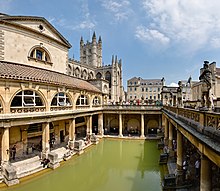
One thing that has always intrigued me about ancient Roman culture are their recreational activities. To have lived so many years ago, it is surprising how much they were able to invent and accomplish. I recently stumbled upon an ancient Roman recreational activity I hadn't known of before. The Romans built bathhouses. These bathing spas were communal. Men and women were typically separated, but they welcomed everyone in the city for a small fee. These bathhouses had warm baths, hot baths, and cold baths. And even a room for massages with oils. Most had a courtyard that was used for exercise. These bathhouses were a large part of Roman culture. Within the spas many business deals were sealed, exercise was common, courtships were conducted, and friends were made.
Roman baths in Bath, England.
While the ancient Roman spas and the spas of our day have their differences, some things that I enjoy are, warm showers, exercise, steam rooms, social gatherings, massages, and making friends. The co-ed spas don't seem very attractive to me, but I think that if I were to have lived in ancient Rome, these bathhouses would have been some of my favorite places. Especially considering the fact that steam rooms are already some of my favorite places to be. The recreational activities the ancient Romans enjoyed are always surprising.

Wednesday, October 14, 2015

Midterm Essays

Politics and Rhetoric--5

Rhetoric played a huge role in ancient Greece because of the political system. Every land owner had to fend for himself in court, in politics, and in other speeches. Today, the rhetorical styles of ancient Greece resonate so well with us because of our similar political system. But in ancient Greece, landowners needed more training than we do today. Lawyers were not common, thus ordinary people had to know how to win over a jury. Because of this, many were taught the ways of rhetoric. In fact, the profession of a rhetorician, meaning that you taught rhetoric, was a pretty lucrative profession in those days. Rhetoricians would pose debates in front of potential students to flaunt their skills and increase the number of students they had.

These rhetoricians taught specifically the “encompassing terms,” “persuasive appeals,” “branches of oratory”, and “canons of rhetoric.” These subjects were taught through imitation, analysis, and exercises. Students were taught according to what they would need to succeed in the ancient Greek world. No matter the profession, citizens were expected to know how to persuade others in order to succeed in society.  In ancient Greece’s democracy, all landowners were expected to participate in politics for the betterment of Greece as a whole. In summary, rhetoric played a crucial role in the lives of the citizens because politics was not just left to the politicians; rather, politics was an every-day part of the average Greek landowner’s life!


I'm just glad I'm not here right now. 
Interpreting Greek Speeches--6   
         
A lot has been said already regarding the branches of oratory in Pericles’ funeral oration, and I think there is only one thing that has been established: the branch of oratory the speech fall into is up for debate. Many have claimed that it is purely epideictic, some purely deliberative and even more have claimed that it is a mixture of both. I argue Pericles’ funeral oration is both epideictic and deliberative and let me tell you why.

Epideictic

One of the most important aspects of epideictic oratory is that the orator uses praise. The fact that Pericles praises his country and its citizens is undeniable. He exaggerates this concept of praise so much it is almost irritating: "our city," "our belief," "our empire," "our state," "our power," "our constitution," "our system of government," "our being a model to others," "our deep respect," "our obedience," and "our own real courage and loyalty." These phrases are clearly meant to praise the country as a whole, which in turn, gives the audience a feel of patriotism. Clearly, Pericles meant this speech to be (at least partially) epideictic, after all it is a funeral oration.

Deliberative


One of the most authoritative arguments for the oration to be deliberative is that in Aristotle’s Rhetoric, he quotes this speech while he is explaining deliberative oratory (Aristotle Rhetoric, 158). Aristotle quotes the speech, but that does not mean that the oration is purely deliberative. It does, however, provide a strong case for the speech containing some deliberative aspects. Pericles goes on to use the praise that he has given to his country and fellow citizens as leverage to persuade them to fight for their country. This legislative persuasion regards the future. Deliberative oratory regards the future. This simple syllogism makes perfectly clear that the speech is also deliberative.

Monday, October 5, 2015

The importance of delivery

Note taking during general conference has always seemed exhausting to me. I'm not good at enjoying things I feel forced to do. And after the many years of being forced to take notes for class, I love just being able to listen without the looming mid-term or final exams. But that can make it hard to remember some talks.

Elder Hales' talk probably would have been one that I would have forgotten this conference. 

This may surprise you after reading Kevin's post about how memorable this same talk was. And it's not that I don't like Elder Hales, in fact, he's one of the apostles I respect the most. Honestly, I don't think I would have remembered his talk because of his delivery. The tone of his voice and his facial expressions did not seem to change through out his entire speech. I didn't see his arms, hands or even a finger. His eyes seemed to be fixed on the teleprompter reading line after line. 

Don't get me wrong, it was a great speech. His arrangement was especially impressive. He was able to tie in the story of him being a pilot through out his entire speech. His stories were descriptive and captivating with even a few laughs. Which makes this talk, in my opinion, a much better read. The only benefit that I gathered from watching the address was that he built his ethos by sitting down. Seriously, he was teaching to the youth from experience. He captivated them by his piloting days and showed them that he has been there and done that by simply sitting in his chair. I praise Elder Hales for his good writing skills and when I'm his age I don't think I'll have the strength to even get into that chair. 

Tuesday, September 29, 2015

But doesn't Alma say the word is more powerful?


"The preaching of the word had a great tendency to lead the people to do that which was just—yea, it had had more powerful effect upon the minds of the people than the sword, or anything else." (Alma 31:5) While reading this scripture it's easy to miss the first two words "the preaching." But those are the keywords. It's not the word itself, but the preaching of it. This is better explained by Nephi: "when a man speaketh by the power of the Holy Ghost the power of the Holy Ghost carrieth it unto the hearts of the children of men." (Nephi 33:1) I believe that the spirit can work more effectively through the voice of a servant, than the pen of a servant.
 
Let's look at an example: When Nephi tried to convince his brothers to help him build a ship, his words were crucial. Can you imagine what would have happened if the entire conversation was done texting back and forth?
Fortunately for Laman, Lemuel, and the rest of us, Nephi was able to engage them in a live conversation.

Why does the spirit work more efficiently through a speaker than through text?
There are many possible reasons for this. Staying on gospel topics, Preach My Gospel may have some insight. Let's just look at some of the topics within the 'how can I improve my teaching skills?':
  • Adjust Your Teaching to Meet Needs 
  • Teach with Your Companion in Unity 
  • Ask Questions 
  • Listen 
All of these attributes can be utilized more effectively in a face-to-face setting.

Monday, September 21, 2015

The narrative stole the show

I brought my wife to the play tonight happy that my professor had found us a great FHE date. We  both went in expecting to learn more about the ancient Greeks and what they did for entertainment. I was a little disturbed by the graffiti and half modern clothing. I think that if I wanted modern entertainment I would have gone to Jurrasic World. Fortunately it brought great discussions and we were pleased to have seen the play.
 
I agree with Chandler D when he said, "my favorite part was when Tutor told the story of Orestes' 'death'. The drum set, his humor, and the way he told the stories with gesture and a building voice all worked to create a rousing change of pace." It was the narrative that stole the show. The tutor specifically had a very well rounded story. The actor used his hands to cue the drummer when he wanted a specific sound to help him engage the audience. His words were very specific and painted a very vivid picture (even without us knowing the culture that well). As he told the story he waved his arms, twirled his body, widened his eyes, and raised his voice. All of this, brought the heroic death of Orestes into a vivid reality. Although, the tutor and the drummer were not the only ones helping him shape the narrative: Electra and the chorus' reactions to the story made it even that more real. 

It seems pretty obvious that this narrative was meant to be one of the most entertaining parts of the play. My question is, why? Because the story was meant to deceive, at least that is my opinion. The most elaborate story of the entire play is also the most deceiving. What does this tell us about Greek culture and in turn our own culture?

Tuesday, September 15, 2015

Kairos leads to pathos

The moment when change is possible
In my opinion, a funeral oration is one of the clearest examples of Kairos. The audience expects something to be said about those who have passed on and the orator has the opportunity to say something that lifts the spirits of the audience. Thucydides understands that the audience wants to hear about the character of Pericles and he fulfills this want, but he also has his own persuading to do. Laycee Liston mentioned in her post that the orator had multiple motives for his speech. I would like to expound on her claim.

Clearly, Thucydides is worthy of speaking there. He makes that clear by stating that he is a historian and has been honest in all of his writings. He shows the audience by quoting Pericles that he is a patriot by stating their differences (i.e. how they are better) than the other cultures of their time. Unlike others who have posted before me, I don’t believe he expounds on logos at all. I claim that he purposely expounds on ethos, Kairos, and pathos, but not logos. Seizing the opportunity he had to talk about their country, bringing out the deepest of emotions in them. Thucydides took advantage of the high emotions quoting Pericles of the event to persuade them. In fact, not only did he take advantage of their already high emotions, he stirred them up even more. Pathos was his main tool to persuade them, and this was only possible because of the unique moment he had found himself in. So, after establishing his ethos in the beginning, which was typical and also advised by rhetoricians of their time (arrangement), he uses the Kairos of the moment to stir up the emotions of the audience to persuade them of his underlying motive.

So, what was his underlying motive? I’ll let you decide in the comments below.

Tuesday, September 8, 2015

Thanks, Jonathan!

Utah State Campus
My entire childhood I never wanted to attend BYU. Growing up in Provo, I thought it would be ridiculous to stay home and be a Zoobie. So, as soon as I graduated high school I was in Logan hating on BYU. But while in Mexico for two years I realized how unique the opportunity to attend a church sponsored school really was. Although I had more respect for BYU students, I still wasn't willing to apply. What would my Utah State friends say?  I would betray those I came to love in Logan.
Me as a total Zoob!

With just about 6 months to go a former companion, Jonathan, told me I should got to BYU. I quickly denied him, but he was persistent. He told me that he knew we both needed good friends to be around after returning home. And he told me that I would find those friends at BYU. I thought about who I would hang around with at Utah State and I knew I needed BYU much more than it needed me. Jonathan knew exactly what was important to me and how to persuade me to join him at BYU. His timing couldn't have been better--he knew I was thinking about how to return home and stay active.

 He was right about finding friends at BYU. Almost two years after our conversation he introduced me to who is now my wife.

Friday, September 4, 2015

"Trust the Dreams"

Dreams are some of the most persuasive forms of communication. Martin Luther King Jr. convinced the nation that his dream was desirable and attainable. In my opinion, the fact that he used dreams to persuade made all of the difference. If he would have said, "I believe that one day..." it still would have been persuasive, but having used the word dream, it became a dream instilled in the hearts of the American people. 

Martin Luther King Jr. knew his audience. He understood that most of the American population was christian and that they believed in visions, angels, and revelations. The way he proposed his dream was, in a way, divine. 

Although, Agamemnon and Nestor were not Christians, they were religious men that believed in a higher power or higher powers. So, when Jove sent Agamemnon this 'lying dream' he knew that his audience would accept it, because it was a dream from the Gods. Now, Jove not only knew his audience but also knew how to use karios to his advantage. Sending the dream to Agamemnon, would give Nestor the confidence to accept it as truth. Just as Amanda Debuse put it, "when the person speaking is someone who the audience likes or esteems highly, the better chance the speaker has of convincing the people with his/her rhetoric." For this reason Nestor was convinced: "He who has seen it is the foremost man among us - we must therefore set about getting the people under arms."

Agamemnon also understands the effects of kairos because he called the elders to a meeting, creating a kairotic moment to persuade the rest. Knowing how important Nestor would be in persuading the rest, he calls this meeting in the ship of Nestor and throughout his speech refers to Nestor in pleasing ways. 

Martin Luther King Jr., Jove and Agamemnon all understood that a dream would strike their audience deep in their hearts and leave them with a conviction to follow. 

Tuesday, September 1, 2015

The Greeks and I sgraffito


Sgraffito is italian, but derived from the greek word gráphein which means to write.The greeks wrote with an alphabet in a linear fashion, just like you are reading this. And, now that I am in a writing class, I write just like the greeks did. Although, my writing looks a little different.


Fortunately, sgraffito has multiple meanings. Today sgraffito is a decorating technique used in multiple artistic disciplines, but pottery is my personal favorite discipline of art. So, I use it in my work. I'm not sure if the greeks used it much, because it was much more popular during the renaissance. But I was taught to use sgraffito  by using a clay slip that is a different color than the original clay to decorate the piece. Using this technique potters can get much more intricate decorations on their work--you can tell I'm still learning how to incorporate sgraffito in my work.