 Communication disorders are no respecter of
persons, and have penetrated humanity since the beginning (some evidence even
suggests Moses had such struggles). Ultimately, we
are social beings, and there are negative consequences when we are unable to
effectively communicate in any way. Thankfully, we live in a time where there
is professional help available to those afflicted with such disorders, and they
are called Speech Language Pathologists (or speech therapists).
Communication disorders are no respecter of
persons, and have penetrated humanity since the beginning (some evidence even
suggests Moses had such struggles). Ultimately, we
are social beings, and there are negative consequences when we are unable to
effectively communicate in any way. Thankfully, we live in a time where there
is professional help available to those afflicted with such disorders, and they
are called Speech Language Pathologists (or speech therapists).
A Shift in Society
 Historically, there were not “professionals” for
individuals to see when they were having problems communicating. But surely
there were cases of individuals working out in the field or learning a trade
who had limitations when it came to speaking with others. Early humanity was
most concerned with what these limitations meant. The ancient Greeks thought it
was a cursing of sorts. Even the scriptures
reference numerous accounts of Jesus being asked questions regarding this very
suspicion regarding such disorders. With these negative
connotations in regards to disordered communication, individuals were
predominantly left to the mercy of self-help or questionable surgeries[6]. Today we know these
disorders to be rooted in very diverse, natural (rather than supernatural)
causes. Specifically, today we investigate structural, functional, cognitive,
behavioral, and environmental causation factors. With the shift that has taken
place in our society from labor intensive roles
(blacksmiths, seamstresses, farmers) to more communicative centered roles
(customer service, public relations, advertising), this field was born. Functioning
in our present day society is nearly impossible for those whose speech draws
negative attention to the speaker. Thus, speech pathologists combine their knowledge
of human development, psychology, sociology, science, and medicine to develop
personalized therapies that target the root problem and dissipate secondary
adverse effects as much as possible. Language is not a secondary function in
our modern world. We know that the lack thereof is not evidence of supernatural
root or punishment by God; and because of this, we place high emphasis on
helping individuals learn to communicate effectively; and the way in which we
do this is by communicating effectively ourselves.
Historically, there were not “professionals” for
individuals to see when they were having problems communicating. But surely
there were cases of individuals working out in the field or learning a trade
who had limitations when it came to speaking with others. Early humanity was
most concerned with what these limitations meant. The ancient Greeks thought it
was a cursing of sorts. Even the scriptures
reference numerous accounts of Jesus being asked questions regarding this very
suspicion regarding such disorders. With these negative
connotations in regards to disordered communication, individuals were
predominantly left to the mercy of self-help or questionable surgeries[6]. Today we know these
disorders to be rooted in very diverse, natural (rather than supernatural)
causes. Specifically, today we investigate structural, functional, cognitive,
behavioral, and environmental causation factors. With the shift that has taken
place in our society from labor intensive roles
(blacksmiths, seamstresses, farmers) to more communicative centered roles
(customer service, public relations, advertising), this field was born. Functioning
in our present day society is nearly impossible for those whose speech draws
negative attention to the speaker. Thus, speech pathologists combine their knowledge
of human development, psychology, sociology, science, and medicine to develop
personalized therapies that target the root problem and dissipate secondary
adverse effects as much as possible. Language is not a secondary function in
our modern world. We know that the lack thereof is not evidence of supernatural
root or punishment by God; and because of this, we place high emphasis on
helping individuals learn to communicate effectively; and the way in which we
do this is by communicating effectively ourselves.  I’ve Decided to Study Speech Language Pathology- What Should I Expect?
To prepare for this major requires completion of prerequisite classes, specific anatomy and language development courses in the major, and some field work. For more specifics as to how best prepare or what you need to do now that you have decided to pursue this path, consult the audience profile in this blog post or the PDF version of this complete paper.
Required Skill Development- Communicating to Different Audiences
Therapist - Client: Therapist to client communication has a
very low style. The goal is to increase the individual’s basic communication
and eliminate any negative attention or secondary behaviors associated with the
impediment, to increase the individual’s quality of life. The most important
skill to have is to be able to connect with each individual with his or her
unique situation. What works with one client will not work with another;
however, in all cases, clarity needs to be priority. This will be the most
effective tool whether the patient has the cognitive ability of a
seven-year-old, has ADD, had a tracheotomy, or a lisp—directions need to be
concise and precise to persuade them to compliance. There will also be client
to therapist communication. And a therapist needs to be aware of client
strengths in order to magnify them.
Therapist - Family: Another group that speech therapists will
constantly communicate with is the family of the client. With this group, it is
extremely important to convince them of the necessity of treatment. Treatments
can be expensive and often times insurance doesn’t cover all of the sessions
necessary. So as the speech pathologist, it is important to design a routine
that actually helps the individual progress in a way significant to the person
and their family. But, before treatment can be implemented at all, the family
needs to be guided through the grieving process. It is very hard to learn that
a loved one has any sort of condition, mild or severe, that inhibits their
ability to lead a normal life. So, SLPs need to be emotionally available and be
able to read the family members to know when it is appropriate to suggest a
course of action. It is important to effectively communicate with the family so
that their support and encouragement of the client will be based on a clear
understanding of the issue, the program, and the expectation.
 |
| Reference 1 |
Therapist - Insurance: This is the group in which the most
technical written and oral communication, heavy in use of medical terms, is
used. Therapist need to persuade the insurance companies that the disorder
interferes with the individual’s ability to function, and consequently, an
expensive treatment could improve the individual’s quality of life in very
specific ways. These documents are saturated with lists of the advantages of
treatment and the disadvantages of not proceeding on this course of action. It
is very important for the speech therapist to effectively communicate to the
insurance company exactly what course of action is necessary, and who all needs
to be involved (other doctors and specialists). If successful in this, the client
will receive the care they need to progress.
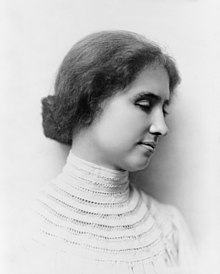
So I am sure by this point you have taken notice of the photos on the right. From top to bottom you see Isaac Newton, Marilyn Monroe, Winston Churchill, Helen Keller, and Beethoven.(Websites for more information about famous stutters.) Looking at these people you may have several words come to mind. For example: talent, intelligence, music, determination, inspiration, and leadership. One word that may not come to mind is disorder; and yet, these are just a couple of the faces of various communication disorders. Their disorders cover everything from lisping, to stuttering, to hearing loss. Like all these historical people, our clients too can be remembered in a positive light that focuses on their successes. It is our job to disintegrate these negative concepts associated with such disorders and communicate our own stories of success. Success in this field takes an understanding of communication, respecting communication, and maintaining control over your own communication. One way in which we as speech pathologist showcase control over our communication is by successfully identifying our different audiences and adapting to what will be most persuasive for who we are talking to. It is important to remember that language production in no way indicates intelligence or potential. In this field, we maximize the positive influence of effective communication to improve another’s ability to communicate. They may never get to the point where they are 100% effective in their use of language; but, this will be a field in which you help facilitate individuals growth, improvement, and success.
[1] "Hearing Beethoven – Part I." Hearing
International Bob Traynor International Perspectives on Hearing Health
Audiology HearingHealthMattersorgHearingInternational. HHTM, 04 May 2011.
Web. 09 Dec. 2014.
<http://hearinghealthmatters.org/hearinginternational/2011/hearing-beethoven-part-i/>.
[2] "Famous People." Stuttering Foundation: A
Nonprofit Organization Helping Those Who Stutter. Stuttering Foundation of
America, n.d. Web. 09 Dec. 2014.
<http://www.stutteringhelp.org/famous-people/>.
[3] Doty, Laura. "Famous People Who Stutter." Famous
People. N.p., n.d. Web. 09 Dec. 2014.
<http://www.d.umn.edu/~cspiller/stutteringpage/famous.htm>.
[4] "Knowing Your Disability - The History of
Deafness." Knowing Your Disability - The History of Deafness. N.p.,
n.d. Web. 09 Dec. 2014.
[5] John 9:1-3
[6] Brosch, S., & Pirsig, W. (2001). Stuttering in history
and culture. International Journal of Pediatric Otorhinolaryngology, 59(2), 81-87.
Retrieved from http://search.proquest.com/docview/85358528?
accountid=4488


