Showing posts with label assignment. Show all posts

Monday, November 30, 2015

Assignment: Annotated Working Draft of Final Project

My students have been drafting components of a larger semester project over the last six weeks or so. Now, it's time to combine and develop these into the final project. To this end, I want each of my students to create an "annotated working draft," as follows:

1. List and link your posts
First, I want each student to create an index to the four component blog posts he or she has written to date. Here is a reminder of those four posts. Students should have a section titled "component assignments" with a numbered list like this one, only they will give the title of their post written for each of these. Be sure to link to your own posts:


Component Assignments:

If you were simply to stick together all four of these posts, it would not be a very good paper (yet). So, we need to find a way to bring the content you've already written together in a meaningful way, and then chart a path to a revision that will fit the requirements for the final project (including length). Read on...

Wednesday, November 18, 2015

Assignment: Institutional Authority and Communication

As part of my students developing final projects in which they examine how history and communication relate to their chosen career fields, I am now asking them to develop a new component: researching their chosen field in light of the institutions that regulate that field, and in terms of the communication and control mechanisms that field employs.

The historical parallel here is to the political power of the Roman empire, and to the ecclesiastical and social power of the Catholic church in medieval Europe. Both of these entities put into place administrative hierarchies, and both used educational systems, authoritative texts, and cultural practices that would conserve their values, practices, and influence.

I do not want my students to examine political or religious authority, but to use these as historical analogs to the ways institutional authority functions within their career fields. Every field -- to be understood as a field -- has organizations that set, communicate, and enforce standards. In parallel to Catholicism, even the most secular fields keep the ideas of orthodoxy and of heresy. People have legitimacy conferred upon them by organizations provided they maintain "the faith," as it were. And such organizations have methods for disciplining or "excommunicating" its "unfaithful" or heretical members. They typically also have ways through which standards can be challenged and changed. Along the way, there must be in place methods for establishing and communicating standards and for vetting and approving / disapproving members of a given community of practice.

So, in 300-400 words, I would like my students to research one organization that institutionalizes the values and practices of their field. (It is very likely there will be multiple organizations with authority within a given field, but only one should be chosen). In their prewriting, they should answer these questions:

  1. Authoritative Organization
    What is the name and nature of one authoritative organization for this field?
  2. Regulating Standard
    How has this organization institutionalized the values and practices of their field? (Do they have key documents, or regulating processes or meetings?)
  3. Influential Event
    What is an event this organization holds to create consensus, communicate values, or exercise control and influence in the field? 
  4. Authoritative Publication
    What is an organ of communication used by this organization to communicate values or standards, and to connect people with peers in the field?
  5. Challenging Authority / Changing Standards
    How does the organization deal with challenges to its core standards or practices?
In the actual post, however, I do not want the students to organize their writing as this list. Instead, they should use the list and then create a fictional scenario, a mini case study, that walks people through how these things are experienced. In this brief fictional story about someone in their career field, they should use the components in the list above as elements they identify (bolded and in brackets) as they tell the story. See the example, below.

Title your post "Institutional Authority and Communication in [your field]"
use the label: institutional authority and communication

Go past the break for an example

Saturday, November 14, 2015

Assignment: Analyzing Biblical Eloquence

My students are reading St. Augustine's On Christian Doctrine. Augustine discusses and analyzes the eloquence of scripture. We will do the same. Here is their assignment for Tuesday, November 17:

Find an eloquent or poetic passage from the Bible which you comment on rhetorically. Look for passages that are appealing not because of their content or doctrinal importance necessarily, but because of their pleasing expression. The passage you choose should be paraphrased and/or quoted and briefly analyzed. This can be a single verse, a passage, or even an entire chapter.

Title your post "Biblical Eloquence in [passage reference]"
Use the label "biblical eloquence"

In essence, I'm asking you to do something similar to what Augustine models in Books III and IV when he observes and analyzes scriptural eloquence. For a specific example of him doing this, see Book IV Chapter 7 (pp. 77, paragraph 11 in the PDF).

Be sure that you both identify one or two rhetorical elements and then discuss their significance -- why the rhetorical elements are needed for the author or speaker to make his or her point, or why knowing these rhetorical aspects improves our ability to understand that passage, or what the function or effect is of this form of expression. See the two example posts below as a guide, or browse through the completed posts of prior students.

Wednesday, November 11, 2015

Assignment: My field within the history of civilization

As part of my students' final project, "Rhetoric in My Field," I'm asking them to research the history of their chosen field.

Outside of an academic setting, history can seem quite unimportant when compared to the pressing matters of the present. But history gives context and credibility to whatever one is doing. It can demonstrate sensitivity to the diverse issues and people associated with a given field of action. With a historical perspective, we can think about the present with more wisdom and act more appropriately.

Stories about origins 
It is often the case that first principles are evident within the first events that give rise to and shape a given field. This is one of the great reasons for history: it doesn't just narrate the past; it uses the past to make claims about foundational concepts that transcend time. We retell stories of how things first came to be in order to remind ourselves and ongoing generations about standards, issues, and even problems that have been and remain critical.

In 300-500 words, trace the development of your chosen field over time and relate it to the history of civilization. If possible, tell the story of how your field began. What contexts gave rise to the formation of that field? Some fields are of very recent origin. If so, you may need to generalize a bit to the broader field that has a longer history. Do your best to trace your field back to antiquity if possible. For a model of this look at the "History of Accounting" section in this post (although that post lacks the social source I am requiring, as described below).

In giving this history, use two sorts of sources:
  1. A scholarly source
  2. A social source
    By this is meant you must communicate with someone presently in the field who can give you a historical perspective. That person may not be able to give you a general history, but he or she should be able to tell you about how this field has developed over time as far as they know (so don't consult someone new to the field).
Use the label: "my field in the history of civilization"
Due: Friday, Nov 13 at noon. Comments at 5pm

Monday, November 2, 2015

Assignment: Revising Our Personal Stories (2)

Previously, I asked my students to make a catalog of ten personal stories. Now, based on responses to these that they received from others, each student is to select one of their listed stories (one which received at least one vote), and tell this story -- twice. (Use the label "retelling a personal story")

First Version - "How I Normally Tell It"

  1. Name your story (have this be the title of your blog post, too)
  2. Give the kairos / audience (typical setting in which you tell this story, either why or to whom)
  3. Tell the story in 200-400 words, being sure to use
    1. descriptive words or scene-setting to make it vivid and interesting
    2. dialogue / direct speech


Second Version - In a Contrasting Style
Tell the same story again, but this time vary its style and include the rhetorical elements (and labels) listed below.
  1. (Re)name your story
  2. Give a different setting or audience for this version of the story
  3. Retell the story in 200-400 words, and in doing so
    1. Use and label at least three topics of invention [use bold and brackets]
    2. Use and label at least two schemes [use underline and brackets]
    3. Use and label at least two tropes [use italics and brackets]


See the example that follows

Wednesday, October 28, 2015

Assignment: Revising Our Personal Stories

As a follow-up to the discussion held with my students about the persuasive power of stories and storytelling, I'm now going to ask my students to consider personal stories and how we can draw more from them (both for personal and social purposes) by reworking them.

This is a two-part assignment. The first post (due Friday 10/30) will be a list of 10 stories (explained below). The second post (due Tuesday, Nov 3) will be based on the responses given by those who comment on the first post (as will be explained in a separate instructions post).

To introduce this assignment, I'd like to review how stories define us, as well as confine us, and how they can be used to bring about change. Then I will give the assignment details for the first post.

Monday, October 26, 2015

Assignment: Storytelling in My Field

After studying Roman rhetorical pedagogy and the various preliminary exercises (the "progymnasmata") outlined by Quintilian, it's clear that preparation for speaking and writing required the ability to tell stories convincingly.

I'd like my students to find and relate a story (or to compose one of their own) that exemplifies one type of storytelling typical in their career field. They should follow this pattern:

Title "Storytelling in [my field]"

Foreword

  • What type of situation and genre of communication this exemplifies. ("In the field of _______ it is common to relate an account of ______________ within a [document / setting / situation] and to [audience(s)]")
  • What is the purpose of such stories / storytelling?
  • What are the parameters for such storytelling (length, medium, audience, etc.)?
  • Where did you get this story or how do you know it's representative of your field?
Example Story
  • Set up the story if needed (one sentence only)
  • Give the example story. Try to keep it under 100 words if possible. Bold the story so it stands out.
Analysis
  • Point out the component ingredients of the story
  • How is persuasion at work here? 
Retelling the Story
Show that you understand how to rework stories for different purposes or audiences by revising and retelling the story you just communicated.  (See the model below for an example).
  • Indicate the variation in purpose or audience.
  • Retell the story you gave above, but as recommended by Quintilian when he outlined the narrative exercise, change the order in order to make a different point or to address a differing audience. (While you can take a bit of creative license here, still try to stay within the parameters or appropriate tone for the genre you're writing in.) You can slightly lengthen the story but focus mostly on varying the order of events, either telling events in reverse order or from the middle, as Quintilian suggests. (Bold the story so it stands out)
  • In a follow up sentence or two remark on how you varied the story and why that variation might be more persuasive
Use the label "storytelling in my field" as a label for the blog post.

A model for this assignment follows the break.

Monday, September 14, 2015

Assignment: Rhetorical Analysis of Pericles' Funeral Oration

Pericles led Athens at the height of its classical glory, and from the funeral oration he gave, as recorded by Thucydides, we get a sense of how the Athenians thought of themselves, as well as the role that public speaking played in their culture.

I'd like my students to read the funeral oration of Pericles and analyze this rhetorically in about 300-400 words, using the rhetorical terminology learned to date -- including the three encompassing terms, the three persuasive appeals, and the three branches of oratory. (One might also look at the use of topics of invention, or at arrangement or style -- all terms on the Forest of Rhetoric but not yet formally introduced).

Since this oration is included within a history, we have a second frame of reference for this, and that is the one provided by the historian Thucydides. Consider history as another genre of rhetoric, comparable to a branch of oratory. So, in addition to looking at Pericles, analyze Thucydides' rhetoric (audience, intention, kairos, style, etc.) In order to do so, you may nee to do some brief research on Pericles and on 5th century Athens, or on the Peloponnesian war. How is the history by Thucydides "rhetorical"? What role does oratory play in reflecting history or making it understandable to us? Does Thucydides violate the rules of history?

To encourage learning from one another, as well as the avoidance of duplication, each post should make explicit reference to and link to at least one other student's analysis. Rather than seeing multiple students make very similar points, I'd like to see students refining or even challenging one another's analyses. Feel free to read and respond to my students' posts from a past class. Find theirs by using the same label you should use for this assignment, "Pericles' funeral oration"

Thursday, March 5, 2015

Analyzing the Rhetoric of Revolution

My students in rhetoric and civilization are currently examining revolutionary writings that range from the early Enlightenment up to the 20th century. I want them to recognize a pattern in these writings and speeches, the pattern of revolutionary rhetoric.

All students will be reading the Declaration of Independence, in which we can identify many of the traits of this genre of discourse. Then, each student (as assigned) will be responsible to do a rhetorical analysis of a specific writing from our text. They will take notes on their individual speeches, which they will discuss in small groups early next week (March 9th), and then they will formalize this into a blog post, a more polished rhetorical analysis.

I'd like to draw attention to several traits of this kind of discourse, so that these can be analytical categories to assist them.

Context
Revolutionary writings are always intimately tied to the historical setting and circumstances that give rise to the felt need to act and to speak. (See the rhetorical concept of kairos or the rhetorical situation). What are the larger or more proximate occasions that gave rise to this particular speech or writing?

Such writings, at least since the Enlightenment, also seem to have an international or global context to them. Revolutionaries look beyond national boundaries, often, just as they look beyond class divisions -- both for trends that justify their current actions and for including those of the same economic status despite differing political affiliations.

Epideictic Oratory
Revolutionary rhetoric is typically epideictic in nature -- more oriented to the present moment, and often employing two common modes of epideictic speech, encomium and especially vituperation (speeches of praise and of blame). It is often filled with complaint and blame. Who or what are the people or factors that are blamed?

Monday, February 2, 2015

Essaying the Essay: Wrapping up the Renaissance & Reformation

As we conclude this unit on the Renaissance and Reformation within this Rhetoric & Civilization course, I'd like my students to return to the essay form -- not the college essay form with its overt structure of argument and support, but the essay form as first practiced by Michel de Montaigne: exploratory, informed, and conveyed with a sense of personal reflection and style.

We just had a classroom activity, a "salon" where, in small groups, the students practiced sprezzatura -- spirited and witty conversation informed by the historical figures, texts, and concepts we've studied in this period. I want their written essay to be something of an extension of this lively dialogue. In short, I'm hoping that in about 500 words each student can demonstrate 1) knowledge of specific concepts, people, events, and texts of the Renaissance and reformation; and 2) ability to meaningfully explore such ideas within the genre of the Renaissance "essay." In that spirit, they are to essayer ("try" or "prove") their ideas as those ideas bump into one another, and as they play off of people and ideas.

A simple formula:

Tuesday, December 16, 2014

Just acCount it!


Despite surface impressions, the field of accounting requires an underestimated amount of background knowledge and communication. Based on what I’ve been able to gather with almost two years of being in the accounting program at BYU, I’ve decided that the following will address the importance of understanding the history of accounting – supplemented with a few historical examples and the importance of communicating effectively within the field – broken in to two different contexts. Though these topics create a list that is far from an exhaustive description of the important forms of communication, I believe them to be critical based on my interactions with accounting professors and an internship with the nation’s top accounting firm, PwC.

History of Accounting

The tablet above holds accounting
information dated as far back as 3200  BC
Of all the things humanity has created – arts, theatre, technology, medicine – keeping track of money/valuables is one of the oldest. Even back to the days of the flood, Noah was instructed to take an accounting of the Lord’s valuables (His creations, the animals). Down through Moses we have records of accounting (i.e. the entire book of Numbers). Trade records and bartering systems were all accounted for and assessed, if not on a social level then on an individual one. Men have always been trying to be richer than his neighbor. And how does he know he’s rich? He accounts for what he and his neighbor have. In ancient Greece, officers were required to give accountings of the fund entrusted to them at the conclusion of their service. They were expected to properly manage the funds that had been given them. The importance of wealth and stewardship were not lost on the Greek and so they were sure to require an accounting of those who had been given so much. In ancient Rome, accounting played a particularly important role in leading the home. Fathers were expected to keep track of the accounts of the household. Fortunately, the lack of credit cards and predating of shopping malls made monitoring teenage spending significantly easier. Most purchasers were made with cash; however, there are clear indication that receivables and payables were set up with merchants and customers. As time lapsed into the medieval ages, we see an apparent retrogression of the accounting systems however apparently “Charlemagne had an elaborate system of accounting for income and expenditures and required detailed reports from all his subordinates.” (Kester, 1917)
Accounting has been formalized and structured over the centuries. In fact, in a more recent vein, the reliance on the way we account for things has a tremendous impact on everyone’s daily life. The value we give to different currency; the price floors and ceilings that certain markets and commodities bear; and the amount of money we pay in taxes each year all depend how we account for our money. On a nationwide scale, the most significant change to the accounting system in recent history is the Sarbanes-Oxley act passed in the wake of the Enron/Arthur Anderson debacle (Koehn and Stephen, 2004). This act revamped the way big businesses are allowed to account for their money. How does this affect the average consumer? Corporation now have to pay significantly more to have their accounts managed, these types of costs are always passed on to the consumer.

Accounting has been around a long time, and will be around forever. At the very least, men and women will always be required to give an accounting of the labors, which very well may include how we spend our money/substance.

Communication in Accounting

Two man avenues of communication exist in the accounting field. The first is internal with our fellow employees and managers. The second is with the customer or other external entities.
Internal Communication

Like the ever-ticking hands of an ornate grandfather clock, the world of business clicks on at an undeviating and unrelenting pace. Only the most competent and most exact companies survive the grueling grind of the free market. This medium of exchange, for innumerable vendors and consumers, demands specific type of communication -- a communication that one only understands by understanding the nature of business itself. This nature has two underlying fundamental principles that drive everything in the world of industry – efficiency and accuracy. Companies must produce every product and every service on time and to proper specification. Therefore, essentially all material communication works to meet those ends.

Accounting firms have a focused and restricted environment of communication. Information is exchanged almost exclusively on need-based circumstances. Accountants will use any type of communication necessary to obtain the requisite information as efficiently and accurately as possible. They will make phone calls at almost any time of day, they will send emails as soon as problems arise, and if necessary, they will physically visit other employees or customers in search of a solution. Accounting firms provide services to clients and charge those clients based on the amount of time it takes them to render those services. Therefore, the only way a firm can lower the cost of services it provides to the client, and consequently make the client happier, is to reduce the amount of time spent on each project. To that end, accountants prefer to communicate over any medium that resolves their concerns as quickly as possible.
For example, when management decisions are being made, a team of executives will gather to discuss the issue. They do not mince words and do not particularly care about how they come across to their peers. They all have one goal in mind, discus the facts and reach the best conclusion for the company. A high-performing, management team will set aside egos, pride, and pleasantries, to optimize the efficiency and accuracy of their communication.

External Communication

Among the biggest firms, clients will need to pay an average of $300 dollars an hour for accounting services. For clients that have large tax returns, which are literally one and a half feet tall when everything is printed out and stacked together, the firm can receive into the hundreds of thousands in revenue. Naturally, these clients have tremendous leverage over the firm in the sense that they can easily take their business to another firm if the previous does not meet their expectations. This bargaining power engenders tremendous focus on positive, client relationships. The firm will do everything they can to ensure that they maintain a healthy association with all of their clients – especially large ones. The following fictitious story illustrates the need for respectful and tactful but effective communication.

Michael the a tax manager for PricewaterhouseCoopers has longer had the Walt Disney Corporation assigned to him to ensure that their corporate tax returns are always filed on time and accurately. Michael thoroughly enjoys working with Disney as they almost never have any issues with how they have classified and reported their income. This proficiency means that despite Disney’s extraordinary size, filling out the tax returns is not overly complex. However, Michael is a diligent employee and always double checks.
On one unfortunate day he discovers an error – a gross error—an error of such blatant magnitude and nature that it would have unlikely been missed by the usually meticulous Disney tax preparers. Perplexed, Michael sends a quick email to his contact at Disney inquiring about the discrepancy. He receives a reply in a uncharacteristically short period of time that indicated he should not worry about the supposed error because it is not an error due to xyz explanation. This made Michael even more concerned. Not only would such an inquiry much more time to investigate than Disney took to respond, very suspicious, but also the explanation made no sense. Michael drafted another email that explained the error and politely elaborated on the proper solution. Again, Disney responded quickly and tersely. They adamantly reaffirmed their position and offered no further explanation. Michael knew he would need more authority in his next correspondence. He called an IRS hotline, available exclusively to the top accounting firms, received congruent advice. He the drafted the following email:
Dear Sarah:
Thank you very much for your prompt correspondence over the last few weeks. I am again writing regarding the allocation of income discussed in previous emails. I apologize for any annoyance caused by my persistence on this matter. I assure you my sole concern is to ensure that Disney avoids any penalties associated with inaccurate filling.
Regarding, the allocation of interest income generated by off-shore, related entities – specifically those related to Disney Cruise Lines must be reported as ordinary income. The internal revenue code very clearly states that all revenues received for engaging in the normal course of business must be classified as ordinary income not income received from capital gains despite the fact that Disney Cruise Lines is a capital investment that exists independent of The Disney Corporation. Furthermore, I called the IRS to receive further clarification about the proper allocation of this income and they confirmed the above opinion.
We cannot sign the return until the income has been reclassified. We are very grateful for your understanding and again apologize for any inconvenience caused.
Sincerely,
Michael the Manager
The above scenario illustrates the need for tactful and courteous communication. Had Michael handled the situation poorly, he would have risked losing one of the firm’s biggest clients. Fortunately, it was handled well because Michael remained polite and unassuming. Though it seemed very suspicious that such an experienced firm should make such an egregious error and not fix it, Michael did not make an assumptions or accusations. Instead, he calmly investigated the matter and presented his case to the extent that either Disney would have to file a return without PwC and likely receive a penalty, or they could change the way they classified their income. Respectful style and appropriate delivery are paramount.

Conclusion

Accountants are always looking for new and more creative ways of saving their company and clients’ money. When we understand the importance of the history of accounting, we will be far less susceptible making the same mistakes.  After all, a creative form of accounting caused the largest business scandal in recent history. Furthermore, the need for appropriate communication is constant. Accountants cannot succeed in their field without understand how to express themselves in the varying situations that they will encounter.

Monday, December 15, 2014

Communication in the World of Accounting

Accounting has been around for centuries and some of the oldest accounts recorded and known date all the way back to ancient Rome where they would account for taxes, crops, and population (Rathbone). At that time accounting was simply recording the count of different categories. As civilizations began to develop and evolve with advancements in technology, accounting followed the trend. Today modern accounting practices have become much more complex, with many rules and regulation created in the late nineteenth century (Schneider). The accounting junior core will teach students all of the rules and technical information needed for their profession, but what is often left out the communication skills needed in their field. Accounting students must know how to communicate both through written documents and through oral, face-to-face interaction in order to successfully communicate with others.

Written Rhetoric
There are two types of written communication for accountants (1) financial statements, and (2) business correspondences. To better understand how each one plays a role in the accounting field, case studies have been provided below:

Financial Statements
John has just submitted the quarterly financial statements for the company. He double checked that the assets equal the liability and equity, the monthly ending account balances match on both the cash flows and bank account statements, and the income statement has the correct revenues and expenses listed. All three statements that he created followed the specific format that is customary to the field. John knows that because the documents were clean, and organized, those who would review the statements would easily find the information they were seeking. John was able to follow a specific form that allowed easy access to information. In accounting, it is imperative that the financial statements are clean and clear so the intended information will be easy for the reader to access. Over the years, accountants have somewhat standardized the look of their financial statements through the Generally Accepted Accounting Principles (GAAP), but there is still some flexibility when it come to the outline. Because of this, choosing the correct template to follow is very important.

Business Correspondences
Hannah needed to write a memo to her accounting team that explained the new system when creating journal entries. There were multiple added or revised steps, and she knew it would be a longer memo. When writing in business, it is important to keep the messages organized, and easy for the reader to understand where exactly in the process they are. Hannah kept that in mind when writing the memo, so she decided the best option was to organize the steps by bullet points. This would create a break in the page which would make the reading seem less daunting to read, and it would make the organization of the memo very precise. Hannah also created an agenda, similar to a thesis sentence, and the beginning of the memo which outlined all that was going to be discussed in the memo. It acted as a table of contents, which helped the reader follow and understand where how the paper was being guided. In the end, because Hannah was able to neatly organize her memo, all of her staff were able to transition smoothly over to the new journal entry system.


Oral Rhetoric
The second type of communication is oral, when people interact with one another in the workplace. Once again, there are two subcategories in this communication, communication during (1) an interview and (2) a meeting / presentation. The following case studies exemplify these two categories:

Interviews
Adam knows that first impressions are everything when it comes to interviewing. Oral communication does not consist of only what you say, but also includes tone and body language. When answering questions Adam made sure that his voice sounded confident and sure of his abilities and previous work experience. He also used a friendly and approachable tone when first introducing himself. Adam also took body language into consideration when preparing. He came ready to give a firm handshake, make direct eye contact, and dress appropriately. During the interview, Adam was very mindful of his gestures and hand movements. He avoided making nervous gestures such as playing with his hands, but also made sure to use his hands and avoid sitting completely still and lifeless. Finally, Adam prepared answers to the possible interview questions that would be asked. When interviewing one weak answer could prevent you from getting the job if your competitor is a great interviewer, and because of this he made sure that every answer that he would give would tell both a past problem that he encountered, and also the solution that he came up with that helped him in the work place.

Presentation / Meetings
Lisa was assigned to give the monthly presentation to the board of directors that explained the financial standing of the company. She knew that some of the directors did not have strong financial knowledge, and that if she were to talk and explain things to them as she would to her accounting colleagues, they would not understand. In order to relay the information Lisa chose to not just show the statements and charts, but to translate them from numbers into words, and explain the occurring trends. She also made sure that her accounting jargon was limited, and that she spoke in simple terms that everyone could understand. She had PowerPoint slides up and ready with information on them that she was going to further discuss.


In conclusion, accounting student must know how to communicate through written and oral rhetoric in order to successfully relay the information that they know to others in the company. Written financial statements and messages, along with oral communication during interviews and meetings / presentations are used daily in this field, and are vital to surviving in the business world. Just like everything in life, in order to master the skills, it take practice and patience. Taking the Management Communications class required for business majors will help further build up the communication skills described above.


Work Cited
Rathbone, Dominic. “Taxation in Roman Egypt.” Classical Review 27.2 (2007): 490-492.
Academic Search Premier. Web. 3 Dec. 2014.

Scheider, Bob. “Accounting Basics, History of Accounting.” Investopedia. Web. 3 Dec. 2014.

So You Wanna be a French Teacher

I was thirteen years old, and I did not want to take a Spanish class.
            The whole world was already taking Spanish, and besides, my older sister had taken French and loved it. So despite my parents’ warnings that Spanish would be more useful, I enrolled in French I for my eighth grade year. French I led to French II, which led (eventually) to French 322. In the middle of that great journey, I came across a thought: what about French teaching?
            So I looked into it and discovered that which already begs for attention: in order to teach French, you have to know French…and really know French. It would be a little tough to teach a language when you’ve never been immersed in it before, wouldn’t it?
            Underneath that fact, though, there is more to being a French teacher. It’s not just about saying your “bonjour”’s and your “oui oui”’s. It’s about knowing how to communicate with certain audiences, as well as how to use knowledge of French teaching history, in a way that benefits students the most.

Ruminations on Communications
            There is a problem in junior high and high schools in the United States (among others): the lack of funding for humanities subjects like French. In order to keep funding for your subject, you must be able to convince a variety of audiences that the French language matters in education. Considering each of these audiences’ values before presenting your arguments can help you keep your subject in schools.
            The Head Honchos
            One audience you’ll encounter is the school administrators. Because they are the ones who will be cutting the funding for French classes, or at least delivering the bad news, you’ll need to stuff some good stuff up your sleeve to convince them that French is needed in schools.
Administrators are academics, right? They thus value professionalism, statistics, and good solid reasoning. Appealing to these values requires a confident appearance coupled with your best pressed slacks or that black pencil skirt. This shows that you are serious about your topic, and that you understand the hierarchy of school positions. You also have to do some genuine research beforehand—find a couple studies with graphs to display, for example. Do a brief study yourself at your school if you can (making sure, of course, that all of this research points to how French language learning benefits students). Then, show them that you know what you’re talking about. Make straightforward points that represent a clear pathway of logic. Create multiple syllogisms, emphasizing the conclusions about—or the advantages of—French as a part in the whole of education.
The Young Whipper-Snappers
Of course, your most frequent audience will be students. Convincing these little buggers that French is a worthy pursuit (which will lead to larger class sizes and thus more funding) is a different task altogether.
            Students value entertainment, familiarity of tone, and application to real life. For your case to be convincing, all of these elements must be included. So say you’re doing a beginning-of-the-year presentation to students about how French can be of use to them in their education. Make it an online presentation, like a PowerPoint or a Prezi. Start it with a video (a funny one that students might already know would be best). Keep the slides interesting throughout the presentation with music and pictures that keep their attention. Now that you’ve got them with the technology, make sure that your tone doesn’t betray your status. Just because you’re going to be their French professor doesn’t mean that you’re better than them—so make sure your voice isn’t sending that message. Throw in some hip teenager lingo, for instance, along with some funny French words. Get on their level. Show that you care not just about their presence in your class, but about their general educational well being. That can definitely boost your points with the kiddos. But some of them might then get to the point where they start wondering, How does this matter in real life? One of the things that first caught my attention about French was how it would connect me to other people and other parts of the world that I had never studied or seen before. Using this little tidbit could help attract some of those students who haven’t thought about French before but have a deep sense of curiosity or wanderlust.

The Tale of French Teaching
            Before the Renaissance, French teaching emphasized conversation more than anything. Students learned as if from traveler’s bilingual dictionaries—how to talk about the pantalons they put on that morning, how to describe the nourriture they ate for lunch, how to ask for directions to the cinéma. Their textbooks were “elementary grammars…and treatises” that addressed little more than “the occupations of daily life” (Simoni). Grammar was left on the sidelines. Teachers—who were often emigrants—did little more than move their students to conversational ability. Granted, at that time, French teaching wasn’t exactly standardized.


            French teaching in modern history, up to the present, is much the opposite. The student’s first encounter with French often consists of just standardized learning of grammar and vocabulary (using textbooks that may or may not be from the ‘80’s). These “‘pre-communicative’ knowledge and skills” (Littlewood) are essential foundations, but they don’t get students to the communicative part of language. And it’s the communicative part that really makes knowledge of language useful and meaningful.
            So, what? Can this historical context make a difference in how French teachers make a difference in students’ lives? Indeed, it can. Knowledge about the history of French teaching can help create the ideal learning environment for students. The approach is to balance the distant and recent past.
            It can be difficult for beginning students especially to have the courage to communicate in a secondary language in class. To embolden the shier ones requires, quite simply, frequent and effective conversation activities. Integrate simple and useful French phrases into the curriculum so that students can speak in the classroom while they are learning other grammar and vocabulary rules, not apart from that learning. French teachers should also speak in French at least during part of class, working up to entire class times in French within the first couple years of language courses.
           
            French teaching is more than being fluent in French. In order to persuade students and administrators to recognize the value of French classes, you must possess rhetorical and historical knowledge. Such tools can and will have an incredible impact on how much attention and funding your language program receives, as well as how you’re your students learn and end up being able to utilize their language skills.

Works Cited
Littlewood, William T. "Form and Meaning in Language-Teaching Methodology." The 
Modern Language Journal (1980): 441. EBSCO. Web. 3 Dec. 2014.
Simonini, R. C. "The Genesis of Modern Foreign Language Teaching." The Modern 
Language Journal (1951): 185-86. EBSCO. Web. 3 Dec. 2014.

Keeping Honest People Honest: Why Accountants Matter

There is a story told of a man who sets out to build a thunderous tower, one that will stand the test of time. He toils and travails for much of his time, exerting and expending much of his energy. As he works, he lets dreams of fortune outmuscle ideas of reason. You see, when he set forth to build, he never accounted for what he would need to finish the work. As such the building was never finished and the man went bankrupt. His lack of preparation was his downfall. Unfortunately, many people today display similar lack of foresight when choosing to work in the field of accounting. Numbers they can crunch, but
communicate they cannot. In modern accounting you must be able to speak benevolently about many subjects in order to effectively lead a company.

Writing Stories of Success

Communication disorders are no respecter of persons, and have penetrated humanity since the beginning (some evidence even suggests Moses had such struggles). Ultimately, we are social beings, and there are negative consequences when we are unable to effectively communicate in any way. Thankfully, we live in a time where there is professional help available to those afflicted with such disorders, and they are called Speech Language Pathologists (or speech therapists).


A Shift in Society
Historically, there were not “professionals” for individuals to see when they were having problems communicating. But surely there were cases of individuals working out in the field or learning a trade who had limitations when it came to speaking with others. Early humanity was most concerned with what these limitations meant. The ancient Greeks thought it was a cursing of sorts. Even the scriptures reference numerous accounts of Jesus being asked questions regarding this very suspicion regarding such disorders. With these negative connotations in regards to disordered communication, individuals were predominantly left to the mercy of self-help or questionable surgeries[6]. Today we know these disorders to be rooted in very diverse, natural (rather than supernatural) causes. Specifically, today we investigate structural, functional, cognitive, behavioral, and environmental causation factors. With the shift that has taken place in our society from labor intensive roles (blacksmiths, seamstresses, farmers) to more communicative centered roles (customer service, public relations, advertising), this field was born. Functioning in our present day society is nearly impossible for those whose speech draws negative attention to the speaker. Thus, speech pathologists combine their knowledge of human development, psychology, sociology, science, and medicine to develop personalized therapies that target the root problem and dissipate secondary adverse effects as much as possible. Language is not a secondary function in our modern world. We know that the lack thereof is not evidence of supernatural root or punishment by God; and because of this, we place high emphasis on helping individuals learn to communicate effectively; and the way in which we do this is by communicating effectively ourselves.

I’ve Decided to Study Speech Language Pathology- What Should I Expect?
To prepare for this major requires completion of prerequisite classes, specific anatomy and language development courses in the major, and some field work. For more specifics as to how best prepare or what you need to do now that you have decided to pursue this path, consult the audience profile in this blog post or the PDF version of this complete paper. 


Required Skill Development- Communicating to Different Audiences
Therapist - Client: Therapist to client communication has a very low style. The goal is to increase the individual’s basic communication and eliminate any negative attention or secondary behaviors associated with the impediment, to increase the individual’s quality of life. The most important skill to have is to be able to connect with each individual with his or her unique situation. What works with one client will not work with another; however, in all cases, clarity needs to be priority. This will be the most effective tool whether the patient has the cognitive ability of a seven-year-old, has ADD, had a tracheotomy, or a lisp—directions need to be concise and precise to persuade them to compliance. There will also be client to therapist communication. And a therapist needs to be aware of client strengths in order to magnify them.
Therapist - Family: Another group that speech therapists will constantly communicate with is the family of the client. With this group, it is extremely important to convince them of the necessity of treatment. Treatments can be expensive and often times insurance doesn’t cover all of the sessions necessary. So as the speech pathologist, it is important to design a routine that actually helps the individual progress in a way significant to the person and their family. But, before treatment can be implemented at all, the family needs to be guided through the grieving process. It is very hard to learn that a loved one has any sort of condition, mild or severe, that inhibits their ability to lead a normal life. So, SLPs need to be emotionally available and be able to read the family members to know when it is appropriate to suggest a course of action. It is important to effectively communicate with the family so that their support and encouragement of the client will be based on a clear understanding of the issue, the program, and the expectation.
Reference 1 

Therapist - Insurance: This is the group in which the most technical written and oral communication, heavy in use of medical terms, is used. Therapist need to persuade the insurance companies that the disorder interferes with the individual’s ability to function, and consequently, an expensive treatment could improve the individual’s quality of life in very specific ways. These documents are saturated with lists of the advantages of treatment and the disadvantages of not proceeding on this course of action. It is very important for the speech therapist to effectively communicate to the insurance company exactly what course of action is necessary, and who all needs to be involved (other doctors and specialists). If successful in this, the client will receive the care they need to progress.

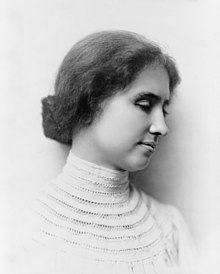
So I am sure by this point you have taken notice of the photos on the right. From top to bottom you see Isaac Newton, Marilyn Monroe, Winston Churchill, Helen Keller, and Beethoven.(Websites for more information about famous stutters.) Looking at these people you may have several words come to mind. For example: talent, intelligence, music, determination, inspiration, and leadership. One word that may not come to mind is disorder; and yet, these are just a couple of the faces of various communication disorders. Their disorders cover everything from lisping, to stuttering, to hearing loss. Like all these historical people, our clients too can be remembered in a positive light that focuses on their successes. It is our job to disintegrate these negative concepts associated with such disorders and communicate our own stories of success. Success in this field takes an understanding of communication, respecting communication, and maintaining control over your own communication. One way in which we as speech pathologist showcase control over our communication is by successfully identifying our different audiences and adapting to what will be most persuasive for who we are talking to. It is important to remember that language production in no way indicates intelligence or potential. In this field, we maximize the positive influence of effective communication to improve another’s ability to communicate. They may never get to the point where they are 100% effective in their use of language; but, this will be a field in which you help facilitate individuals growth, improvement, and success.


[1] "Hearing Beethoven – Part I." Hearing International Bob Traynor International Perspectives on Hearing Health Audiology HearingHealthMattersorgHearingInternational. HHTM, 04 May 2011. Web. 09 Dec. 2014. <http://hearinghealthmatters.org/hearinginternational/2011/hearing-beethoven-part-i/>.
[2] "Famous People." Stuttering Foundation: A Nonprofit Organization Helping Those Who Stutter. Stuttering Foundation of America, n.d. Web. 09 Dec. 2014. <http://www.stutteringhelp.org/famous-people/>.
[3] Doty, Laura. "Famous People Who Stutter." Famous People. N.p., n.d. Web. 09 Dec. 2014. <http://www.d.umn.edu/~cspiller/stutteringpage/famous.htm>.
[4] "Knowing Your Disability - The History of Deafness." Knowing Your Disability - The History of Deafness. N.p., n.d. Web. 09 Dec. 2014.
[5] John 9:1-3
[6] Brosch, S., & Pirsig, W. (2001). Stuttering in history and culture. International Journal of Pediatric  Otorhinolaryngology, 59(2), 81-87. Retrieved from http://search.proquest.com/docview/85358528?  accountid=4488