Showing posts with label posted by Spencer Marks. Show all posts

Tuesday, December 15, 2015

Final Exam Essays: Spencer Marks


Short Essay
Rhetoric and religion have had a very interesting relationship for millennia. There seems to be an awkward love-hate relationship between the two. While religion needs to persuade people to become followers, religionists tend to spurn the art of persuasion, rhetoric, as deceitful and dishonest. We will examine some examples here.

In 1 Corinthians 1:27, Paul says, “But God hath chosen the foolish things of the world to confound the wise; and God hath chosen the weak things of the world to confound the things which are mighty”. In Christianity, we often have this ideal of an uneducated preacher preaching by the power of the Holy Spirit. While this is important, and God does inspire men to preach greater than their natural abilities permit, we sometimes turn this into a disregard of skill at speaking. This is ironic, as the very man who wrote this verse, Paul, was a well-schooled Pharisee, and had no small skill in oration.

Perhaps this antipathy toward rhetoric comes from evil men who have used it for their own design. We read of the lawyers who tried to ensnare Alma and Amulek, the men of Athens who, skilled in rhetoric, scoffed at the teachings of Paul, or the many flatterers who have come along, misleading men. Because of rhetoric’s potential to be used by the adversary, it is sometimes cast aside as a tool unfit for moral instruction, not just by Christians but by men such as Plato and Socrates as well.

However, there is a strong Christian tradition of rhetoric. Augustine, who at first disliked the Church because of its rhetorical weakness, eventually came to view the prophets and apostles as the greatest rhetoricians of all. He spoke of the various ways that preachers can use rhetoric, and his thoughts were incorporated into church customs. Nobody can doubt that the Revivalist preacher, the mega-church pastor, and even the Mormon prophet all use rhetoric as ways to inspire their congregations to greater devotion to God.

In the LDS faith, we have a great microcosm of this. Joseph Smith was an unschooled 14-year-old boy when he saw God and Christ. He started a church with little to no schooling. Yet, in his later years, his words ring with eloquence. God used him as a tool when he had no skill in speaking, and He used him as a tool when he was a great speaker.

Short Essay 2

Jacob’s speech to the people at the temple in Jacob 2-3 is filled with rhetorical devices. He effectively uses a vast array of persuasive tools to create a sermon designed to touch the hardened hearts of those who hear him.

Jacob makes excellent use of persuasive appeals. Opening up his speech, he first mentions his authority from God to speak and preach. This establishes immediate ethos. He mentions ancient prophets and their teachings and uses them as proof for his logos appeals. Finally, he makes repeated and deeply touching pathos appeals, especially relating to the men’s relationships with their wives and children, and the deep pain that they are causing them. By using the full array of rhetorical appeals, Jacob constructs a very moving argument.

The overarching structure of Jacob’s argument is also calculated for effect. He starts out speaking of his call from God, and rises to denunciations of the sins of his audience. He then speaks of the awful power of God, compares his listeners to the hated Lamanites and finishes with a climactic threat of hellfire if the men don’t repent. This rising action moves the emotional level higher and higher, allowing the final plea to have maximum effect on the audience.

Jacob also uses very vivid imagery and figures of speech in his sermon. He talks about his desires to have his garments washed clean, how the men are causing their wives and children to have daggers placed to pierce their souls, and how God can smite them to the dust with a glance of his eye, as well as many others. These figures of speech are all deeply pathetic appeals, ones that create powerful imagery to sway his audience. This is particularly true regarding the men’s wives and children. I can’t think of a more horrifying image than having daggers placed to pierce the hearts of those I love, and I’m sure that as the men thought upon that, it caused them deep reflections on the sins they were committing.

Through his rhetorical devices, Jacob’s speech at the temple is an excellent example of the style that Augustine referred to as “grand”. Through his strong appeals, his excellent structure, and his striking figures of speech, he was able to deliver a sermon so powerful that nobody could ever blame him for not teachings his people the ways of righteousness.

Wednesday, December 9, 2015

The Nicest Villain Ever


Many say that since ancient days, mankind has struggled under the oppressive boot of big business. They claim that history is a story of workers being exploited, greedy owners lining their pockets with excess profits, the one percent living off the backs of the 99, and offering nothing in return. This way of thinking is growing in popularity, but ignores the important contributions of business to human society. Although business has black marks on its history, it has been a net good force on the world because of all the societal good it has achieved.

Tuesday, December 1, 2015

Annotated Working Draft and Hotspots in Business Consulting

1. Communication and Persuasion in Business Consulting
 Rhetoric and communication are absolutely critical to business consulting. Half of consulting is data analysis and strategic planning, but the other half is presentation to clients. Consultants must be able to present their ideas confidently and convincingly, or they will be dismissed as worthless musings.
2. Storytelling in Business Consulting
Storytelling in business consulting plays an important role, both in fictional and non-fictional stories. Fictional stories can be used for motivation and proving a point. Non-fictional stories are a great way to demonstrate in more emotionally involving terms a point that has already been proven by data and analysis.
3. Business within the History of Civilization
Romans were very pro-business. They spread uniform coinage across the known world, built roads to improve trade, and even had subsidies to help encourage shipping. They also had large plantations, the forefathers of our modern mass agriculture. Business consulting itself didn't actually begin until more modern times.
4. Institutional Authority and Communication in Business Management Consulting 
The main authorities in consulting are the big three consulting firms. They largely control the industry by leading in innovation and choosing which potential consultants can work with them. They also publish papers and hold events to promote themselves.

Hotspot #1 (in the field): The important role of communication in the workplace. This really is half of the job as a consultant. You can have the best idea in the world for a client, but if it isn't well-presented, then it won't be implemented and your work will be viewed as a waste.
Hotspot #2 (personal): This has some overlap with the first. I definitely realize that my communication skills are going to be critical, not only in doing my job, but in securing one. I feel that if I don't continue to take measured steps to improve my oral and written communication, then I'll fall behind. 
Hotspot #3 (personally interests me in the field, but never actually made it into any of our blog posts): One thing that really interests me about the whole world of business is the potential to do good. Many people see business people as greedy or power-hungry, and there is power in business, since the main goal is to get large groups of people to behave how you want them to (i.e. buy your product). This power is often used for getting rich, but can be brought to bear on social and economic issues that governments and charities can only begin to scratch.

Tuesday, November 24, 2015

Institutional Authority and Communication in Business Management Consulting

Stephen straightened his tie as he gave himself one last look in the mirror. "All right," he thought, "Here goes nothing!" He had prepared for this moment his entire college career, and now he was about to have his final round interview [3. Influential Event] with Bain and Co, one of the "Big Three" companies that controls the management consulting world [1. Authoritative Organization], and the one that he'd been dreaming of joining ever since he decided he wanted to be a consultant. He would sit across from the interviewer, who would give him a case study, a hypothetical business case that he would have to think through and solve as the interviewer watched, closely observing his analytical skills, creativity, mental math, and interpersonal skills. [2. Regulating Standard] Every aspect of his performance would be closely examined, analyzed, and reported, and he was more than a little nervous.

He walked into the room that had been set aside for Bain interviews, shook hands with the interviewer, and sat down. For two and half hours, he was presented with case after case, answering and asking questions, analyzing diagrams and drawing his own. He was very glad that he'd spent a lot of time poring through the many Bain publications, such as Founder's Mentality and Results Delivery, as well as keeping up with general business news in the Wall Street Journal, [4. Authoritative Publication] because they gave him valuable industry insights into several of the cases. At the end of the interview, his interviewer stood up to shake his hand. "Thanks for coming! You should hear from us in a couple of weeks whether or not we'll be taking you on." And that was that! Stephen hopped in his car and drove home, relieved to be through that experience, but almost sick with anticipation of the results.

As luck would have it, he received a phone call three weeks later. "We are pleased to inform you that you have been accepted as an associate at Bain and Co." Sweeter words had never reached his ears. Stephen packed his bags and reported at the Dallas office the next week.

Over the years, Stephen was an integral member at Bain. He moved up the ranks, from associate to consultant, and eventually to partner. He pioneered new management techniques in new industries, and this innovative mindset helped drive him from success to success [5. Changing standards] He changed the face of management consulting, and it all started with that one interview at Bain.

Tuesday, November 17, 2015

Biblical Eloquence in 2 Timothy 4:6-8

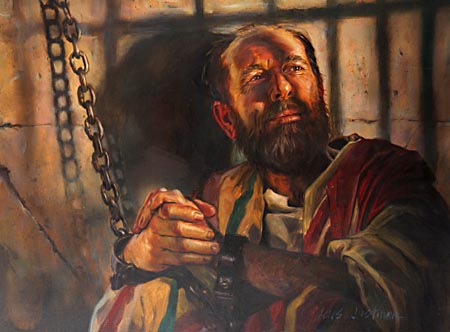
One of those most poignant moments in all of Paul's writing is his last letter to Timothy, where he knows that he will probably not live to escape the dungeons of Rome. He knows that he is about to die, yet he has no regrets, nor any fears. Here is what he says.

For I am now ready to be offered, and the time of my departure is at hand.
 I have fought a good fight, I have finished my course, I have kept the faith:
 Henceforth there is laid up for me a crown of righteousness, which the Lord, the righteous judge, shall give me at that day: and not to me only, but unto all them also that love his appearing.
This is a great example of what St. Augustine meant when he discussed majestic oratory. Paul is exhorting Timothy to stand firm in his work, and uses very deep, moving language to do so.
There are some very clear metaphors to be seen here, such as fighting a good fight, finishing a course, and being offered (to my knowledge, there is no record of Paul being a warrior, a runner, or a lamb). Paul also uses asyndeton in verse 7, with no conjunctions between the clauses describing what he has done. He also uses synechdoche, as he refers to the kingdom of heaven as a "crown of righteousness", referring to that one part of heaven as the whole, though whether this is synechdoche or metaphor really depends on whether or not we think that crowns are involved there.
The deep eloquence of these verses must have been very moving to Timothy, and probably helped him to finish his own course in the dark days that lay ahead of him.

Friday, November 13, 2015

History of Business

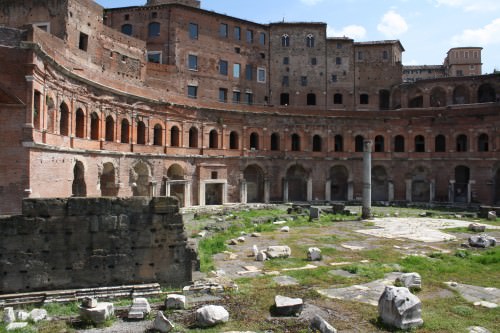
While business management consulting itself has only formally existed in more recent years, business has a long and proud history, heavily rooted on the ancient streets of Rome. In Rome, many ideas were pioneered that we see today in modern business. They spread coinage across the known world. They had government-sponsored roads to encourage trade, and even had a system of subsidies under the Republic to help encourage shipping trade. They had massive plantations, the fore-runner of our mass agriculture of today. According to the Ancient History Encyclopedia, "Whatever the exact economic mechanisms and proportion of state to private enterprise, the scale of trade in the Roman world is hugely impressive and no other pre-industrial society came even close." Rome laid the foundation for modern business.

Trajans Market, Rome
Trajan Market in Rome

Management consulting started more recently, with Arthur D. Little of MIT being credited as the first management consultant. His firm still stands today, and helped launch a revolution. Business consultants started out mostly as efficiency experts, helping companies "lean down" their systems by cutting off waste processes, but eventually came into every branch of business imaginable.


Today, business is going through a revolution. According to entrepreneur Doug Marks, Big Data is changing the landscape of the marketing world. With so much data about customers available, through internet searches, website choices, and social media, companies, and especially consultants, have a veritable mountain of potentially valuable information. Marks says that, "Businesses spend a lot of money and effort on finding out who their customers are." What customers' preferences are, where they live, how they behave, it is all woven together in our modern world of Big Data, which is changing how we do and think about business at a blinding speed.
From the streets of Rome to the turn of the 20th century management consulting to the Big Data of today, business has been intertwined with how people have lived, and it will continue to do so in the years ahead.

Thursday, October 29, 2015

Personal Stories Catalogue - Spencer Marks

1. Story of my proposal to my fiance. [romantic story, funny story] I've been telling this one a lot lately because I got engaged last week.
2. Story of how I met my fiance. [romantic story, hand of God story] I've also been telling this one a lot after our engagement.
3. Story of being Branch President on Nonouti, a small island in the Pacific Ocean [trial story, achievement story, mission story] I tell this one during mission story swaps, or at interviews where I need to show leadership ability.
4. Story of living in a hut, pooping on the beach, and general living conditions in Kiribati, the place where I served my mission [funny story, mission story, trial story] I tell this one at mission story swaps or when people start talking about "first world problems."
5. Story of winning the Klondike Derby as a Boy Scout [teamwork story, overcoming trials story, epic adventures in the snow story, boy scout story] I tell this one when we talk about things we do in the snow, or things we've done as Boy Scoutss
6. Story of my friend, Elizabeth Cole, dying in a car crash. [tragedy story, car crash story] I don't often tell this story any more, but I used to tell it a lot more because it was on my mind.
7. Story of starting cross country my sophomore year as the slowest runner, boy or girl, on the team, and ending up running at state my senior year. [athletic story, improvement story] I often tell this one to encourage new runners to keep working hard, regardless of what may come in their way.
8. Story of creating an awesome pantomime for the drama competition, but getting shot down by one judge who didn't know what they were doing. [sour grapes story, disappointment story] I mainly tell this one when I'm feeling bitter about it.
9. Story of crashing on a motorbike in Kiribati. [mission story, motorcycle story] I tell this one to explain why I don't like riding motorcycles.
10. Story of not doing my homework in one class freshman year, and missing out on a scholarship because of it. [freshman stupidity story, advice story] I tell this one to my freshman cousins to motivate them not to slack off freshman year.

Wednesday, October 28, 2015

Storytelling in Business Consulting

Foreword:
In business consulting, stories are often used to illustrate points to clients. While data-driven analysis is the basis of our suggestions, stories help to make them more understandable and relevant. The stories are vocal, short, and illustrative of data. This story was found on businessballs.com, which claims that it is a true story.

Example Story:
Setup: A service-based company has hired consultants to solve its poor customer service ratings. We found that the problem is due to inconsistent application of industry best practices, and are going to give suggestions on why and how to fix this problem. This story is used as a set-up before I give the presentation.

The bank concerned had introduced a charge to be levied when people paid in money to be credited to an account held by a different bank. The charge was 50p and had been in force for about 6 months or so. A well to do, upper-class lady enters the bank and presents the cashier a check which she asks to be paid into an account held by a different bank. The cashier duly tells the lady that there will be a charge of 50p. Indignantly, she tells him, "I wasn't charged the last time."
To which the cashier immediately replies, "Well that will be a pound then..." 


Analysis:
This story is illustrative of the importance of having standardized processes across a company. The persuasion is through a pathetic appeal of humor. It clearly demonstrates the problems that can result when changes are not completely and simultaneously implemented across a company.

Retelling the Story:
If I was telling a story to a labor group explaining why they should advocate for changes like the ones mentioned above, I could tell the story like this.
George is a teller at the local branch of a large bank. He has been working there 8 months now, and is really starting to get into the swing of things. He enjoys his job and feels that he is on the road to success with the firm. One day, unbeknownst to him, a supervisor puts a memo on top of his task while he's in the bathroom. Another teller walks over and drops some more papers on top of the stack. Unfortunately, the memo, which details a new pricing regimen to be applied to inter-bank transfers, gets lost in the pile. Because the business relies completely on tellers to apply prices with no electronic backup, hundreds of customers every day are helped by George without. Then one day, George's supervisor calls him into his office.
"George, our company auditors just came through, and they tell us that we've been losing 50p from you every time you perform a transaction. I'm going to have to put you on temporary probation."
George protests, but because he did indeed receive the memo, his statements that he didn't see it fall upon deaf ears, and he is soon fired and later prosecuted for embezzlement, all because his company had outdated price management systems.
I changed the story so that rather than being through the eyes of the customer, it comes from the eyes of an innocent, up-and-coming employee who is accidentally caught up in the errors caused by inefficient management systems. Whereas the first story would appeal more to management who are most concerned with customer experience, this applies more to those who advocate for workers by drawing attention to the dangers that these systems present to the company labor force.

Friday, October 23, 2015

Communication and Persuasion in Business Consulting

You stand there, staring into the eyes of the executive board of a Fortune 500 company. These men are all over 50, and have been working in their industry since before you born. You have your notes in hand, a powerpoint slide deck behind you, and you are about to tell all these experienced men the changes that need to be made in their company to keep it afloat. An effective command of rhetoric and communication are going to be the only thing that keeps them from dismissing you and your ideas with an indignant grunt. The time for preparation is over, and the time for delivery is now.

To a business consultant, very few things could be more important than effective communications skills. A consultant is hired, generally as part of a larger firm, to examine a company's operations and assist management in making a variety of different business decisions. While consultants try to produce data-driven, effective results, the fact of the matter is that they are usually considerably younger and less experienced than the management that they are consulting for. While a fresh set of eyes is often needed on a case, and consulting firms offer invaluable insight, it is easy for a long-time CEO to simply dismiss their ideas as the uneducated musings of relative children. Only a powerful command of rhetoric can convince them otherwise.

In such cases, what you say can be very much less important than how you say it. You must quickly build up powerful ethos, and swivel into striking logos to help impress upon the minds of the management team that not only are you intelligent and capable, but your ideas can change their company for the better. You must have relevant content, good ideas that really will make a difference, but it won't do you any good if they won't listen to you in the first place.

I used to want to be a lawyer, but my roommate brought me to the business strategy club, where we do amateur consulting, and I was hooked. Now, I'm thrilled to one day be a business consultant.

Saturday, October 17, 2015

Letters from Rome


The idea of written language is a fascinating one. Think of it, as you are reading this blog, ideas are being suggested to your mind. Thoughts are coming to you, maybe even a subliminal human voice, and all you are doing is looking at little black marks on a white background. Written language is a truly incredible invention, and for our modern alphabet, we can thank the Romans.

While it is true that many of our modern letters had their beginnings in the Greek language, it is Latin where they took the form that we know them today. The Romans altered Greek and made it into the letters that we read today, and then they spread it to the world. Roman conquests across France, Spain, Portugal, and Romania affected their languages forever, and the influence of Roman culture meant that even in countries where Latin didn't become the main language, the other countries of Europe adopted its letters. Through the exploits of Spanish, English, and Dutch explorers, these letters were spread to the world. It even in the far-off Pacific island nation of Kiribati, where I served my mission. Before the arrival of European explorers, Kiribati didn't have a written language, but the Latin alphabet has since become the Kiribati alphabet as well.

I, for one, am grateful for the Roman influence on our alphabet, largely because I've seen my roommate's Japanese homework and I'm super glad we can get by on only 26 letters. In this huge service, Rome has blessed my life and the lives of billions of others.

Thursday, October 15, 2015

Midterm Essays

Sophists vs. Socratics
What did Socrates find wrong with rhetoric and rhetoricians? How would the real Gorgias respond to how Gorgias was portrayed in the dialogue by Plato/Socrates?

     The Sophists and the Socratics were two major groups of thinkers at the beginning of the age of rationality. Despite emerging in the same culture, they had conflicting viewpoints on knowledge, rhetoric, and even the meaning of truth itself, and they did not often see eye to eye.
     Socrates and his followers were proponents of an absolute Truth, one that was perhaps higher and purer than the truth that we encounter and observe on a daily basis, and one which the soul of a noble man is constantly engaged in pursuing. They contended that all things, whether it be a person, a house, or a sword, are simply our mortal approximations of the ideal version, which exists independent in a different realm. The Socratics would subscribe to the idea promoted in our own Doctrine and Covenants 93:30. which states that "all truth is independent in [its] sphere." The striving to come closer to that truth, and perhaps venture to imitate it more fully, was considered the most noble pursuit of life, and the end goal of all philosophy.
     This can be clearly contrasted with the views of the Sophists, Socrates' main rivals. These thinkers subscribed to the idea that perhaps there was absolute truth, perhaps there wasn't, but it was our task to make the best use of what we have, either way. As opposed to Socrates' more moral take on the world, the Sophists were a pragmatic group, and would be accused of by Socrates as not attempting to represent truth, but as attempting to sway the opinions of men through dishonest means. Socrates saw them as self-promoting, pretending that to give a good speech and convince a crowd was the goal of philosophy.
     Regarding Gorgias' opinion of his own portrayal in Socratic works, I cannot help but imagine that he would be offended. Here was an accomplished speaker, I'm sure very proud of his own prowess, as can be seen in his Encomium of Helen, and he was portrayed as a knavish learner at the feet of a man whose thinking he probably considered seriously flawed. I believe that Gorgias would have had something to say about it, and it probably wouldn't have been an encomium.

Politics and Rhetoric
What is the relationship between politics and rhetoric in ancient Greece?

Rhetoric was an important part of Greek politics, as it has been in every political system, especially democratic ones, since the world began. As Isocrates would point out, rhetoric is an important building block of human civilization, as if we cannot communicate and convince each other to act in certain beneficial ways, it would be impossible to create the systems of laws, culture, and infrastructure that make up our modern human civilization. This is true today, and it was no different in the cradle of democracy.
I think that an excellent example we have covered in class about the importance of rhetoric in Greek government was Pericles' funeral speech. One of the most important factors in the victory of a democracy at war is the ability of its people to keep heart and continue the fight, despite setbacks. While in a monarchy, the power of the king will keep his subject fighting until long after they would otherwise have given up, war weariness has historically been a classic ailment of a democracy at war (for better or for worse.) At the time of Pericles' oration, this was a serious danger. The Athenian forces had just suffered a major setback, and it would have been easy for them to lose heart and surrender. This speech caused their defeat to have the opposite effect. Rather than be ready to surrender, they were ready to fight on, for Athens, for the culture and land that they loved! This was a critical function of rhetoric.
There are many other examples, such as Agamemnon's ploy in the Iliad, or the events of Electra (I'm sure that the rhetoric that got the queen killed was fairly influential in that government!) but it is clear that in any civilization, and especially a democratic Athens, rhetoric is key to politics. The Greek roots of the word "politics" mean "relating to the citizens", and nothing could relate to them more than swaying them to believe and do your wishes through words and speech.

Tuesday, October 6, 2015

Form Affects Function!

There are many different ways to organize a speech. Some speakers choose a long, rambling style, with lots of stories and examples. Others choose a more direct style, with clear organization and tight points. The talk that I analyzed, by Carole M. Stephens, offered an integrated approach that I really liked, and which effectively brought all of the elements of her talk together in an easily digestible, yet pointed and purposeful format.

Full Name Carole M. Stephens

Sister Stephens started by telling us a story about her granddaughter. She could not get her granddaughter to behave, despite rewards, punishments, and begging, until her granddaughter realized that she loved her. Once she realized this, everything went smoothly. This was a great little story that appealed to ethos and pathos, but then Sister Stephens transitioned to that little girl's trust that was based on love, and in turn to our trust for our Heavenly Father that we can have because of His love for us. What started as an engaging story turned into a point by point discourse of logos on the trust that we can have in Heavenly Father, Jesus Christ, the Holy Ghost, and their servants on the earth. She then wrapped it up by relating it back to that original story of a little girl trusting her grandmother.

It was perfect. Ethos, pathos and logos were all effectively appealed to. The organization made it easy to remember, despite our occasional tendency to forget exactly what speakers said. The ending conclusion left us with the sweet feeling of a child's trust in our loving Heavenly Father, and the excellent organization of the talk was an important part of achieving that. The talk was a great example of how style can truly affect the content of a speech and its effect, rather than being simply a tool to be used.

Tuesday, September 29, 2015

Your Friends TALK to my friends! How nice!

To add my voice to those of many others, I would like to say that texting is a dark plague upon the frontier of modern communication. This may seem like a bit of an exaggeration, but I find it an appropriate characterization, given my recent experiences. I refer to my recent experiences of playing the middle man between two friends who are navigating the dangerous seas of potential romance.


I'm sure it's an old story. Boy texts girl. Girl texts boy. After a few exchanges, BOTH text poor unsuspecting mutual friend with the inevitable questions, "He said this, what does that mean?" "She's thinking that, what should I do?" and the inevitable, though sometimes implied, "Can you talk to them and see what they're thinking?"

Being in this situation as I type this blog post, I am acutely aware of the problems involved with written communication, while emoticons and emojis do make things much better, as noted by Alysha and Laycee, the nuances of human conversation, especially in a romantic setting, cannot be contained in :), :(, :'(, and (my personal favorite) :-}) (man with moustache.) And so it is that the parties, feeling the effects of such limits, go to the only way they can think of: ask ME!

Angry ranting aside, I think that this is yet another excellent example of why Socrates and Plato disliked writing. Human speech itself is an art form, with meaning far beyond the some parts of the words. The tone of voice, volume, body language, and facial expression, along with a myriad of other factors, convey a message that  the written text simply can not. Nowhere are these shortcomings as painfully apparent as when your friends ask you to solve their romantic problems for them.