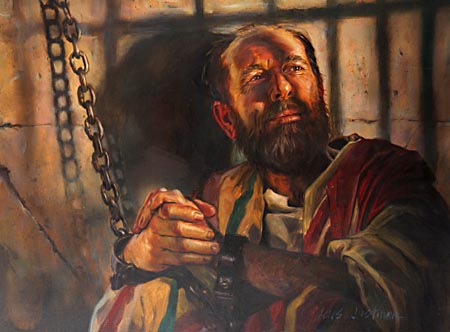
6 For I am now ready to be offered, and the time of my departure is at hand.
8 Henceforth there is laid up for me a crown of righteousness, which the Lord, the righteous judge, shall give me at that day: and not to me only, but unto all them also that love his appearing.
This is a great example of what St. Augustine meant when he discussed majestic oratory. Paul is exhorting Timothy to stand firm in his work, and uses very deep, moving language to do so.
There are some very clear metaphors to be seen here, such as fighting a good fight, finishing a course, and being offered (to my knowledge, there is no record of Paul being a warrior, a runner, or a lamb). Paul also uses asyndeton in verse 7, with no conjunctions between the clauses describing what he has done. He also uses synechdoche, as he refers to the kingdom of heaven as a "crown of righteousness", referring to that one part of heaven as the whole, though whether this is synechdoche or metaphor really depends on whether or not we think that crowns are involved there.
The deep eloquence of these verses must have been very moving to Timothy, and probably helped him to finish his own course in the dark days that lay ahead of him.
