Showing posts with label Elder Bednar. Show all posts

Monday, October 5, 2015

A Cycle of Proverbs

Funny story. In the event of analyzing newly called Elder Dale G Renlund, I completely missed the point of what he was trying to say. I was so focused on writing down my analysis, I was unable to truly analyze his speech. I felt that the conversation about how writing can be a distraction was very fitting for this situation.

What ended up happening though, as I watched Elder Bednar finish conference with that masterpiece, I couldn't help but put some analysis into it. The thing that really impressed me, and increased my respect for Elder Bednar was his use of authoritative maxims and proverbs as we learned from our topics of invention.


As if it wasn't enough to establish his ethos with the authoritative quote of one former prophet, Elder Bednar chose to quote proverbs from the last six prophets and apostles that have passed away. He loved these men, and it was evident in his desire to remind us of the profound things they have said in the past. The reminder of these proverbs was a very powerful way to end the conference, and I know it was truly inspired.

The interesting thing is, by using this authoritative method, Elder Bednar is now, one of those authorities for millions of others who wish to establish their own ethos. That is what we do, we want to support our claims, and statements, until it gets to the point where our own claims and statements can be used as a proverb or maxim. It is almost like a cycle. 

Friday, September 12, 2014

Building an Argument

Obviously, both Elder Bednar and Socrates are fascinated by the idea of communicating thoughts and ideas.  Both would agree that communication should be a means by which truth is discovered and expounded upon.              

After a long time of searching for the right word for it, I gave up.  Basically, Elder Bednar and Socrates use very similar methods of speech in their oratories, that method being a building up of an idea based on previously mentioned thoughts and ideas.  For instance, Elder Bednar establishes the importance of social media in spreading the Lord’s work by first discussing the concept of dispensation.  Then he shows the progression of technology over the past few centuries.  Finally, he shows how over the millennia, God has been preparing the world for global outreach through social media.  Similarly, Socrates slowly, yet surely, builds his argument against rhetoric as an art; first by establishing some simple definitions and then developing those thoughts into something quite elaborate.  Is there a rhetorical definition for this gradual process of developing an argument?


Socrates uses an incredible amount of procatalepsis.  It is fascinating how he anticipates possible counterarguments and others misconstruing his thoughts.  This is evidenced by his giving of questions to have Polus ask him.  Elder Bednar does the same by cautioning us to do more than just giving a one-time effort of sharing the gospel with others, but also not to become social media fanatics.   

Knowledge/Truth Properly Spoken is Persuasion

In an attempt to say something of meaning without repeating what has already been said I do feel that the rhetorical ideals of invention and logos are key in both Elder Bednar’s speech and Socrates’ banter with Gorgias and Callicles. Coming from a background in sales I have always backed and really believed more in the “how” you say things over the “what” you say. James McClatchy mentioned in his post more about how the rhetoricians Socrates argues against feel quite similarly, and that “skill” is more important than knowledge in persuasion. In contrasting Socrates arguments made in the Gorgias, I think Socrates would have been overjoyed to have had Elder Bednar as a partner.
Coming October 10th - Just curious, what does everyone think about this movie?


                Although Elder Bednar is good at both the “how” and “what” of speaking, his address was so direct and knowledgeable of the topic that the viewer, speaking for myself at least, is persuaded by the mere content of what is being presented. Elder Bednar doesn't have to sell us on anything, as the message or “what” is being said sells itself. The part of the presentation that really took me back was when he got everyone’s undivided attention by directly asking for it. The reason that stood out to me is that I haven’t really heard that kind of a statement from a general authority before. I would assume this is because we are usually drawn in anyway by the “how” of their talk or presentation. It was the cherry on top that said to me Elder Bednar has spent time on this, and he knows what he is talking about. He knows what he wants to say, and what he wants us to do and doesn't need any kind of sales pitch to get us motivated to do it. 

The Whole (divided by) the Parts = Clarity

Explaining small parts of a larger whole provides clarity for an audience. This type of explanation is called division. Both Elder Bednar and Socrates use this technique in their respective oratory.

Elder Bednar uses division when he mentions the genre of social media, then identifies “five of the presently popular social media channels,” or five smaller parts of that larger whole. He briefly names and explains the individual social media channels of Facebook, YouTube,  Twitter, Instagram, and Pinterest. After he explains each one, the audience better understands at least in part what social media consists of. This way, teenagers and grandparents alike come to understand what Elder Bednar means when he speaks more generally of “social media.”

            The division serves not only to clarify or to define, but also to peak the audience’s wide-spread interests. Some listening may be avid Facebook posters, others snap-happy Instagrammers, or  others YouTube video fanatics. Others may be inspired to use a program they had never used before. I myself was so inspired by Elder Bednar’s specific references to Instagram that I subscribed to follow the Church’s accounts in the middle of the talk! That’s what I call effective rhetoric; Elder Bednar’s purpose in speaking of these five channels was not only to show that they exist but to stimulate us to use them!

            Socrates also practices divisions in his dialogue with Gorgias. He breaks down the larger category of “the arts” into specific activities. Some of the activities mentioned include doctoring, gymnastics training, business (36), “arithmetic…geometry, and even checkers” (34). By indicating individual members of “the arts” Socrates  more clearly defines the whole.


While I found the use of division in both  of the above mentioned addresses, I could not see how the two were interrelated. Thus, I pose the question to the class.

Go forth and serve...some rhetoric!

In trying to motivate us to do something, Elder Bednar employs epideictic oratory talking about the virtues of communication. He breaks his message down into various parts and then uses testimony of others to highlight his points.
  • He used the testimony of past prophets to give authority to his message.
  • He used the examples of the church to show that this is not just something he is asking us to do, but to show that the church itself is getting involved.
  • Elder Bednar, leading the troops in the digital age.
    (you know you thought the same as you watched)
  • He used the ideas of church members to highlight that anyone of us can use social media; it need not be hard or time consuming.

Perhaps what impressed me the most was that even though I was watching this for an assignment, by the end of the video I was excited to get out there and start posting things online. He had the authority, he had the logic, then he plead for us to take it from a slow trickle to be a flood, if that didn’t get you excited for battle with the adversary, I don’t know what will.

Contrast this to Socrates who uses judicial oratory to show the injustice and wrongness of the study of persuasion. Socrates knows that he has an audience, and he wants to tear down rhetoric to show that it is not fit for the use of man. He works hard to use logical arguments to catch a master sophist off guard. He shows the crowd that Gorgias goes back and forth on the justice and injustice of rhetoric and thereby tries to show that it is not a techne and as such deserves no place.


I think Elder Bednar would disagree with Socrates about the goodness of rhetoric. From Elder Bednar’s perspective, Socrates is throwing out the baby with the bath water.

Telling the Truth, the Whole Truth, and Nothing but the Truth

One of the first things that I noticed as being similar between Elder Bednar’s talk and the conversation between Socrates and Gorgias was the fact that both parties addressed their audiences. In Elder Bednar’s talk, this helped to establish pathos with the people listening. He used words such as “us” and “we” and that helped to create unity among those in attendance and help him more personally relate, even when being in such a large crowd. People are generally more likely to listen to someone’s thoughts if they feel a personal connection, and Elder Bednar established that connection very well. Socrates and Gorgias addressed the audience in a much different way. Instead of the audience being an integral part of the conversation (like Elder Bednar created, with the use of “us” and “we”), the audience was just that: an audience. They were bystanders, listening. At one point, Socrates’s and Gorgias’s conversation is halted as they recognize the audience’s presence (see pg. 42, line 458D). This acknowledgment reconnects the people to the conversation. It is not quite as inclusive as Elder Bednar’s talk, but it still creates the much-needed unity that creates pathos and involvement, which encourages people to listen more intently.

The fact that both were addressing crowds is also important to note, as it creates a need for epideictic rhetoric. In both cases, they were speaking to motivate and persuade. In Elder Bednar’s talk, he ended with praise of the character of the audience, the Church, and the Lord. Socrates continued in questioning (which seems a lot like blaming) Gorgias and rhetoric in general.


I also found a lot of similarities in Elder Bednar and Socrates in their search for truth and knowledge. Several times during both of their speeches, they turn towards the importance of truth and knowledge when making an appeal. Both focused on the necessity of having the information and truth before sharing opinions and false “knowledge.” 

Genuine rhetoric is better!

As far as I understand from reading Gorgias, Socrates is weary of rhetoric because of the intent behind it and what he perceives as the fraudulent nature of rhetoricians.  He uses a lot of logos, kairos, and ethos to question rhetoric, and appeals to multiple of these rhetoric devices (interesting, he seems to be combating a rhetorician by using rhetoric) by questioning how genuine rhetoricians are because they specialize in rhetoric, not in the subjects of anything they would use rhetoric to present. I don't think that anyone can  present or teach anything in a moving and inspiring way that he or she hasn't developed some passion for. Sure, people can pass along facts and figures, unfortunately I've had many teachers who shared a lot of information with us, but they taught us nothing. I feel that Socrates is correct in saying that it is more effective for someone who is passionate about their subject to present it rather than someone who is a good rhetorician but cares nothing about the subject they are trying to get across.

Elder Bednar's speech was, to me, moving. He used kairos, knew his audience, employed great decorum throughout the speech as he made one topic flow to another, as mentioned in Courtney's post, and showed media at great times throughout the presentation. He used great logos and pathos and balanced them out great, he used Ethos as he gave his apostolic warnings and testimony and as he sited former Prophets and Apostles. But I think the thing that made the whole thing inspiring and moving was how he felt about it. I knew that this man was passionate about what he was saying. I knew that he meant what he said, so I listened differently. I don't think the message that Elder Bednar delivered would have been as effective if it were delivered by anyone else, even the greatest rhetorician in the world.


Thursday, September 11, 2014

Are we talking about communication or are we communicating?

Both Elder Bednar and Socrates address the topic of communication and do it with an audience.  But how can we know what to believe when communication is a mean and a topic?  Doesn’t that all just seem a little confusing?  Through the use of ethos and logos, it is easy to trust both Elder Bednar and Socrates.

Elder Bednar establishes his ethos by first talking about the importance of prophets and then proving his point by going on to quote prophets, play audio recordings from prophets, and show videos of prophets speaking on the use of technology.  You can’t argue with that!  You also can’t argue with Socrates as he refutes the ethos of Gorgias.  I think even Gorgias started to doubt himself with all those questions.

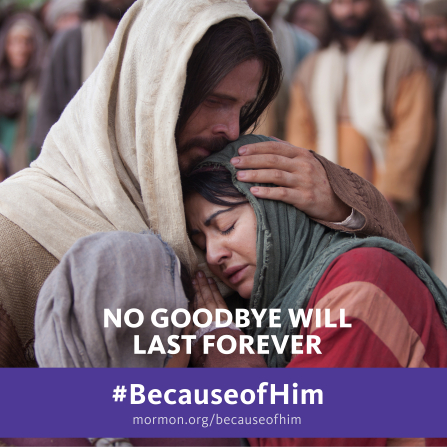
Socrates also uses lots of questions to reason and therefore uses logos which makes him even more believable.  Gorgias even agrees with Socrates multiple times and ends up contradicting himself.  Elder Bednar uses logos throughout the body of his speech by stating lots of statistics. The “Because of Him” video was viewed “more than five million times during Easter week in 191 countries and territories of the world”.  These statistics prove his point.


So now that we believe both Socrates and Elder Bednar what should we do?  Start communicating and questioning and flooding the world with knowledge, truth and light!

Just Go With the Flow!


In Plato’s Gorgias, it quickly becomes apparent that Socrates is the one driving the conversation. The other characters participate in the debate, but the way that Socrates phrases his questions and structures his replies almost forces the conversation in his intended direction. The debate never seems to drift out of his control because he carefully organizes his thoughts in a way that flows. President Bednar was not having a conversation per se, because he was addressing such a large audience, but he worded his speech in such a way that the audiences’ thoughts flowed from one idea to the next in the way that he intended. He achieved this in many forms, but I only have time and space to address two of them.
First he made lists, much like how I am doing now, in order to get his audience to focus on his main points. The same thing happens in General Conference, devotionals, etc. When someone says that they have three points and starts to talk, your attention may start to drift, but as soon as they say they are moving on to the next point you naturally pay attention again just long enough to catch what it is. The speaker does this because he/she knows that the audience will probably not have a long enough attention span to listen to every word, but the list allows for at least the main points to get across.

Secondly, his speech had a natural order to it. He started in the past and moved on to the present and the social media aspects of what he was talking about. Did anyone else notice that the people he quoted, for the most part, went in chronological order? I thought that was really cool; because of the increasing time periods he went from pictures of the prophets, to audio bits, and then to videos of increasing quality.

Different Styles, Same End


Through Instagram, I can challenge others
to post their favorite scriptures and spread
the gospel.  These are all the people I
challenged!


Both Socrates and Elder Bednar present to their respective audiences the dangers of communication in deliberative addresses.  The styles of Elder Bednar and Socrates are extremely different but actually lead to the same end: their audience cannot refute them.


I loved the #BecauseofHim movement and
 tweeted and retweeted about it often.
Socrates spoke directly to a very few people: Gorgias, Callicles, and Polus.  Because of this, there is a “back-and-forth” to the messages that Socrates gives.  People can refute him and do so constantly.   In contrast Elder Bednar’s audience is the entire world.  His message is that we can spread the gospel through social media in huge ways, so he obviously thinks that his own message, recorded on video for everyone to see later and for thousands of people to actually witness, will have a world-wide audience.  Because of this audience, there is no “give-and-take.”  He simply lays out his argument so no one can refute him to his face, but still might disagree with him.

I also love the hashtag #LDSconf.  It
helps create discussion with my
non-member friends.
Because the audiences are different, the persuasive appeals of ethos and pathos between Socrates and Elder Bednar differ.  Socrates increases his own ethos and pathos by shaming others.  He proves Gorgias, Polus, and Callicles wrong and contradictory in order to make himself look like the one for whom to turn for wisdom and uses outside references sparingly.  He appeals to emotion by making others feel shame for what they said.  The effect of this shaming creates a situation where no one can refute Socrates.  Elder Bednar, in contrast, showed clips of worthy prophets and apostles to increase his own ethos by association and used the motivating word of “exhort” to motivate people to action, which creates a spirit of good-will toward Bednar where one truly believes his argument enough to not refute him.  Therefore, both Bednar and Socrates create the same inability in their audience for refutation but through different means. 
Unlike my social media, Socrates could
only speak to a few people at a time.
That's why his approach to his audience is
different and much less pleasing than Bednar's.