Showing posts with label the greeks and I. Show all posts

Tuesday, September 1, 2015

Building the Greek way

I love to build crap. Literally. Whatever it is, I'll build it for you. It may not not turn out how you want it, but I'll enjoy doing it! I'm pretty sure I was building spaceships with legos before I could walk or talk.

We all know how prominent Greek literature, art, architecture, and even cuisine are. But I had know idea how great they were at inventing, developing, innovating, and building. Interestingly enough they're credited for creating some of our most basic tools, such as cranes, thermometers, alarm clocks, and even central heating! It fascinates me how long these things have remained a cultural necessity. As an engineer, thats what I want to accomplish.

I am currently studying electrical engineering and can't wait to start my own tech firm. Seeing so much Greek influence in modern day engineering motivates me to reach that potential and be just as inspiring someday.
My friends and I trying to build a robot arm. It didn't work so we ended up throwing a claw on a remote control helicopter.

Written in the Stars

Zodiac Chart
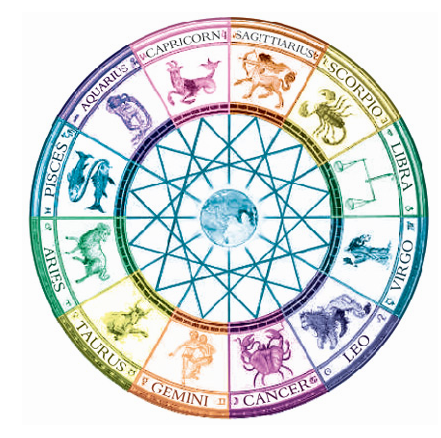
For centuries, humans have been fascinated by the heavens. Between the gleaming cosmos and the expansive darkness, the night sky, in particular, has mystified humans since the beginning of time. The Greeks had a unique view of the stars. Believing in Zeus, the God of the sky and other Gods, the Greeks rationalized that each constellation was put there by Zeus for a particular reason, based on a fable. These constellations, which are fashioned in a Zodiac that changes with the passage of time yearly, are then related to people who are born in the life of a constellation. I, for example, was born in August, and therefore am a Leo.  
Cosmos
Nowadays, many magazines and websites earn money and page views by attributing characteristics of the fables of the signs and how they change in the sky. I, personally, have never been a big believer in these “horoscopes.” But recently, after learning a bit more about the cosmos myself through some classes, observation, and study of mythology and plenty reading of horoscopes, perhaps am on my way to becoming one. I suppose that the idea of a self-fulfilling prophecy is applicable here – or maybe, it’s just written in the stars.
It's Greek to Me

Languages don’t come easily for me. Ninth grade Spanish still stands as my hardest class, slaving for hours and hours just to learn a few words. So it is a surprised to find that I am now learning a new language… the medical language.

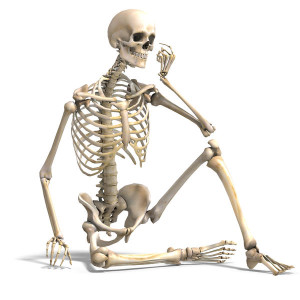
Most medical terminology is founded in Greek and Latin words. We owe a lot to our Greek predecessors. Some of the earliest medical terminology was found in Greek Hippocratic writings dating back to the “5th and 4th centuries BC”. Most of these Greek terms were later changed to Latin but some still remain.

Although this new language may be hard for someone like me to learn it was common language for the Greeks. Most of the medical terms represented something in nature or society, for example the word the bone in your lower leg is named your tibia which means flute. Thus, it would have been easier for someone in ancient world to learn medical words then it is for us now. It’s completely Greek to me.

It is amazing that this the use of Greek and Latin in the medical world has withstood the test of time. Still today in all of my classes Greek and Latin words are use regularly but now I understand what they are saying. I can’t wait to learn more about the people who changed the medical world forever.

works cited

http://debpotts.com/wp-content/uploads/2015/07/aaphoto-300x300.jpeg?fe33b2

Wulff, H. (n.d.). The language of medicine. Retrieved September 1, 2015. 

Sick Over the Centuries

Me, not in Greece, not sick, eating wild blueberries. Take it or leave it.
Malaria.  HIV.  West Nile.  In the last ten years Greece has had outbreaks of all of these diseases.  But cooler yet, at least to a Microbiology major like me, is that in ancient Greece, there were diseases known and treated, some of which have been connected to maladies that continue on into our time.

Hippocrates and his fellow researchers were some of the first to observe, document, and attempt to treat diseases.  One of the texts written at Hippocrates' pseudo medical school even contained a description of asthma, one of my future research focuses.  We even still use some of their "home remedies," such as honey for acne and desensitization for allergy treatments.  Though our technological advances have allowed us to make discoveries at a larger scale in a shorter amount of time, perhaps it was upon their foundation of medical learning that we built.

Power to (All Of) the People

With the Primary Elections approaching, it is virtually impossible for the public to bypass campaign strategies coming at us every which way.  For a year we all have the “delight” of hearing all about candidates’ ethics and policies and agendas that often feel empty and exaggerated.  Yes, the Electoral College is something we love to hate, but the idea of a representative government—a democracy—was once an unconventional concept.

We have the Ancient Greeks to thank for republics and democracies.  Their system, however, was far from absolute virtue and decency.   Neither women nor social minorities had the right to vote.  Only non-slave male citizens were able to join the new democracy club.  Today it’s easy to become discouraged by political gridlock and partisanship, but the US really has come a long way through equality.


It has been a lifelong dream to someday work within the United Nations and help other countries acquire the basic rights of life that come from democracy.   Like the Ancient Greeks, I too want to spread the demokratia (literally meaning “people-power”) to all.

Where the Heck Am I


.

I had a little bit of trouble trying to figure out what connection I could possibly have with the ancient Greeks... until I discovered that they are huge contributors to the reason why I can get anywhere on a daily basis. In other words, I am horrible at directions. Luckily, the ancient Greeks provided the foundation for our modern GPS’s and maps—which I use pretty frequently.


By the way, this is me (on the left) at Disneyland--which we used a map to get to.
Pythagoras was the first to propose that the world was a sphere—“the most perfect of all geometric shapes.” I would say that that was a pretty solid first step on our way to the invention of the GPS. From there, ancient Greeks (one of them named Anaximander) developed the first world map and maps with boundaries between geographical regions. So, publicly, I would like to thank them because without them I would not have gotten as far as I have in this life. Literally.

Frenemies... Friends + Enemies


   As a missionary in the north-eastern part of Brazil (the Teresina mission, known to be the poorest mission in the country- I once heard it called “the Mexico of North America”), I had the privilege of experiencing “futbol” at its finest.  I am a huge fan of soccer; played ever since I can remember.  I knew I would be in the soccer capital of the world during the World Cup, and knew it was going to be especially crazy in such a violent area.  I was quite nervous because I had already seen “crazy” with gun shots and gangs.
(at least in this party we had not beat up each other the day prior...)

In a city where wreckless driving, dead animals, violence, drug dealing, and pop music at ear-drum breaking levels is a daily (and nightly) occurrence, you can imagine the abnormality of a moment of peace and quiet.  I knew exactly when the kick-off was about to start because friends, families, and enemies alike gathered together to unite for a common cause.  I would think, “Hey, weren’t you two beating each other up yesterday?”  Turns out in ancient Greece, the city-states were often at war, but would make a truce in honor of the Olympic events and its travelers.  Wars were put on hold, even death penalties were suspended.    

The Body and The Mind

Relating to people has always been a struggle for me. When people ask what I'm into, it's hard to give a definitive answer. I was definitely surprised, though, when I felt so connected to the Greek culture. With their emphasis and excellence in so many different categories, I felt like their view on the world is similar to my own. For example, I've played a lot of sports, music and art play a big part in my life, and play video games. In a way I'm kind of like Troy Bolton. Researching a little about the Greeks was all it took to relate. With the olympics, successful politics, art, music, theater, military, philosophy, and architecture all leaving a lasting effect on the world, It's easy to see why the Greeks were so popular. Having a good balance of the body and mind and being proficient in everything they did is a good example of how I want to live my life. Inscribed on the shrine of Delphi are the words, "Nothing in excess." Similar to the old saying, "Jack of all trades, master of none" but don't forget the last part "...but better than a master of one."
On the Shoulders of Giants


Though imagined and constructed thousands of years ago, Greek architecture still largely influences us today.  From the time that pen was put to paper (or chisel to stone, as would be more apt in this case), the Greek’s building style was meant to both impress and inspire.  It differed from that of the later Baroque style which was focused on intimidating those who dared disapprove because the fluted columns and stately demeanor of the Greek’s buildings welcomed those who entered to a level of higher thinking.  When I think of words to describe what famous ancient architects, like Hippodamus or Ictinus, were trying to convey, I think of justice, order, and enlightenment.  Is it such a wonder then that many national buildings or important religious monuments were built with Greek undertones?  (If you want to explore more in detail, click here).  This summer, I toured around some more historic parts of the United States.  Here are a few of my adventures:       


Even a place as common as the St. Louis Cardinals baseball stadium has subtle traces of the Greeks.


                                                                                                              Me at the Nauvoo LDS Temple

Pushing the Limits

Me and my sister climbing in California 


I have been rock climbing and rappelling ever since I was exposed to it for the first time in scouts but have really gotten into it recently and has become one of my biggest hobbies. For some some odd reason, hanging on the side of an eighty foot cliff is enjoyable to me. The thrill doesn't go away because there is always more room to push yourself to new heights and difficulties. And to be honest….. its addicting!


The question is... what does Rock Climbing have to do with anything Greek? You could make the argument that the strongest connection would be the fact that climbing as a sport has ties to the ancient Olympiad, the Greeks having a rich history in that area. But for me, there is a much deeper connection between the two.

According to the Stanford Encyclopedia of Philosophy rhetoric is not for the purpose of convincing all audiences, rather it is the ability to see what is persuasive in every given case. The Greeks used rhetoric to mold and shape ideas and thoughts. They searched for what is persuasive in their ideologies then created and argued positions in order to “push the limits” of their thoughts.
Me night rappelling up Spanish Fork Canyon
Taken by my sister. No Photoshop either!


For myself, rock climbing serves the purpose of pushing me to the limit. It allows me to face fear head on and creates an experience that is difficult to put into words. It expands my thoughts and allows me to connect with God and his creations in a whole new way. I talk to people who have been climbing for years and I always ask them if they ever get over the same experience that I have every time I climb or rappel. They consistently answer that the experience is always there no matter how many adventures you take. That is what keeps taking me back!

Le'ts talk Netflix

The best thing ever
I'm a terrible actor, so I don't pretend to be any expert in that field. However, I am excellent at watching other people act. Well, mostly at watching television.

To say television is a popular form of entertainment would be an understatement. Many people pride themselves on their ability to binge watch four season of a show in one sitting. They also identify with cultures and philosophies that come to them through this medium.

Greek theatre also proved to be a source of culture during the time period. It was not only a means of entertainment, but a source of discussion. After the play had ended, the audience would often discuss the play, its themes, and what it all meant. To them, it was a foundation for cultural identity.

I too love television - possibly too much - and identify with the culture. It's just a shame I have to write a blog. It's seriously detracting from my Netflix time...

We Owe it to the Greeks

The Greeks were the original ESPN. They were masters of the pageantry of sport, and, by elevating sport from not just an amusing pastime but also an integral part of their religion, the Greeks deified kicking, punching, throwing, and running. Any athlete, myself included, who has played a sport sub-consciously reveres the best of the best. We may not say it, but LeBron is an American god.


Fishing is a sport, right?
Of course, as a student at BYU I’m not saying that I worship idols or false gods, but as an athlete I watch what some people can do and sit there in awe. All during high school, I ran track and cross-country. I was a self-described “above average” runner. I always ran in championship meets and I often scored points for my team. But when I watch the Olympics, it’s as if I’m watching the Greek gods, for all their power and imperfection, duke it out for that prized olive branch wreath. It’s not a coincidence that people who play sports feel that same spirit of competition, or that people who zealously follow sports teams are essentially participating in the cult of Zeus (think Fantasy Football). Sports are a beautiful thing, and we owe it to the Greeks.

Learn more about the games here:http://www.olympic.org/ancient-olympic-games


From Clay Tablets to Printed Text


Beginning at a young age, I adored the written word.  Stories are often told of me as a two year old, sitting on the ground reading with a massive array of books surrounding me.  As I refused to read without every book in my possession within reach, I spent hours working my way through the collection—thus rendering myself free from the labyrinth of books arranged before me.

Today, I find myself an English major, required to take an early British literature class that covers pieces dating back to the Middle Ages.  While this may seem old, the start of Greek literature is much more impressive in its date.  Greek classics such as Homer’s the Illiad and the Odyssey were written around 800 BC.  The Greeks not only provided us literature that has surpassed the ages, but many contemporary classifications of literary genres stem back to their works.  Examples of this would be lyrical poetry, odes, and tragedy (learn more).  English classics may be my focus for the semester, but there’s no doubt that there will be Greek influence.  I guess the only question now is how I’m going to fit all of my beloved books into a small, college apartment…


Myths and Other Stories

Bodleian Library, Oxford
I love stories—reading them, telling them, even writing them. I’m studying journalism at BYU and I love learning people’s stories. Last year I interned with BYU Magazine and I got to tell the stories of successful alumni, incredible BYU athletes, and +2,000 people who work behind the scenes at football games.

Learning stories.
In the press box and on the field.
Best. Job. Ever.
Greek stories, though told thousands of years ago, are still widely read and repeated today. Greek myths were made up and told to explain the world and teach lessons, as Brooke N explained. And that worked for them.

That doesn’t quite work for journalists today. We can’t mythologize our stories. But true stories can help us understand the world and teach lessons too.

The Greeks and I sgraffito


Sgraffito is italian, but derived from the greek word gráphein which means to write.The greeks wrote with an alphabet in a linear fashion, just like you are reading this. And, now that I am in a writing class, I write just like the greeks did. Although, my writing looks a little different.


Fortunately, sgraffito has multiple meanings. Today sgraffito is a decorating technique used in multiple artistic disciplines, but pottery is my personal favorite discipline of art. So, I use it in my work. I'm not sure if the greeks used it much, because it was much more popular during the renaissance. But I was taught to use sgraffito  by using a clay slip that is a different color than the original clay to decorate the piece. Using this technique potters can get much more intricate decorations on their work--you can tell I'm still learning how to incorporate sgraffito in my work.

Capturing "Moments"; Then and Now


A sample of my photography.
This is me, almost at the top of Y Mountain!
Sometimes I wonder how people were able to live in ancient Greece. Sure, there was a functioning society, your life tended to not be in immediate danger, and there was success to work towards. But I mean live it up! I'm specifically referring to the ability to capture special moments in someone's life. Forgetting about cameras for a minute, even just trying to crudely sketch something like when your little boy Paxton scored his first goal in the Greek version of Hockey would have been difficult. The reason for this is art supplies were expensive and hard to find because of the pains of making papers during this time in history. (Learn more about Greek culture here.)

Athens was the Greek city that centered itself the most around the Arts and Sparta was the city that cared more about military might. If I had to choose a city to live in I definitely would choose Athens. I love nature and allowing myself to be surrounded by it, and as a result I could call myself an amateur nature photographer. Athens would be my best shot at still creating the art I love to create without my trusty camera.

Mythology and Me

Me with one of my books

When I took a Greek and roman mythology class last semester, I had 
no idea what to expect. But as we studied the history and culture of the Greece, I came to realize that we weren't just learning about this civilization. We were learning about people, with the same feelings and questions as us, even if they are removed by time.

They came up with stories to explain what they saw, and to teach moral standards or lessons.  Why do the seasons change? Demeter is in mourning for her daughter. How should I behave? Look to Apollo, a monument of physical and intellectual perfection. As a writer myself, I can relate to these early story tellers. I also want to find meaning through stories, and in that class I found how relevant Greek myths are today. We can all relate to the people in these stories, who are often not quite perfect, put into situations that are definitely not ideal.


To me, this was a good reminder that if we can relate to people from thousands of years ago, we can certainly make an effort to relate to those around us.

(More about myths here)

Victorious

 Hip-hop dance won my heart as a kid... especially when I learned I could wear my favorite Nike shoes to every class. My Nike shoes were the essence of my performance! Wearing them made me feel that I would succeed no matter what. Who would have thought that Nike, the Goddess of victory, would become the iconic brand for athletic fashion all over the world? Guarantee she didn't see that coming...


Nike was the personification of the ideal victory, and sat alongside her three sisters who were also personified deities on the top of Mount Olympus where Zeus reigned. As a dancer you're always looking for ways to improve your moves in hopes that you will "earn your seat" among the greats of the world; and the Nike company was built after Nike's legacy to provide people with the right athletic tools to be victorious.


 I believe that no matter what success you're trying to achieve... in the name of Nike... you can, "Just do it!"


It all looks Greek to me

My undergraduate focus is economics, but I had no idea what that meant. As I have gotten into some of the more advanced classes involving calculus and advanced statistics, I no longer feel like I am in an economics program, but rather a Greek language program. When I look at my assignments I feel like this:

I never realized how many people influenced mathematics in the ancient Greek world. People like Pythagoras, Plato, Euclid, and many more. (http://www.storyofmathematics.com/greek.html )

They played a key role in establishing the foundation for much of the mathematics we have in our day, and although I am often times confused, if it wasn't for the Greek lettering used I would be so much more lost.

Just so you know how I feel here are a few small examples:

Flying through Greek Philosophy

I, like most rational human beings, have a mild issue with heights. More specifically, with falling. As much as I love to be spontaneous and adventurous, flying through the air with only a cable to keep me from death isn't exactly my idea of a relaxing Saturday afternoon. (Okay, maybe I'm being a bit dramatic.)  So when I had the opportunity to go through an 8 zipline course this summer, that idea didn't really "fly" with me...pun intended.
The Greeks sum up their ideas of moral philosophy with 4 virtues: Wisdom, Courage, Moderation, and Justice. With the military being a major part of Greek culture, it comes as no surprise that courage, being able to face a situation without cowardice, was valued.
So yeah, courage is a thing, but so is acrophobia--a morbid fear of heights ( a word with Greek roots, by the way). According to Plato, "Courage is knowing what not to fear", so I'm quite glad that I decided to pretend that I didn't have an issue with falling, confront my fears--and find out that I actually love ziplining.