Showing posts with label economics. Show all posts

Wednesday, December 9, 2015

Give Economics a Chance

Imagine a world without proper theories that economists have developed over hundreds of years. Can you see it? Picture a place like Zimbabwe, which has such economic potential, but has fallen to the point of requiring its citizens to pay 1.6 trillion Zimbabwean dollars for a loaf of bread (Fisher 2010). If that doesn’t show a government that does not know how to apply the science of economics, I don’t know what would. Although economics is considered a social or dismal science, it is a science comparable to chemistry and should be considered a subject of general education, because economic theories are practical applications of everyday life.
Sometimes people see the physical sciences as more reliable, or that they state the facts and are not wishy washy. There seems to be this disposition that nothing in the physical sciences change. As an example of the contrary, over the last few centuries many new theories have developed about the atomic model.
Source: Advameg, Inc. 2015. Atomic theory.
Accessed December 2015.
http://www.scienceclarified.com/As-Bi/Atomic-Theory.html.
 First it was Dalton’s model, second was Thompson’s plum pudding model, then Rutherford’s, followed by Bohr’s planetary model, all the way until our current understanding of the atom, which is the quantum theory (Advameg, Inc. 2015). Does that seem like a hard and factual science? There are so many theories and assumptions that have to be made for chemistry to work, why would it not be the same for economics.

Through the Ages

Economics is a different way of viewing the world, and thus certain assumptions have to be made, just as chemist would make certain assumptions in order to view the world in an atomic way. The principles relating to economics were used even in the days of Socrates, but it wasn't really formed into a field of study until the 16th - 18th centuries when the formation of an economic theory called mercantilism was developed (The Centrist Party 2014). This theory in simplistic terms means that any nation is only as prosperous as the amount of money they have (The Centrist Party 2014)
It wasn't until the development of classical economics in 1776, and with the publication of Adam Smith's article called The Wealth of Nations that economics truly began to be viewed as a field of study (Centrist Party, 2014). With the start of this study of viewing the world in terms of economics there were many more theories that began to merge, theories such as the laissez-faire. Laissez-faire was developed in the 19th century, bringing about a free market, which increased the restrictions that governments have on a free market (Centrist Party, 2014). This was a contradicting theory to mercantilism which gave more power to the government, and thus we see the separation of opinions especially concerning economic theory.
This division of opinion in economic theory is what I assume the reason many people consider economics a soft science because it does not have specific unchanging values. The thing to consider is that even though two different theories may seem to contradict, it doesn’t invalidate each individual theory.  In the markets or societies that laissez-faire has been implemented, it has proven to be quite effective, and efficient. On the other hand certain governments, such as China, who have more of a government ruled society have also proven to be successful. There is obviously a question of how ethical each theory is, and personal opinion is important in deciding which way is the “right way.” That is the beauty of economics, it can mold to fit the need of each individual.

The View of Our World

            Of course the study of economics is not the same as a study of chemistry, but the value each subject presents the world is equally useful. When a chemist decides to present his or her work, they do it with models and formulas. These things are very specific and cannot allow much variation, but the point of it is to help us understand the world we live in. The following definition illustrates this point:
Chemistry is the study of matter and the chemical reactions between substances. Chemistry is also the study of matter's composition, structure, and properties. Matter is essentially anything in the world that takes up space and has mass (Boundless 2015).
I would like to reemphasize that chemistry studies matter, and everything in the world is made up of matter. Thus, chemistry is the study of understanding the world. In contrast, or rather in agreeance to that definition let’s look at the definition of economics, presented by the American Economic Association[IF1] :
Economics is the study of how people choose to use resources. Resources include the time and talent people have available, the land, buildings, equipment, and other tools on hand, and the knowledge of how to combine them to create useful products and services (American  2015).
Similar to chemistry, economics studies the behavior of humans, and the way they interact with the things around them. The world is filled with humans, and so economics, like chemistry, is the study of understanding the world. Just because we view it from a different angle, doesn’t make it any less accurate or useful.
            Just as was mentioned before, chemists present their work through models and formulas. That is exactly what economists strive to do. Unlike chemists though, economists have a harder time expressing their work in formulas and models that are so concrete and specific. Certain assumptions must be made, and thus hypotheticals are created, which are oftentimes discredited. What I am proposing that maybe it’s not the study of economics that is soft or unspecific, but rather the inability of economists to communicate their work. If an economist doesn't know how to communicate his knowledge to others, it will make no difference what kind of research he has done, because he can't communicate to others.

Through the Eyes of an Economist

            What I want to impress on your mind is that we should not discredit or give less value to economics simply because economists fail to present their findings in a concrete way without assumptions. That is what makes economics what it is. Why shouldn’t it be a required course in high school and college? Chemistry is a required college and high school course, along with many other physical sciences. Many people end up not ever applying the principles studied in their physical science related classes, even though they are important. What I am saying though is that everyone will have the opportunity to apply the principles of economics in their own personal lives if not in their careers. The benefit would be that every person would be able to view and understand the world in a way that would strengthen the state each individual lives in.
I propose that we increase students’ exposure to economics by incorporating core high school and college level classes into curriculum. The more we can incorporate viewing the world in the way economists do, the more likely it is for economists to improve their ability to present their findings. Let’s set aside this fictitious notion that economics is the dismal science with no hope for the future. I invite anyone that has read my words to evaluate the way you view the study of economics and find the desire within yourself to learn more about how you can see through the eyes of an economist. 


References

Advameg, Inc. 2015. Atomic theory. Accessed December 2015. http://www.scienceclarified.com/As-Bi/Atomic-Theory.html.

American Economic Association. 2015. What is Economics? Accessed December 2015. https://www.aeaweb.org/students/WhatIsEconomics.php.

Boundless. 2015. The Study of Chemistry. October. Accessed December 2015. https://www.boundless.com/chemistry/textbooks/boundless-chemistry-textbook/introduction-to-chemistry-1/overview-of-chemistry-26/the-study-of-chemistry-176-7533/.

Fisher, Daniel. 2010. In Pictures: The 10 Worst Economies. Forbes Magazine.

The Centrist Party. 2014. History of Economics. Accessed November 2015. http://uscentrist.org/platform/docs/history-of-economics.

Tuesday, December 8, 2015

Economics- A Foreign Language

Economics is not spoken in English. Let me explain with a story. I can remember when I walked into my Economics class after a two year break from studying the subject. The professor immediately walked in and started writing things on the board and speaking a language that was completely foreign to me. I started to panic. I truly could not understand a single word he was saying. He was not speaking English, he was speaking Economics. Now obviously the was using words rooted in the English language (We were in Utah after all) but the reality is that it deterred my desire to continue learning because I didn't believe I could learn the language. Luckily I decided to stick it out despite my lack of desire and as I continued to study, my desire grew and I now have a much easier time following the concepts. This has been a huge benefit to me because it allows me to see things in the world in a different light. Unfortunately though, many others choose not to study Economics, not because of a lack of ability to learn, but rather, their desire to learn is diminished by the complexity of the subject. As a result a large amount of individuals miss out on the perspective that an understanding in Economics brings only because their initial impression was too complicated for them. The reality is, although its roots lie in both antiquity and a statistical foundation which inherently causes complexity, Economics needs to be presented in such a manner that it attracts interest rather than deters, because having a vast majority of individuals who understand the subject will have a heavy weight on our prosperity in the future.
http://www.huffingtonpost.com/steven-strogatz/the-3-most-confusing-thin_b_2296216.html

Tuesday, December 1, 2015

Hot-spots in Economics

Component Assignments:

1. Communication and Persuasion in Economics (link)
           
Communication is key in all things. Even though economists can have largely varied opinions, if they are unable to relay the knowledge they have it is of no use. Economists all take their own approach using similar methods to try and benefit mankind to the best of their ability, even though their approach may not be the best. If we were better able to communicate our knowledge, many of the problems faced in the world today would be solved.


2. Storytelling in Economics (link)
           Economics has its own terminology that often times people are not familiar with. This causes a need for the economist to do a good job when they tell a story. They need to be able to relay important information, often presented in the form of data or a statistical analysis, so that even the most uninformed citizen can understand what is being talked about. 

3. Mercantilism (link)

           Economics has been around for a while, but it wasn't until 1776 when it really started to develop into a discipline for study. There are theories such as mercantilism that state that a nation is only as prosperous as the amount of money they have. Other theories are also existing, and most of the time those theories don't change, but the way that we approach theory and other economic situations changes often. Scarce resource allocation is a crucial part of meeting the needs of mankind.

4. Institutional Authority and Communication in Economics (link)

           The United Nations Economic and Social Counsel is one of the fundamental organizations in the field. There are things that change in the field of economics, but if they do it would have to come up in one of the meetings with this organization. One of the main things about being an economist is trying to be well informed of what is going on in the world. The ECOSOC is where all of those things going on in the world are discussed. 

Hot-spots:

1. Hotspot #1 (field): Economic models are useful but not accurate. For some reason many people believe that economists can foretell the future, or always are right with their analysis. This is not the case. They make projections, and try to understand the world around us, and they make assumptions to understand situations, but they are not always right.

2. Hotspot #2 (personal): If an economist is unable to communicate or relay the information and knowledge they have, they will make very little difference in the world. They have to be able to present things in such a way that is statistically sound, yet simple.

3. Hotspot #3 (personal): Economics is a different way of viewing the world, it's not about money. Economics is the study of allocating the scarce resources available to meet human needs. This applies to both tangible and intangible things. It is a science, which means we are continually learning things and finding new data and information to help in research.

Monday, November 23, 2015

Institutional Authority and Communication in Economics

Alfred is a student at Oxford University trying to figure out what he wants to do with his life. He has done some basic research on different fields of study and has found an intriguing fascination in economics.  Deciding to visit the councilor over the department was only obvious, but what he experienced was not what he expected. 

Joe, the counselor, started right off firing the questions at Alfred. "Why do you want to study economics?" asked Joe. Alfred didn't know what to say other than that he was just curious. "Have you been reading up on the ECOSOC?" he asked.

"No," responded Alfred, unsure of what that was... "What does ECOSOC mean?" asked Alfred.
"You don't know what ECOSOC is and you are thinking about economics for your degree. ECOSOC is the United Nations Economic and Social Council[Authoritative Organization]. You have never heard of this economic council?"
"No, I'm sorry," said Alfred.

The counselor wasn't sure what approach to take in the situation. "So you've never read any reports or summaries that come from the annual four week forum in the summer[Influential Event]? This is where all of the leaders of economics meet, and deal with current events and issues in the world[Changing Standards]. If there are any major changes in economics, oftentimes it comes from this event and the discussion/decisions made in this council."

Alfred felt a little sheepish, but was excited to be able to learn more about this council.
"I would love to learn more about it, where can I go to do that?" he inquired.
"That is a great question. Go to this website, http://www.un.org/ecosoc/en, and you will be able to find the documents and reports that not only come from these annual meetings, but also the rules that are a foundation to economics[Authoritative Publications]. If you don't like that, simply look up the United Nations, and they will have publications as well."

"Great," said Alfred, as he thanked Joe and began to go out the door.
"Oh, one more thing," declared Joe. "The United Nations Charter is a document that you will want to look up. That is the treaty which has the fundamental rules that regulate the ECOSOC[Regulating Standards]. You should look it up."
"Thank you so much," said Alfred, as he left that office on a journey to economics.

Friday, November 13, 2015

Mercantilism

Even though economics may seem like it is a field that hasn't been around for a long time, I can assure you that it is a fundamental principle that has allowed the development and industrialization of society. According to the Webster dictionary economics in its archaic form means "the management of household or private affairs and especially expenses." 

This is obviously a principle that has been used even in the days of Socrates, but it wasn't really formed into a field of employment until the 16th - 18th centuries when the formation of an economic theory called mercantilism was developed (Centrist Party, 2014). This theory in simplistic terms means that any nation is only as prosperous as the amount of money they have (Centrist Party, 2014)


Source: www.coordinationproblem.org

It wasn't until the development of classical economics in 1776, and with the publication of Adam Smith's article called The Wealth of Nations that economics truly began to be viewed as a field of study (Centrist Party, 2014). Then many more theories such as the theory of laissez-faire, which was developed in the 19th century, brought about a free market, increasing the preventative measures that the government has on the free market (Centrist Party, 2014). Many other theories have been and continue to be developed as I realized when I spoke to Dr. Michael Ransom, a senior economics professor at Brigham Young University.


What he said helped me realize that economics really is developing every day, month, and year. He shared that the principles of economics remain the same, but the approaches to it change. Even in his lifetime he has seen that new theories are developed, most recently the study of human behavior from economic models has stricken the interest of many. Although many might sometimes view economics as a number crunching or money making enterprise, the intent is glowingly turning into a strive to understand the human mind.


Souce: www.cartoonstock.com

This human behavior is something that has not changed very much overtime, and yet we have learned so little about it. Economics is truly the art of dividing scarce resources to meet human needs. That sums up economics in a sentence, and it truly is a marvelous science. 


Tuesday, October 27, 2015

Storytelling in Economics

Foreword:
Economists are well known for having very opposing opinions on similar subjects. It takes a very talented and knowledgeable economist to translate the vocabulary of economists into simple English. Not all of them are capable of this kind of presentation, even though it is a necessary skill if they ever want to publish their work. Economists collect data, analyze it, and present it to a business, agency, or political leader. As they present, the way they relay the analyzed data may make or break the situation. Using stories that can relate to the audience will benefit the economist greatly as they strive to persuade their audience.

Example Story:
Setup: This is a summary of a economic story in the Washington Post.
Story:
"Breakfast sandwiches started as a working class meal, popularized because it was cheap and could be eaten while standing up. Today, such foods are being absorbed into luxury culture. What can this tell us about the society we live in?"Washington Post

Analysis:
This is an interesting way of applying comparison into writing. This is a very valuable tool for economists because you see the difference between what has been and what is now, and what is to come. I find it fascinating that they use the word absorbed when talking about luxury culture. It makes it sound like it is apart of everyone's lives. And the question at the end makes it sound like this is a very negative thing that is happening to our society, which I personally would agree with, even if other economists wouldn't.

Retelling the Story:
Refutation can be a powerful marketing tool, especially if an accredited economist is the one refuting which I will do with this story.

Just because you see the CEO of Goldman Sachs eating a breakfast sandwich does not make it an appropriate breakfast meal. You know that breakfast sandwiches used to be a meal for the poor working class. Why the change? We need to keep making healthy meals to feed our children, or they will never know what a real breakfast meal is.

I decided to use a lot more forceful language like "just because", "healthy meals", and "poor working class". These are more extreme versions of the first story that have the intent of refuting the behavior of eating out for breakfast.

Friday, October 23, 2015

Communication and Persuasion in Economics

I have to compliment Ben in his post because he practically took the words out of my mouth. What he had to share about communicating effectively to those who are not a software programmer made a lot of sense for my field as well.

Many times when I tell people that I am studying economics, people are unsure what that means. All they ever hear about regarding that field is whether or not the economy is doing well... This is not really what I study, although it is a small part of it. That is one of the main reasons I chose to go into this field, because it is a completely new way of thinking, which can be hard to explain to others.

My studies have helped me learn how to allocate the scarce resources (physical or intangible) in order to bring the greatest amount of benefit to humans. Why is communication then important for this? You see, each one of us has a different view of what is the best way to maximize the satisfaction we require. That is why there are so many presidential debates about so many economic topics.
I just had to....
Persuasion is crucial to these kinds of discussions, because frankly some people have better ideas than others. While another individual may know nothing about GDP. These are important topics that we should be aware of, and in my field we study them, and try to make it easier to understand. 
If an economist doesn't know how to communicate his knowledge to others, it will make no difference what kind of research he has done, because he can't communicate to others. As I read in Alexis's post I thought of something that I feel is true. If we were all better able and willing to communicate in this world many of the problems faced in this world would be resolved. That is why I love economics.

Tuesday, September 1, 2015

It all looks Greek to me

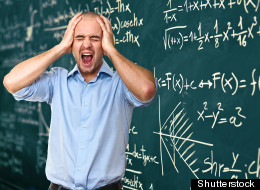
My undergraduate focus is economics, but I had no idea what that meant. As I have gotten into some of the more advanced classes involving calculus and advanced statistics, I no longer feel like I am in an economics program, but rather a Greek language program. When I look at my assignments I feel like this:

I never realized how many people influenced mathematics in the ancient Greek world. People like Pythagoras, Plato, Euclid, and many more. (http://www.storyofmathematics.com/greek.html )

They played a key role in establishing the foundation for much of the mathematics we have in our day, and although I am often times confused, if it wasn't for the Greek lettering used I would be so much more lost.

Just so you know how I feel here are a few small examples: