Showing posts with label architecture. Show all posts

Monday, October 19, 2015

Remarkable Architecture

As I was growing up one of the things I wanted to be was an architect. I loved to draw and create new things. I have not yet taken the path of an architect, but I still have a fond desire of building and designing structures. I designed a set for a play at Lehi High school, and spent hours on end building this set. I enjoyed doing it so much, because when I finished I was able to sit back and look and say that I designed and built that.

The Romans were very similar. They loved architecture, and were really good at it. Not only the famous aqueducts and Colosseum but also the temple of Jupiter, and the Sanctuary of Fortuna Primigenia.
Model of the Sanctuary of Fortuna Primigenia

 They even started to experiment with concrete which was a new feat at that time. They loved to build and create new things. We are a people today that love to create new things and I think much of that can be attributed to the Romans. But as Chloe was talking about her experience in Italy with dance, I realized that there is a profound importance that comes from going to the country to understand more about them. I can study architecture online all I want, but i would need to go in person to truly experience the magnificence of the amazing things they created. They were a remarkable people.

Tuesday, September 1, 2015

On the Shoulders of Giants


Though imagined and constructed thousands of years ago, Greek architecture still largely influences us today.  From the time that pen was put to paper (or chisel to stone, as would be more apt in this case), the Greek’s building style was meant to both impress and inspire.  It differed from that of the later Baroque style which was focused on intimidating those who dared disapprove because the fluted columns and stately demeanor of the Greek’s buildings welcomed those who entered to a level of higher thinking.  When I think of words to describe what famous ancient architects, like Hippodamus or Ictinus, were trying to convey, I think of justice, order, and enlightenment.  Is it such a wonder then that many national buildings or important religious monuments were built with Greek undertones?  (If you want to explore more in detail, click here).  This summer, I toured around some more historic parts of the United States.  Here are a few of my adventures:       


Even a place as common as the St. Louis Cardinals baseball stadium has subtle traces of the Greeks.


                                                                                                              Me at the Nauvoo LDS Temple

Thursday, January 8, 2015

Competing Geniuses: The Dome of Florence

Filippo Brunelleschi spent 20 years designing and the world’s largest brick dome, and he was a goldsmith.  This dome was the crowning achievement and victory of Brunelleschi’s life.  It was preceded by designing clocks, formal art school, mastering architecture; and extensive study of old Greek and Roman texts.  He lived in the beginning of the Renaissance and inspired men like Leonardo Di Vinci and Michelangelo with his designs and art.  He was, in the renaissance sense of the word, a true genius, the kind of renaissance man that Kenny talks about in his earlier post.

His struggle to build the dome was a very personal one.  His efforts were often sabotaged and criticized by his rival, Lorenzo Ghiberti, who was commissioned to work on the dome alongside Brunelleschi.  Lorenzo too had great fame in Florence as an artist and architect.  In fact, he had beaten Brunelleschi before to win a commission to build the bronze doors to the Saint John Baptistery.  By nature Brunelleschi was an intense man who easily lost his temper.  He often vied against his rival. 

Monday, December 15, 2014

Dreams, Creation, and Communication

It is likely that you have created something in your lifetime. There is a process to creation. When we create something it doesn't simply appear out of nothing; it must first be an idea or a concept, then the concept must be communicated in some way; finally, we physically organize the material world to create something tangible out of an originally immaterial, intangible, and sometimes abstract idea. As students of architecture, we mostly concern ourselves with creating buildings. Unfortunately, many students of architecture destroy the bridge between the ideas in their minds and what is being organized in the material world by ignoring communication-while communication is actually a central part to architecture.

Envision an architect working, most people would envision a solitary, creative-looking person sitting at a large desk drafting a building in a sketchbook or on a computer; that vision is true for only a small fraction of the time; after all, if that was all they did, would anything get built? What do architects have to do in order to have their dreams and visions realized?

Interior of the Guggenheim.

Case Study


Imagine that you recently graduated from a great architecture program, you became accredited, and got a job at a firm you've always admired. The firm that you work for has recently been granted a commission to work on a new museum for a major city. You are assigned to be on the team of architects in charge of the design of this building. You are excited because you've probably come up with several museum concepts throughout your college time and even before that, and you think that your design concepts are genius, so this is a huge chance for you to prove yourself. But then you meet with the team of architects who you’ll be working with, all of them are more senior than you, and there is a project lead who conducts the meeting and tells the team about the specifications of the project. You learn a couple of things you did not anticipate, you’re going to have to do a lot more than just throw your designs from college out there in order to prove yourself, and all of those designs you did in school don’t fit the client’s specifications.

Observe how important communication is already; you will need to know how to observe and listen, you will need to know how to properly interact with the architects in your team in order to build the confidence and trust that they have in you, and you will need to know how to most effectively present your ideas to them. The interactions that will take place among you and the other architects extend even beyond verbal communication.

After several weeks of planning and conceptualizing this project, the team you are on has decided on an overall design concept, and you are tasked with designing the bathrooms, reception area, and the museum cafe. Notice here that nothing will be accomplished without communication; you will have to sketch, create computer renderings, perhaps build models, and be able to present those sketches and renderings effectively. While you would be presenting things a lot, it would usually be presented on an intimate level. Since the team you’re working with is small, there will be a lot of small
Some Guggenheim Museum blueprints.
gatherings around someone’s computer to see some of the latest developments on their portion of the project, and other similar interactions. Every decision that you make has to be cleared by the team in the end, so you will likewise be clearing the decisions made by the other architects, otherwise this museum would be a hodge-podge of designs and ideas, not a cohesive system that works. After months of planning and communicating as a team the final blueprints and designs are drafted and work moves forward with the clients and contractors to begin the actual building process. Now you have to know how to communicate not only with fellow architects, but with engineers, general contractors, electricians, plumbers, businessmen, and every other person that has something to do with building a structure.

You will be sending a lot of emails and taking a lot of phone calls during the building phase of the project. So picking up on and communicating verbal and written cues will be important. During this phase of the project there will also be many complications that arise, material orders get messed up, or perhaps some measurements don’t end up working. Sometimes, due to complications, contractors and engineers might try to alter building plans, usually in an attempt to make their job easier. How you and the team of architects respond to such complications can have a lot of effects; any negative response could sour the relationship you and the other architects have with the other professionals involved in the project, but knowing how to get what you want while not offending those who have to work to produce what you want would be very valuable. After months, perhaps years, all of your work has paid off, and you and the other architects are able to walk through the completed museum to see the physical reality that those concepts and ideas became. You can now say that you have placed your own little stamp on the world as the architects in the past have by filling the world with their ideas and creations.

History


Any student of architecture who has taken classes on architectural theory and the history of architecture has probably developed a personal liking to certain types of architecture and periods of architectural history. Certain styles and theories elicit different feelings and responses in all of us. They communicate something. In the end, all of the work that architects put into the buildings that they helped design will communicate something through the design of the structure itself. Sometimes a client will state clearly what they want to be communicated by their building, sometimes that is left up to the architect. It will be important for you to be able to hearken back to the past in order to remember what architects have said and how they have said it through their designs, so that you can elicit similar responses through your own creations.

The best architecture communicates something to those who experience it. That is why it lasts. But in order to create the best architecture, an architect must be able to communicate so effectively and skillfully with those around him that the meaning and idea of a design is clear; it is so easy for meaning to become lost in price estimates, construction complications, and the everyday business of creating a building. Don’t allow the every day to detract from what can be extraordinary. As Bjarke Ingels said, “Architecture is about trying to make the world a little more like our dreams.”


Works Cited:

Ingels, Bjarke. Interview by archi-ninja.com staff. Interview with Bjarke Ingels. arch-ninja.com 2009.  Web. 10 November 2009


Britannica article, "Western architecture"http://www.britannica.com/EBchecked/topic/32952/Western- architecture/47295/Roman-and-early-Christian

Friday, December 5, 2014

What are buildings communicating to us?

Profile: 

What the undergraduate career of an architectures student is like will depend largely on the college that they attend. If the college that they attend has an undergraduate architecture program, they will have classes that address the history of architecture, they will learn about individual architects and the influence their work has had on architecture, they will take drafting classes, construction science classes that cover building codes and the laws behind buildings, many will do field studies abroad. But many colleges don't have an accredited architecture program, in that situation the student is free to get a degree in whatever field they choose, and do a three-year graduate program in architecture.  Internships and employment at an architecture office during your school experience are highly recommended by practicing architects. Architects do have to be able to create attractive resumes, in all resumes a portfolio must be included that shows the creativity and skill of the candidate. Whether or not the people hiring look more at the portfolio or the experience outlined in the resume depends completely on the firm. Some firms look only at creativity, some want practical experience. The building of communication skills will begin right when the student has their first drafting class, usually they'll have to collaborate with other students to do projects.


Context/Rhetoric/History: 

Most creative types like to look towards the f
uture, since they will be creating things in the future. Anything in the context of how an idea or theory could help an architecture student get to where they want to be (turning their ideas and dreams into a physical reality), so I will probably focus on how rhetoric and the history of architecture fit into that context. Like I did in my most recent post, I will draw parallels to the design process to today, yesterday, and tomorrow. I'll address questions such as, "How can communication and rhetoric help me to build my dreams?" and "How does knowledge of the past of Architecture contribute to the future of the art?", I think it'll most effectively be done by showing an architecture student the process so that it becomes even more real to them.

Development plan: 

I think the paper and ideas will naturally flow pretty nicely. Most students of architecture will be willing to read anything about architecture (most). Starting and ending with the present in mind I think will be most effective, however. I will talk about the field of architecture today and the skill sets that are needed to be successful in the field; following that I'll talk about some specific skills, probably creative skills such as drafting, building models, and thinking of concepts, and then I will connect those skills that most people already envision architects doing to communication and rhetoric. The final point I will make concerning communication in architecture is the idea that the whole art of architecture itself is communication, the final product of what you envisioned and worked to produce communicates so much to the world. Then I will talk about history, and what architectural styles from the past communicate to the world (this is a cool point, in my opinion, architectural expression is timeless, we understand today pretty much the same message that Rome was sending to the world through it's architecture thousands of years ago!). So in the paper I'll do a brief survey of major architectural styles ranging from antiquity to today (that will likely require some additional research on my part) and how those styles function as rhetorical devices, and how a knowledge of both the styles themselves and rhetoric is necessary to the profession today.

I will then talk a little bit about how the future of architecture largely depends on its' history. And how the future professional architect will have the huge responsibility of communicating the identity of who we are in the future. Will they build structures that communicate how much we care about nature, perhaps they will communicate that we are more concerned with quick and easy jobs that take the minimum amount of resources... (those buildings likely won't last, however... think about campus, many building have been torn down, those were the cheap one's that simply were their to function as a space to put people, the buildings that are preserved are usually beautiful and enjoyable to look at and experience). Throughout the paper I will use quotes from current architects and past one's to add authority, I will likely conclude with the one that was in a photo in my last post, "Architecture is about trying to make the world a little more like our dreams" -Bjarke Ingels.
This is "Falling Water" a home designed by Frank Lloyd Wright; it
will never be torn down, but, unfortunately, most people cannot
afford a house like this to be built for them.


No dreams went into this, it is a mass
produced floor plan that is cheap
 and easy to build. It can still
be a home though!

Wednesday, December 3, 2014

An Art as Old as Civilization


In a recent interview, Bjarke Ingels, a young Danish architect who is quickly becoming very famous in the architecture field, was asked what architecture is. Mr. Ingels believes in a philosophy of architecture that hearkens to Darwin's evolutionary theories, in the interview he says that, "... the forms and shapes (designs if you like) of the biosphere have evolved through millenia-long selection processes." He then talks about how buildings and cities have evolved, and that now instead of living things adapting themselves to physical environments, we have arrived to the point where we can design our physical environment; we aren't the ones adapting physically anymore. Today architecture is a fluid science that adapts as our needs and wants change. New technology, sustainability, more resources, and so many other things add up to what we want and need. As Bjarke put it, "Architecture is the art and science of making sure that our cities and buildings actually fit with the way we want to live our lives: the process of manifesting our society into our physical world." 

The idea of, "...making...cities and buildings...fit the way we want to live our lives..." is equally valid when studying the architecture of antiquity. Most college students would be able to connect an entire civilization from antiquity with a single building, observe:

Hopefully most of you can identify the top image of the three to the right as the Parthenon. Studying the Parthenon and other Greek architecture reveals a lot about Greek society. The ancient Greeks relished in physical beauty, so in architecture form was valued over function, especially in ceremonial and public buildings. 

The second image I'm sure you recognize as the coliseum built by the ancient Romans. They borrowed a penchant for beauty from the Greeks, as well as many of their building styles. But the Romans took the Greek ideas and built upon them pretty close to perfection. Romans found a new obsession with power and impressive super structures, feats and advances of engineering allowed Rome to build an identity that they wanted.

The third image is a Christian cathedral. Christian architecture borrows heavily from Roman engineering, the earliest Christian buildings began as replicas of Roman basilicas and bath houses, but evolved to a unique type of architecture. The high spires, elongated pillars, and steep arches seem to be reaching for the heavens. 

In the same interview mentioned earlier in the blog post, Bjarke was asked what architecture will look like in the next 50 years, he said, "It will evolve into something that is both completely different and also exactly the same as today, and the built environment (our cities) will most likely be completely recognizable and also surprisingly new." 
I love London, it has a way of holding on to the beauty from
the past while embracing the future. 
Works Cited: 
         Ingels, Bjarke. Interview by arhi-ninja.com staff. Interview with Bjarke Ingels. arch-ninja.com  2009.                     Web. 10 November 2009
             Britannica article, "Western architecture". http://www.britannica.com/EBchecked/topic/32952/Western- architecture/47295/Roman-and-early-Christian

Friday, November 7, 2014

Architecture: where communication builds things... literally.

Henry is a seasoned architect, he has gained a lot of respect over the years through a distinguished career of innovative and even inspiring structures, monuments, and buildings. He even recently won the Pulitzer Price for a museum he designed in the middle east. He currently is a partner in a very respected firm and a large municipality announced recently a design competition for a large municipal project that would bring a lot of recognition to the designer. He sees it not only as a great business opportunity to bring added recognition and money to the firm, but also an opportunity to communicate something to the community. 

Typical Architecture firm office.
Henry heads a team of junior architects, and will usually communicate to them in a unique work-setting. Most architecture firms have are designed in a way to optimize collaboration and team work, so a firms physical space itself will contribute to communication between associates. All of the written communication will be over e-mail, Henry will send e-mails to the junior architects, he likely won't have to labor too much over rhetorical tools since he's their boss, but he'll observe obvious courtesies and will always use words that identify a team effort. For example:

Memo for municipal competition team:

Hello everyone! Attached to this e-mail are some conceptual sketches that I've rendered. Review them and see what you think. We'll have a meeting tomorrow morning at 10 to talk about the sketches and do some additional brainstorming together for this thing.

-H.

Zaha Hadid, a recent Pulitzer Prize winner... she probably
designed what she was wearing that day.
Notice that it was simple, it was likely hastily typed, read over, then sent right away to all of the junior architects on the team. He made sure to make them feel included, but at the same time sent his own sketches, the junior architects won't really question him, they'll give input and offer suggestions, but the framework has already been set with Henry's renderings, and because of his already established position and ethos, the juniors won't really question it. Also, they know who "H." is, this may be a tool by Henry to show his seniority.

Say that the firm wins the competition, and thus contracts with the municipality to build this project. After that point the architects will meet with whoever represents that part of the government, probably a city planner or someone on some committee or something. Henry will be present, and, honestly, he can wear what he wants. Most architects wear very simple clothes, blazers, nice shoes, sometimes just t-shirts. When meeting with this client, Henry will probably wear a blazer, a plain shirt or sweater underneath, and some ridiculous pair of glasses (architects can pull those off... one of the perks.) A client might think, "...that wouldn't be appropriate in my office, but he is an architect, he must be really... cool, I trust him to make something cool."

Bjarke Ingels, a pretty young architect who has kind of exploded
in popularity in the past decade. I don't even know if he's wearing a
blazer or a hoody... or both.


Friday, October 31, 2014

Form vs. Function: a Central Conflict in Architecture


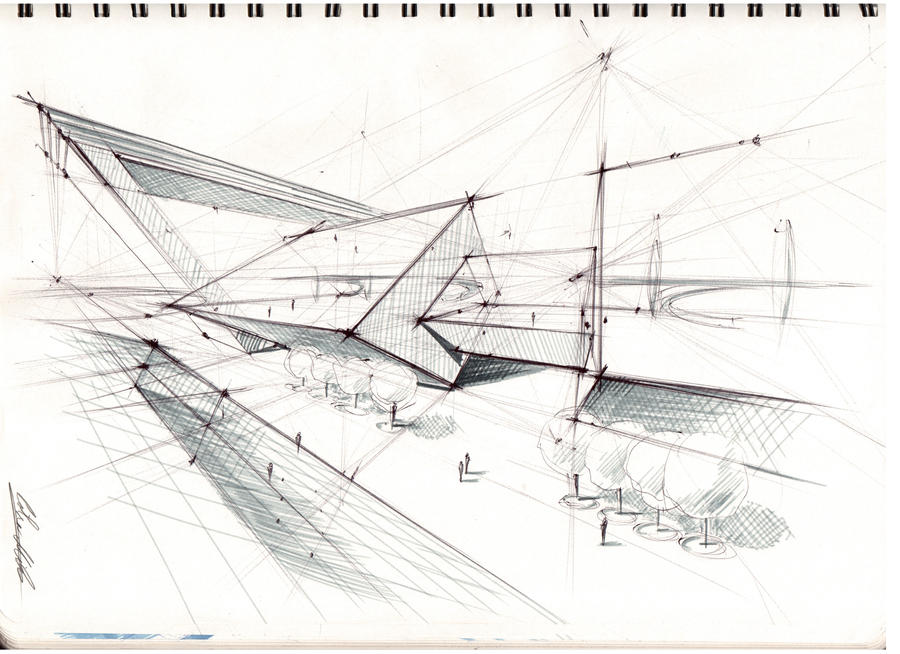
Sample Sketch-work
There seems to be a governing problem in most fields, especially some of the fields previously talked about by other students, that is a scarcity resources. The scarcity of resources present in all professions and in all of our lives manifests itself in architecture through a central conflict I've heard called "form vs. function".

A client comes to a meeting with the team of architects from the firm he contracted with in order to hear and see a design proposal; he likes what he sees a lot, he doesn't understand most of what he sees in the models and sketches and computer renderings, but it all looks really cool. He's excited and ready to get going with construction, then he's reminded of something he understands very well that brings his mind down to reality, numbers and dollar signs. It all depends on the client from that point on and the convincing ability of the architects, the architects would respond by talking about the reputation and purpose of the building and the client and his company, they would refer to the precedent set by architectural works done in the past and what those buildings have inspired in people, it seems like simultaneously the architects would use definition, division, and comparison in order to explain further the need for the designs they've come up with and why the price tag would be worth it.

One of Frank Gehry's sketches of Disney Hall. Due to
this architects reputation, most clients go to him
expecting something grand, so they expect to pay
the price. Unfortunately it's not like that for all Architects.
In the end, the architects' main argument would be how the form would influence the functionality (productivity of employees, appeal to costumers, etc.) in a positive way, thus appealing the main goal of most any company: increased profits. Mostly this appeals to the special topic of invention called deliberative (specifically referring to advantageous/disadvantageous) and also the common topic of cause and effect.

Finished Disney Hall, it's kind of cool to see a thought become
a reality, huh? 

Friday, October 24, 2014

Communication and Persuasion in Architecture

I have been fascinated by buildings and structures since my early youth. I would grab paper and a pencil and escape by creating new worlds full of buildings and houses, I've designed a new dream house for myself already at least a half dozen times. Time escapes me when I sit down and sketch a beautiful building. All architects are unique, but all share the same love and fascination with creating and shaping the world around them. 

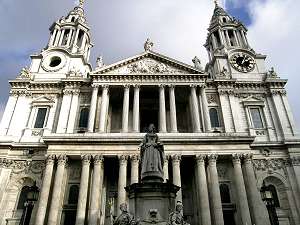
I'm currently working on a sketch of St. Pauls Cathedral... it is super hard
Isn't it a beauty, though?
Communication is an integral part of the profession of architecture. Every day architects collaborate with other architects, structural engineers, building contractors, electrical engineers, surveyors, and every other profession that has to do with erecting any type of structure; but the most important communication that occurs in the profession is with the client. The client is who provides the resources you need to create something, his needs and desires must be met. Unfortunately, the majority of clients don't know all that much about architecture, and are usually more worried about cost than anything else. So they want the best product for the cheapest price, it's basic economics. If an architect is a skilled rhetorician, he can better provide the vision he sees in his own mind to the client. Without any communication skills, an architect would be useless. He would be unable to share any plans or any ideas. Architects communicate through many means; they speak on the phone, through e-mail, in meetings, they build models and draw sketches to communicate their ideas visually. 

What messages does the church communicate through its' architecture?
Perhaps the most powerful communication tool for an architect are his designs themselves. It takes a great deals of interpersonal skills to get a project going and to keep it going through the design process, but what the finished product ends up being is a strong message from the Architect. It is the architects message to the world and community around him or her. Sometimes it is hard to find the message they are sending, perhaps their communication skills weren't the best so they weren't able to get what they wanted in the design process, so their idea and vision may have been polluted by cost restrictions and client demands. But an architect who knows how to communicate and persuade will, in the end, send beautiful and powerful messages through their creations. 

Most of the knowledge that I've gained about architecture have come from practical experience, I've done an extended internship at an architecture firm in Salt Lake City, and was also an Architecture major at the University of Utah before I went on my mission and transferred to BYU. 
I'm sure most of you know where this is, if not, this is in Dubai; think for a moment;
what do the superstructures in Dubai communicate about that community, about that economy,
about the people living there?

Tuesday, October 21, 2014

Love and Love of Rome

It's the Colosseum!  Would you be one to
go watch the bloody spectacle?  (Photo courtesy of Winnie)
After many weeks since the earlier topic on ancient Greece, I have come back to the Greco-Roman world and my connection to it.  As mentioned in my older post, my girlfriend loves and has visited Rome.  Due to this, her enthusiasm has become contagious and I have found myself also drawn to this world of war and ruins. 


I would like to go see Trevi Fountain with
Winnie some day, hopefully soon!  (Photo also courtesy of Winnie)
Perhaps our reasons for being interested are different, but I must say that personally, I am most excited about the architecture.  Maybe this is due to my prior days of building Legos, but I plan on seeing these remarkable structures firsthand someday.  

Saturday, September 20, 2014

Architecture: a Civil Expression of Irrationality

What would life be like if there were no possible opportunities for us the "loosen up"? Perhaps Euripides' main point is that in order for a well-ordered, functional, and sane civilization to thrive there must be some form of release. I often reflect on several novels contemporary novels that narrate a dystopian future where there is no freedom, George Orwell's 1984 is one of the foremost examples I feel, in that novel the protagonist finds some outlets of release and freedom, and parts of some hidden, new creature are released. He feels liberated, but throughout the book, when he acts on those more carnal desires his personality almost turns animal-like. I think Orwell and Euripides make a similar point, that there is a point where suppression of our instinctive drives becomes unhealthy, and can lead to disastrous ends. So, how do we find a way to healthily control the animal drives within us that cause disorder and chaos? In the play I love that difference in between the city and the wilderness, most of the irrational things happen in the wilderness, whereas the civil and rational moments happen in the city. It is in the city that Agave comes back to rationality, and where all of the civil discourse takes place. Even the nature of worshiping Dionysus is differs by whether it is in the city or the wilderness. In the city an organized cult worships him, in the wilderness his followers change to different creatures in frenzies of ecstasy.

In the high point of ancient Greek architecture the form of their architecture was emphasized more than the utility of a space. They cared more about the beauty of their structures than the utility, at least in the grand community buildings and temples and things. The buildings were extremely well built and engineered, and all of the measurements are engineered in order to create a beautiful image. (The Parthenon, for example, is not symmetrical when measured out, the different sides of the building are different lengths and the measurements look weird when written or drawn on paper, but when they are applied and built, they look perfect.) Today architects see designing a building where form is allowed to take precedence over function (which generally means more costly buildings, but incredible works of art) as an incredible opportunity for their creativity to take over. When architects design buildings that are irrational, it stirs something within us that inspires more creative power, we relish in the opportunity to create something just for the sake of creating it, just so that we can look at it. When people attend Disney Hall (pictured above right) they see something that is, frankly, irrational, it just looks... well a little crazy, (I think it's beautiful) yet it contributes to society as a place where beautiful music is performed to uplift and inspire.

Tuesday, September 9, 2014

Architecture!


My family and I lived in Japan for a few years while I was in high school. The architecture there was amazing! The utility of all of the ancient temples and homes was amazingly advanced, but were very elegant and intricate. Similarly, ancient Greeks sought to make beautiful edifices that reflected their refined culture. Isn't cool how you can look at the two different buildings above and tell me almost exactly from what area of the world and culture they come from? Architecture historically was such a defining characteristic of a civilizations culture.


M-thegreek-E (The Greek in Me)

A can castle my ward built for a HOPE food drive
Me as Maleficent in a Roadshow Performance hosted by my stake in CA
Out of all the many different influences the Ancient Greek culture has on our modern lives, the two I see most in my life (aka the two I had pictures of so I wouldn't have to worry about copyright infringements) are architecture and storytelling. I am amazed by how many buildings are built with Greek influences. I mean, any time you see a pillar the design was probably copied off of a Greek building. I found a website (pillars) that shows three different types of pillars that the Greeks used based on how ornate they wanted a building to be. Anyway, for storytelling I like to read and tell stories but I also like to participate in plays and drama productions. So apparently there is more Greek in me than I thought!