Showing posts with label posted by Austin P. Show all posts

Monday, December 15, 2014

Dreams, Creation, and Communication

It is likely that you have created something in your lifetime. There is a process to creation. When we create something it doesn't simply appear out of nothing; it must first be an idea or a concept, then the concept must be communicated in some way; finally, we physically organize the material world to create something tangible out of an originally immaterial, intangible, and sometimes abstract idea. As students of architecture, we mostly concern ourselves with creating buildings. Unfortunately, many students of architecture destroy the bridge between the ideas in their minds and what is being organized in the material world by ignoring communication-while communication is actually a central part to architecture.

Envision an architect working, most people would envision a solitary, creative-looking person sitting at a large desk drafting a building in a sketchbook or on a computer; that vision is true for only a small fraction of the time; after all, if that was all they did, would anything get built? What do architects have to do in order to have their dreams and visions realized?

Interior of the Guggenheim.

Case Study


Imagine that you recently graduated from a great architecture program, you became accredited, and got a job at a firm you've always admired. The firm that you work for has recently been granted a commission to work on a new museum for a major city. You are assigned to be on the team of architects in charge of the design of this building. You are excited because you've probably come up with several museum concepts throughout your college time and even before that, and you think that your design concepts are genius, so this is a huge chance for you to prove yourself. But then you meet with the team of architects who you’ll be working with, all of them are more senior than you, and there is a project lead who conducts the meeting and tells the team about the specifications of the project. You learn a couple of things you did not anticipate, you’re going to have to do a lot more than just throw your designs from college out there in order to prove yourself, and all of those designs you did in school don’t fit the client’s specifications.

Observe how important communication is already; you will need to know how to observe and listen, you will need to know how to properly interact with the architects in your team in order to build the confidence and trust that they have in you, and you will need to know how to most effectively present your ideas to them. The interactions that will take place among you and the other architects extend even beyond verbal communication.

After several weeks of planning and conceptualizing this project, the team you are on has decided on an overall design concept, and you are tasked with designing the bathrooms, reception area, and the museum cafe. Notice here that nothing will be accomplished without communication; you will have to sketch, create computer renderings, perhaps build models, and be able to present those sketches and renderings effectively. While you would be presenting things a lot, it would usually be presented on an intimate level. Since the team you’re working with is small, there will be a lot of small
Some Guggenheim Museum blueprints.
gatherings around someone’s computer to see some of the latest developments on their portion of the project, and other similar interactions. Every decision that you make has to be cleared by the team in the end, so you will likewise be clearing the decisions made by the other architects, otherwise this museum would be a hodge-podge of designs and ideas, not a cohesive system that works. After months of planning and communicating as a team the final blueprints and designs are drafted and work moves forward with the clients and contractors to begin the actual building process. Now you have to know how to communicate not only with fellow architects, but with engineers, general contractors, electricians, plumbers, businessmen, and every other person that has something to do with building a structure.

You will be sending a lot of emails and taking a lot of phone calls during the building phase of the project. So picking up on and communicating verbal and written cues will be important. During this phase of the project there will also be many complications that arise, material orders get messed up, or perhaps some measurements don’t end up working. Sometimes, due to complications, contractors and engineers might try to alter building plans, usually in an attempt to make their job easier. How you and the team of architects respond to such complications can have a lot of effects; any negative response could sour the relationship you and the other architects have with the other professionals involved in the project, but knowing how to get what you want while not offending those who have to work to produce what you want would be very valuable. After months, perhaps years, all of your work has paid off, and you and the other architects are able to walk through the completed museum to see the physical reality that those concepts and ideas became. You can now say that you have placed your own little stamp on the world as the architects in the past have by filling the world with their ideas and creations.

History


Any student of architecture who has taken classes on architectural theory and the history of architecture has probably developed a personal liking to certain types of architecture and periods of architectural history. Certain styles and theories elicit different feelings and responses in all of us. They communicate something. In the end, all of the work that architects put into the buildings that they helped design will communicate something through the design of the structure itself. Sometimes a client will state clearly what they want to be communicated by their building, sometimes that is left up to the architect. It will be important for you to be able to hearken back to the past in order to remember what architects have said and how they have said it through their designs, so that you can elicit similar responses through your own creations.

The best architecture communicates something to those who experience it. That is why it lasts. But in order to create the best architecture, an architect must be able to communicate so effectively and skillfully with those around him that the meaning and idea of a design is clear; it is so easy for meaning to become lost in price estimates, construction complications, and the everyday business of creating a building. Don’t allow the every day to detract from what can be extraordinary. As Bjarke Ingels said, “Architecture is about trying to make the world a little more like our dreams.”


Works Cited:

Ingels, Bjarke. Interview by archi-ninja.com staff. Interview with Bjarke Ingels. arch-ninja.com 2009.  Web. 10 November 2009


Britannica article, "Western architecture"http://www.britannica.com/EBchecked/topic/32952/Western- architecture/47295/Roman-and-early-Christian

Friday, December 5, 2014

What are buildings communicating to us?

Profile: 

What the undergraduate career of an architectures student is like will depend largely on the college that they attend. If the college that they attend has an undergraduate architecture program, they will have classes that address the history of architecture, they will learn about individual architects and the influence their work has had on architecture, they will take drafting classes, construction science classes that cover building codes and the laws behind buildings, many will do field studies abroad. But many colleges don't have an accredited architecture program, in that situation the student is free to get a degree in whatever field they choose, and do a three-year graduate program in architecture.  Internships and employment at an architecture office during your school experience are highly recommended by practicing architects. Architects do have to be able to create attractive resumes, in all resumes a portfolio must be included that shows the creativity and skill of the candidate. Whether or not the people hiring look more at the portfolio or the experience outlined in the resume depends completely on the firm. Some firms look only at creativity, some want practical experience. The building of communication skills will begin right when the student has their first drafting class, usually they'll have to collaborate with other students to do projects.


Context/Rhetoric/History: 

Most creative types like to look towards the f
uture, since they will be creating things in the future. Anything in the context of how an idea or theory could help an architecture student get to where they want to be (turning their ideas and dreams into a physical reality), so I will probably focus on how rhetoric and the history of architecture fit into that context. Like I did in my most recent post, I will draw parallels to the design process to today, yesterday, and tomorrow. I'll address questions such as, "How can communication and rhetoric help me to build my dreams?" and "How does knowledge of the past of Architecture contribute to the future of the art?", I think it'll most effectively be done by showing an architecture student the process so that it becomes even more real to them.

Development plan: 

I think the paper and ideas will naturally flow pretty nicely. Most students of architecture will be willing to read anything about architecture (most). Starting and ending with the present in mind I think will be most effective, however. I will talk about the field of architecture today and the skill sets that are needed to be successful in the field; following that I'll talk about some specific skills, probably creative skills such as drafting, building models, and thinking of concepts, and then I will connect those skills that most people already envision architects doing to communication and rhetoric. The final point I will make concerning communication in architecture is the idea that the whole art of architecture itself is communication, the final product of what you envisioned and worked to produce communicates so much to the world. Then I will talk about history, and what architectural styles from the past communicate to the world (this is a cool point, in my opinion, architectural expression is timeless, we understand today pretty much the same message that Rome was sending to the world through it's architecture thousands of years ago!). So in the paper I'll do a brief survey of major architectural styles ranging from antiquity to today (that will likely require some additional research on my part) and how those styles function as rhetorical devices, and how a knowledge of both the styles themselves and rhetoric is necessary to the profession today.

I will then talk a little bit about how the future of architecture largely depends on its' history. And how the future professional architect will have the huge responsibility of communicating the identity of who we are in the future. Will they build structures that communicate how much we care about nature, perhaps they will communicate that we are more concerned with quick and easy jobs that take the minimum amount of resources... (those buildings likely won't last, however... think about campus, many building have been torn down, those were the cheap one's that simply were their to function as a space to put people, the buildings that are preserved are usually beautiful and enjoyable to look at and experience). Throughout the paper I will use quotes from current architects and past one's to add authority, I will likely conclude with the one that was in a photo in my last post, "Architecture is about trying to make the world a little more like our dreams" -Bjarke Ingels.
This is "Falling Water" a home designed by Frank Lloyd Wright; it
will never be torn down, but, unfortunately, most people cannot
afford a house like this to be built for them.


No dreams went into this, it is a mass
produced floor plan that is cheap
 and easy to build. It can still
be a home though!

Wednesday, December 3, 2014

An Art as Old as Civilization


In a recent interview, Bjarke Ingels, a young Danish architect who is quickly becoming very famous in the architecture field, was asked what architecture is. Mr. Ingels believes in a philosophy of architecture that hearkens to Darwin's evolutionary theories, in the interview he says that, "... the forms and shapes (designs if you like) of the biosphere have evolved through millenia-long selection processes." He then talks about how buildings and cities have evolved, and that now instead of living things adapting themselves to physical environments, we have arrived to the point where we can design our physical environment; we aren't the ones adapting physically anymore. Today architecture is a fluid science that adapts as our needs and wants change. New technology, sustainability, more resources, and so many other things add up to what we want and need. As Bjarke put it, "Architecture is the art and science of making sure that our cities and buildings actually fit with the way we want to live our lives: the process of manifesting our society into our physical world." 

The idea of, "...making...cities and buildings...fit the way we want to live our lives..." is equally valid when studying the architecture of antiquity. Most college students would be able to connect an entire civilization from antiquity with a single building, observe:

Hopefully most of you can identify the top image of the three to the right as the Parthenon. Studying the Parthenon and other Greek architecture reveals a lot about Greek society. The ancient Greeks relished in physical beauty, so in architecture form was valued over function, especially in ceremonial and public buildings. 

The second image I'm sure you recognize as the coliseum built by the ancient Romans. They borrowed a penchant for beauty from the Greeks, as well as many of their building styles. But the Romans took the Greek ideas and built upon them pretty close to perfection. Romans found a new obsession with power and impressive super structures, feats and advances of engineering allowed Rome to build an identity that they wanted.

The third image is a Christian cathedral. Christian architecture borrows heavily from Roman engineering, the earliest Christian buildings began as replicas of Roman basilicas and bath houses, but evolved to a unique type of architecture. The high spires, elongated pillars, and steep arches seem to be reaching for the heavens. 

In the same interview mentioned earlier in the blog post, Bjarke was asked what architecture will look like in the next 50 years, he said, "It will evolve into something that is both completely different and also exactly the same as today, and the built environment (our cities) will most likely be completely recognizable and also surprisingly new." 
I love London, it has a way of holding on to the beauty from
the past while embracing the future. 
Works Cited: 
         Ingels, Bjarke. Interview by arhi-ninja.com staff. Interview with Bjarke Ingels. arch-ninja.com  2009.                     Web. 10 November 2009
             Britannica article, "Western architecture". http://www.britannica.com/EBchecked/topic/32952/Western- architecture/47295/Roman-and-early-Christian

Tuesday, November 25, 2014

Thank you, taste.

The bright orange skin of the small orb you peel glistens back at you, a fresh scent accosts your nostrils as juices coat your skin; then, the long awaited moment approaches, and you place the beautiful little segment of orange fruity flesh (alliteration) on your tongue. Taste, how grateful I am to have you (personification). You make possible the enjoyment of every meal (hyperbole), most especially the blessed spread of Thanksgiving, that most blessed day of thanks (repetition). You are the angelic hallelujah (alliteration) of this mortal plain, the aurora borealis of the senses (metaphor), God's most precious gift (hyperbole). Whenever we part I anxiously look forward to our reunion; goodbye, until we rejoice again together (personification).


Wednesday, November 19, 2014

A good orator is his audience... sort of.

"Confessions" by Augustine contains
a lot of his story, this is mostly what
we read from in my Freshman class.

In a class that I had at the University of Utah my freshman year we studied Augustine briefly, but instead of focusing on rhetoric, we focused on philosophy and the intellectual tradition of western civilization, so we read his memoirs and treatises, but none of his sermons. I remember the memoirs most clearly, because in them it seemed like Augustine was putting more trust in his audience by writing about details of his life; I gained a lot of respect for the man because he went through a lot of repentance and had to experience a lot of forgiveness on his path to becoming a Christian, and it seemed like his conversion was as complete as any other I've heard of, he was a changed man. Augustine's sermon for lent would have been more powerful if he would have shared some of those personal experiences that he had. I'm not saying that he needed to confess any of his specific past transgressions, but sharing that he had personally experienced in a real, tangible way what the scriptures had taught him would have added so much power.

The act of personally relating to an audience through personal testimony of his or her experience seems like it could be a part of all three categories of style (high, low, middle). All of you have done a great job describing how all three categories were present in the sermon, I agree, and it was cool to see the arrangement of the sermon and how it effected flow of the oratory style. One interesting part that stood out to me was when he included himself as the audience, "... do not be ashamed to seek pardon. In the same manner I speak to all, men and women, young and old, lay persons and clerics, and to myself, also. Let us all hearken; let us all fear." He puts us all on the same level! But at the same time utilizes high style to try and inspire action.

Most of us think of a good leader as one who works a long side those he leads. My mind turns to Jesus Christ; a great deal of the love and respect that many have for Him stems from the fact that He, the single greatest being in the Universe has been through everything that we go through, He's descended to our level, so that He can lift us up to His level. Augustine kind of does the same when he uses the pronoun "us", but could have done it to a greater extent by sharing relevant personal experiences, which, when effectively done, is done in all three styles: high, low, and middle.

He's our best friend!

Saturday, November 15, 2014

The Body of Christ

25 That there should be no schism in the body; but that the members should have the same care one for another.
 26 And whether one member suffer, all the members suffer with it; or one member be honoured, all the members rejoice with it.
 27 Now ye are the body of Christ, and members in particular.
In verses 25-27 of the tenth chapter of Paul's 1st epistle to the Corinthians Paul beautifully compares us to a body. He illustrates the body and how there are different parts that have their own purpose but all of the parts work and function together in harmony, this is a great application of the topic of invention of parts/whole. The scripture reference is also a metaphor, representing us and our relationship with Christ. We aren't literally the body of Christ, but are a in integral part of His work and purpose, as though we were a part of His body, and play our own part that contributes to some form of a harmonious whole, as our bodies do. The use of a metaphor extends the meaning of these brief verses to something far more profound than simply saying something like, "...we all have a part to play, and jobs to do for Christ..." Obviously there is more meaning than that, but that's the beauty of the metaphor, through the metaphor Paul talks about Charity, Christ's work and purpose, and the role that we play in it all!


Friday, November 7, 2014

Architecture: where communication builds things... literally.

Henry is a seasoned architect, he has gained a lot of respect over the years through a distinguished career of innovative and even inspiring structures, monuments, and buildings. He even recently won the Pulitzer Price for a museum he designed in the middle east. He currently is a partner in a very respected firm and a large municipality announced recently a design competition for a large municipal project that would bring a lot of recognition to the designer. He sees it not only as a great business opportunity to bring added recognition and money to the firm, but also an opportunity to communicate something to the community. 

Typical Architecture firm office.
Henry heads a team of junior architects, and will usually communicate to them in a unique work-setting. Most architecture firms have are designed in a way to optimize collaboration and team work, so a firms physical space itself will contribute to communication between associates. All of the written communication will be over e-mail, Henry will send e-mails to the junior architects, he likely won't have to labor too much over rhetorical tools since he's their boss, but he'll observe obvious courtesies and will always use words that identify a team effort. For example:

Memo for municipal competition team:

Hello everyone! Attached to this e-mail are some conceptual sketches that I've rendered. Review them and see what you think. We'll have a meeting tomorrow morning at 10 to talk about the sketches and do some additional brainstorming together for this thing.

-H.

Zaha Hadid, a recent Pulitzer Prize winner... she probably
designed what she was wearing that day.
Notice that it was simple, it was likely hastily typed, read over, then sent right away to all of the junior architects on the team. He made sure to make them feel included, but at the same time sent his own sketches, the junior architects won't really question him, they'll give input and offer suggestions, but the framework has already been set with Henry's renderings, and because of his already established position and ethos, the juniors won't really question it. Also, they know who "H." is, this may be a tool by Henry to show his seniority.

Say that the firm wins the competition, and thus contracts with the municipality to build this project. After that point the architects will meet with whoever represents that part of the government, probably a city planner or someone on some committee or something. Henry will be present, and, honestly, he can wear what he wants. Most architects wear very simple clothes, blazers, nice shoes, sometimes just t-shirts. When meeting with this client, Henry will probably wear a blazer, a plain shirt or sweater underneath, and some ridiculous pair of glasses (architects can pull those off... one of the perks.) A client might think, "...that wouldn't be appropriate in my office, but he is an architect, he must be really... cool, I trust him to make something cool."

Bjarke Ingels, a pretty young architect who has kind of exploded
in popularity in the past decade. I don't even know if he's wearing a
blazer or a hoody... or both.


Friday, October 31, 2014

Form vs. Function: a Central Conflict in Architecture


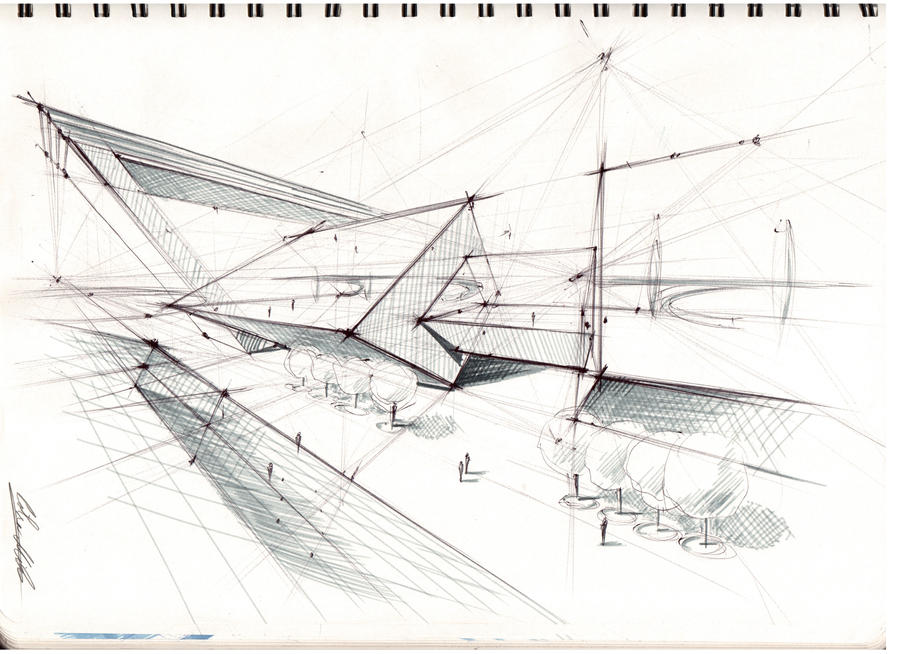
Sample Sketch-work
There seems to be a governing problem in most fields, especially some of the fields previously talked about by other students, that is a scarcity resources. The scarcity of resources present in all professions and in all of our lives manifests itself in architecture through a central conflict I've heard called "form vs. function".

A client comes to a meeting with the team of architects from the firm he contracted with in order to hear and see a design proposal; he likes what he sees a lot, he doesn't understand most of what he sees in the models and sketches and computer renderings, but it all looks really cool. He's excited and ready to get going with construction, then he's reminded of something he understands very well that brings his mind down to reality, numbers and dollar signs. It all depends on the client from that point on and the convincing ability of the architects, the architects would respond by talking about the reputation and purpose of the building and the client and his company, they would refer to the precedent set by architectural works done in the past and what those buildings have inspired in people, it seems like simultaneously the architects would use definition, division, and comparison in order to explain further the need for the designs they've come up with and why the price tag would be worth it.

One of Frank Gehry's sketches of Disney Hall. Due to
this architects reputation, most clients go to him
expecting something grand, so they expect to pay
the price. Unfortunately it's not like that for all Architects.
In the end, the architects' main argument would be how the form would influence the functionality (productivity of employees, appeal to costumers, etc.) in a positive way, thus appealing the main goal of most any company: increased profits. Mostly this appeals to the special topic of invention called deliberative (specifically referring to advantageous/disadvantageous) and also the common topic of cause and effect.

Finished Disney Hall, it's kind of cool to see a thought become
a reality, huh? 

Tuesday, October 28, 2014

Be real!

I don't feel I could make a better comparison between Plato's Gorgias and Cicero's De oratore than has already been made by Macey Richardson in her post. I agree with all of the points that she made and even found greater insight of how the two treatises relate by reading her post.

I don't know if any of you have seen the BBC series Sherlock, but I like it enough
to watch it, which is saying a lot... I'm a fan of  Benedict
Cumberbatch, who plays Sherlock Holmes in the series. I think I'm a fan because the actor
has become Sherlock, he has taken on his emotions, his personality, everything that is
Sherlock Holmes, so that I actually believe him when he's acting, he's genuine because in a way
what he feels when he acts as this fictional character is probably what the writers felt as they
created that character.
In the closing paragraphs of De oratore Cicero narrates the dialogue of Crassus, who is discussing style. But he finishes powerfully by declaring that "...delivery is the supreme factor in successful oratory." and then goes on to say that the emotions and the delivery used in oratory cannot be faked. He says that artificiality is easily and quickly detected. Many of the previous blog posts have aligned Cicero with the Sophists, which I mostly agree with. But in the dialogue between Socrates and Gorgias in Plato's Gorgias one of the common points brought up by Socrates his belief that it would be better for the masters of any given subject to speak about their subject instead of a professional orator, because it is more genuine. In De oratore Cicero seems to bridge a disconnect fabricated by Socrates; good rhetoric and oratory does need genuine deliverers, but just because someone isn't a specialist in a given subject doesn't mean he or she isn't passionate about it. (However, having more knowledge about a subject definitely makes it easier to talk about that subject; notice how much shorter this blog post is than my posts about architecture... I usually have to cut stuff out of those posts because they're too long.) 

It's very interesting to see Cicero draw his knowledge from so many different sources of learning, I think that is a part of what Macey was talking about in her post about the difference in the dialogue in De oratore  versus the dialogue in Gorgias; the dialogue was much less biased and more open, or as Macey put it; "mature". 


My nephew!!! Isn't he cute? He's so happy in this picture
because he's doing his favorite thing, dipping things and then eating them.
He's passionate about it and you can tell, so the emotion is contagious!

Friday, October 24, 2014

Communication and Persuasion in Architecture

I have been fascinated by buildings and structures since my early youth. I would grab paper and a pencil and escape by creating new worlds full of buildings and houses, I've designed a new dream house for myself already at least a half dozen times. Time escapes me when I sit down and sketch a beautiful building. All architects are unique, but all share the same love and fascination with creating and shaping the world around them. 

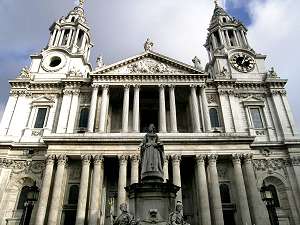
I'm currently working on a sketch of St. Pauls Cathedral... it is super hard
Isn't it a beauty, though?
Communication is an integral part of the profession of architecture. Every day architects collaborate with other architects, structural engineers, building contractors, electrical engineers, surveyors, and every other profession that has to do with erecting any type of structure; but the most important communication that occurs in the profession is with the client. The client is who provides the resources you need to create something, his needs and desires must be met. Unfortunately, the majority of clients don't know all that much about architecture, and are usually more worried about cost than anything else. So they want the best product for the cheapest price, it's basic economics. If an architect is a skilled rhetorician, he can better provide the vision he sees in his own mind to the client. Without any communication skills, an architect would be useless. He would be unable to share any plans or any ideas. Architects communicate through many means; they speak on the phone, through e-mail, in meetings, they build models and draw sketches to communicate their ideas visually. 

What messages does the church communicate through its' architecture?
Perhaps the most powerful communication tool for an architect are his designs themselves. It takes a great deals of interpersonal skills to get a project going and to keep it going through the design process, but what the finished product ends up being is a strong message from the Architect. It is the architects message to the world and community around him or her. Sometimes it is hard to find the message they are sending, perhaps their communication skills weren't the best so they weren't able to get what they wanted in the design process, so their idea and vision may have been polluted by cost restrictions and client demands. But an architect who knows how to communicate and persuade will, in the end, send beautiful and powerful messages through their creations. 

Most of the knowledge that I've gained about architecture have come from practical experience, I've done an extended internship at an architecture firm in Salt Lake City, and was also an Architecture major at the University of Utah before I went on my mission and transferred to BYU. 
I'm sure most of you know where this is, if not, this is in Dubai; think for a moment;
what do the superstructures in Dubai communicate about that community, about that economy,
about the people living there?

Monday, October 20, 2014

Roman Mosaics and I

The ancient Romans, as they did with many things, took the skill of creating mosaics and made it their own. As far as we know mosaic has been around as a skill for about 4000 years, but the Greeks transformed the skill into an art form, and the Romans expanded upon it.

See a brief history of mosaic here: http://www.thejoyofshards.co.uk/history/

 
This is an ancient Roman mosaic.

Today many people do mosaic as a hobby, I will be one of them. I have done a lot of tile work with my family whenever we do tile in construction, and I've always enjoyed the process of examining a surface, smoothing out the adhesive evenly, and then carefully laying down the tiles in the most perfect way possible. When I have the time, the resources, and a house of my own that I can experiment on, I'm going to start creating mosaics. I think that they are so entrancing to look at, but when I get to the point where I can do mosaics as a hobby, I think I'll enjoy the process of creating them just as much as the final result. Perhaps one reason that the ancient Romans did and expanded upon so many things such with art, architecture, engineering, and so forth, because they too found some enjoyment in the process of refining and creating itself. Doesn't it just feel good to create stuff?


Sorry it's so huge, just wanted you to get the full effect. This is a contemporary mosaic at the Dallas/Ft. Worth airport.

Monday, October 13, 2014

Figurative language about learning to play an instrument...

Tropes about learning to play an instrument:

1. metaphor:
  • "Learning to play an instrument is nourishment for the mind." 
  • Playing an instrument provides no physical nutrients for the brain, the word nourishment here denotes something healthy that contributes to progress or enrichment.
2. paronomasia:
  • "Learning to perform an instrument performs wonders for the idle mind." 
  • The word "perform" is used twice, but with a different meaning each time. It might be humorous to think about how great of a performance it might be for one observing for the idle mind to be changed to something more complex and productive. 
3. anthimeria:
  • "A key step to learning how to play an instrument is a good daily practice." 
  • Practice is a verb not a noun, but is used in the previous sentence as a noun. By turning practice into a verb it seems like it emphasizes the action of practicing more and makes it seem more involved or intense. 
4. hyperbole:
  • "Learning to play an instrument is no mere hobby; it is the difference between a life lived to its' fullest and being consigned to decades of mediocrity. "
  • Suggesting that playing an instrument is what provides for a fulfilling life and not doing so will lead to unhappiness is an exaggeration. Most people can't really tell the difference between someone who plays an instrument ad someone who doesn't. 
5. oxymoron:
  • "The simple complexity of time, rhythm, and movement form the sum of musicality."
  • Simple and complexity placed right by each other is paradoxical.

Schemes about learning to play an instrument:

1. parallelism:
  • "Memorizing songs to play, poems to recite, or words to use are all expansive to the human mind." 
  • "...songs to play... poems to recite... words to use..." are the parallel phrases here. 
2. anastrophe:
  • "Rapidly moving were her eyes and hands as she played the notes that passed by quickly on the music before her." 
  • Placing the adjective and verb "rapidly moving" before rather than after "her eyes and hands" places more emphasis on the intensity of her movement and the action of movement itself. It causes the phrase to be more active. 
3. ellipsis:
  • Actors memorize pretty quickly; the musician, even quicker. 
  • The word "memorize" was omitted in the second part of the sentence because it is still implied. 
4. alliteration:
  • "When learning an instrument the brain may breach barriers that are broken by the balance of musicality and technicality." 
  • B's were repeated throughout the middle of the sentence, it provides greater emphasis on the brain and the words that follow. 

Tuesday, October 7, 2014

Learn an Instrument

Music can have an incredible effect on the mind, in a brief essay posted about two hours ago on this blog Spencer Muir talks about some of the specific positive effects that listening to music has on the human mind. (Authority) Similarly, when one learns the art of performing music his or her mind is enriched. (Similarity) Performing music is incredibly complex; one must learn to read music which involves training the brain to associate symbols with tones, pitches, dynamics, timing, and style, one must develop muscle memory that aligns with all of the tones, pitches, dynamics etc., (whole/parts) after all of this, a musician must develop musicality, or the ability to feel music and translate that feeling through all of the technicalities that he/she has worked to develop. (Definition)

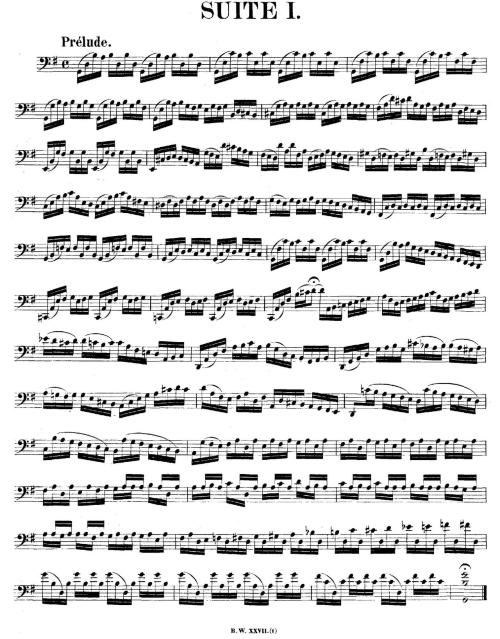
My favorite piece to perform,
you've probably heard it, here is a link
https://www.youtube.com/watch?v=DwHpDOWhkGk
Just think of it! Imagine you are a parent, (possible/impossible) what would you do to help your child develop? Imagine watching them learning and honing all of those skills required by a musician to perform. Imagine how greater their capacity would expand by exercising their mind (cause and effect) rather than mindlessly watching T.V for hours on end. (Contradiction) Learning to perform an instrument provides life long benefits in the health and capacity of the brain. (Antecedent/Consequence) In her article from National Geographic magazine Diane Cole sites several scientific studies and tests that have been performed that show higher levels of grey and white matter in the brains of adults who have played musical instruments since childhood. (Documents)


Post-Concert with one of my stand partners, I
recommend Mark Olson's post, we were
definitely dressed for success.
I personally have seen the benefits of learning to perform a musical instrument. I play the cello, I love it. It is one of my favorite hobbies, it has increased my ability to memorize and the motor skills of my body and brain. (Testimony) Whenever I pick up my cello and play its as though some imaginary wind blows through my mind and clears everything away. (Supernatural

Tuesday, September 30, 2014

What is beauty? Why does it matter?

This entree will largely agree and coincide with the two previous entrees written by Jessie and Joseph. I was struck by Aristotle's discussion concerning the definition of beauty, and that largely the purpose of epideictic oratory as a rhetorical form was to give form or point out what was beautiful around them by praising virtue or to do the same with the opposite; vice. Aristotle describes that which is beautiful as beautiful simply because it is. He provides many examples of noble characteristics that we may or may not possess as things of beauty; he describes them as things of beauty because they benefit the community at large. The virtue that I feel is the most powerful that he mentions he describes as "Greatness of soul..." which he says inspires men and women to do other virtuous things that uplift others.

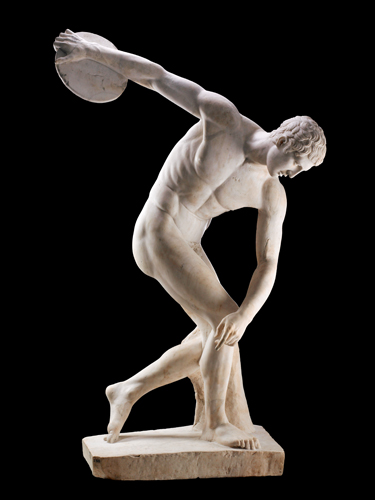
What use was this thing? You can't really make
anything with it or grow food on it, why did
the Greeks love stuff like this so much? Simply
because it's beautiful!
I feel that the purpose of Peracles' oration was to lift the people he was addressing to a higher "greatness of soul", so that they would be inspired to do more virtuous or beautiful things. As Jessie and Joseph discussed, Peracles used wonderful epideictic oratory in order to praise Athens and the men who fell defending her; he employed masterfully the special topic of invention that Aristotle classified as virtue, or that which he believed to be beauty. Fortunately history provides us with perspective, and as Professor Burton pointed out in class, all of the things that Peracles stated became realities which have come to define the ancient Greek civilization. Aristotle, in this case, was right; a man who was known and trusted by his audience employed epideictic oratory in order to praise and inspire, and the people were inspired. This wasn't the only speech that inspired that ancient civilization, but it is a typifying example of one. If people trust you enough they'll believe what you say, your beliefs are your reality, a man who is trusted like Peracles can alter reality through rhetoric. (I don't know how sound that syllogism is, but I tried...) 


Sunday, September 28, 2014

The Cradle of Humanism

The Inspiration for the European Renaissance


While reading the funeral oration as delivered by Peracles I couldn't also help but think of the leaders of the American revolution, I imagined them reading similar works and being influenced by them. For, as addressed sufficiently by Macey, James, and Ryan, many ideas mentioned exactly reflect the "American Dream" and the guiding thoughts that created modern democracy. But then my thoughts turned to the European renaissance when society began to adopt greater humanistic ideas; these ideas emerged because people began reading works similar to this oration. The ancient Greeks clearly placed value on the individual working to better him/herself so that they could actively contribute to society. Freedom was emphasized, they took great pride in the fact that they were splitting from the norm. 


Audience and Pathos


I'm always fascinated by how an audience influences one giving a speech and how it changes the rhetorical devices and forms used. I completely agree with what James posted about the kairos of Peracles' speech, and what he briefly mentioned about how Peracles personified Athens. I feel that Peracles knew his audience, and accordingly formed his speech to inspire within them ideals to benefit the community. His speech is replete with humanist ideas that he presents with great pathos in order to inspire the community. 


Moral Absolution 


I felt some form of moral force govern the thoughts Pericles used. He presented the ideals of Athens as morally the most correct of ideals. That being said, I don't feel I agree completely with Ryan and Macey's analysis that he was following the Sophist order of things. I feel that it was a bit more Socratic because it seems to me that he genuinely felt the things he was addressing were a question of morality. I don't think that he was pragmatic, he certainly didn't claim that he didn't have absolute knowledge; on the contrary he spoke with absolution guided by beliefs that seemed to be deeply planted within him. Perhaps in the sense that he used public speaking as a way to get his point across he was in line with the Sophists, but the philosophies behind his ideas felt far more Socratic. 

Tuesday, September 23, 2014

Power


What really is power? As Latter-day Saints, we believe that God is all powerful, that He is omnipotent and omniscient; however, He reserves one thing for us to have that He does not now possess nor control, our free agency. So, no matter how much He hurts when we make stupid decisions and I'm sure it's incredibly frustrating for Him to see us make so many mistakes He will not force us to do anything, even the most powerful being in the universe cannot control us. However, as Professor Burton has mentioned several times in class, we believe in a God that uses words and communicates to us with language, how He helps us make right decisions is through communication in scripture and Prophets, He also gives us the influence of the spirit, which we usually describe as a feeling. It isn't a normal feeling, like love or fear or even joy, sometimes those feelings come as a result of feeling the spirit, but feeling the spirit is different, yet for most who feel it they almost always describe it as a feeling.


The Greeks understood similar principles in their own way, as I watched Hecuba I was impressed, disturbed, and struck by the power that language had. Hecuba herself, as some have mentioned in previous posts, said that none of the other arts were as important as the art of persuasion, because it allows one to influence and control the actions of others. Hecuba's usage of persuasion came through language but almost always she utilized ethos by appealing to pathos. She used her grief and then her and her families position in an appeal to ethos in order to influence the feelings of those around her. It shows just how powerful our emotions have on others. When someone smiles at me, I smile back not because it's polite, but because I feel like doing it! When I heard Hecuba's moaning and screaming I felt the chills and was disturbed. Although I knew that the revenge that ended up occurring was totally wrong it didn't seem like such a bad thing after being influenced by Hecuba's grief, it was after all, justice. You see how powerful that is? An appeal to our emotions through dramatic language can change so much about us!

Saturday, September 20, 2014

Architecture: a Civil Expression of Irrationality

What would life be like if there were no possible opportunities for us the "loosen up"? Perhaps Euripides' main point is that in order for a well-ordered, functional, and sane civilization to thrive there must be some form of release. I often reflect on several novels contemporary novels that narrate a dystopian future where there is no freedom, George Orwell's 1984 is one of the foremost examples I feel, in that novel the protagonist finds some outlets of release and freedom, and parts of some hidden, new creature are released. He feels liberated, but throughout the book, when he acts on those more carnal desires his personality almost turns animal-like. I think Orwell and Euripides make a similar point, that there is a point where suppression of our instinctive drives becomes unhealthy, and can lead to disastrous ends. So, how do we find a way to healthily control the animal drives within us that cause disorder and chaos? In the play I love that difference in between the city and the wilderness, most of the irrational things happen in the wilderness, whereas the civil and rational moments happen in the city. It is in the city that Agave comes back to rationality, and where all of the civil discourse takes place. Even the nature of worshiping Dionysus is differs by whether it is in the city or the wilderness. In the city an organized cult worships him, in the wilderness his followers change to different creatures in frenzies of ecstasy.

In the high point of ancient Greek architecture the form of their architecture was emphasized more than the utility of a space. They cared more about the beauty of their structures than the utility, at least in the grand community buildings and temples and things. The buildings were extremely well built and engineered, and all of the measurements are engineered in order to create a beautiful image. (The Parthenon, for example, is not symmetrical when measured out, the different sides of the building are different lengths and the measurements look weird when written or drawn on paper, but when they are applied and built, they look perfect.) Today architects see designing a building where form is allowed to take precedence over function (which generally means more costly buildings, but incredible works of art) as an incredible opportunity for their creativity to take over. When architects design buildings that are irrational, it stirs something within us that inspires more creative power, we relish in the opportunity to create something just for the sake of creating it, just so that we can look at it. When people attend Disney Hall (pictured above right) they see something that is, frankly, irrational, it just looks... well a little crazy, (I think it's beautiful) yet it contributes to society as a place where beautiful music is performed to uplift and inspire.

Tuesday, September 16, 2014

Listen to This Song! It might inspire something irrational within you...

I had a thought running through my mind as I read through the Encomium; what Gorgias says in his essay often passes through my own head. When I make mistakes, the first thoughts that run through my mind are what influences that I may perceive at the moment did to make me do something, like Satan, for example, I often think, "Man, I really don't appreciate that temptation!" We, as humans are so prone to blame others. After a few minutes of thinking about a mistake I may have made I get over the frustration and realize the truth, no matter what those outside of me try to get me to do, I ultimately decide what I do. Gorgias sounds almost childish, kind of like we do when we point our fingers, as he defends Helen. His essay seems to me to drip with pathos as he produces images in our minds of art, moving speech, and war. His whole argument seems to be based on pathos, whether it was the emotions of Helen or the emotions of her captors it was emotion that controlled them according to Gorgias, thus it wasn't their fault.

Music moves me. I have played the cello for many years, I don't know why I've stuck with it, really it isn't rational. I won't ever be able to provide for my family since I'm not choosing to be a music major, it just takes up time to practice and play in the symphony orchestra here. Time is precious, I need it to study and work, why would I use some of it to sit down and play music when I won't be pursuing it professionally? Because it feels good. When I was 15 I played in the Utah Youth Symphony and we performed a song called "Danzon no. 2" by --. In the last 1/4 of the song there is a crescendo in the piece where everyone in the symphony is playing as loud as they can with all of the emotion they can muster. The moment we arrived at that part in the piece I felt the most incredible sensation; I felt as if I was lifted up, I felt a weightlessness that made me feel like I and the rest of the group was floating in the air. It was almost spiritual, there I was with a group of people working together to create something beautiful, useless, really, but beautiful. The only moments that have produced feelings that equaled that moment have been deeply personal and spiritual. It is for that reason that I continue with my irrational decision to play the cello today, even though I have no time, and it will take me nowhere. We all do irrational things because of our emotions, but that doesn't make them excusable if they're bad as Gorgias proposes, but I like to think that not all irrational decisions are bad decisions. If you have a few minutes, go ahead and listen!

In case you are interested, the part where I felt like I was 
floating starts at about 7:45 until the end. (Notice how much the musicians are moving.)

Friday, September 12, 2014

Genuine rhetoric is better!

As far as I understand from reading Gorgias, Socrates is weary of rhetoric because of the intent behind it and what he perceives as the fraudulent nature of rhetoricians.  He uses a lot of logos, kairos, and ethos to question rhetoric, and appeals to multiple of these rhetoric devices (interesting, he seems to be combating a rhetorician by using rhetoric) by questioning how genuine rhetoricians are because they specialize in rhetoric, not in the subjects of anything they would use rhetoric to present. I don't think that anyone can  present or teach anything in a moving and inspiring way that he or she hasn't developed some passion for. Sure, people can pass along facts and figures, unfortunately I've had many teachers who shared a lot of information with us, but they taught us nothing. I feel that Socrates is correct in saying that it is more effective for someone who is passionate about their subject to present it rather than someone who is a good rhetorician but cares nothing about the subject they are trying to get across.

Elder Bednar's speech was, to me, moving. He used kairos, knew his audience, employed great decorum throughout the speech as he made one topic flow to another, as mentioned in Courtney's post, and showed media at great times throughout the presentation. He used great logos and pathos and balanced them out great, he used Ethos as he gave his apostolic warnings and testimony and as he sited former Prophets and Apostles. But I think the thing that made the whole thing inspiring and moving was how he felt about it. I knew that this man was passionate about what he was saying. I knew that he meant what he said, so I listened differently. I don't think the message that Elder Bednar delivered would have been as effective if it were delivered by anyone else, even the greatest rhetorician in the world.


Tuesday, September 9, 2014

Architecture!


My family and I lived in Japan for a few years while I was in high school. The architecture there was amazing! The utility of all of the ancient temples and homes was amazingly advanced, but were very elegant and intricate. Similarly, ancient Greeks sought to make beautiful edifices that reflected their refined culture. Isn't cool how you can look at the two different buildings above and tell me almost exactly from what area of the world and culture they come from? Architecture historically was such a defining characteristic of a civilizations culture.