Showing posts with label renaissance. Show all posts

Tuesday, February 3, 2015

Learn Good from the Past and Discover Good in the Future

In my salon group, the Manifesto or the Oration on the Dignity of Man by Pico Della Mirandola was brought up.  As we were discussing the different themes of our class so far, one thing became very apparent to me as I was listening to the discussion.

One of my classmates who was in the group, Joseph, asked why we focus so much on the printing press as being the main force driving the Renaissance.  Of course, as Joseph pointed out, it was a huge development that obviously aided the Renaissance greatly.  Without the printing press, it would have been difficult for some of the great writings and ideas from the Renaissance to become so widespread.  However, as Joseph got to the point of why he was asking why the printing press is so largely credited for the Renaissance and nothing else seems to be, he pointed out that the Renaissance actually started about a century before the printing press was invented.

Up to this point, we had still mostly been focusing on the idea of going back to the sources and discovering the ancient works and philosophies and trying to be great like ancient peoples and cultures.  I know that discovering the past was a main focus of the Renaissance, but I think (and I was thinking during our discussion) that there is something more to the Renaissance and why it was great than just discovering the past.
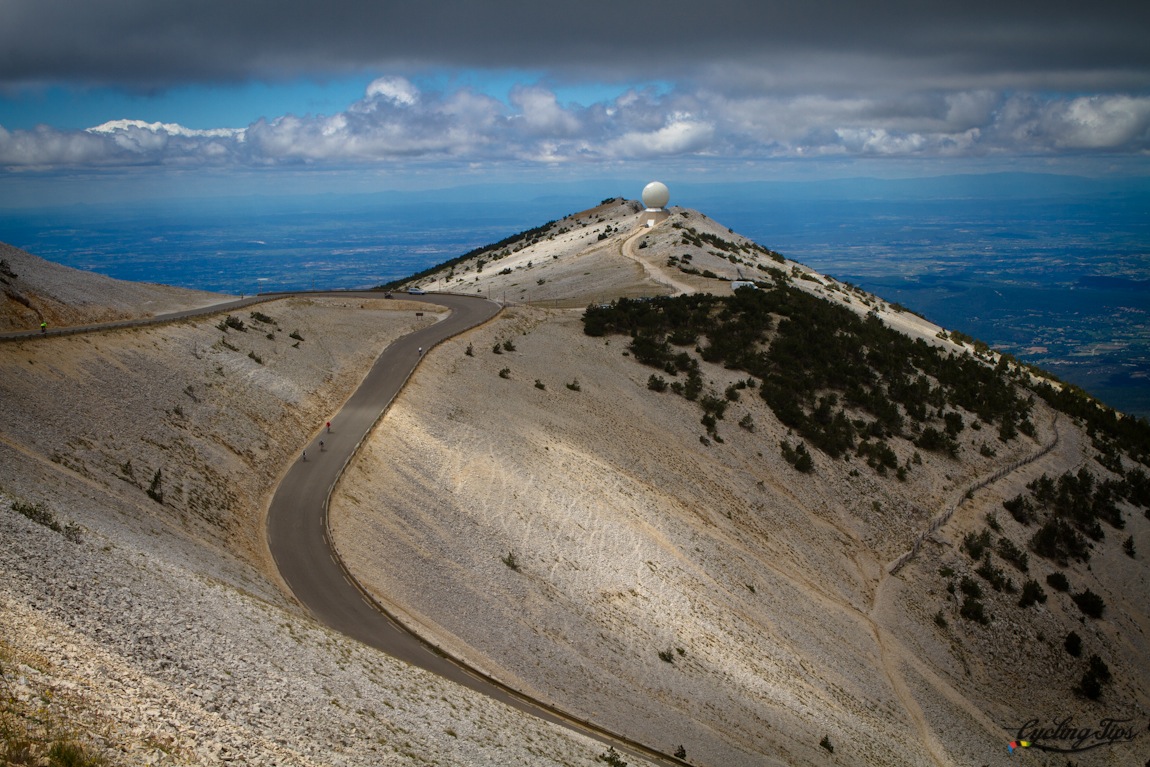
When asked, Joseph pointed out that he thought that the Renaissance originally started because of people traveling and discovering different peoples and cultures.  We also discussed the idea of the Bubonic plague, and its effect on the people of Europe considering the devastation of losing a third of the population.  That, along with different warring countries, caused a lot of discussion and debate, and it changed the way people thought about things.  This went along more with what I was feeling about the Renaissance.

I have a brother who received a Master’s degree in History from the University of Reading in Reading, England.  My brother’s thesis focused on ancient Rome and how the founding fathers of the United States of America used what they knew about ancient Rome and its government to establish the government of the USA.  Our founding fathers learned much of what they used to form the government of this country by studying ancient Rome.

However, the founding fathers included the amendment process.  They knew that they couldn’t expect everything, so they allowed for the government in the future to make changes according to new ways of thought.


My feelings on the Renaissance are that it was a time not only to discover the good of the past, but to focus on the new things that are good as well.  We often don’t notice good, new things that could really benefit us until we go out and discover them, as Petrarch did.  So, I think that the Renaissance is an example not only of discovering the good of the past and applying it to our lives, but also discovering new things that are good and applying them to our lives as well.

A Collaboration of Genius

 “When investigating truth, there is no harm in adding to the diligence of one’s predecessors.” 
-Erasmus

The View From Mt. Ventoux
Men like Erasmus took what was from the past and brought it into a new world.  Each genius shared different ideas, some were scientific, others artistic, or perhaps religious, all were literary.  Though it seemed untrue in geniuses like Leonardo Da Vinci and Brunelleschi, it held that, "Onc ne furent a touts toutes graces donnees." ["All graces were never yet given to any one man."] - La Brebis.  As these men had not all graces in one, they had to take their knowledge and skill by following others.

“Stale water is a poor drink... Stale skill is worse. And the man who walks in his own footsteps only ends where he began.”
-Loyd Alexander

Contrast and Causes

The Renaissance really wasn't that awesome. 

Maybe I'm sabotaging my grade by thinking that way, but hear me out. 

The main underpinnings of the Renaissance and Reformation really weren't 'new'. The Greek's had celebrated the individual thousands of years before, Humanism wasn't a groundbreaking concept. Exploration had occurred previously - heck, the Vikings had found the 'new world' hundreds of years before. The Reformation was an outright attempt to return to the tenants spoken by Christ that had caused similar religious upheaval 1400 years before. What was Sprezzatura except an attempt to regain the intellectual culture fostered in the ancient civilizations. Even the printing press, while truly amazing, was simply an enabling tool, allowing for greater propagation of these rediscovered ideas. 

True, most of the buttresses of modern society can be traced to ideas that were rediscovered during the Renaissance - they were at best caretakers of the ideas. Why so much fuss? 

Well, as our good friend Erasmus liked to say:


"In regione caecorum rex est luscus."
"In the country of the blind the one-eyed man is king."
(Adagia, III, IV, 96)

Or, as I like to say:


"In a box of black crayons, even a gray one seems bright."

You see - the achievements of the renaissance weren't really groundbreaking when considered as part of history as a whole. But when considered against the backdrop of the Middle and Dark ages (though I maintain we give them a harder time than they deserve) the age really begins to shine. 

"In essence the Renaissance was simply the green end of one of civilization's hardest winters."
 (John Fowls, 1969)

It's when the ideas that make up the reformation - from Humanism to Sprezaturra - are considered against the backdrop of 14th century Europe that they truly begin to shine. The Bubonic Plague had swept Europe, leaving a third of the populous dead in it's wake. Centuries endured in the uncertainty and insecurity of the feudal system proved a stark background for rediscovered concepts of individual worth and achievement. The slowly tightening hand of catholic oppression and corruption made the reformation shine as few other religious upheavals do in our history books today. 

It was the severity of the winter that made the spring so sweet, when in reality the spring was not terribly remarkable in and of itself. 

When I think on the renaissance I think of that one-eyed man. That these men were brilliant - but no more brilliant than we are today. It was simply that, when cast against the proper backdrop, the ordinary becomes extraordinary. 


"How far that little candle throws its beams!"
(Merchant of Venice, Act V, Scene I) 


The Concept of Creation

"Y'all wouldn't be here without me."

Spencer Muir said in (semi) jest during our Salon on Monday. That was each of our claims as we had our discussion--that the subject we had studied with our previous groups was the most important during the Renaissance and Reformation. As I discussed the different aspects with my classmates, I came to the realization that in reality, not one of our topics was more important than the other. Each had it's own pros and cons, evident weaknesses and strengths. The Renaissance was a web of interconnected ideas, people, and events. Greek classics and history inspired scholars, who articulated the idea of humanism. The idea of humanism prompted people to start questioning their place in society and in their religion. This individualistic fervor pushed people to travel, to share, to learn, to grow, and to create. One of those creations was the brilliant Gutenberg press, which circled back and allowed for more sharing and creation. The more I thought about it, the more I realized that it didn't matter what came first. "Which came first, the chicken or the egg?" Well, aren't we just glad we have both? Same with the Renaissance.


There is a key theme in each of the ideas of the Renaissance that we discussed, and that theme is creation. Whether an original or a re-creation, the Renaissance was an explosion of creation. Petrarch discussed this idea of creation in terms of writing: "There is no lighter burden, nor more agreeable, than a pen. Other pleasures fail us or wound us while they charm, but the pen we take up rejoicing and lay down with satisfaction, for it has the power to advantage not only its lord and master, but many others as well, even though they be far away — sometimes, indeed, though they be not born for thousands of years to come." Petrarch recognized the importance of creation, especially through words. He knew that creation would affect people in his own time period, but people in the future as well.

Creation isn't unique to the Renaissance, but it was the first time in hundreds of years that people dared to create. And they weren't just creating because it was monetarily profitable, but rather, because it enriched their lives intellectually. Whether it was humanism that prompted them or the protestant reform, or the printing press, it doesn't matter. What matters is the vast number of new ideas that were being shared all around the world. There was true communication occurring, true rhetoric.

After studying this unit, I have become particularly fond of the Renaissance because of the wave of individuality that it started. We live in a day and age where individuality is taken for granted. We can say what we want, when we want, where we want, with little to no repercussions. Because of the humanism ideas that were propagated, education became more mainstream and desirable. Because people dared to think and create, we don't have to think twice when we create. The Renaissance took the world from a place where you were born, worked, then died to a place where you can learn, create, and grow.

So what came first, the chicken or the egg? What inspired the Renaissance, humanism or sprezzetura? It doesn't matter what came first or what came last. What matters is the era that came about because people dared to create.


The Renaissance of the Butterfly and the Human Spirit

    Quoth Erasmus, in contemplating the role of free will, “If you keep thinking about what you want to do, or what you hope to do, you don’t do it and it won’t happen.”
    I find something very reassuring in the fact that God can create a butterfly out of a caterpillar. Think about it for a minute. There’s this squiggly, ugly, hairy thing—very unattractive in form and outward appearance—that wraps itself up, goes to sleep for awhile, and poof! Magical transformation, right? Wrong, at least on some counts. The actual science behind it is a bit more…well, messy, shall we say. Sparing the details, the point is that the potential contained in that ugly caterpillar is not something we can easily recognize, no matter how closely we examine it. Aren’t humans much the same? There is a spark of the divine wrapped inside, and it may be necessary to shed some things, dissolve some others, and rebuild from the basics to regenerate and grow into what we can become. We become through a process.
    Erasmus had no priest at his bedside when he died, perhaps because he was able to intuit that if the inner man wasn’t aligned with God and His purpose for him, any outward manifestation wouldn’t matter. His relationship with God was a private matter; it was not dependent on a priest or a facilitator. It makes me pause and wonder what miracles of growth we miss by being passive, rather than being an active participant in our own lives? Humanism in the Renaissance period focused on the potential and value of the individual. Do we see ourselves more collectively than individually; do we become what others say we are, rather than what we feel we are, or should be?
    Can we become more than the caterpillar who spends most of his life ingesting material in a frenzy to survive and then wraps himself up in self-preservation? They may be necessary steps in his progression, but they are only that—steps. As we reflected in our “salon” conversation, it is the application of what we know that matters. Exploration is necessary--even desirable--in life. What strengths can we uncover through testing and trying? Why do we fear reaching beyond the known? Life has its mud puddle and rainstorm days; it gets messy. Mistakes aren’t generally fatal, although we often regard them as such.
    For all of his dogged, focused determination to foster reform and change, combined with a seemingly uncompromising attitude, Martin Luther has been quoted as saying, “If I am not allowed to laugh in heaven, I don’t want to go there.” I agree! I know of no other way to survive—to enjoy—life than by employing what I call “battle humor.” I am happiest when I can laugh at myself and not take offense when others laugh with me. I am evolution in front of your eyes. The master isn’t finished with me yet; I am still finding my wings.


Will the Stars Control Your Destiny?

It was so great discussing the various Renaissance themes with everyone in our "salon" yesterday.  In our second group, Susan quoted Shakespeare, who said, "The stars do not control our destiny, we do." It made me question what I am proactively doing with what I am learning/have learned here at BYU. All of our knowledge depends on what we do with it. What propelled humans forward in the Renaissance was their ability to connect [and implement] everything they had learned. They didn't let the stars control their destiny. 

Take Da Vinci and Machiavelli, for example. Their ability to follow Ad Fontes gave them greater humanistic understanding. They went back (quite literally) to the sources when they explored and studied cadavers to better understand the human body. Their Ad Fontes allowed them to see "what a piece of work" man was. Martin Luther also used Ad Fontes in his persuasive appeals to his audiences. He turned to the faithful examples of the Apostles to give his followers the strength and hope they'd need in the face of such horrific opposition.

The Gutenberg press also allowed for people to implement their knowledge because the Bible was available to everyone. This giant distribution armed the masses with knowledge, or as Thomas Carlyle said, it "was disbanding hired armies, and cashiering most kings and senates, and creating a whole new democratic world."  

I suppose you could say they just allowed the reformers to decide their religion for them; were it not for reformers' sprettzatura and their ability to preach with so much emotion, people may have never converted. Did all those "normal folk" just learn to read and instantly comprehend the Bible enough to understand it and question the Catholic church on their own? I'd like to think that followers took charge of their own destiny, but it'd be hard for an impressionable follower to resist Calvin's boldness or Luther's bravery. Much harder in fact to resist Erasmus' logic.

Shakespeare did say that we control our destiny, but in whose "stars" was it to control the black plague? Maybe the stars do play some role without our permission. If it hadn't been for that deathly disease, it's quite possible the royals wouldn't have devoided the royals of their power. And if it weren't for that change in demographic, the Renaissance and Reformation wouldn't have come when they did. 

I think there are some aspects of our destiny that are out of our control, but it is true that it is up to us--not the stars--to decide what we do with what we are given. Da Vinci and Michelangelo discovered artistic techniques and scientific theories; the masses took what they had studied and decided for themselves what their religion would be. And I, I have so much knowledge yet to obtain, and I understand more clearly that it will be up to me what I do with it. 

Remember the Past to Build the Future

“Those who cannot remember the past, are condemned to repeat it”
Quoted by George Santayana in the year 1905. As a philosopher, essayist, poet, and novelist living in Italy, George spoke the words of one bouncing off renaissance and reformist ideas. If one had no knowledge of the past, or did not learn enough, repeated mistakes are bound to happen. I am reminded of an example of my brother in high school getting pulled over by the same cop, in the same spot, for the same mistake (not wearing a seat belt), at the same time back to back days. He obviously did not learn from the past, and therefore was condemned to repeat it.

Pondering over this quotation, I found that it linked quite well with what was taught by Martin Luther in the late 15th/early 16th century. He quoted the Vulgate Bible in Psalm 42 that stated “in the same way that a stag is drawn unto the sources of water, so is my soul drawn unto you, God.” This German reformer who opposed the Catholic

"Grow Brave by Reflection"

“I love those who can…grow brave by reflection. 'Tis the business of little minds to shrink, but they whose heart is firm, and whose conscience approves their conduct, will pursue their principles unto death” (Leonardo da Vinci). I feel like this quote is the epitome of learning through conversation and through reasoning together like we did in class this week. At the end of our salon, Makenna B. made a comment that struck me. She suggested that three of our themes are ideas that sparked events in the other three themes. Along this train of thought, sprezzatura, ad fontes, and humanism are ideas that are intrinsically infused in the travel/social change, the Protestant Reformation, and the effects of the printing press.
Petrarch, years before the Renaissance, realized that he and his culture were not speaking the proper form of Latin. He saw that with an increased ability to communicate, more ideas could be discussed, and, better yet, ideas could be explored in a whole new light. In addition to returning to the ancient language, people also began to return to the ideas and innovations from ancient Greece and Rome. Then, during the Renaissance, the idea of humanism came to be, which we add to the return to Greece and Rome’s magnificence. Therefore, we have the conception that the past creations were wonderful (language, architecture, and art), and now we have added the idea that human beings are magnificent as well. For example, William Shakespeare wrote, 'What a piece of work is a man! How noble in reason, how infinite in faculty! In form and moving how express and admirable! In action how like an Angel! in apprehension how like a god! The beauty of the world!”
Finally, add sprezzatura into this mix and we have the reality of the renaissance. Now, man is not only magnificent, but he has the potential to become even better than he is today. For instance, The Courtier describes the ideal man, and all the characteristics he could seek to develop. There was a sense that someone could not be good at, say, archery, but that you could practice and become knowledgeably enough to not only be able to become a great archer, but to do it with ease or nonchalance.
         Now, I believe that we see these three basic ideas in the other three themes. For instance, in the explorations we see the potential of a human being, perhaps humanistic or even sprezzaturic in nature. Montaigne, in Of Cannibals actually left home and sought for something new. Columbus had to convince the Crown that his travels were going to be worthwhile and I would assume that would take quite flattery to appeal to ethos, as well as a lot of information to appeal to logos. There was a view that the world wasn’t just Europe anymore, there was more to see and more for individuals to discover.

Another possibility could be that the printing press could be seen as a watershed and all of the other ideas could flow from it. Without the Guttenberg printing press, nothing would have happened as rapidly. For example, the Protestant Reformation would not be notable today if people hadn’t heard about it. If Martin Luther only translated the Bible into German once, and it was never printed and distributed, I believe that his cause would have simmered out. Another example is with a return to the ancients with language. Word of mouth only goes so far, but if we could print up books that show how to speak properly and how to act, then we can see change in a whole society. Therefore, it could be the printing press that we should thank for everything that came out of the Reformation, for without it, the learning and the explorations wouldn’t have been known by a large amount of people.

Societal Success: From Renaissance to Reformation

            “Movable type helped disband the world’s armies,” said Jenna. Then she expounded, informing us that the quote from Hugh Latimer during the Northern Renaissance. Our small group pondered her point while we sat, analyzing its relevancy to a seemingly simple prompt: what best captures, or signifies, the period in Europe’s history from Early Renaissance to Reformation (roughly 1350 C.E. to 1700 C.E.)? While I loved the imagery that her quote summoned—that the power in words can be “mightier than the sword,” as Edward Bulwer-Lytton later coined it—my inner realist began to whisper doubts.
            But, did the world’s armies really disband,’ I thought, perplexed. Should we, knowing history’s subsequent death tolls of numerous civil and world wars, embrace Movable type as the greatest indicator of social success during the Renaissance and Reformation? If not, what could possibly capture the successful social transformation that did occur during that period? Was it a name, or a text? Was it an event, or a place?

Monday, February 2, 2015

That We May All Be A Part Of THE CENTAUR

“He who lives everywhere, lives nowhere” So said Charles J. He said this in response to my point that sprezzatura is in and through all things in the renaissance. It made me ponder as to the home for each concept, as well as which one is chiefest among them.

I now want to compare the renaissance to a centaur. 

Essaying the Essay: Wrapping up the Renaissance & Reformation

As we conclude this unit on the Renaissance and Reformation within this Rhetoric & Civilization course, I'd like my students to return to the essay form -- not the college essay form with its overt structure of argument and support, but the essay form as first practiced by Michel de Montaigne: exploratory, informed, and conveyed with a sense of personal reflection and style.

We just had a classroom activity, a "salon" where, in small groups, the students practiced sprezzatura -- spirited and witty conversation informed by the historical figures, texts, and concepts we've studied in this period. I want their written essay to be something of an extension of this lively dialogue. In short, I'm hoping that in about 500 words each student can demonstrate 1) knowledge of specific concepts, people, events, and texts of the Renaissance and reformation; and 2) ability to meaningfully explore such ideas within the genre of the Renaissance "essay." In that spirit, they are to essayer ("try" or "prove") their ideas as those ideas bump into one another, and as they play off of people and ideas.

A simple formula:

Tuesday, January 13, 2015

My Discovery On The Sand Bar

One of the most intense experiences I’ve had in life was when I was a teenager.  Every year for the fourth of July my family would go to South Dakota (my parents still do this every year when possible) to be with our family there.  My dad’s side of the family settled in South Dakota, and we have a family ranch there that is run by one of my dad’s brothers.

Every year we would go to the nearby dam in the Missouri river to go boating, tubing, and to just have fun in the water with family.  There was always so much excitement being with cousins and getting to just play all day and all night without, as far as we could tell, any restrictions.

I was always just focused on spending time with my extended family and having fun, so I never really considered much else.  I was sort of stuck in my own little bubble.  Because of this, I never really discovered very many new things, and I didn’t ever really see the world outside of my bubble.  I thought I was happy and content with things just being that way.

One of the things that really opened my eyes to new ideas and the joy of learning, growing, and discovering was accidentally finding a sand bar.  Typically we were told that sand bars weren’t safe, but I never really understood why since I’d never been on one.  In this case, we all went on the sand bar, and we made sure to take life jackets and watch out for the little kids.


Once I was on the sand bar, it was amazing to look out at the river from the middle of it.  I could see the shore on either side, and it was amazing.  It was like I was standing on top of the water.  I had never seen the river from this point of view before, and I thought it was awesome.  This experience helped me realize how great it is to discover new things, and how constantly striving to become better day to day can be a lot of fun.

Personal Stories of Modest Exploration

I have outlined six key themes from the Renaissance and Reformation. In discussing voyages of discovery and exploration, this illustrated the second theme, "Brave New Worlds: Travel and Social Change." I made the point in class that there was a physical or material component to this exploration (actual voyages to faraway places took place, and actual physical goods were brought back to Europe); and there was a more abstract kind of exploration (as the minds of Europeans opened to the possibilities of change, improvement, and opportunities of many kinds).

Mediating these two worlds (the physical and mental) were travel narratives, reports and stories (not always factual and frequently exaggerated) which nevertheless inspired and sustained ideas of renewal. It turns out that even modest journeys, properly recounted, can have this same effect of opening the mind and inspiring the heart. Take for example, Francesco Petrarch.

I mentioned the trip that Petrarch took up Mount Ventoux in 1336. He had read about Philip of Macedon (from the second century BC) climbing a mountain, and this inspired him. Later, he would himself write about this eye-opening journey for him. In other words, a story from history prompted his climb, and in return he told his own story, which in its turn has inspired others.

Friday, January 9, 2015

Cervantes Syndrome

Miguel de Cervantes was an interesting, seemingly flighty character, who worked for the government in Spain (between jail visits) and wrote one of the foundational works for modern, western literature.

"The Ingenious Gentleman Don Quixote of La Mancha" often truncated to simply "Don Quixote" was one of the later renaissance works and one of few produced by Cervantes. It was published as two separate parts, the first released in 1605 and second ten years later and is the caricaturized story of a man, disenchanted with his modern life who dons a new identity and sets out on a quest to restore chivalry (much to the dismay of his friends and family who assume he has gone mad). The inspiration for this quest however is not madness as his family suggests, but the content of many books he has read that highlight chivalrous acts.


In fact, our hero was quite the bookworm. Even our narrator admits, "finally, from so little sleeping and so much reading, his brain dried up and he went completely out of his mind." This is significant personally, as I can relate to family chastisement for book-worminess, but is also significant in the larger context of the renaissance. This novel comes near the end of the period, and centers a new medium at the heart of the story: physical novels. The printed word had recently begun to permeate European life, and the novels of chivalry and brainless romance that were popular in previous periods are mocked in Cervantes' brilliant satire. I recognized my own unrelated follies in the endearing naiveté of Quixote, and can only imagine the reception of those who were openly mocked.

The clever style and subject of Cervantes' novel absolutely holds in our day. The poignancy of the meta-narrative is applicable to each new creative outlet, and as I scroll through my Twitter feed appreciating users who joke about people who use Twitter, I laugh as I suffer from rasin-brain also known as dried brain also known as Cervantes Syndrome.