Showing posts with label petrarch. Show all posts

Tuesday, February 3, 2015

Learn Good from the Past and Discover Good in the Future

In my salon group, the Manifesto or the Oration on the Dignity of Man by Pico Della Mirandola was brought up.  As we were discussing the different themes of our class so far, one thing became very apparent to me as I was listening to the discussion.

One of my classmates who was in the group, Joseph, asked why we focus so much on the printing press as being the main force driving the Renaissance.  Of course, as Joseph pointed out, it was a huge development that obviously aided the Renaissance greatly.  Without the printing press, it would have been difficult for some of the great writings and ideas from the Renaissance to become so widespread.  However, as Joseph got to the point of why he was asking why the printing press is so largely credited for the Renaissance and nothing else seems to be, he pointed out that the Renaissance actually started about a century before the printing press was invented.

Up to this point, we had still mostly been focusing on the idea of going back to the sources and discovering the ancient works and philosophies and trying to be great like ancient peoples and cultures.  I know that discovering the past was a main focus of the Renaissance, but I think (and I was thinking during our discussion) that there is something more to the Renaissance and why it was great than just discovering the past.
When asked, Joseph pointed out that he thought that the Renaissance originally started because of people traveling and discovering different peoples and cultures.  We also discussed the idea of the Bubonic plague, and its effect on the people of Europe considering the devastation of losing a third of the population.  That, along with different warring countries, caused a lot of discussion and debate, and it changed the way people thought about things.  This went along more with what I was feeling about the Renaissance.

I have a brother who received a Master’s degree in History from the University of Reading in Reading, England.  My brother’s thesis focused on ancient Rome and how the founding fathers of the United States of America used what they knew about ancient Rome and its government to establish the government of the USA.  Our founding fathers learned much of what they used to form the government of this country by studying ancient Rome.

However, the founding fathers included the amendment process.  They knew that they couldn’t expect everything, so they allowed for the government in the future to make changes according to new ways of thought.


My feelings on the Renaissance are that it was a time not only to discover the good of the past, but to focus on the new things that are good as well.  We often don’t notice good, new things that could really benefit us until we go out and discover them, as Petrarch did.  So, I think that the Renaissance is an example not only of discovering the good of the past and applying it to our lives, but also discovering new things that are good and applying them to our lives as well.

Tuesday, January 13, 2015

My Discovery On The Sand Bar

One of the most intense experiences I’ve had in life was when I was a teenager.  Every year for the fourth of July my family would go to South Dakota (my parents still do this every year when possible) to be with our family there.  My dad’s side of the family settled in South Dakota, and we have a family ranch there that is run by one of my dad’s brothers.

Every year we would go to the nearby dam in the Missouri river to go boating, tubing, and to just have fun in the water with family.  There was always so much excitement being with cousins and getting to just play all day and all night without, as far as we could tell, any restrictions.

I was always just focused on spending time with my extended family and having fun, so I never really considered much else.  I was sort of stuck in my own little bubble.  Because of this, I never really discovered very many new things, and I didn’t ever really see the world outside of my bubble.  I thought I was happy and content with things just being that way.

One of the things that really opened my eyes to new ideas and the joy of learning, growing, and discovering was accidentally finding a sand bar.  Typically we were told that sand bars weren’t safe, but I never really understood why since I’d never been on one.  In this case, we all went on the sand bar, and we made sure to take life jackets and watch out for the little kids.


Once I was on the sand bar, it was amazing to look out at the river from the middle of it.  I could see the shore on either side, and it was amazing.  It was like I was standing on top of the water.  I had never seen the river from this point of view before, and I thought it was awesome.  This experience helped me realize how great it is to discover new things, and how constantly striving to become better day to day can be a lot of fun.

Personal Stories of Modest Exploration

I have outlined six key themes from the Renaissance and Reformation. In discussing voyages of discovery and exploration, this illustrated the second theme, "Brave New Worlds: Travel and Social Change." I made the point in class that there was a physical or material component to this exploration (actual voyages to faraway places took place, and actual physical goods were brought back to Europe); and there was a more abstract kind of exploration (as the minds of Europeans opened to the possibilities of change, improvement, and opportunities of many kinds).

Mediating these two worlds (the physical and mental) were travel narratives, reports and stories (not always factual and frequently exaggerated) which nevertheless inspired and sustained ideas of renewal. It turns out that even modest journeys, properly recounted, can have this same effect of opening the mind and inspiring the heart. Take for example, Francesco Petrarch.

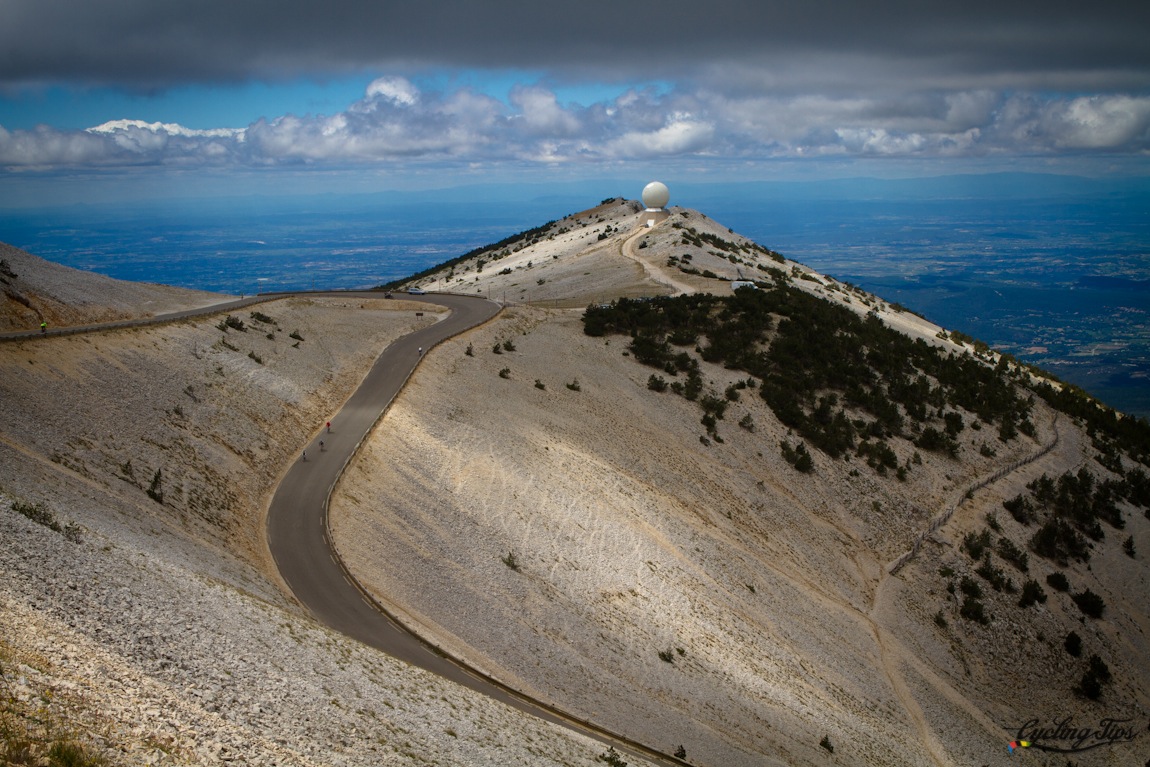
I mentioned the trip that Petrarch took up Mount Ventoux in 1336. He had read about Philip of Macedon (from the second century BC) climbing a mountain, and this inspired him. Later, he would himself write about this eye-opening journey for him. In other words, a story from history prompted his climb, and in return he told his own story, which in its turn has inspired others.

Thursday, January 8, 2015

Humanized Accountability: Petrarch and Machiavelli's Happy Medium?

I found it interesting what Spencer M had to say about Machiavelli's leadership style. As we learned in class, Petrarch and Machiavelli didn't see eye to eye. I found it interesting that Petrarch advocated for the continuity between the Classical culture and Christianity. Another source I found explains that Petrarch believed an effective leader should be loving and merciful the way a father is to his children. If a leader takes the time to gain the trust and love of his or her people, it will be much easier for them to be loyal to you. I understand that Machiavelli found fear and power more effective tools, but I think too much fear can cause frustration and/or rebellion in the masses. (King Louis XIV was neither caring nor loving and look where that got him...just saying.)

Today while I was editing a blog post for my boss, I realized it was Petrarch vs. Machiavelli all over again. In his post my boss shared a story of how he motivated his employees to perform better when he was a housekeeping manager at a hotel. He said at first he tried to be loving and motivate them. He attended his employees' children's baptisms and brought donuts to the office on Fridays. He motivated them so effectively he said they could have won the world cup. But despite those efforts, their review scores didn't change.

So then he went all Machiavelli on them and tried to be harsh and angry and make them understand how upset he was. He even wore all black to work for a few days. That didn't work either. And then, he found a balance. He decided to bring each employee in one by one and review their personal scores with them. This personal accountability humanized the process so that he didn't seem like an evil person, but was able to instill a more personal type of fear for each employee. Knowing that the boss was measuring their personal scores held employees accountable and made them compete against themselves.

I would have never thought that Machiavelli's and Petrarch's leadership styles would reflect in a blogpost written for LinkedIn, but it made me realize that there is always something we can learn from many opinions of philosophy. Either way, I prefer the more humanist approach, siding with Petrarch. Compromise for the win.

Petrarch, Griffey, Bublé, and more

From: Seattle Sports Net
On October 8, 1995, Edgar Martinez hit a line drive double to left field. This wouldn’t have been that big of a deal if star center fielder Ken Griffey Jr. hadn’t scored from second to win the division title against the Yankees. It was in that moment that my favorite number changed from 1 to 24 and, even though I’m right handed, I started batting from the right side of the plate. Griffey became one of my first heroes and people that I would try to emulate in my own life.

While fumbling through a library in Liege, Francesco Petrarch encountered a collection of letters written by Marcus Tullius Cicero. As the story goes, Petrarch was impressed by the letters and began to emulate the ideas from the letters in his own works and life. He saw Cicero as a sort of hero, kind of like what Griffey was to me. As Petrarch continued to draw from stories of the past he inspired the humanism movement. Focus turned from the great works God had done to the great works that man had done. 

Thanks to Petrarch’s inspiration to emulate the past, Machiavelli tried to perfect leadership based on kings and emperors from the past, Sir Thomas More created his Utopia based on the greatest civilizations to exist, and musicians like Michael Bublé and Bruno Mars are emulating the great musicians from recent history like Frank Sinatra and Michael Jackson. 

The humanism movement became much larger than the Italian poet, but Petrarch inspired, not just one but several generations of dreamers who, through a little narcissism with a dash of optimism, are creating, inventing, and doing great things.

Reborn from the ashes

“What if I told you insane was working 50 hours a week in some office for 50 years at the end of which they tell you to [leave], ending up at some retirement village hoping to die before suffering the indignity of trying to make it to the toilet on time” -Steve Buscemi’s character in Con Air.