Showing posts with label posted by Macey B. Show all posts

Monday, December 15, 2014

Writing Stories of Success

Communication disorders are no respecter of persons, and have penetrated humanity since the beginning (some evidence even suggests Moses had such struggles). Ultimately, we are social beings, and there are negative consequences when we are unable to effectively communicate in any way. Thankfully, we live in a time where there is professional help available to those afflicted with such disorders, and they are called Speech Language Pathologists (or speech therapists).


A Shift in Society
Historically, there were not “professionals” for individuals to see when they were having problems communicating. But surely there were cases of individuals working out in the field or learning a trade who had limitations when it came to speaking with others. Early humanity was most concerned with what these limitations meant. The ancient Greeks thought it was a cursing of sorts. Even the scriptures reference numerous accounts of Jesus being asked questions regarding this very suspicion regarding such disorders. With these negative connotations in regards to disordered communication, individuals were predominantly left to the mercy of self-help or questionable surgeries[6]. Today we know these disorders to be rooted in very diverse, natural (rather than supernatural) causes. Specifically, today we investigate structural, functional, cognitive, behavioral, and environmental causation factors. With the shift that has taken place in our society from labor intensive roles (blacksmiths, seamstresses, farmers) to more communicative centered roles (customer service, public relations, advertising), this field was born. Functioning in our present day society is nearly impossible for those whose speech draws negative attention to the speaker. Thus, speech pathologists combine their knowledge of human development, psychology, sociology, science, and medicine to develop personalized therapies that target the root problem and dissipate secondary adverse effects as much as possible. Language is not a secondary function in our modern world. We know that the lack thereof is not evidence of supernatural root or punishment by God; and because of this, we place high emphasis on helping individuals learn to communicate effectively; and the way in which we do this is by communicating effectively ourselves.

I’ve Decided to Study Speech Language Pathology- What Should I Expect?
To prepare for this major requires completion of prerequisite classes, specific anatomy and language development courses in the major, and some field work. For more specifics as to how best prepare or what you need to do now that you have decided to pursue this path, consult the audience profile in this blog post or the PDF version of this complete paper. 

Required Skill Development- Communicating to Different Audiences
Therapist - Client: Therapist to client communication has a very low style. The goal is to increase the individual’s basic communication and eliminate any negative attention or secondary behaviors associated with the impediment, to increase the individual’s quality of life. The most important skill to have is to be able to connect with each individual with his or her unique situation. What works with one client will not work with another; however, in all cases, clarity needs to be priority. This will be the most effective tool whether the patient has the cognitive ability of a seven-year-old, has ADD, had a tracheotomy, or a lisp—directions need to be concise and precise to persuade them to compliance. There will also be client to therapist communication. And a therapist needs to be aware of client strengths in order to magnify them.
Therapist - Family: Another group that speech therapists will constantly communicate with is the family of the client. With this group, it is extremely important to convince them of the necessity of treatment. Treatments can be expensive and often times insurance doesn’t cover all of the sessions necessary. So as the speech pathologist, it is important to design a routine that actually helps the individual progress in a way significant to the person and their family. But, before treatment can be implemented at all, the family needs to be guided through the grieving process. It is very hard to learn that a loved one has any sort of condition, mild or severe, that inhibits their ability to lead a normal life. So, SLPs need to be emotionally available and be able to read the family members to know when it is appropriate to suggest a course of action. It is important to effectively communicate with the family so that their support and encouragement of the client will be based on a clear understanding of the issue, the program, and the expectation.
Reference 1 

Therapist - Insurance: This is the group in which the most technical written and oral communication, heavy in use of medical terms, is used. Therapist need to persuade the insurance companies that the disorder interferes with the individual’s ability to function, and consequently, an expensive treatment could improve the individual’s quality of life in very specific ways. These documents are saturated with lists of the advantages of treatment and the disadvantages of not proceeding on this course of action. It is very important for the speech therapist to effectively communicate to the insurance company exactly what course of action is necessary, and who all needs to be involved (other doctors and specialists). If successful in this, the client will receive the care they need to progress.

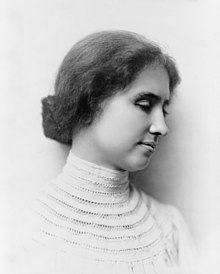
So I am sure by this point you have taken notice of the photos on the right. From top to bottom you see Isaac Newton, Marilyn Monroe, Winston Churchill, Helen Keller, and Beethoven.(Websites for more information about famous stutters.) Looking at these people you may have several words come to mind. For example: talent, intelligence, music, determination, inspiration, and leadership. One word that may not come to mind is disorder; and yet, these are just a couple of the faces of various communication disorders. Their disorders cover everything from lisping, to stuttering, to hearing loss. Like all these historical people, our clients too can be remembered in a positive light that focuses on their successes. It is our job to disintegrate these negative concepts associated with such disorders and communicate our own stories of success. Success in this field takes an understanding of communication, respecting communication, and maintaining control over your own communication. One way in which we as speech pathologist showcase control over our communication is by successfully identifying our different audiences and adapting to what will be most persuasive for who we are talking to. It is important to remember that language production in no way indicates intelligence or potential. In this field, we maximize the positive influence of effective communication to improve another’s ability to communicate. They may never get to the point where they are 100% effective in their use of language; but, this will be a field in which you help facilitate individuals growth, improvement, and success.


[1] "Hearing Beethoven – Part I." Hearing International Bob Traynor International Perspectives on Hearing Health Audiology HearingHealthMattersorgHearingInternational. HHTM, 04 May 2011. Web. 09 Dec. 2014. <http://hearinghealthmatters.org/hearinginternational/2011/hearing-beethoven-part-i/>.
[2] "Famous People." Stuttering Foundation: A Nonprofit Organization Helping Those Who Stutter. Stuttering Foundation of America, n.d. Web. 09 Dec. 2014. <http://www.stutteringhelp.org/famous-people/>.
[3] Doty, Laura. "Famous People Who Stutter." Famous People. N.p., n.d. Web. 09 Dec. 2014. <http://www.d.umn.edu/~cspiller/stutteringpage/famous.htm>.
[4] "Knowing Your Disability - The History of Deafness." Knowing Your Disability - The History of Deafness. N.p., n.d. Web. 09 Dec. 2014.
[5] John 9:1-3
[6] Brosch, S., & Pirsig, W. (2001). Stuttering in history and culture. International Journal of Pediatric  Otorhinolaryngology, 59(2), 81-87. Retrieved from http://search.proquest.com/docview/85358528?  accountid=4488 

Friday, December 5, 2014

Communication Disorders Writing Plan

Audience Profile 

The typical aspiring ComD (Communication Disorders) student is female (generally speaking, though they definitely do not have to be). They take pre-requisite classes (human anatomy, statistics 121, and an entry level course), classes about anatomy (specifically focused on speech production and hearing ability), language classes (that dissect the components of language and how it is produced and received), and classes on different disorders and how they can be treated. They also take classes that provide an opportunity for experience in the field. Since field experience is part of the major requirements, doing it on your own before acceptance into the major is not really necessary nor does it give you an added advantage in the application process (not included on the application form at all). However, participating in internships, collaborative projects, or other extracurricular activities may benefit the student by giving them exposure and giving them an idea of what the field is like so that they don't do all the work to get into the major just to find out they don't like it at all. Personally, I major hopped a lot before I found Communication Disorders and it was because I was pursuing avenues that I really didn't understand what the work entailed. I waited a while to see those fields in action and by the time I did, I found out that I didn't like it and that I had wasted so much time and money on classes that weren't going to help me graduate at all. So from my personal experience, I think volunteering and getting out there to see this field is a good thing just even if it doesn't necessarily help you apply or get through your education. Finally, students learn about and practice communication that is applicable to the field from the very first entry level ComD class on. The whole major is communication based so don't expect any delay in learning about how to effectively communicate in this field and applying such knowledge.


Context

The most meaningful context I can provide for this student is to truly convince them through the use of examples that effective communication is not something that one turns on and off. Effective communication isn't reserved for school and work, but is to be embedded in our very nature. That is what speech pathologists do. We are social beings and when an individual is unable in any way to effectively communicate, they are negatively affected. I will be most successful in this if I list the secondary effects that often accompany those with communication disorders. 


Rhetoric

Because speech pathology is the study of effective communication, there are many ideas about communication that I need to be careful to emphasize. Communication is:
  • Part of our daily lives; thus, if it is in any way inhibited, there will be negative consequences for the individual's well-being.
  • influenced by many outside factors. Learning to account for every possible variable is an important skill.
  • different for everyone. The purpose of the major is progress and not necessarily perfection. Any sort of progress in helping a client overcome a disorder will greatly increase their quality of life and well-being.
In regards to specific persuasive strategies used within the field, most persuasion will take place with the family and insurance companies. This will be done in the form of precise documentation and researched evidence. Most clients will have problems with very basic communication (and persuasion, in my opinion, is a more advanced form of communication). Since we mainly help individuals increase their levels of basic communication, I am not too worried about overwhelming my audience with technical rhetorical jargon. 


History

With any field, passion always helps establish perspective. Especially within this field, where we are still learning so much about why there are certain disorders and how best to treat them, optimism and creativity is key. I think by using some of my sources to recent and distant history, I can portray the quest of humanity since the beginning with solving these disorders. Using history in this way, I think it will establish the importance of the work speech pathologists do and how extensive the implications of a communication disorder are.


Development Plan

Looking at what I have so far, I am mildly concerned about the length of my final paper. However, several ideas have come to me as to how I can add more detail and length while continually increasing the strength of my piece. Reading through my old blog posts, I found that in one I set up two scenarios that will affect almost everyone. The one regarded a parents role in identifying a communication disorder in a small child, and another where a child or grandchild is responsible for monitoring the decline of a parent/ grandparent and must decide if they require more assistance to learn how to safely talk and swallow as their body deteriorates. Because I feel that this is something that encompasses everyone (whether it be a situation they have witnessed, experienced, or can imagine), I feel like I can do more to develop those scenarios and do more to explain the process.

Because I really want to establish communication disorders as something that has always been around and something that affects all people, I want to start my paper by giving more examples of people throughout history who had speech disorders. This requires some more research on my part because I only retrieved four or five examples when researching for my last post; but, I think that will make a clearer point and further establish a clearer context for the reader.

The section I anticipating needing the most work is my rhetoric section. I know I was very general in my outline and need to further search for applications of course concepts (beyond the three I identified in a previous blog post. If I can find more than that, I want to).


Wednesday, December 3, 2014

Different Approaches to the Same Disorders

People of old stuttered and lisped much as we do today. They had structural malformations and functional problems that affected their speech. These aren't new issues unique to our generation. However, it is because they have penetrated throughout humanity that we have speech pathologist today.

Distant Past
Way back when, there were not professionals to consult with in regards to communication issues, so there were many approaches. Some tried to help themselves. For example, Demosthenes, a Greek orator, battled his stutter by placing pebbles in his mouth and practicing talking (presumably to build up control of those muscles). Others, consulted surgeons to snip their lingual frenulum, remove portions of the tongue, or mess with their nerves in hopes to gain control over their various speech impediments.

Recent Past
More recently, there has been more emphasis placed on finding the root of the problem. For example, the source of a communication disorder could be because of:

  • a structural malformation (something anatomically preventing the production of correct and intelligible speech such as hearing loss)
  • a behavioral disorder that secondarily affects speech
  • a traumatic experience (an environmental deprivation)
  • any sort of cognitive impairment 
Identifying the source of the problem is the key to successful treatment. As I researched it became obvious to me that the reason why my field has recently developed is because our world is shifting. In earlier times, society was more labor intensive. People were blacksmiths, seamstresses, and so forth. As long as you could work with your hands, you were okay. Today, our work force has shifted into communicative centered roles. Without the ability to effectively and clearly communicate without drawing negative attention to yourself, functioning in this present day society will be very difficult for you.
During Reconnaissance times, in plays and artwork, a person with a stutter was often identified via large glasses. This was because it was common for those with a stutter to squint and distort their facial features as if they couldn't see. Thus, they would wear glasses. 


Brosch, S., & Pirsig, W. (2001). Stuttering in history and culture. International Journal of Pediatric          Otorhinolaryngology, 59(2), 81-87. Retrieved from http://search.proquest.com/docview/85358528?  accountid=4488 

Law, J., Reilly, S., & Snow, P. C. (2013). Child speech, language and communication need re-examined in a public health context: a new direction for the speech and language therapy profession. International Journal Of Language & Communication Disorders,48(5), 486-496. doi:10.1111/1460-6984.12027

Monday, November 24, 2014

The Thankless Black Friday Ads

Calling, taunting--the unmarked pages lay neatly stacked, witholding the majesty of their secret deals (anastrophe).
Through your casual lounging, your quiet presence, your mysterious stare you reel in your victims and spoil their feelings of gratitude (articulus).
And while you innocently sit there, does your very existence not stand to contradict the very spirit of thanks which is being celebrated (interrogatio)?
You hypocrite! Impostor (exclamatio)!
Evil black and red ink cursing the whole land with a nasty spell of want and greed (hyperbole)!
My vision blurs over the red word sale, my thankful red heart tries to resist, my thankless hand draws a menacing circle with a red felt-tipped marker (traductio).
My eyes get green with great, guiltless greed (alliteration).
Another day of wanting.
Another turkey eaten in vain.
Another holiday hijacked (anaphora).
And will the madness ever stop? Of course not. We politely gave you one day and you greedily now take two (subjectio).
Black Friday, you should lose your association with Thanksgiving. Why? Because you contradict everything it stands for and impede on the thankful spirit that unites the nation. You transform once humble and domestic people into deranged, wild beasts that trample each other to satisfy the craving for a good deal (ratiocinatio).
I desire not your blood thirsty sales and late night shopping, but your offering of an evening Thanksgiving family tradition of marking your smooth pages (correctio).

Tuesday, November 18, 2014

Some Days You are the Pigeon . . . Others the Statue

As I read St. Augustine's sermon, I was reminded of this poster. (Specifically as I analyzed the various audiences addressed throughout.) Sometimes, Augustine is talking to the servant, other times the master, and yet in the end he is talking to everyone throughout the whole sermon because we all, at one time or another, find ourselves playing the role of servant or master (we even fulfill these roles simultaneously, much how we can be a child, parent, and sibling all at the same time). This really is a beautiful correlation to religion and how it is designed to be for ALL of us. In regards to audience, Augustine did an excellent job of making his sermon applicable to everyone at any stage of their life. We can be the one needing forgiveness and the one giving forgiveness in the same moment. In this effort to apply to everyone, I felt that the whole style was relatively low and focused on teaching.

The part I liked best in the sermon is where Augustine teaches us how to identify the enemy in paragraph 7. All mankind is "our brother" so he would appear to contradict himself in that section. What would happen if you pray for your enemy to be killed and your brother spared if they are the same person? As I read, I interpreted this to mean that the enemy is an action or feeling. the enemy is a part of the person, not the whole individual. I'm not sure if this is a correct interpretation, but it added insight to the Christian theme of all necessitating forgiveness and opportunity to forgive (even those whom we can't readily perceive as our "brothers").

Friday, November 14, 2014

Strong and of a Good Courage

Have not I commanded thee? 
Be strong and of a good courage;
be not afraid, neither be though dismayed:
for the Lord thy God is with thee withersoever thou goest.
Joshua 1:9                              
 

Erotema: The rhetorical question. To affirm or deny a point strongly by asking it as a question.*

This scripture opens with a rhetorical question. Today, we use rhetorical questions to state something that is common knowledge. By opening this scripture in this way, he is inviting the command to be strong and courageous to become something we just know. 

Similarity/ Difference: That topic of invention which invites us to consider how something compares and contrasts with others. *

This scripture eloquently defines strength and courage by stating what wouldn't be considered strong and courageous. By doing this, the reader is held responsible for figuring out how to fulfill this command by inferring the opposites of "fear" and "dismay".

Affirmatio:  A general figure of emphasis that describes when one states something as though it had been in dispute or in answer to a question, though it has not been.*

This could be a misinterpretation on my part, but when I read this verse, I read the last line as a clarification of who the Lord is, and felt affirmation of something I already knew to be true. He is your God. This has a very authoritative feel to it and generates quite a different feeling from the rhetorical question that opened. To me, this use of affirmatio was a much gentler way of calling someone to remembrance of things they should already know. 


*All definitions gotten from silva rhetorica*

Friday, November 7, 2014

Style and Delivery in Speech Pathology

The goal of a speech pathologist is to teach others how to communicate. In class, we have studied that style is the how of speech. So really, you could say that speech pathology is a low style of communication (between patients and therapists) focused on improving an individual's ability to apply style while communicating. The situation of the client determines the method used to increase style application and thus improve quality of life. Though each therapy is unique, there are a couple of constants I have identified in regards to style on the part of the speech pathologist:

  1. Low Style
Speech therapists must maintain a low level of style while communicating with clients. The goal is to teach effectively so that the individual can learn the skills they lack. For example, individuals on the autistic spectrum often have a hard time interpreting facial expressions. Thus, a therapist can use appropriate facial expressions to try and reinforce what is being taught. For example, picture flashcards depicting different emotions may be shown to help teach the principle, and then reinforced by the therapist through smiling when answered correctly.


      2.  Clarity
This is highly emphasized by speech pathologist. Not only clear, informative expression  with families and insurance companies, but clarity when interacting with the individual. A medical vocabulary is very necessary when communicating for insurance needs; but, to an individual with the cognitive ability of a seven year old,  simpler terms and instructions will be more effective.

Sometimes as a speech pathologist, written communication will be necessary. Because in my field there is a high emphasis on oral communication, I am still learning and identifying ways in which I will rely on written communication. In previous posts, I have mentioned documentation and insurance as possible sources of written communication. I'm not entirely familiar just yet with how that all works or is structured. So, for the purpose of this post, I have focused on the use of written communication in therapy. First of all, literacy is one means of assessment speech therapists use to identify an individual who may need therapy (where there are reading and writing problems, speech problems are likely to follow). There is also one type of therapy that I know for sure relies on written cues:

  1. Aphaisa
Aphasia refers to the language displacement suffered by individuals recovering from a stroke. After a stroke, these individuals have varying degrees of ability to comprehend language and also produce it. They rely heavily on verbal cues (often needing another person to be able to fill in the blanks or suggest keywords to help them express their ideas, very similar to the tip-of-the-tongue phenomenon). However, the girl in the video, Sarah, who suffered a stroke at the age of 18, writes down the first letter of the word she knows she wants to say and the visual of seeing the first letter helps her locate and produce the word. Pictures (I consider written communication) are another means used to help these individuals increase their speech output and understanding. In the video, Sarah shows just how difficult it is for her to describe what is going on in the picture.  (4:10-7:52 relate to what I was talking about in this post with written cues and describing a picture)   

Friday, October 31, 2014

Conflict Issues and Special Topics of Invention in Speech Pathology

A Point of Conflict in Speech Pathology


The main point of conflict I foresee as a speech pathologist is the argument over "necessary and proper". While many of us are familiar with this phrase in terms of our government, I'm using it to identify the cases speech therapists make throughout  their careers in regards to whether or not therapy is necessary and will be effective for individuals struggling to communicate in any way. 

Topics of Invention in Law

There are many opportunities for persuasion when dealing with communication disorders. I want to quickly describe two different scenarios that will in one way or another affect each of us. 

Scenario One: 

Imagine sometime in the near future. You're graduated, working, and you have one beautiful child. They are three years old and what you would describe as "extremely shy" Usual communication consists of pointing and making noises rather than word formation. The preschool teacher has noted that your child has a hard time joining other kids and often paces the room and simply watches. You're the parent and need to decide, is this behavior normal or is there an underlying problem?  

Scenario Two:

It is much further into the future. Your parent or grandparent is aging and activities of daily living are becoming more laborious for them. They require extra care now, but the decline you are most concerned with is their ability to chew and swallow. What do you do? 


Analysis

My field deals with highly charged, emotional situations such as these. Health of loved ones is something that is sensitive and dear to all of us. You want to do what is beneficial for those who are in your charge, you feel responsible. As a speech pathologist, I would take your concerns and do a little research. In order to identify the problem, I need to know the composition of the situation. For example, does the child have hearing loss or have an intellectual disability? Is the parent/ grandparent losing their teeth or had a stroke? Identifying these little parts help expose the whole problem. I would need to then compare these observations to what I know is standard or expected from someone in this age group. (You need to have a knowledge of what is "regular" in order to identify atypical behaviors.) Finally, I would help you see how therapy would be advantageous in improving the quality of life for the individual (helping your child eventually be able to interact with other children, or how therapy will help your parent/ grandparent safely be able to maintain independence and avoid a potentially harmful situation). The special topics of invention (parts/ whole, similarities and differences, and advantageous vs disadvantageous), will also then be used to help persuade your insurance that such interventions are necessary and proper. Those are the three topics of invention that are very common in my field.   


Tuesday, October 28, 2014

Empowering the Reader

While I read the De oratore, I reached very similar conclusions to those made by Katie and Thomas. I really loved both of their explanations of this progression. Katie compared the two works to a bicycle with training wheels and a regular bike, suggesting that there is a same basic idea, but a different style applied. Thomas noted how "growing up" may have helped Cicero's opinion deepen and expand. I appreciated both of these explanations. While reading, what stood out to me the most was that the topics were more evolved than those expressed in De inventione in that he relied more heavily upon a different topic of invention; testimony (specifically that of authority figures). In reading other student's posts, most readers seem to have appreciated this alteration. However, I definitely agree with the comment Brooke made on Thomas' post. I like the concise, direct manner in which the De inventione was given. This helped me to focus on what was being said but also empowered me as a reader to apply those techniques of rhetoric in my own way rather than being spoon fed the "right" application by the professionals. I felt like the name dropping in De oratore was distracting and in the end, I felt like I had no freedom in application. Perhaps though, this feeling of limitation is due to the fact that there is an age difference between the Cicero who wrote the oratore and the Macey who read it. The Cicero who wrote the inventione had the advantage of being the same age as the Macey who read it. Thus, while I read, I got the sense that I was reading a text by someone who was more on my level and I didn't feel forced to believe he was right. However, in the oratore, I had the feeling throughout that I was listening to an adult who believed they had a perfect understanding of the subject matter, and who cared more about me believing as they do, independent of any thinking on my own, rather than helping me develop my own cognitive reasoning. (Has anyone else had a past experience with a professor in college who was like that? I know I have.) As a result, I think I was less receptive. Who knows, maybe the Macey 20 years down the road will be more receptive to the style of the De oratore. 

Friday, October 24, 2014

Communication and Persuasion in Speech Pathology

At the end of this BYU road, I hope to be a speech pathologist, or one who studies communicative disorders. My entire field of study is rooted in how individuals communicate, discovering why their methods of communication may be ineffective, and designing and implementing therapies to improve their ability to communicate with others. If it isn't already obvious from my use of the word communicate four times in two sentences, my major deals pretty heavily with communication and persuasion, in fact that is the major!The attractive aspects of this major are that it is a blend of social science and the medical field, there are various settings for employment (hospitals, schools, nursing homes, and private practice to name a few), and we deal with a wide range of individuals. We work with babies, the elderly, and everything in between. Because we deal with such a large populous, this includes a variety of disorders such as: stroke recovery, physical malformations, swallowing problems, emotional problems, learning disabilities, etc. These are some of the things that really excite me about the Communication Disorders major.

Because this is the science of communicating effectively, all types of communication are utilized. It my understanding from the discussions I have had with professors that as a speech pathologist, I will be utilizing various methods to communicate with insurance companies/ doctors, clients, and their families. Professionally, I will utilize paperwork and documenting to reach persuasive ends with third parties. Recording observations and also improvements will allow me to use logos to properly advocate services for my clients and their families. It is part of my job to prove that action is necessary. With the clients, paperwork and documentation will not be persuasive in the slightest. With this audience, my goal is to establish independence, a sense of capability, and motivation within the individual. Since this job will include helping those on the autistic spectrum, those recovering from strokes, those with physical malformations, and so forth, no single intervention program will be exactly like the program used for another person (even for another person with a similar primary problem). Finally, to communicate persuasively with the family members of clients will also require a different approach. The goal in communicating with the family is to aid with the grieving process and convince them that intervention is necessary and can only be beneficial. The grieving process requires a very sensitive, understanding form of communication. It is extremely hard to learn that someone you love has a disorder, and a speech pathologist needs to be sympathetic to that and need to be able to evaluate when it will be appropriate to suggest an intervention program.       

Tuesday, October 21, 2014

History Repeats Itself (Fashion Industry Motto)

"History repeats itself" is the perfect motto for the fashion industry. Our styles really aren't innovative or new. They are recycled styles that were dearly loved by those who came before. May I introduce to you the gladiator sandal! (But you probably already knew what that picture was of.) My guess is most girls have at least one pair of these in their closet, myself included. Fun fact, just as their name suggests, the style was in fact inspired by the ancient roman gladiators. However, their function is slightly different today than back then. In ancient Rome, these sandals were strictly worn by Gladiators fighting in the arena. (A simpler form of sandal was worn by the common people.) They were made out of leather and some even had studded soles. It is assumed that studded soles would help them navigate the sandy interior of the arenas (probably in a manner much like soccer cleats). Another example of ancient Roman footwear evident in our footwear today is found in the socks with sandals trend. Now, the common people in ancient Rome wouldn't be seen wearing such an unsightly combination. However, strips of cloth would often be put in soles to protect the feet while the sandals were worn. See? Like I said, just a recycled form of what those before us have previously enjoyed.

Monday, October 13, 2014

Figurative Language About Words

Tropes about Words:
1.       Metaphor
·         “Words are the nails we use to hammer our beliefs, opinions, biases, and expressions in place.”
·         Words are not literally tools, but they are the means we use to communicate and solidify our individual thought processes and our means of sharing them with others.
2.       Paronomasia
·         “’What do you say we go get some ice cream?’
‘Word.’”
·         This example of dialogue is quite literally a play on words in that the word, “word,” is used in place of a word that would mean agreement or used to affirm.
3.       Anthimeria
·         “He worded the silent classroom with sound.”
·         This one was kind of tricky to come up with an example for because it takes on so many forms (word, words, wordy, worded). But, just because now it is acceptable to use it in all these different ways doesn’t mean it always was. I’m sure this is a result of application by the masses. Instead of simply saying "he talked in the silent classroom," he added words to the silence. 
4.       Hyperbole
·         “That is literally the worst thing I have ever heard!”
·         Is it literally the worst? Only until someone tells you the next unbelievably wretched thing. Sometimes we use clearly defined words incorrectly as a means of exaggeration or making a point.
5.       Oxymoron
·         “Her words rolled easily off her tongue and beat mercilessly in the ear.”
·         “Rolled” and “beat” describe two very different forms in which words can take. By using them both in that sentence, it shows how subjective they really are. To the speaker they may roll and flow easily while for the hearer those same words feel like they are cramming into the ear and beating the ear like a drum.
Schemes about Words:
1.       Parallelism
·         “Effective word usage is a skill to be mastered and an art to be perfected.”
·         The parallel parts are “skill to be mastered” and “art to be perfected.”
2.       Anastrophe
·         “A word he spat out without having a clear understanding and purpose.”
·         This is an example simply because it goes against the expected word order. I know that even typing it I wanted to say, “He spat out a word without having a clear understanding or purpose.” I think this use of anastrophe evokes more curiosity. Why did he rush and say something? Was he nervous, mad, or put on the spot? Was the word bad or good and simply used incorrectly? We may never know.
3.       Ellipses
·         “The mother used her words carefully and the daughter did not.”
·         This insinuates that within this conversation, the mother was careful in what she said and the daughter reacted and possibly said things she did not mean. Even though it was not stated so blatantly, it can be assumed that “did not” means the daughter did the opposite.
4.       Alliteration
·         “What was the woman’s name whose words, though whispered, were wonderfully inspirational?”

·         The “w” sound is repeated throughout the question representing alliteration. 

Tuesday, October 7, 2014

Words

baby proof 1Picture this: a cute little baby looking up at you. What is the first thing young parents try to teach this little person? It comes before walking or potty training . . . the answer is words. Babies start the process of word formation with phonation, then cooing and gooing, which leads to babbling, and finally morphemes and lexicons (words) [whole/ parts]. Why is it that such an emphasis is put on learning words? Words are really just a combination of sounds that carry meaning only to those familiar with the sound combination [definition]. But these unique sound combinations make possible the expression of an infinite amount of topics via various different modes of transmission [possible/ Impossible]. Some words are just unforgettable, like: "I love you," "I do," "It's a boy," "mama," "I hate you," or any degree of name calling. The point is, words can be used to reach positive, uplifting ends . . . or not so positive and destructive ends [Contradictions]. But ultimately, words are going to be learned from reliable sources like dictionaries and teachers, or not such trustworthy sources such as friends and T.V. shows [Contradictions]. Therefore, if a parent understands that "the pen is mightier than the sword" [Maxims and Proverbs], then, they recognize their superior role in helping their children learn to effectively and properly use words [Antecedent and Consequences]. The most important understanding we can reach in regards to words are their varying degrees of permanence. Those words whispered to oneself in a reflection or absentmindedly written on a misplaced sticky note may not last a lifetime; but, others that are shouted into a camera, thrust onto the internet, or tattooed on the body itself can last just that long [Degree]. The emotion that charges those words can lead to enhancing its permanence [Cause and Effect]. The moral of the story is, regardless of how effectively or ineffectively you have used your words in the past, you can choose to use them more purposefully and knowledgeably looking forward [Past Fact/ Future Fact].

Thursday, October 2, 2014

Profile For Persuasion: The Middle Child (As Understood By the Oldest)


Main Characteristics and Values

Sandwiched between the shock-and-awe effect of the oldest and lacking the eternal cuteness and perpetual innocence of the baby, the middle child stands defensively. The middle child is completely self-sufficient with an overly developed id; which is both for their gain and demise. Self- preservation is the ultimate benefit from their determination to cast the shadow that dwarfs the shadows they feel they are in. But, such thorough independence is often destructive through making isolation comfortable, negative emotional outputs increasingly more negative, and projecting personal thought processes on the world itself rather than being open to different trains of thought. Often times, they carry with them a warped understanding of justice, believing they are always justified in a world that is inherently unjust to them (at least when they are younger). However, they also have large, compassionate hearts, sensitive to the beautiful and artistic things of this world. Furthermore, they are usually the more talented individuals, but fail to recognize themselves as such because the value of anything is determined via comparison to something or someone else rather than determined as individual unit.

Likely/ Unlikely to Persuade

“See how your sister is doing it? Do it like her.” This will never persuade a middle child! They want to be an individual that exists separately from the image of their siblings. They want to be innovative and different, but secretly aspire to the same good outcomes that come to their siblings. Appreciation and recognition are the means to the ultimate persuasion for a middle child.

Test Case: Attending a Play

The middle child could be persuaded to see a play for several reason. First, if there is a choice between a play and an orchestral performance, and the siblings want to go to hear the orchestra, the middle child will seize the opportunity to go against the grain and will therefore select the play. A second means to persuasion would be if the play exposed the plight of the middle child, and sided with them, justifying their cause. (For example, maybe a dramatization of Malcolm in the Middle?) They seek this understanding and self-concept, so a portrayal of such would be very persuasive.