Showing posts with label accounting. Show all posts

Tuesday, December 16, 2014

Just acCount it!


Despite surface impressions, the field of accounting requires an underestimated amount of background knowledge and communication. Based on what I’ve been able to gather with almost two years of being in the accounting program at BYU, I’ve decided that the following will address the importance of understanding the history of accounting – supplemented with a few historical examples and the importance of communicating effectively within the field – broken in to two different contexts. Though these topics create a list that is far from an exhaustive description of the important forms of communication, I believe them to be critical based on my interactions with accounting professors and an internship with the nation’s top accounting firm, PwC.

History of Accounting

The tablet above holds accounting
information dated as far back as 3200  BC
Of all the things humanity has created – arts, theatre, technology, medicine – keeping track of money/valuables is one of the oldest. Even back to the days of the flood, Noah was instructed to take an accounting of the Lord’s valuables (His creations, the animals). Down through Moses we have records of accounting (i.e. the entire book of Numbers). Trade records and bartering systems were all accounted for and assessed, if not on a social level then on an individual one. Men have always been trying to be richer than his neighbor. And how does he know he’s rich? He accounts for what he and his neighbor have. In ancient Greece, officers were required to give accountings of the fund entrusted to them at the conclusion of their service. They were expected to properly manage the funds that had been given them. The importance of wealth and stewardship were not lost on the Greek and so they were sure to require an accounting of those who had been given so much. In ancient Rome, accounting played a particularly important role in leading the home. Fathers were expected to keep track of the accounts of the household. Fortunately, the lack of credit cards and predating of shopping malls made monitoring teenage spending significantly easier. Most purchasers were made with cash; however, there are clear indication that receivables and payables were set up with merchants and customers. As time lapsed into the medieval ages, we see an apparent retrogression of the accounting systems however apparently “Charlemagne had an elaborate system of accounting for income and expenditures and required detailed reports from all his subordinates.” (Kester, 1917)
Accounting has been formalized and structured over the centuries. In fact, in a more recent vein, the reliance on the way we account for things has a tremendous impact on everyone’s daily life. The value we give to different currency; the price floors and ceilings that certain markets and commodities bear; and the amount of money we pay in taxes each year all depend how we account for our money. On a nationwide scale, the most significant change to the accounting system in recent history is the Sarbanes-Oxley act passed in the wake of the Enron/Arthur Anderson debacle (Koehn and Stephen, 2004). This act revamped the way big businesses are allowed to account for their money. How does this affect the average consumer? Corporation now have to pay significantly more to have their accounts managed, these types of costs are always passed on to the consumer.

Accounting has been around a long time, and will be around forever. At the very least, men and women will always be required to give an accounting of the labors, which very well may include how we spend our money/substance.

Communication in Accounting

Two man avenues of communication exist in the accounting field. The first is internal with our fellow employees and managers. The second is with the customer or other external entities.
Internal Communication

Like the ever-ticking hands of an ornate grandfather clock, the world of business clicks on at an undeviating and unrelenting pace. Only the most competent and most exact companies survive the grueling grind of the free market. This medium of exchange, for innumerable vendors and consumers, demands specific type of communication -- a communication that one only understands by understanding the nature of business itself. This nature has two underlying fundamental principles that drive everything in the world of industry – efficiency and accuracy. Companies must produce every product and every service on time and to proper specification. Therefore, essentially all material communication works to meet those ends.

Accounting firms have a focused and restricted environment of communication. Information is exchanged almost exclusively on need-based circumstances. Accountants will use any type of communication necessary to obtain the requisite information as efficiently and accurately as possible. They will make phone calls at almost any time of day, they will send emails as soon as problems arise, and if necessary, they will physically visit other employees or customers in search of a solution. Accounting firms provide services to clients and charge those clients based on the amount of time it takes them to render those services. Therefore, the only way a firm can lower the cost of services it provides to the client, and consequently make the client happier, is to reduce the amount of time spent on each project. To that end, accountants prefer to communicate over any medium that resolves their concerns as quickly as possible.
For example, when management decisions are being made, a team of executives will gather to discuss the issue. They do not mince words and do not particularly care about how they come across to their peers. They all have one goal in mind, discus the facts and reach the best conclusion for the company. A high-performing, management team will set aside egos, pride, and pleasantries, to optimize the efficiency and accuracy of their communication.

External Communication

Among the biggest firms, clients will need to pay an average of $300 dollars an hour for accounting services. For clients that have large tax returns, which are literally one and a half feet tall when everything is printed out and stacked together, the firm can receive into the hundreds of thousands in revenue. Naturally, these clients have tremendous leverage over the firm in the sense that they can easily take their business to another firm if the previous does not meet their expectations. This bargaining power engenders tremendous focus on positive, client relationships. The firm will do everything they can to ensure that they maintain a healthy association with all of their clients – especially large ones. The following fictitious story illustrates the need for respectful and tactful but effective communication.

Michael the a tax manager for PricewaterhouseCoopers has longer had the Walt Disney Corporation assigned to him to ensure that their corporate tax returns are always filed on time and accurately. Michael thoroughly enjoys working with Disney as they almost never have any issues with how they have classified and reported their income. This proficiency means that despite Disney’s extraordinary size, filling out the tax returns is not overly complex. However, Michael is a diligent employee and always double checks.
On one unfortunate day he discovers an error – a gross error—an error of such blatant magnitude and nature that it would have unlikely been missed by the usually meticulous Disney tax preparers. Perplexed, Michael sends a quick email to his contact at Disney inquiring about the discrepancy. He receives a reply in a uncharacteristically short period of time that indicated he should not worry about the supposed error because it is not an error due to xyz explanation. This made Michael even more concerned. Not only would such an inquiry much more time to investigate than Disney took to respond, very suspicious, but also the explanation made no sense. Michael drafted another email that explained the error and politely elaborated on the proper solution. Again, Disney responded quickly and tersely. They adamantly reaffirmed their position and offered no further explanation. Michael knew he would need more authority in his next correspondence. He called an IRS hotline, available exclusively to the top accounting firms, received congruent advice. He the drafted the following email:
Dear Sarah:
Thank you very much for your prompt correspondence over the last few weeks. I am again writing regarding the allocation of income discussed in previous emails. I apologize for any annoyance caused by my persistence on this matter. I assure you my sole concern is to ensure that Disney avoids any penalties associated with inaccurate filling.
Regarding, the allocation of interest income generated by off-shore, related entities – specifically those related to Disney Cruise Lines must be reported as ordinary income. The internal revenue code very clearly states that all revenues received for engaging in the normal course of business must be classified as ordinary income not income received from capital gains despite the fact that Disney Cruise Lines is a capital investment that exists independent of The Disney Corporation. Furthermore, I called the IRS to receive further clarification about the proper allocation of this income and they confirmed the above opinion.
We cannot sign the return until the income has been reclassified. We are very grateful for your understanding and again apologize for any inconvenience caused.
Sincerely,
Michael the Manager
The above scenario illustrates the need for tactful and courteous communication. Had Michael handled the situation poorly, he would have risked losing one of the firm’s biggest clients. Fortunately, it was handled well because Michael remained polite and unassuming. Though it seemed very suspicious that such an experienced firm should make such an egregious error and not fix it, Michael did not make an assumptions or accusations. Instead, he calmly investigated the matter and presented his case to the extent that either Disney would have to file a return without PwC and likely receive a penalty, or they could change the way they classified their income. Respectful style and appropriate delivery are paramount.

Conclusion

Accountants are always looking for new and more creative ways of saving their company and clients’ money. When we understand the importance of the history of accounting, we will be far less susceptible making the same mistakes.  After all, a creative form of accounting caused the largest business scandal in recent history. Furthermore, the need for appropriate communication is constant. Accountants cannot succeed in their field without understand how to express themselves in the varying situations that they will encounter.

Monday, December 15, 2014

Communication in the World of Accounting

Accounting has been around for centuries and some of the oldest accounts recorded and known date all the way back to ancient Rome where they would account for taxes, crops, and population (Rathbone). At that time accounting was simply recording the count of different categories. As civilizations began to develop and evolve with advancements in technology, accounting followed the trend. Today modern accounting practices have become much more complex, with many rules and regulation created in the late nineteenth century (Schneider). The accounting junior core will teach students all of the rules and technical information needed for their profession, but what is often left out the communication skills needed in their field. Accounting students must know how to communicate both through written documents and through oral, face-to-face interaction in order to successfully communicate with others.

Written Rhetoric
There are two types of written communication for accountants (1) financial statements, and (2) business correspondences. To better understand how each one plays a role in the accounting field, case studies have been provided below:

Financial Statements
John has just submitted the quarterly financial statements for the company. He double checked that the assets equal the liability and equity, the monthly ending account balances match on both the cash flows and bank account statements, and the income statement has the correct revenues and expenses listed. All three statements that he created followed the specific format that is customary to the field. John knows that because the documents were clean, and organized, those who would review the statements would easily find the information they were seeking. John was able to follow a specific form that allowed easy access to information. In accounting, it is imperative that the financial statements are clean and clear so the intended information will be easy for the reader to access. Over the years, accountants have somewhat standardized the look of their financial statements through the Generally Accepted Accounting Principles (GAAP), but there is still some flexibility when it come to the outline. Because of this, choosing the correct template to follow is very important.

Business Correspondences
Hannah needed to write a memo to her accounting team that explained the new system when creating journal entries. There were multiple added or revised steps, and she knew it would be a longer memo. When writing in business, it is important to keep the messages organized, and easy for the reader to understand where exactly in the process they are. Hannah kept that in mind when writing the memo, so she decided the best option was to organize the steps by bullet points. This would create a break in the page which would make the reading seem less daunting to read, and it would make the organization of the memo very precise. Hannah also created an agenda, similar to a thesis sentence, and the beginning of the memo which outlined all that was going to be discussed in the memo. It acted as a table of contents, which helped the reader follow and understand where how the paper was being guided. In the end, because Hannah was able to neatly organize her memo, all of her staff were able to transition smoothly over to the new journal entry system.


Oral Rhetoric
The second type of communication is oral, when people interact with one another in the workplace. Once again, there are two subcategories in this communication, communication during (1) an interview and (2) a meeting / presentation. The following case studies exemplify these two categories:

Interviews
Adam knows that first impressions are everything when it comes to interviewing. Oral communication does not consist of only what you say, but also includes tone and body language. When answering questions Adam made sure that his voice sounded confident and sure of his abilities and previous work experience. He also used a friendly and approachable tone when first introducing himself. Adam also took body language into consideration when preparing. He came ready to give a firm handshake, make direct eye contact, and dress appropriately. During the interview, Adam was very mindful of his gestures and hand movements. He avoided making nervous gestures such as playing with his hands, but also made sure to use his hands and avoid sitting completely still and lifeless. Finally, Adam prepared answers to the possible interview questions that would be asked. When interviewing one weak answer could prevent you from getting the job if your competitor is a great interviewer, and because of this he made sure that every answer that he would give would tell both a past problem that he encountered, and also the solution that he came up with that helped him in the work place.

Presentation / Meetings
Lisa was assigned to give the monthly presentation to the board of directors that explained the financial standing of the company. She knew that some of the directors did not have strong financial knowledge, and that if she were to talk and explain things to them as she would to her accounting colleagues, they would not understand. In order to relay the information Lisa chose to not just show the statements and charts, but to translate them from numbers into words, and explain the occurring trends. She also made sure that her accounting jargon was limited, and that she spoke in simple terms that everyone could understand. She had PowerPoint slides up and ready with information on them that she was going to further discuss.


In conclusion, accounting student must know how to communicate through written and oral rhetoric in order to successfully relay the information that they know to others in the company. Written financial statements and messages, along with oral communication during interviews and meetings / presentations are used daily in this field, and are vital to surviving in the business world. Just like everything in life, in order to master the skills, it take practice and patience. Taking the Management Communications class required for business majors will help further build up the communication skills described above.


Work Cited
Rathbone, Dominic. “Taxation in Roman Egypt.” Classical Review 27.2 (2007): 490-492.
Academic Search Premier. Web. 3 Dec. 2014.

Scheider, Bob. “Accounting Basics, History of Accounting.” Investopedia. Web. 3 Dec. 2014.

Keeping Honest People Honest: Why Accountants Matter

There is a story told of a man who sets out to build a thunderous tower, one that will stand the test of time. He toils and travails for much of his time, exerting and expending much of his energy. As he works, he lets dreams of fortune outmuscle ideas of reason. You see, when he set forth to build, he never accounted for what he would need to finish the work. As such the building was never finished and the man went bankrupt. His lack of preparation was his downfall. Unfortunately, many people today display similar lack of foresight when choosing to work in the field of accounting. Numbers they can crunch, but
communicate they cannot. In modern accounting you must be able to speak benevolently about many subjects in order to effectively lead a company.

Saturday, December 6, 2014

Accounting Framework

Audience Profile

The individuals who will likely find the most interest in my posts will be those seeking to enter the field of business, specifically accounting. Most pre-accounting majors have a moderate proficiency towards numbers and analytics. There is a greater than no probably that they succeeded, if not excelled, at mathematics in high school and their general studies. Most of these types of individuals tend to be more left-brained, focusing heavily on logic and reason and not as much on creativity and innovation. After securing a place in the School of Accountancy, every student is exposed to courses that teach to the importance of adequate professional communication. Furthermore, throughout several of the courses reviews of recent accounting history are covered to further the understanding of current practices. As accounting students’ progress in their studies, they will receive exposure to a variety of public accounting firms and industry oriented corporations – most of which recruit eagerly. Between their junior and senior year most will engage in internships with the companies they hope to work for after graduation.

Context

Accounting students need to prepare for the rigors of their future profession, especially those going into public accounting. Especially in public accounting, the accounting environment has significantly more stress than people might naturally think. Accountants are responsible for managing the life of blood of every corporation – money. Most entrepreneurs fail in starting their businesses because they do not understand the importance of accounting. They think that it is something that just makes sense or can be felt out. More often than not, it takes a great deal of understanding accounting principles to make a business succeed. It is imperative that students understand the source of the accounting general principles. Memorizing account rules and guidelines will provide an insufficient knowledge base to perform successfully in a specific field. Codes cannot guide every decision and understanding the logic and the history behind the current codes will help every accountant adjust to the uniqueness of his or her situation. Additionally, some managers foolhardily ignore accountants. Part of the blames lies with the accountants who do not communicate very well. Communications that are awkward, unfriendly or overly lengthy will, regardless of their importance, be must more difficult to hear. To be successful, accountants must understand the history of their field and how to communicate successfully within it.

Rhetoric

Accountants must rely mostly on heavily on epideictic patterns of communication. It cannot not be overstated how important it is to ensure that all arguments are based on facts or very feasible postulations in order to persuade successfully. Furthermore, an accountant must master the skill of articulating an argument. Managers and coworkers will not give much more weight to the argument that is articulated well. Articulation indicates sophistication. People in the business world will always be more inclined to listen to someone who sounds like they know what they are talking about. If an accountant will attach strong, fact-based logic to articulation, he or she will become extremely persuasive.

History

As mention previously, history helps accountants understand why certain laws were made. All of the most significant regulations based in recent accounting history have been passed in response to some significant event. Most regulations come into existence because someone somewhere exploited somebody (or organization) with ethical business practices. The accounting codification helps accountants navigate black and white decisions, but the history of the regulations will ensure successful navigation of the more frequent and costly gray decisions.

Development Plan


I think my post on history in accounting and the one on style and delivery in accounting say most of what I think is important to express. Frankly one of the biggest concerns with recruiters from BYU’s accounting program is that the graduates communicate poorly. I really want to focus on the communication aspect of this assignment because that would give the most benefit to accounting students. Most of the students are already extremely intelligent and well instructed in the history of accounting, more importantly they lack people skills. I think a well-written explanation of the paramount importance of pleasant, polished communication will provide the most positive impact for the most likely readers.

Friday, December 5, 2014

Writing Plan of the Accountant

Audience
People looking into accounting as their major are often analytical thinkers who like numbers, and the idea of fitting all the pieces of a puzzle together. In order to be fully equipped for a job in the accounting field one must take many technical classes in the accounting field. In these classes the student will learn how to communicate through the financial statements that accountants create. They also will need to have a solid business background, which will require them to take classes studying the basics of the other business fields such as marketing, finance or information systems. Internships are highly recommended for the accounting field, and most students apply for internships after their junior year. The department strongly recommends having an up-to-date and impressive resume to help communicate to possible employers how qualified you really are.

Context
Communication is vital in business, and accounting has no exception. I can explain different scenarios in which their use of rhetoric and communication come in handy. Through these different scenarios they can see a variety of ways that communication are used. This will help eliminate the problem that the reader won’t feel like the information is relevant to them because at least one scenario could relate to them.

Rhetoric
Communication occurs in many ways for accountants. The two main ways accountants communicate are through verbal communication and through documents.
  • Verbal This type of communication is often seen in meetings, and discussions between colleagues. Accountants often use verbal communication to clear up any discrepancies or to answer any questions that may arise when performing their tasks.
  •   Documents This type of communication is the more important form of communication because most information is shared through financial statements. The financial statements that companies present to their investors, and creditors help communicate and persuade that their company is in great (or sometimes not so great) standing.


History
Accounting has been around longer than most people realize, and some believe that the earliest forms of recording information was done through accounting practices. It is easy to see how keeping records of things like crops, taxes, and population were necessary in any civilization, but not many people understand how modern day accounting was shaped and created. During the industrial revolution businesses had developed into how we see them today, and their accounting practices at that time didn’t fully meet the business’s financial needs. Not all accountants had the same training or knowledge, which caused for variance in practice across the field. A group of extremely educated accountants met together in 1896 to solve this problem. They formed the American Association of Public Accountants, and developed the first Certified Public Accountant (CPA) exam. From there, they were able to help create standards in what was being taught, but also standards in procedures and formats that accountants use.

Development Plan
-Opening: For my opening I want to tie in the history of my profession, and use the information
-Body: I want to separate my body into two main categories written and verbal communication. It will look something similar to my rhetoric section, except it will be longer and more detailed. There will probably be subsections within these two topics that discuss the different times that the communication will be used.

-Closing: For my closing I want to explain the style and delivery that accountants use. I didn’t mention it in any other part of my essay, and I feel that it would be beneficial for the student interested in accounting to know. 

What The Accountant Must Take Into Account

Audience:
He/she will take a lot of technical classes, particularly aimed at teaching them a new language – accounting. Communication revolves around gathering data and the financial statements. Accounting has always revolved around counting and ensuring the safety of what you have, and more recently has taken on the new dimension of cost accounting, which is essentially accounting to help make decisions. Whereas with the original purpose it was possible to be an introverted person and still be a successful accountant, with all of the relationships in modern accounting it is the extroverts who excel. Unfortunately the curriculum is focused on the technical side of accounting, as such internships are an essential part of the education process. It is there that more of the interpersonal skills necessary for the job are taught. In sum, personal communication is learned in the field through internships, written communication (the financial statements are the written communication) is learned in the classroom.

(Follow the break for more Info)

Wednesday, December 3, 2014

Business Business Business... Numbers


Accounting in Antiquity

The age of the accounting trade is frankly a sad commentary on the world. Of all the things humanity has created – arts, theatre, technology, medicine – keeping track of money/valuables is one of the oldest. Even back to the days of the flood, Noah was instructed to take an accounting of the Lord’s valuables (His creations the animals). Down through Moses we have records of accounting (i.e. the entire book of Numbers). Trade records and bartering systems were al accounted for and assessed, if not on a social level then on an individual one. Men have always been trying to be richer than his neighbor. And how does he know he’s rich? He accounts for what he and his neighbor have. In ancient Greece, officers were required to give accountings of the fund entrusted to them at the conclusion of their service. They were expected to properly manage the funds that had been given them. The importance of wealth and stewardship were not lost on the Greek and so they were sure to require an accounting of those who had been given so much. In ancient Rome, accounting played a particularly important role in leading the home. Fathers were expected to keep track of the accounts of the home. Fortunately, the lack of credit cards and predating of shopping malls made monitoring teenage spending significantly easier. Most purchasers were made with cash; however, there are clear indication that receivables and payables were set up with merchants and customers. As time lapsed into the medieval ages, we say an apparent retrogression of the accounting systems however apparently “Charlemagne had an elaborate system of accounting for income and expenditures and required detailed reports from all his subordinates.” (Kester, 1917)

Accounting in a less Ancient Time

Accounting has been formalized and structured over the centuries. In fact, the reliance on the way we account for things has a tremendous impact on everyone’s daily life. The value we give to different currency; the prices floors and ceilings that certain markets and commodities bear; and the amount of money we pay in taxes each year all depend how we account for our money. On a nationwide scale, the most significant change to the accounting system in recent history is the Sarbanes-Oxley act passed in the wake of the Enron/Arthur Anderson debacle (Koehn and Stephen, 2004). This act revamped the way big businesses are allowed to account for their money. How does this affect the average consumer? Corporation now have to pay significantly more to have their accounts managed, these types of costs are always passed on to the consumer.

Accounting has been around a long time, and will be around forever. At the very least, men and women will always be required to give an accounting of the labors, which very well may include how we spend our money/substance.

Kester, R. (1917). Accounting - Theory and Practice. In Accounting Theory and Practice (pp. 2-4). New York: Ronald Press Company.


Koehn, Jo Lynne, and Stephen C. Del Vecchio. "Ripple Effects Of The Sarbanes-Oxley Act." CPA Journal 74.2 (2004): 36. MasterFILE Complete. Web. 4 Dec. 2014.

The History of Accounting

It is easy for one to see how accounting has been a practice that has been around for many year, but did you know you can trace it all the way back to Ancient Rome? The Bible is a perfect example where accounting is shown in the Roman Empire. Luke 2:1 states that "there went out a decree from Caesar Augustus, that all the world should be taxed." Everyone who lived in places that Rome occupied were required to pay these taxes, and the tax collectors used early accounting methods to document who had paid, and exactly how much. These early accounting methods were the basic form of bookkeeping. Bookkeeping is the recording of financial inflow and outflow in a business, or in this case, government.

Augustus, a Roman ruler during the third century, furthered the use of accounting by creating and enforcing different types of taxes. Some of these include professional fees, sales tax, and customs. What I find the most interesting about the taxing system during this time was that priests, elders in the village, or others. They would collect the tax from those below them, and acted almost as a middle man in the process (Rathbone). Today we do not follow this system because we each individually pay our taxes to the government. One reason this might have been the case in Ancient Rome is because this allowed fewer small tax donations, and more large tax donations organized by region. This would have made bookkeeping, or the recording of the tax easier for their form of accountant.

In the modern age, the industrial revolution called for a reform in the basic accounting practices. Business had developed into a more complex structure that the ancient forms of accounting that couldn't account for. In 1896 a group of accountants came together and formed the American Association of Public Accountants where they developed the CPA exam. This helped ensure uniformity across the accounting world. After the Great Depression the Securities Exchange Commission was created, which required companies to report financial statements to the government. This caused the accounting standards and regulations to become even more unified, and the Financial Accounting Standards Board was established (Schneider).

Today, these rules and organizations are followed and monitored by all accountants. Bookkeepers today often have a CPA degree that proves that further training and learning about accounting rules was studied. Through their training they know how to record taxes and the other types of payments that people in Ancient Rome were required to pay.

Work Cited
Rathbone, Dominic. "Taxation in Roman Egypt." Classical Review 57.2 (2007): 490-492. Academic           Search Premier. Web. 3 Dec. 2014.
Schneider, Bob. "Accounting Basics, History of Accounting." Investopedia. Web. 3 Dec. 2014.

Friday, November 7, 2014

Style and Delivery for Accountants

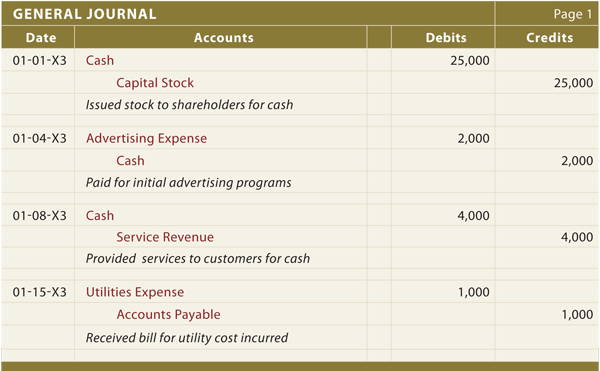
Accountants like fewer things more than standardization, neatness, and conciseness. That is why when Charlotte creates her daily journal entries she follows the standard format that is taught to beginning accounting students. She lined the debits along the left hand side, and the credits along the right, making sure that both sides equaled each other. The note that explained every expense was a brief sentence giving just enough information. Because she follows the basic, yet efficient format every time she does a journal entry, Charlotte can easily spot the errors that she did, and can correct them before she submits the journal entries for approval from her boss. This format is also efficient for her boss because there is a very specific format that leaves room for very few errors. The errors, if any are easily spotted and allows her boss to focus her time more on other important matters. 
As Michael prepared for his presentation with the CFO of the company, he knew that he had to appear and act confidently in his location not only through the financial statements that he was presenting, but also through his body language. He made sure that he showed up to work that day in a more formal business suit than his usual slacks and a button up collared shirt. He also made sure that he was properly groomed, with his hair cut and nicely combed. First impressions are everything, which is exactly why he gave a firm handshake and had eye contact when he first entered the conference room and met the executives. On his financial statements he had all the numbers balancing, and had very ratio broken down, ready for the executives to analyze and ask questions about them. Michael had studied the financial statements and rehearsed his answers beforehand, so the people in the meeting would see that he knew what he was talking about. He had strong answers ready which would portray his confidence in his location and their financial success over the past three months. In the end, the firm would be highly impressed and give his location more financial responsibility. 

Thursday, November 6, 2014

Style and Delivery in Corporate Accounting

Mr. Brown is an accountant working for a public firm. The time has come to prepare the financial statements for the year. He knows that these statements are what those outside the company will judge the company based upon, so he strives to comply with the highest standards for style set forth in his field. The highest virtue of style here is that of clarity. While there are many figures of reasoning that help to clarify a point, Mr. Brown recognizes that he need not show why the company selected a certain way of doing something. He only needs to state the way they did it, thus concise clarity is the ultimate goal. For example, when describing the Inventory account, he might write something like this:


“The cost of materials and supplies, coal stocks and fuel oil is determined primarily using the average cost method. The cost of stored gas is determined using the last-in-first-out ("LIFO") method.”

The reasoning behind it is not stated because the stockholders just want to know how they classify it, not why. It is the auditors who care about why.

When talking with the auditors to show why the company selected the methods they did, clarity is still the ultimate goal. But in this case time allows for the use of figures of reasoning so that there is no ambiguity in the communication. A few figures that he would use when talking with the auditor are those of expeditio and apophasis (both are ways of showing why one option is the best one). He might say to the auditor:


Accountants will clearly explain the
methods they use to the auditor.
“The cost of fuel can be shown either by first-in-first-out (FIFO), last-in-first-out (LIFO), or average cost. Since we place all the fuel in the same tank, it gets mixed up. FIFO wouldn’t be appropriate because the first fuel bought isn’t necessarily the first sold. Similarly LIFO wouldn’t work because the last fuel isn’t necessarily sold first. It is an average of oldest and newest, thus the average method is what we use.”

Saturday, November 1, 2014

Conflict Issues and Special Topics of Invention in Corporate Accounting

While the field of Accounting is for the most part straight forward, there are certain areas where much persuasion happens. One of these areas is when a company is applying for a loan.

When the company will go to the bank to request a loan they might mention something like: “I recognize that we already have some loans outstanding, but look at our numbers. We have had a 50 percent increase in net income each of the last two years. Moreover our P/E Ratio is well above 40, showing that our investors have confidence in our future and are willing to invest their money into this company. If you compare our balance sheet against the industry leader we actually have a higher profit for every dollar of sales then they do. So as you can see, we will be able to more than pay the interest on this loan at our current growth rate. Imagine how much we could grow with this loan! The financial market rarely presents you with something as certain as this, now is not the time to pass this up.”


This is rife with examples of the company showing that the numbers are solid. I’ll refer to this special topic as letting the numbers do the talking. The purpose of a topic of invention is to come up with convincing material. In the accounting field the numbers represent the ultimate authority, so why not let them make the argument? One of the major common topics this example shows is that of comparison. Comparing your company to that of an industry leader happens very often. It shows that you are doing things right, or better yet, even superior to the industry leader. But, it is important to note that this too comes back to the numbers. One final common topic is that of past fact/ future fact. If you have been growing the last few years, then it is natural to assume that growth will continue. And once again, numbers are the basis of your argument.

Conflict Issues and Special Topics of Invention in Accounting


A Point of Conflict in Accounting


A common point of conflict in the field of accounting exists between non-management level employees and management concerning the logging of time it takes to complete projects for clients. The amount of time an employee logs dictates how much the firm will charge the client. If a project takes less time than projected than the firm charges the client less and makes the client happy – everyone wins. If an employee take longer than the budgeted amount of time then the firm has to charge the client more money to cover the cost of the employee. The added cost makes the client unhappy and the firm will come down hard on the employee. This will motivate employees who fall behind under report the amount of time it took them to complete a project. Though this falsified report seems to not hurt anyone the company ends up at a deficit because they still have to pay the employee for the extra time but they do not get to charge the client extra money to compensate. So management is constantly engaged in a campaign to persuade their employees to be honest with reporting their hours.

A Possible Conflict

A partner, Pam, notices one of her senior associates, Sebastian, working long hours on his only project. After a few weeks, Sebastian finished his work and turned in an excellent project. Pam then checks to see how the client should be charged for Sebastian’s work. Though pleased with his work, Pam was a little hesitant to check the hours, as she was certain he went way over to create such a quality project. To her surprise, the hours were within the budgeted amount. She promptly called Sebastian into her office where she inquired about the hours expended. A little defensively, Sebastian said that he worked what he stated. Furthermore, he asserted that even if he had worked longer it was only his own time that he wasted so it should not make a difference. With an impressive employment of judicial invention, Pam explains to Sebastian that, outside of the fact that understating hours is unethical and a lie, it really is not fair to the company that we give clients projects that cost more than we charge them. In the future, clients will be expecting projects of a quality that cannot be replicated in the budgeted amount of time. It is only fair (JUSTICE) that the client be charged the amount that reflects the true cost of labor.

Friday, October 24, 2014

Communication and Persuasion in Accounting

If you have taken any sort of business class, you have probably heard the professor say that accounting is the language of business.  I never gave that statement much thought until I took an accounting class last semester where the statement actually hit home with me. Accounting really is the language of business. Through the financial statements that accountants create, companies are able to share information regardi
ng the financial position of their company. After I took this accounting class I realized that I love numbers and seeing how they all add up. I also love to lead people, and because of this I hope to get to the management side of a firm.

Communication is a vital part of business, and most of the communication that goes on in and outside of a firm pertains to the financial information of a company. Because of the nature of accounting, the written form of communication is highly stressed. The financial statements that firms provide quarterly communicate the financial health of the company to their investors, creditors, managers, and the general public. People interested i
n the company are able to analyze the statements that are based on the past performance of the company to get a glimpse of the success of the company. Oral communication is also key to accounting. You could have the most impressive financial statements ever made, but if you are unable to breakdown the information present and explain what each piece means, then the information is of no value. Financial statements help those outside the firms, but managers and those who make crucial decisions internally for the firm often consult with the accountants of the firm during conference calls, meetings, and over dinner / lunch appointments. At each one of these different circumstances the communication between the accountant and the manager is expected to be formal, as expected in a business setting.

Generally, those who are communicating the financial information to other managers and higher people in the firm are the chief financial officer (CFO) or the accounting manager who has a deep knowledge of accounting and the rules and principles that need to be followed. They are also higher up in the company which adds to their ethos, because they are more respected because of their previous work experience and their management over other employees. They are able to communicate clearly and explain to other high up executives, who expect clear and detailed information presented to them.

The financial statements fall under a couple of different branches of oratory. They are judicial because use logos to present past financial information. However, because they use the past information to make future decisions for the company, it also falls under deliberative oratory. In meetings and conferences with executives, the accounting managers are giving a speech and presenting information, which can be seen as epideictic. They use the information to either commend the firm’s past decisions which have led to success, or they show the past mistakes that were made that resulted in lower earnings compared to what could have been achieved.


Thursday, October 23, 2014

Communication and Persuasion in Corporate Accounting

Corporate accounting is done by people inside a company. These accountants are searching for ways to improve the bottom line of a company. Since they work for the company they are privy to much more information than those outside the company. As such they are able to communicate with workers more directly. This is the first place where communication happens: in the factory talking to the workers. This can happen any time but especially before and after financial statements are prepared.

From here the accounts report both the numbers, and their findings from talking to the workers up the line to the senior management. Once the information is with them, the senior management meet to discuss possible courses of action. This is where a big chunk of persuasion takes place, trying to suggest a course of action based on the numbers to the other members of the meeting. Often these are communicated using presentations of the financial statements and all the implications behind them. Once decided, the decision for action is passed back down. This is often done through business memos, concise memos that quickly get to the point.

Another common type of communication is talking person to person. This is very important to gather information directly and to persuade directly. This direct person to person is important because of the differences between the finance people and the workers of a company. In the minds of the workers, the accounts are “just a finance person, and all you want me to do is cut costs.” Thus the accountants must be diplomatic in their communicating desired actions with these workers even though they both have a desire for the success of the company.

The profile that would identify accounts is one of detail orientation. They must be ever watchful of little bits of information that can easily get lost in the system. Additionally they are trusted because they must have a high sense of confidentiality. If the numbers from inside a company escaped there would be serious ramifications.

For genres of communication there is not a whole lot of judicial or epideictic oratory. This is because we care about the future of the company. Thus deliberative reigns supreme. When you can come in and make a presentation about the numbers and suggest a course of action based on similar past events, then you can often be very persuasive.

My own interest in this field came about from a few things. I enjoy seeing how numbers interact, how changing this number will affect that one. In addition to that, it comes naturally to me, I understand why they do things the way they do. I found this information from meeting with my accounting professor and talking about the various situations.