Showing posts with label rhetoric of medicine. Show all posts

Monday, December 15, 2014

Adapt and Survive

Schedule an Appointment
Rhetoric in medicine is just as crucial of a toolbox as these
            Since ancient times, the doctor has been an exemplar of rhetorical prowess. The issue often presents itself in the case of the greatest cause of detriment in a patient being the patient him or herself. Such a situation exacts tact from the doctor—of an amount that more often than not is a learned response. To those who have a desire to follow this path of the doctor, much needs to be laid out so as to grasp the best understanding necessary for success. Individual skill in the field of medicine has held equal, but different importance apart from the need for rhetoric. Still, one's own abilities fall short if the doctor cannot convince a patient to take a needed venue toward health. It is for this reason that aptitude in physical practice must be coupled with a more broadened scope in medicine, namely in the forms of historical knowledge and rhetoric, or the art of persuasion. A doctor may hold the antidote or solution to a patient's malady or injury, but it avails nothing if the patient doubts the credibility of the one trying to help him or her. This doubt or question of authority in a patient toward a doctor is paramount to overcome. Pure logic, though a powerful form of persuasion, is insufficient without proper context or explanation. Additional factual information in the form of referencing the past, along with calculated mannerisms, displays, and speech in the form of rhetoric, more effectively create a well-rounded and overall successful doctor.
Screening
            A dedicated study of the history of medicine is crucial to a successful life in the medical field. Doctors are required to have a vast pool of knowledge to pull from to help their patients recognize their symptoms, diagnose illnesses, and ultimately cure said illnesses. These skills allow doctors to work much more effectively through the form of preventative care, which is to cure an illness before circumstances become dangerous, lethal, or even apparent. Of course needing the skills to make quick decisions is important, but studying the history of medicine and mastering preventive care can be equally important. In many cases, preventive care can help spare countless patients a trip to the emergency room, thus increasing a doctor's efficiency by saving more lives.
            Referencing the past and studying the properties of illnesses and their corresponding remedies is what fuels the future in medical breakthroughs and creates great doctors of the present. For example, recent studies have shown that the excessive use of antibiotics, while performing their function of eliminating bacteria very efficiently, are naturally eliminating many beneficial bacteria in the human body as well. This in turn weakens various functions of the human body, and makes the immune system grow lax. While the recent breakthroughs in antibiotics have helped cure and prevent many diseases from growing too severe, they have also caused some problems which could have been avoided by more closely studying principles about health and disease prevention that date back to even the ancient Roman era. The ancient Romans, while having exercise and personal fitness as their biggest advocates for preventing diseases, lacked much of the modern remedies that we have available in our day; however, there are some principles to be learned from this that could have prevented many of the issues that are arising from excessive usage of antibiotics today. Romans focused on keeping the body's immune system strong, overcoming non-lethal illnesses and then growing stronger and adapting. Nowadays with the debut of widespread antibiotics, the body is overcoming illnesses that it previously could not, but the immune system itself is growing weaker with no conquerable bacteria in sight. Just as the body's muscles grow weak and fade away without any exercise, the body's immune system along with various other functions wane when not utilized properly. Studying all of the eras of human medicine and the principles behind them have many benefits, even today in the face of modern remedies that would have been considered miraculous back then.
Tell all the truth...but tell it slant?
Present Results
            Just like how knowing the history can help one be more prepared to go into the field of medicine, effective communication skills can also bring many benefits to the table. Just like how the typical white lab coat and stethoscope give off messages of confidence and prestige, there are many aspects of communication that doctors need to be wary of in order to be able to help their patients in the best way possible. One of the more important skills that fall under this category is persuasion. There are many people that are willing to give their trust immediately to a doctor due to the doctor's sacrifice of many years of their life devoted to the study of how to mend the human body and mind. Sometimes, however, a doctor needs to go the extra mile to convince a patient that their prescription is going to be beneficial to their case. Explaining to patients why their treatment is going to help heal their illness in a way that they can understand is an often overlooked but still crucial part of being a successful and trustworthy doctor. Doctors indefinitely have a greater understanding and vocabulary of medicine than the average person, but that knowledge will not be able to be utilized effectively if the doctor cannot pass it on to a patient in a way that will help them understand and act on that knowledge.
Discuss Solutions
Sometimes there is no easy way, but a doctor
must do what must be done
            Doctors need the ability to persuade their patients, but they also need to be wary of other messages that they can give off without saying anything. Doctors need to be the emotional anchor in times of crisis, therefore keeping calm and maintaining composure are some necessary communication skills. Imagine if a doctor were to panic upon hearing bad news or when things didn't go the right way. The credibility of the doctor would go out the window, and the progress in helping a patient overcome their illness would completely halt. Body language and other mannerisms go hand in hand with speech in being able to convey the thoughts of the doctor to the patients in ways that they can understand. The calm, educated demeanor of the doctor is in itself a way for trust to be built between the doctor and the patient. A furrowed brow is sure to raise alarm in a patient, but excessive smiling could also bring about unease and mistrust, though the doctor's intentions may be good. Doctors have studied medicine for a large portion of their lives and that in itself sends a powerful message; however, effective use of communication through things like body language allows for that knowledge and expertise to be utilized to its full potential. Doctors and patients need to trust each other and communicate in order to understand and solve problems together. This relationship of trust allows for effective communication of ideas and remedies that can save the patient's life. If the doctor and the patient can work together through the doctor's mastery of some key skills in communication, then the doctor can be a much more well-rounded and successful influence in their field.
The Verdict
            There are many factors to consider when pursuing an education and ultimately a career in medicine, whether that be the necessary technical skills, knowledge, or communication skills that will help one in that field to be a better doctor. Through studying the background and history of medicine, an aspiring doctor can draw knowledge from the people of the past to help solve the problems being faced today. Being able to effectively communicate with patients though mannerisms and speech, rhetoric can help patients understand their prescriptions and their symptoms to ultimately learn how to conquer them. Although not commonly brought up when one thinks of a doctor, history and communication are absolutely crucial to the success of aspiring doctors and act as unsung heroes in the war against disease.


Works Cited


Friday, November 7, 2014

Style and Delivery in Medicine

An large collection of most anything is
sure to impress in one way or another.
A seasoned practitioner of medicine and an amiable, fine fellow, Doctor Savage has years of experience in medicine under his belt.  With his far-reaching skills as a doctor, he has helped countless individuals with their health throughout his career.  These cases vary from standard checkups to emergency situations, but through it all, he has persevered and learned how best to address his audience.  Perhaps most critical of all, he does not lose his composure on the clock, nor does he do anything to belittle those he serves, regardless of his pay grade, age, or experience above them. 

Do you see this and immediately think
the wearer knows what they are doing?
Doctor Savage gave a concerned look to Jayce, who instantly refused to go through with the operation that had been suggested.  Assuring his patient that failure to comply would result in dangerous repercussions later down the line, Doctor Savage never once became visually upset, nor did he allow his being flustered to show.  More opposition in that manner would only drive Jayce farther away from the safety Doctor Savage so strongly wished to provide him.  Then, reaching into the shadows beneath his desk, Doctor Savage drew forth a staggering pile of records.  Indicating to the various lists of operation results, the diagrams, the procedure setups, and the picture walkthroughs, the Doctor guided Jayce with cool, smooth confidence in his accompanying words.  In this case, however, it was not the calm voice of Doctor Savage that quelled the storm within Jayce.  No, Jayce was past the point of falling for the trap known as abstract knowledge.  Jayce wanted the hard facts, and the documents provided backing to all that the Doctor had said.  There were now undeniable statistics spelled out plainly in front of the patient.  The combined logos of the documents and ethos exhibited by Doctor Savage with his imperturbable resolve combined into a force too powerful for the wayward Jayce to reject. 


What does this icon say to you?
Entering the room, Doctor Savage gestured a welcome to his clients who sat before him—a mother and her son.  Observing the air of unease surrounding the mother and her constant fidgeting, it appeared to the Doctor that the young woman was perhaps newer in her mothering and had not ever needed to bring her toddler in for anything of serious nature before.  Washing his hands thoroughly in plain sight of the mother for a slight boost of unspoken ethos, Doctor Savage began to question her as to the nature of the visit, making sure that he did not block the view of his credentials hanging on the wall.  Perhaps quelled somewhat by the sound, somewhat by the sight of the cleansing and mark of experience, the mother explained that her son had become ill, but she could not cure him with general purpose drugs.  Hearing this, Doctor Savage nodded his head and began his systematic routine that he had done countless times before.  Politely asking for compliance in each step, the Doctor checked pulse, temperature, pupil dilation, nasal cavities, breathing motions, reflexes, ears, and all else that was required.  Gentle with the boy in both words and tone, the Doctor finished his evaluation in a friendly, yet professional manner, then relayed the diagnosis to the mother using light jargon in his explanation.  Straightening the collar of his lab coat and readjusting the stethoscope around his neck, Doctor Savage displayed his symbols of authority, but in a way that would not permeate the subconscious.  Dressed for success and cleanly in conduct and appearance, the Doctor explained findings to both parent and child, making sure not to provide an air of excessive levity or gravity.  Antibiotics were the solution, he explained with just enough of a casual twinge to allow the mother to let out a sigh of relief.  Danger had been averted, and the mysterious sister maladies of disease and unease could only dread their expelling.  

Friday, October 24, 2014

Communication and Persuasion in Medicine

Similar to James, I also plan on going into the medical field.  Much of what I have to say is similar, as our two fields coincide, but I will attempt to make my post as unique as I can, or at least give it a different flavor through my own voice. 

I am still ambivalent and oscillating as to what exact study I am going to devote my career to, but I have narrowed the choices down mainly to pharmacy and surgery (and also maybe neurology).  Though the realms are quite different in terms of prescribing and physically applying learned medical skills, the rhetoric employed is nearly identical. 

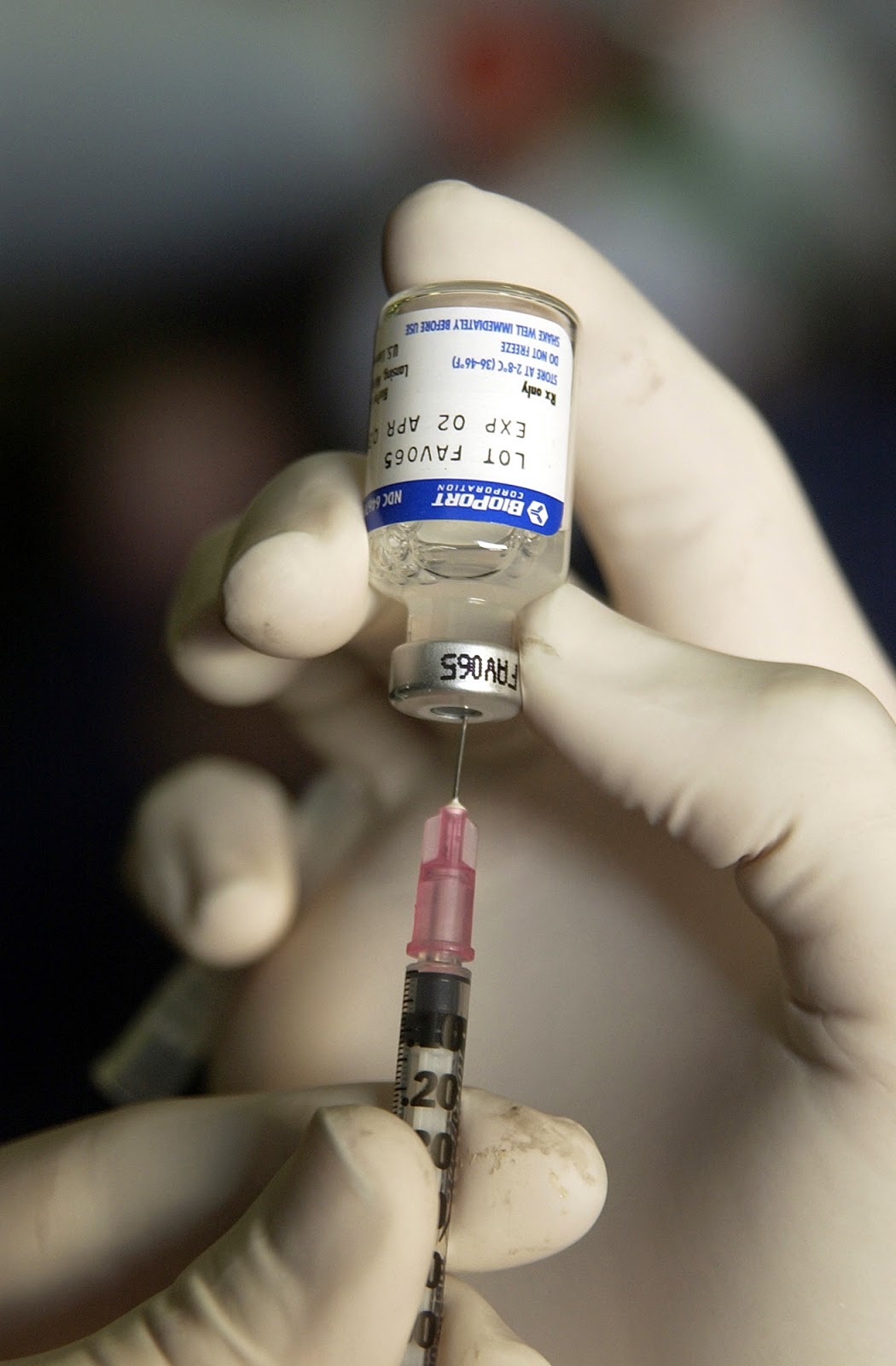
One must know what to put in the syringe,
and where best to put the syringe, while also
convincing the patient to accept the syringe.
As a physician or surgeon, communication first takes place in the office or in the operation room, depending on the patient's current circumstances being dire, or slightly less so.  Either way, be it an emergency or a routine checkup, the patient must be convinced via oral or written reasoning and information as to whether or not to go through with what the doctor professes is "best."  This can be an easy process at times, as the authoritative presence of someone who has spent a large portion of their life to study and practice bears much weight.  Conversely, a stubborn or skeptical patient might require substantial counseling before accepting or rejecting aid.  The outcome of this decision is in part determined by urgency and the gravity of the patient's condition, but much of the time is also heavily reliant on how effective the doctor is in persuasion. 

"To take this medicine or that medicine—or no medicine," or "to go under the knife and radiation, or risk it" are some of the dilemmas patients must acquire an opinion on.  "Is it worth it," and "what is 'it?'"  Before making a decision to heed or dismiss the advice of the doctor, the patient must better understand the nature of their own condition, a worrisome need readily assuaged by said physician or surgeon. 

Take the right one and you live, but take the wrong one and you die.
Better ask the doctor first.
In theory, the doctor is the more knowledgeable of the two with regards to the patient, no doubt due to numerous years of learning and practice before actual application even begins, but this is not always the case.  In general, yes, the patient feels a sense of inferiority to the doctor, or possibly just respect for the medical position, but this does often lead to excessive pride in the doctor.  This "God Complex," as James put it, is a force that must be monitored. 

In my own personal experience, I had a medical tragedy that kept me out of school for two years (and continues to inhibit my success in academics even now).  Fearing for my health and even my life, I consulted a doctor for their professional diagnosis.  Going into the meeting, I had a theory as to what had happened to me, but the doctor disregarded the thought and labeled it "impossible."  Putting me through all the motions for the tests that he thought I needed to go through, the results concluded that nothing was wrong with me—a self-fulfilling prophecy that deeply offended me.  My proposition was to look into a second, "impossibly" rare scenario, but I was merely stuck with a massive painkiller shot and sent home. 
Though the Tenth Doctor might be experienced,
I do not think that he has the appropriate
"experience" for solving most medical issues,
nor of harboring the corresponding ethos.
Months later, I was still unable to properly function, and after attempting to return to school, was forced to go back home and seek further medical assistance.  Something was wrong with me, and after meeting with another, more receptive doctor, we found that I indeed had suffered the exact condition that I had suspected and feared. 


To make a long story short, a doctor must make excellent use of logos in assessing issues in a patient and providing a train of thought leading said patient to accepting help.  This is not all, however, because though the doctor must exercise skillful epideictic oratory (and even judicial oratory to demonstrate prior experiences and results), they must do it in a way so as not to dissuade the patient from accepting the physician's or surgeon's ethos.  Additionally, in order to be the most effective doctor, one must be willing to listen to the plea of the patient, as neither of the two parties are operating or prescribing for themselves.  Without a proper connection of minds under mutual respect, a doctor's rhetoric can still fail him or her.  Looking back at my own interest in this field and my unfortunate, but eye-opening event, I wish to pursue the path of biology with a wiser gait.   

Thursday, October 23, 2014

Communication and Persuasion: The Rhetoric of Medicine

For the past two years I worked as a Medical Assistant for a Neurological Center. I’m also an EMT and am planning on going to PA school to work in the Emergency Room. When the topic of this blogpost was first introduced I thought it would be difficult to find use of rhetoric in the Doctor’s office because, after all, it is a very scientific field with lots of facts and evidence at your fingertips. I was surprised to find that, as I have observed my surroundings, I noticed that there are many uses of rhetoric in my clinic alone. The following are avenues of rhetoric that I have become alive to me.

Believe it or not all patients want to do what they’re instructed. A doctor can’t force a patient to proceed with recommended treatment, but they can persuade a patient to pursue a prescribed procedure.  Most physicians come with a certain type of ethos already intact. After all, the patient has already been persuaded to seek the doctor’s help. That ethos can be strengthened throughout the appointment if the doctor is attentive, instructive, and whose therapy sounds conducive to good health.
In a Doctor’s office, the Doctor isn’t the only one who uses rhetoric.  In many cases it is difficult to see who is trying to persuade who. A patient needs to be an advocate for their own health, and though a Doctor has had much schooling, they are human and prone to mistake. A patient’s persuasive power comes from the fact that they know what they’re feeling. They act as their own personal witness to their testimony because no one can tell them what they are feeling. A wise doctor always listens to what his patients are saying.
If you put 5 doctors in a room and you end up with 10 different diagnoses. While this is an exaggeration it does illustrate that not all doctors agree with one another’s diagnosis on a patient’s illness. Doctors are regularly persuading other doctors to try new treatments and diagnose difficult patients. When this happens the logos in the room becomes very thick. Testimonies, references, and ethos all play major factors in persuading other doctors.
Ever wonder how a doctor knows which drugs to prescribe you? Believe it or not, a doctor doesn’t have an unlimited knowledge of which drugs are on the market or the effectiveness of every pill. Pharmaceutical companies (drug companies) test and manufacture drugs and send representatives (called drug reps) to persuade physicians and physician assistants to use said drugs. This typically consists of a well-dressed salesman attempting to build ethos by showing other doctors or practices that use the drug, power point slides of studies used to show efficacy of drug. Something that has always impressed me is the way these drug reps use medical lingo. Though they haven’t gone through medical school they have been trained to speak using medical terms because they have found this is more persuasive to physicians.
https://ssl.gstatic.com/ui/v1/icons/mail/images/cleardot.gif
Doctors come in many shapes and sizes, with many different philosophies and motivations. While all may differ in approach, it can be said that no doctor has come to be a doctor without putting in countless hours of study and practice. Because medical school is so “intensive” and “extensive”, a doctor values knowledge, facts, and experimental results. These tools are found useful in persuading doctors.
In the field of medicine, few care about the past because there is nothing that can be done to change it. Because the present is all we have to work with and the future is all we have to hope for, the primary form of persuasion is deliberative, yet many handle their approach differently.

Some doctors I have met have what I call “The God complex”. As a result of their degree and the fact that people are coming to them daily to ask for help and advice they come to feel that they are the ultimate authority. While this “my way or the highway” approach of persuasion works very well on getting patients to continue with a set form of therapy, it lacks the persuasive power that some physician’s possess who can explain the benefits of the treatment. Just because people know that something is good or bad for them doesn’t mean they’ll follow the treatment. In my clinic we treat many people with addictions, the doctors constantly inform the patient of the perils this path presents, but few follow the physician’s forewarning. Sometimes it is not enough to present the facts, a patient must be persuaded by what is important to them.