Showing posts with label french teaching. Show all posts

Monday, December 15, 2014

So You Wanna be a French Teacher

I was thirteen years old, and I did not want to take a Spanish class.
            The whole world was already taking Spanish, and besides, my older sister had taken French and loved it. So despite my parents’ warnings that Spanish would be more useful, I enrolled in French I for my eighth grade year. French I led to French II, which led (eventually) to French 322. In the middle of that great journey, I came across a thought: what about French teaching?

            So I looked into it and discovered that which already begs for attention: in order to teach French, you have to know French…and really know French. It would be a little tough to teach a language when you’ve never been immersed in it before, wouldn’t it?
            Underneath that fact, though, there is more to being a French teacher. It’s not just about saying your “bonjour”’s and your “oui oui”’s. It’s about knowing how to communicate with certain audiences, as well as how to use knowledge of French teaching history, in a way that benefits students the most.

Ruminations on Communications
            There is a problem in junior high and high schools in the United States (among others): the lack of funding for humanities subjects like French. In order to keep funding for your subject, you must be able to convince a variety of audiences that the French language matters in education. Considering each of these audiences’ values before presenting your arguments can help you keep your subject in schools.
            The Head Honchos

            One audience you’ll encounter is the school administrators. Because they are the ones who will be cutting the funding for French classes, or at least delivering the bad news, you’ll need to stuff some good stuff up your sleeve to convince them that French is needed in schools.
Administrators are academics, right? They thus value professionalism, statistics, and good solid reasoning. Appealing to these values requires a confident appearance coupled with your best pressed slacks or that black pencil skirt. This shows that you are serious about your topic, and that you understand the hierarchy of school positions. You also have to do some genuine research beforehand—find a couple studies with graphs to display, for example. Do a brief study yourself at your school if you can (making sure, of course, that all of this research points to how French language learning benefits students). Then, show them that you know what you’re talking about. Make straightforward points that represent a clear pathway of logic. Create multiple syllogisms, emphasizing the conclusions about—or the advantages of—French as a part in the whole of education.
The Young Whipper-Snappers
Of course, your most frequent audience will be students. Convincing these little buggers that French is a worthy pursuit (which will lead to larger class sizes and thus more funding) is a different task altogether.
            Students value entertainment, familiarity of tone, and application to real life. For your case to be convincing, all of these elements must be included. So say you’re doing a beginning-of-the-year presentation to students about how French can be of use to them in their education. Make it an online presentation, like a PowerPoint or a Prezi. Start it with a video (a funny one that students might already know would be best). Keep the slides interesting throughout the presentation with music and pictures that keep their attention. Now that you’ve got them with the technology, make sure that your tone doesn’t betray your status. Just because you’re going to be their French professor doesn’t mean that you’re better than them—so make sure your voice isn’t sending that message. Throw in some hip teenager lingo, for instance, along with some funny French words. Get on their level. Show that you care not just about their presence in your class, but about their general educational well being. That can definitely boost your points with the kiddos. But some of them might then get to the point where they start wondering, How does this matter in real life? One of the things that first caught my attention about French was how it would connect me to other people and other parts of the world that I had never studied or seen before. Using this little tidbit could help attract some of those students who haven’t thought about French before but have a deep sense of curiosity or wanderlust.

The Tale of French Teaching
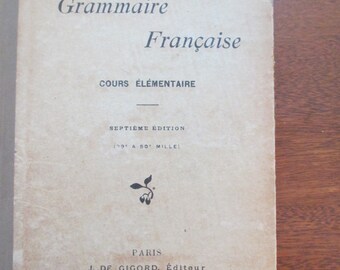
            Before the Renaissance, French teaching emphasized conversation more than anything. Students learned as if from traveler’s bilingual dictionaries—how to talk about the pantalons they put on that morning, how to describe the nourriture they ate for lunch, how to ask for directions to the cinéma. Their textbooks were “elementary grammars…and treatises” that addressed little more than “the occupations of daily life” (Simoni). Grammar was left on the sidelines. Teachers—who were often emigrants—did little more than move their students to conversational ability. Granted, at that time, French teaching wasn’t exactly standardized.


            French teaching in modern history, up to the present, is much the opposite. The student’s first encounter with French often consists of just standardized learning of grammar and vocabulary (using textbooks that may or may not be from the ‘80’s). These “‘pre-communicative’ knowledge and skills” (Littlewood) are essential foundations, but they don’t get students to the communicative part of language. And it’s the communicative part that really makes knowledge of language useful and meaningful.
            So, what? Can this historical context make a difference in how French teachers make a difference in students’ lives? Indeed, it can. Knowledge about the history of French teaching can help create the ideal learning environment for students. The approach is to balance the distant and recent past.
            It can be difficult for beginning students especially to have the courage to communicate in a secondary language in class. To embolden the shier ones requires, quite simply, frequent and effective conversation activities. Integrate simple and useful French phrases into the curriculum so that students can speak in the classroom while they are learning other grammar and vocabulary rules, not apart from that learning. French teachers should also speak in French at least during part of class, working up to entire class times in French within the first couple years of language courses.
           
            French teaching is more than being fluent in French. In order to persuade students and administrators to recognize the value of French classes, you must possess rhetorical and historical knowledge. Such tools can and will have an incredible impact on how much attention and funding your language program receives, as well as how you’re your students learn and end up being able to utilize their language skills.

Works Cited
Littlewood, William T. "Form and Meaning in Language-Teaching Methodology." The 
Modern Language Journal (1980): 441. EBSCO. Web. 3 Dec. 2014.
Simonini, R. C. "The Genesis of Modern Foreign Language Teaching." The Modern 
Language Journal (1951): 185-86. EBSCO. Web. 3 Dec. 2014.

Friday, December 5, 2014

Vous êtes le prof

UN Audience Profile
Students looking into the field of French teaching will probably be humanities types by nature. They appreciate beauty of presentation and of word (no wonder they chose French... ;) ). They will be taking education classes, of course, along with their regular French curriculum. Depending on which courses they choose to complete, they may or may not learn much about French teaching in the past. Most will do an internship or a study abroad in a francophone country. Any French teaching major will have to complete the PRAXIS exam, and achieve a level of advanced-low at least on an oral proficiency exam. And, of course, they will have to do student teaching or an internship. (In the
internships/study abroads, exams, and final preparations, French teaching students will have the most opportunity to display their communication skills in French and in general.)

DEUX Context
I've gotta lay it down for prospective French teachers: "This is your life. This is your career. This is your chance to do something for others. AND SO, you've gotta do it right. By learning about communication in French teaching, you can help yourself and those you teach succeed. I'm assuming that as a teaching major, you want to make a difference in the world, or at least in the life of one person. By learning more about the history and rhetorical-ness behind your career, you'll be able to do that. And do that better."

TROIS Rhetoric
I feel like most of the "teaching" strategies (involving style, delivery, etc.) will be taught to French teaching students in their education courses and through their internships. That teaching stuff is kinda the same regardless of your subject matter. It's the "French" part that I think I need to concentrate on. Here, topics of invention will come in. In order to persuade students, other teachers, and school boards, students need to understand the main stasis and some of the topics of invention I addressed in that one post. Because most people already understand the words "issue" and "topic," I can probs easily explain what's going on with these rhetorical terms.

QUATRE History
People need to be aware of the major flip-flopping going on in this field. Bringing up the history of French teaching can really help people look at the broader picture of where they will want their students to go, and thus, understand what they should focus on while teaching. I don't think most French students understand what the history of French teaching entails, or how it has changed, or how it could be better.

CINQ Plan
Prospective French teachers need skill in their language, above all else, but they also need rhetorical skill to acquire and keep French students. It sounds contrived (as we know rhetoric sometimes can), but really. French teachers need to know not how to persuade students that French is the best, but to show them why it is worth studying and prepare them to use it in the future. In order to do that, they need to know their history and use some rhetoric.

I could look into some more rhetorical topics that French teachers specifically could use, as well as research more about the success of modern French teaching strategies in the U.S. and around the world. For me, it's more about explaining how historical and rhetorical knowledge can improve the field rather than just explaining what French teaching is or what will be required of them in that career. I think with that approach, I'll be able to provide a new and meaningful view of the French teaching profession.

Wednesday, December 3, 2014

Flip-Flopping French Teaching

Long before the days of Allons-y! textbooks, French cinema classes, berets and baguettes--long before French was even taught as a foreign language--it was influencing the English language. Take words like "very," "royal," "terror," "liberty": they're all French cognates. The grammar of French, however, didn't cross over in the same way. Where French is a Romance language grammatically, English is very much Germanic. 

*FLIP*

This pattern of sharing words but not grammatical properties is reflected in early French teaching. In the time before the Renaissance, French was taught in England with "elementary grammars, rhyming vocabularies, and treatises" (Simonini). Instead of bringing focus to sentence structure and placement of adjectives, these early textbooks mirrored traveler's bilingual dictionaries. Their purpose was to move the student (or, étudiant) quickly to the level of comfortable conversation. They were functional. They dealt with "the occupations of daily life." They told you how to ask for directions. In essence, they 'shared words' without explaining the underlying reasons for their arrangement. This wasn't the fault of incompetent teachers--many of them were "foreign refugees coming into the country"--but of lack of resources. They used these French pamphlets because no textbooks had yet been created. (Since these tutors were refugees, they probably had more on their minds than making grammar guides for their English pupils.)

*FLOP*

In modern times, the approach to French teaching has done a 180 (or, demi-tour). Instead of diving into conversation from the beginning, the focus is more on grammar. Of course, beginning French classes still include a lot of vocabulary words and phrases, and on the other end, college-level courses do a bit more with conversation. But most of a student's first rendez-vous with French is concerned with what William E. Littlewood calls ""pre-communicative" knowledge and skills." Basically, instead of speaking a negative sentence in practice, they'll concentrate on knowing how to write and writing a negative sentence. Because of this, many students exit their French learning experience with some structural rules safely intact, but not much "success in terms of communicative ability." And what a shame it is! Without these skills, and without worksheets, textbooks, and a monsieur breathing down their neck, students lose their French langue (the same word for "language" and for "tongue"!) rather rapidly.

So what should we do to provide the best experience for French (and all foreign language) students? The answer seems obvious: combine the distant past with the recent past. Drill that writing and grammar, but share the time with the spoken word. This would help those students who don't have the monetary means to do a study abroad, or who end their French career after high school. Indeed, it would give every student the opportunity to use their French in a meaningful way.


Works Cited

Simonini, R. C. "The Genesis of Modern Foreign Language Teaching." The Modern 
            Language Journal (1951): 185-86. EBSCO. Web. 3 Dec. 2014.

Littlewood, William T. "Form and Meaning in Language-Teaching Methodology." The 
            Modern Language Journal (1980): 441. EBSCO. Web. 3 Dec. 2014.

Thursday, November 6, 2014

C'est un bon style

It was just another ordinary day of teaching French at the high school.

Madame Lachance was worried about the style of her presentation in front of the class. She was using a low, plain style--nothing grand or eloquent in terms of sentence structure or word choice. The ninth graders she taught would probably watch all that stuff fly over their heads, anyway. They didn't want a fancy sermon. They just wanted to learn.

That's why Mme Lachance made special use of as many slightly slang-y terms as she could. That way, she could get across what she wanted to say in a way that they would understand clearly. (And also gain some "cool" points with them.) That's why she also made sure not to be too serious or boring, not to stand at the front of the classroom and lecture the whole time. That was a very un-stylistic style of teaching, and one that none of her students preferred.

As far as delivery went, Mme Lachance concentrated on keeping her tone light, happy, and encouraging, sprinkling in sternness when Laura got out her phone again or the boys in the corner started talking about sports. Typically, this kind of enthusiasm in her voice--even when she internally wished that the day was already over--inspired participation in the class, even quiet Courtney. Often, she tried theatrics, too, in conjunction with writing on the board and her Prezi slides. "I would never address le président Hollande by saying tu!" she'd explained once. "Tu is for friends, not for fancy people." Then she'd put on a gangster pose and continued, "That'd be like going up to President Obama and saying, 'Wut up, bro.'" The students laughed for a quite a while at that. But they got the idea.

It was tougher to get them to enjoy studying the textbook.

Most textbooks aren't that interesting, but the old French textbooks Mme Lachance had were just awful. All the pictures were from the '80's, and thus rather laughable; all the group activities seemed too silly to use in class; and the writing was pretty much devoid of style or figures of speech.


But little else could be expected of a grammar textbook. It got the job done, after all--it was plain and straightforward. Plain and straightforward and boring.


So Mme Lachance supplemented the students' grammar reading with poems and songs, pieces of writing full of figures of speech. She even encouraged them to read such writing in English, because students seemed to be more comfortable learning the passé composé, for example, when they were familiar with figures of speech like simile. To help students form the tense, Mme Lachance would compare it to a train with three cars (three pieces, three words). Anastrophe, too, could provide a frame for the placing of words in general, as adjectives come almost exclusively after instead of before nouns in French.


The bell rang and her students formed a clump near the door, the boys right back to their sports talk and Laura with her thumbs glued to her phone.

But she could've sworn she heard one of the last ones say on his way out, "Ya know, most of my professors are lame, but Madame Lachance has got style."

*Sorry my post kinda addresses the same things as Katie's. I wrote it Wednesday and my brother is getting married tomorrow, so I don't have time to do it over and make it as different and fancy as hers! Those teachers just all have the same style, I guess!

Thursday, October 30, 2014

Topics of Invention in French Teaching

Stasis: Budget cuts for language departments
Special topics:
  • People's responses to accents
  • Part: Language learning / Whole: Education
  • Advantageous
  • Conjugates (literally)
  • Connecting with the world

"Sorry, folks, but...we're getting budget cuts. And I'm pretty sure you know where those budget cuts are gonna come from."

A moan sounded from the audience of teachers. Well, those on the left side of the room: the art and language teachers.

"I know, I know," the board director said. But no amount of I know's could cure Madame Lachance's sadness and frustration. Time to speak for them, these left-side-of-the-roomers. Especially herself and Señora Hernandez. Especially herself.


"I'd like to say somesing."

Everyone squeaked their little metal desks to turn and look at her. Maybe it would be best to ditch the French accent, she decided. These people might be turned off by her pursed-lip vowels and delicate fricative r's, even without knowing it. Or with knowing it...she thought pointedly of bespectacled Mr. Simmons, the calculus professor. She cleared her throat and stood.

"I know what you're going to say, John," she addressed the director, who was now heaving himself into a little desk with a furrowed but resigned brow. "I know that we're competing with the world and that the world cares about math and science. And those subjects are so important! But you must understand that the students need all parts of an education. Including the arts." She gestured toward the choir director and the painting teacher. Then she put a hand against her own chest. "Including languages. These subjects will help them in the long run. And isn't that what we want?"

Nods bobbed up and down the rows of professors. Madame Lachance went on.

"Even just scratching the surface of a new language can help a student. It can help them learn more about their native language." She turned to face the English department chair. "Many English words, for example, come from French, or from the same Latin roots as French. Look at just one example: the verb appeler. It means "to call," like in the sense of the English word "appellation." These words are conjugates--they have a common background, and thus, both suggest the same meaning of name. Wouldn't that help your kids learn that vocabulary word?" she asked the English teacher.

More nodding.

"Learning French isn't just about learning French. It's about broadening your world and finding connections. We and the district should consider that."

Madame Lachance sat down, and the director stayed in his desk, nodding his head in thought.

Thursday, October 23, 2014

Communication and Persuasion in French Teaching

I am currently not a French Teaching major. BUT. I am a French major who is not quite sure where she's going, and teaching has interested me for a while, so I decided to explore rhetoric in this career.
Le tour Eiffel

It all began in eighth grade in French I. My teacher was a lovely woman from southern France, and my tongue felt like it was dripping with warm honey when I repeated after her the Bonjour's and the Je m'appelle's. She made me love French.

That in itself takes some rhetorical talent. Teaching is persuading, and Mme Benford was persuasive. If I wanted to become like her, I'd have to do a few things and persuade a few people.

Right now, I'm probs 
somewhere near the 
Intermediate Low section.
Before I even began teaching, I'd have to prove (at least to BYU) that I had reached a minimum level of Advanced Low on the ACTFL (American Council on the Teaching of Foreign Languages) scale. To do this, I would have to take a speaking test. Though this test mostly involves showing off your skill, rhetoric could be involved in how confident your delivery is. Artful pausing, as well, would give you time to sort your thoughts without being too obvious. These things would help with the fluidity of your speaking and show the "specialized language professional" conducting your exam that you know your stuff.

So say I miraculously pass the ACTFL exam and complete an internship. Then I land myself a place teaching French I or French 101. Très cool ! I'll tell myself. Then I'll take up the task of persuading my students to participate, learn, and do well in my class. Depending on what grade level I'm teaching, I may be the older person who's less innocent and less excited about life. I'd be the one communicating information to the kiddies most of the time in this classroom setting, and in order to persuade them, I'd need to get to their level.  Technology! Deliberative oratory! Praise and encouragement! These are the things that would capture a young student's attention and (hopefully) help them love French.

L'arc de triomphe
A few years pass and I'm getting really good at this whole teaching thing. I decide to join the American Association of Teachers of French (AATF) and go to the annual convention. While I'm at it, I create a presentation to give at the convention based on the theme they chose for that year. My extensive knowledge of French helps me craft metaphors, chiasmi, and proverbs into my presentation. And wouldn't ya know it, it's a hit! People comment on my exquisite accent and my boss tells me I just have to give the same presentation to the foreign language teachers at the school. In order to appeal to them, I tweak my presentation a little and use a more casual tone while giving it. Once again, c'est un succès !

Then I think to myself, Golly, that one assignment in Rhetoric and Civilization...it was worthwhile...