Showing posts with label to sweep the earth as with a flood. Show all posts

Thursday, September 11, 2014

Are we talking about communication or are we communicating?

Both Elder Bednar and Socrates address the topic of communication and do it with an audience.  But how can we know what to believe when communication is a mean and a topic?  Doesn’t that all just seem a little confusing?  Through the use of ethos and logos, it is easy to trust both Elder Bednar and Socrates.
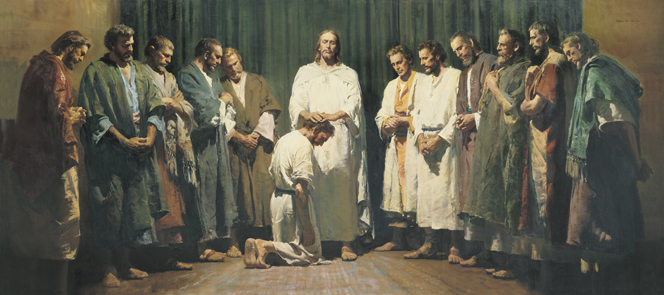
Elder Bednar establishes his ethos by first talking about the importance of prophets and then proving his point by going on to quote prophets, play audio recordings from prophets, and show videos of prophets speaking on the use of technology.  You can’t argue with that!  You also can’t argue with Socrates as he refutes the ethos of Gorgias.  I think even Gorgias started to doubt himself with all those questions.
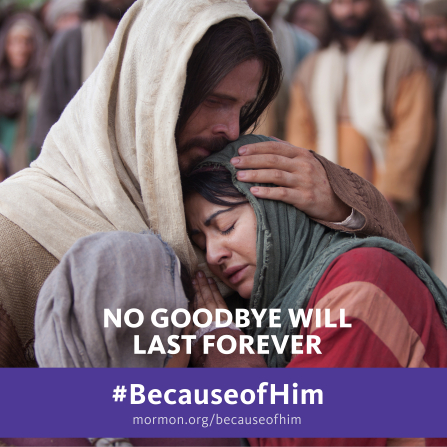
Socrates also uses lots of questions to reason and therefore uses logos which makes him even more believable.  Gorgias even agrees with Socrates multiple times and ends up contradicting himself.  Elder Bednar uses logos throughout the body of his speech by stating lots of statistics. The “Because of Him” video was viewed “more than five million times during Easter week in 191 countries and territories of the world”.  These statistics prove his point.


So now that we believe both Socrates and Elder Bednar what should we do?  Start communicating and questioning and flooding the world with knowledge, truth and light!

Just Go With the Flow!


In Plato’s Gorgias, it quickly becomes apparent that Socrates is the one driving the conversation. The other characters participate in the debate, but the way that Socrates phrases his questions and structures his replies almost forces the conversation in his intended direction. The debate never seems to drift out of his control because he carefully organizes his thoughts in a way that flows. President Bednar was not having a conversation per se, because he was addressing such a large audience, but he worded his speech in such a way that the audiences’ thoughts flowed from one idea to the next in the way that he intended. He achieved this in many forms, but I only have time and space to address two of them.
First he made lists, much like how I am doing now, in order to get his audience to focus on his main points. The same thing happens in General Conference, devotionals, etc. When someone says that they have three points and starts to talk, your attention may start to drift, but as soon as they say they are moving on to the next point you naturally pay attention again just long enough to catch what it is. The speaker does this because he/she knows that the audience will probably not have a long enough attention span to listen to every word, but the list allows for at least the main points to get across.

Secondly, his speech had a natural order to it. He started in the past and moved on to the present and the social media aspects of what he was talking about. Did anyone else notice that the people he quoted, for the most part, went in chronological order? I thought that was really cool; because of the increasing time periods he went from pictures of the prophets, to audio bits, and then to videos of increasing quality.

Different Styles, Same End


Through Instagram, I can challenge others
to post their favorite scriptures and spread
the gospel.  These are all the people I
challenged!


Both Socrates and Elder Bednar present to their respective audiences the dangers of communication in deliberative addresses.  The styles of Elder Bednar and Socrates are extremely different but actually lead to the same end: their audience cannot refute them.


I loved the #BecauseofHim movement and
 tweeted and retweeted about it often.
Socrates spoke directly to a very few people: Gorgias, Callicles, and Polus.  Because of this, there is a “back-and-forth” to the messages that Socrates gives.  People can refute him and do so constantly.   In contrast Elder Bednar’s audience is the entire world.  His message is that we can spread the gospel through social media in huge ways, so he obviously thinks that his own message, recorded on video for everyone to see later and for thousands of people to actually witness, will have a world-wide audience.  Because of this audience, there is no “give-and-take.”  He simply lays out his argument so no one can refute him to his face, but still might disagree with him.

I also love the hashtag #LDSconf.  It
helps create discussion with my
non-member friends.
Because the audiences are different, the persuasive appeals of ethos and pathos between Socrates and Elder Bednar differ.  Socrates increases his own ethos and pathos by shaming others.  He proves Gorgias, Polus, and Callicles wrong and contradictory in order to make himself look like the one for whom to turn for wisdom and uses outside references sparingly.  He appeals to emotion by making others feel shame for what they said.  The effect of this shaming creates a situation where no one can refute Socrates.  Elder Bednar, in contrast, showed clips of worthy prophets and apostles to increase his own ethos by association and used the motivating word of “exhort” to motivate people to action, which creates a spirit of good-will toward Bednar where one truly believes his argument enough to not refute him.  Therefore, both Bednar and Socrates create the same inability in their audience for refutation but through different means. 
Unlike my social media, Socrates could
only speak to a few people at a time.
That's why his approach to his audience is
different and much less pleasing than Bednar's.