Showing posts with label post assignment 7. Show all posts

Saturday, February 7, 2015

Silently Falling Apart

Did you know chaos could be silent? The very fiber of order and structure could be being ripped at the seams like a pack of hungry wolves attacking a wounded elk, and yet, you can hear a pin drop. As I looked at the eyes of the students in that American Sign Language during my junior year of high school, I didn't see teenagers at all but rather a group of great white sharks. What’s worse? I saw the teacher drop the blood in the water, and the before I knew it, the fight was on.


The class began like any other. Students silently filed in, waiting to learn the vocabulary of the day. Like many others, I signed up for American Sign Language because I figured there would be little written homework. What I did not know was that our instructor had a chip on his shoulder and every day would be nothing but a rant by the teacher complaining about how hearing students were entitled and snobby. Well on this day, the teacher’s temper tantrum became too much for one student. In the middle of class, one student stood up and told the teacher exactly what she thought of him. Mercilessly, she got in his face and cut him to the bone. I was shocked but other students were right on board. Suddenly a pack of angry students surrounded the teachers and all heck broke loose. The teacher’s reign had come to an end. From now on, the students demanded to decide what we learned. I expected the teacher to push back but he just stood their helplessly.


You would think an uproar like this would get oud or violent. But this one was silent. No words were verbally spoken but rather signed. Not a sound was heard but the message was loud and clear. 

Tuesday, February 3, 2015

Catalysts for Change: The Why and How of the Renaissance and Reformation

When has any such thing been even heard or seen; in what annals has it ever been read that houses were left vacant, cities deserted, the country neglected, the fields too small for the dead and a fearful and universal solitude over the whole earth?... Oh happy people of the future, who have not known these miseries and perchance will class our testimony with the fables. We have, indeed, deserved these [punishments] and even greater; but our forefathers also have deserved them, and may our posterity not also merit the same...

So wrote Petrarch concerning the Plague to his brother, the lone survivor of his whole village. It wasn't until this class that I really began to understand what a magnificently incredible (and terrible) thing the plague was. To put it into perspective, imagine if by the year 2020, one-third to one-half of all America was wiped out. Imagine what that would do to our society—economically, financially, politically, religiously, and every other possible category you could think of. It would completely change the way we live, and think, and associate with each other. It may cause us to climb a mountain or two and rethink society; maybe even look back to former times as we work forward towards better ones. In Italy, a place hit particularly hard by the Black Death, a movement began. As Joseph from my salon group stated, it was in Italy where the ideas of humanism, and ad fonts (returning to the ancient Greek and Roman sources and thinking), and exploration really took root and sprouted.  The plague had sparked a reaction. But just like every good chemical reaction needs a spark to ignite the process, it also needs a catalyst to speed up and multiply the reaction—and that is what Gutenberg provided in movable type and the printing press.

There is a reason why the Middle Renaissance is labeled as beginning in the middle of the 15th century. That is when Gutenberg began his work in mass producing ideas. Every age has its technological catalyst. The Information Age has the Internet. The Industrial Age had the steam engine. The Renaissance and Reformation Age had the printing press. Hellenism spread by the power of the sword. Calvinism and Lutheranism spread by the power of the pen metal movable type. This technology made a return to the source—the Bible—easy and accessible.

As ideas continue to become easier and easier to share, moral relativism also becomes more common. As Latter-day Saints we believe in absolute truth—God—and that as society moves further and further away from God—the source—so will society degrade.  What will it take for us to return to the source and change our course? Dwight Shrute once said, “We need a new plague.” This may be the case. It took the Plague to spark ad Fontes in the past. Maybe we need something so catastrophic, so fundamentally life altering to get us back on track: perhaps another plague, or perhaps a Second Coming.

Learn Good from the Past and Discover Good in the Future

In my salon group, the Manifesto or the Oration on the Dignity of Man by Pico Della Mirandola was brought up.  As we were discussing the different themes of our class so far, one thing became very apparent to me as I was listening to the discussion.

One of my classmates who was in the group, Joseph, asked why we focus so much on the printing press as being the main force driving the Renaissance.  Of course, as Joseph pointed out, it was a huge development that obviously aided the Renaissance greatly.  Without the printing press, it would have been difficult for some of the great writings and ideas from the Renaissance to become so widespread.  However, as Joseph got to the point of why he was asking why the printing press is so largely credited for the Renaissance and nothing else seems to be, he pointed out that the Renaissance actually started about a century before the printing press was invented.

Up to this point, we had still mostly been focusing on the idea of going back to the sources and discovering the ancient works and philosophies and trying to be great like ancient peoples and cultures.  I know that discovering the past was a main focus of the Renaissance, but I think (and I was thinking during our discussion) that there is something more to the Renaissance and why it was great than just discovering the past.

When asked, Joseph pointed out that he thought that the Renaissance originally started because of people traveling and discovering different peoples and cultures.  We also discussed the idea of the Bubonic plague, and its effect on the people of Europe considering the devastation of losing a third of the population.  That, along with different warring countries, caused a lot of discussion and debate, and it changed the way people thought about things.  This went along more with what I was feeling about the Renaissance.

I have a brother who received a Master’s degree in History from the University of Reading in Reading, England.  My brother’s thesis focused on ancient Rome and how the founding fathers of the United States of America used what they knew about ancient Rome and its government to establish the government of the USA.  Our founding fathers learned much of what they used to form the government of this country by studying ancient Rome.

However, the founding fathers included the amendment process.  They knew that they couldn’t expect everything, so they allowed for the government in the future to make changes according to new ways of thought.


My feelings on the Renaissance are that it was a time not only to discover the good of the past, but to focus on the new things that are good as well.  We often don’t notice good, new things that could really benefit us until we go out and discover them, as Petrarch did.  So, I think that the Renaissance is an example not only of discovering the good of the past and applying it to our lives, but also discovering new things that are good and applying them to our lives as well.

Stone Cut Out of the Mountain

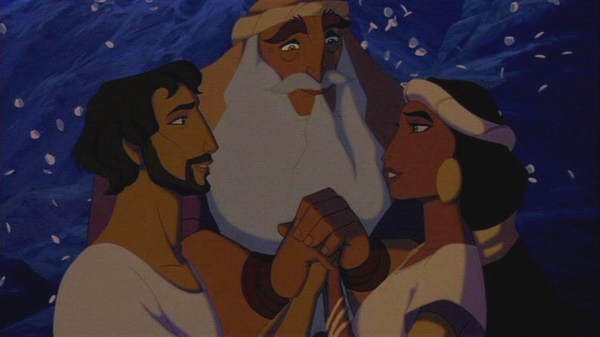
"And the stone that sits on the very top
Of the mountain's mighty face--
Does it think it's more important
Than the stones that form the base?"

Ryan W. quoted the lyrics to this song from The Prince of Egypt in passing, but they described a good part of our group's salon conversation.

I was over there thinking (basically), Well, that top stone has no good reason to think it's better than the base! The base is EVERYTHING. Back to the sources, that's what the Renaissance was all about. Re-naissance. Re-birth. How can there be a rebirth if there was no regular birth?

The Ripple Effect

What a piece of work is a man! how noble in reason! how infinite in faculty! in form and moving how express and admirable! in action how like an angel! in apprehension how like a god! the beauty of the world! the paragon of animals!” – Hamlet, William Shakespeare.

In my mind this quote helps sum up the ideas and beliefs of humanism. Shakespeare lived in the late 16th century, near the end of the time period known as the Renaissance but I feel as though he was in touch with Petrarch who lived a couple hundred years before Shakespeare. Petrarch’s ideas and writings, which ultimately earned him the title of “Father of Humanism,” caused a ripple effect (idea shared by Ryan) which would propagate throughout time affecting everyone it touched.

 The Renaissance was a time of discovery, a discovery of man’s capabilities, of creativity, art, independence, revolution and more. It is so amazing to me that such a simple word, the Renaissance, can be used to describe such a vast and crucial period of time. The Renaissance was the conduit from the Middle Ages to Modern History, a period lasting from the late 14th century to the 16th. It was not just one event but a culmination of events. Imperative events that have shaped our modern world. The notions that they could “recover the past and return to sources” was a great beginning. Learning about what once was helped them understand what could be. Because of this new mindset men began to feed their curiosity with exploration of new and exotic places. This facilitated them with a way to grasp onto a new idea, that there is so much more out there beyond the little bubble of where they live. There was much land to be explored and knowledge to be uncovered.

With the spreading of humanism and rhetoric, the minds of men began to be opened and to become aware of their own ignorance. During the Middle Ages there was not much independent thought, creativity or growth and a lot of that was due to the church keeping the people in the dark. Not allowing them access to the scriptures. But as certain men’s minds began to become uncluttered they took a stand. Men like Erasmus and Luther who desired reform within the church. And let’s not forget Tyndall who translated the bible into English and Gutenburg who invented the printing press which made the bible and other books more readily available to an even larger group, such as plough boys.


The men of the Renaissance, Petrarch, da Vinci, Columbus, Machiavelli, Luther, Erasmus, Shakespeare and more, are men who I believe were inspired by the Lord to help mold and shape the world through their philosophies, their art and exploration in preparation for the restoration of His gospel. It was a movement or maybe just an idea that started hundreds of years ago and rippled throughout time to create the perfect incubator for a new beginning for the Lord’s gospel. I invite us all to study and appreciate these men, their actions, their words and the events that took place during this time period to help us better understand God’s eternal plan.

Wild-Goose Chase


“Nay, if thy wits run the wild-goose chase, I have done, for thou hast more of the wild-goose in one of thy wits than, I am sure, I have in my whole five.”


Mercutio, Romeo and Juliet, Act 2, Scene 4
William Shakespeare

Building the House


“.... [how can anyone] be silly enough to think of himself better than other people...” – Thomas Moore, Utopia

The thought raced across my mind as I reflected upon fellow classmates going for the throat in a heated debate of who was right. I couldn’t help but to imagine that this I is what Martin Luther would have sounded like in the Discourse of Free Will, if I had been present to hear his words. Mercy and compassion were unknown companions as every voice bellowed over the next.


“Everything is about exploration. Everything is a brave new world,” Charles proclaimed. “Yes, what were they exploring? The past,” echoed Macey. “You’re all wrong. Nothing would have happened without the printing press,” Jerrick assured us. “The Reformation was clearly the pinnacle,” James stated. “But everyone made their contributions in the fashion of Sprezzatura,”Joseph concluded. Secretly, I knew humanism was the driving force behind it all though. We trace the start of the Renaissance to Petrarch’s decent to the mountain and we consider him to be the father of humanism. 

Surely, I was correct. But much as Moore suggests, is one better than the other? How silly for us to think that one idea is superior to the next. However I understand where the notion comes from. As a younger sibling, I grew up with the notion that I was wrong. Regardless of my words. My actions. My thoughts. I was simply wrong. By the time I got to high school I too had a Petrarch like discovery. I wasn’t wrong at all. In fact, I very well could be right about many things! From that day forward, a Renaissance took place within my heart. A time of oppression and stagnancy quickly faded as I began to develop and grow. Much like the Courtiers of old, I could do it all and nothing was going to hold me back. My development did not occur all at once though. It took time.


The Renaissance did not come from a single action, a single person, a single idea. Like a building, it came brick by brick. As my mind returned to the conversation, I realized that in fact no one in my group was correct. No idea was superior to the next but all were required to fashion the Renaissance. Much like building a house, you need inspiration. You look up styles, layouts, and such to see just the kind of house you would like to build just like the Renaissance referred to ancient texts. Next you, like Columbus or Magellan, scout out the perfect piece of land. Once you know where it will be build, you lay a foundation and Petrarch’s idea of humanism set the stage for the Renaissance. After the foundation is set, ingenuity allows the home to take shape and it was ingenuity that brought about Gutenberg’s printing press and the Protestant Reformation. Though it took a great deal of time and effort, you look back at the house and realize that although it took hard work, building the house comes to feel effortless like the whit and nonchalance of spezzatrua.  No one part was better than another but all were required to produce the house.

Turns out Moore was right. How silly of us to argue for superiority for every piece was necessary to complete the puzzle we call, the Renaissance. 


The Role of the Past: Essential or Prevalent?

“Ugly hell gape not! Come not, Lucifer! 
I’ll burn my books—” - Dr. Faustus,
(The Tragical History of the Life and Death of Doctor Faustus)

Dr. Faustus makes a fatal deal
            If someone as rooted in the humanistic ideals of the renaissance, as the fictional character of Dr. Faustus was, can turn on all of their vast knowledge they had gained to turn back to God truly the idea of returning to the past had perhaps the largest implications during the renaissance time period. Christopher Marlowe’s character is clear evidence that Psalm 42 (from the Vulgate Bible) had major relevance during the renaissance time period, which states in English “In the same way that the stag is drawn unto the sources of water, so is my soul drawn unto you, God.” In considering this, how big of an effect did the past have upon the other themes present during the renaissance? My initial conclusion was this: without the ideas of the past (Greek and Roman rhetoric, religious traditions of medieval and Christian eras) that the other major themes present during the renaissance such as exploration, humanism, and the rise of the reformation would have never came to be.

            With similar fire that Martin Luther had in his response to Erasmus of Rotterdam on the topic of free will, I brought these thoughts to my classmate’s attention. Of those of whom I was discussing the importance of returning to the past, Kekoa asked a question that forced me to reconsider my previous position, and reevaluate the important role that the past had during the renaissance. He proposed, “Is it really that the other themes would not exist without the role of returning to the past, or is it simply the most overlapping theme of the period, with respect to the other themes?” What a question! The studied carelessness of his question really pushed me into a corner, which soon opened up into a brand new space full of what was most likely a more appropriate idea concerning this theme of returning to the past.


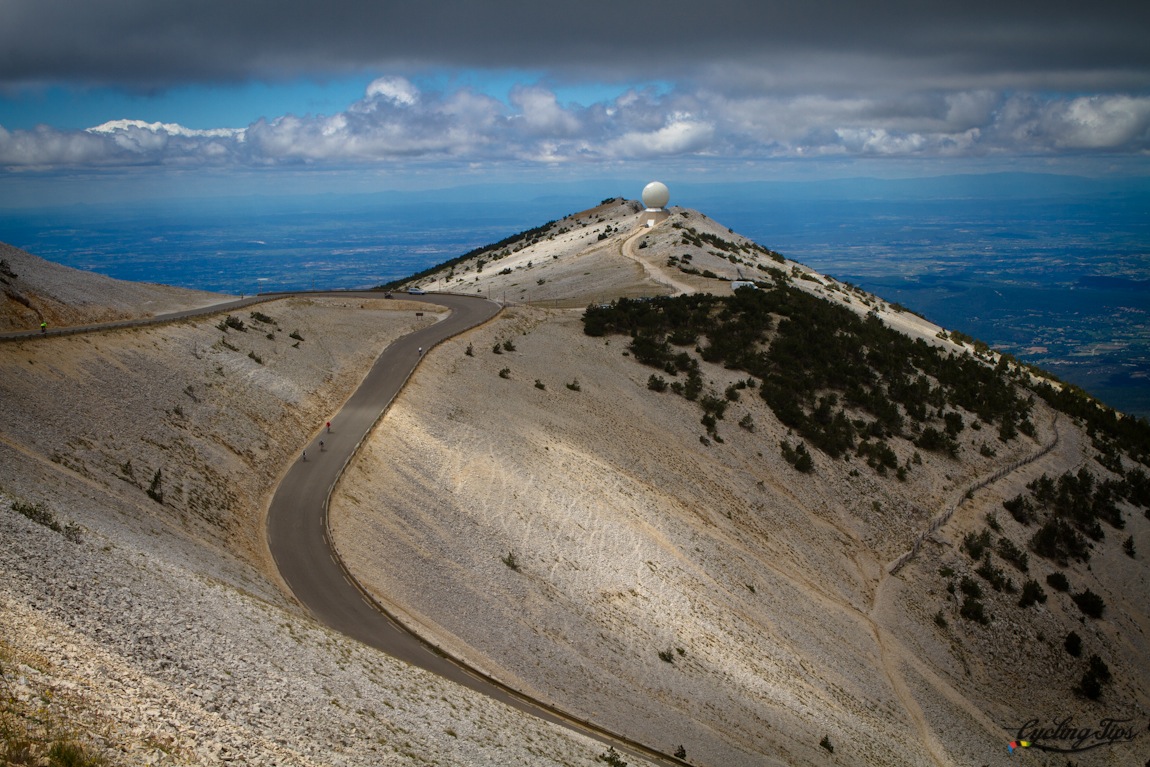
Mount Ventoux
            Rather than being the keystone to the other themes of the renaissance, the idea and importance of returning to the past for many of the major figures during this time period was that of a basis to build their own ideas. Petrarch climb up Mount Ventoux is very illustrative of what the past’s role was in all the other themes of the renaissance. There Petrarch could see back and forth, past and future, and see things from a far, which allows the eye to pick out the good and leave the bad. Much of the returning to the past done during the renaissance and reformation was done in this light. Erasmus of Rotterdam clearly returned to reason over scriptural testimony in his address on free will. Erasmus is one who clearly had respect for and a desire to understand the rhetoricians of the past, giving much respect to the systematized rhetoric of Aristotle. The act of reflecting on the sources, and returning to the past completely shaped the way that humanistic ideas formed, as well as other themes present during the reformation and renaissance.

Will the Stars Control Your Destiny?

It was so great discussing the various Renaissance themes with everyone in our "salon" yesterday.  In our second group, Susan quoted Shakespeare, who said, "The stars do not control our destiny, we do." It made me question what I am proactively doing with what I am learning/have learned here at BYU. All of our knowledge depends on what we do with it. What propelled humans forward in the Renaissance was their ability to connect [and implement] everything they had learned. They didn't let the stars control their destiny. 

Take Da Vinci and Machiavelli, for example. Their ability to follow Ad Fontes gave them greater humanistic understanding. They went back (quite literally) to the sources when they explored and studied cadavers to better understand the human body. Their Ad Fontes allowed them to see "what a piece of work" man was. Martin Luther also used Ad Fontes in his persuasive appeals to his audiences. He turned to the faithful examples of the Apostles to give his followers the strength and hope they'd need in the face of such horrific opposition.

The Gutenberg press also allowed for people to implement their knowledge because the Bible was available to everyone. This giant distribution armed the masses with knowledge, or as Thomas Carlyle said, it "was disbanding hired armies, and cashiering most kings and senates, and creating a whole new democratic world."  

I suppose you could say they just allowed the reformers to decide their religion for them; were it not for reformers' sprettzatura and their ability to preach with so much emotion, people may have never converted. Did all those "normal folk" just learn to read and instantly comprehend the Bible enough to understand it and question the Catholic church on their own? I'd like to think that followers took charge of their own destiny, but it'd be hard for an impressionable follower to resist Calvin's boldness or Luther's bravery. Much harder in fact to resist Erasmus' logic.

Shakespeare did say that we control our destiny, but in whose "stars" was it to control the black plague? Maybe the stars do play some role without our permission. If it hadn't been for that deathly disease, it's quite possible the royals wouldn't have devoided the royals of their power. And if it weren't for that change in demographic, the Renaissance and Reformation wouldn't have come when they did. 

I think there are some aspects of our destiny that are out of our control, but it is true that it is up to us--not the stars--to decide what we do with what we are given. Da Vinci and Michelangelo discovered artistic techniques and scientific theories; the masses took what they had studied and decided for themselves what their religion would be. And I, I have so much knowledge yet to obtain, and I understand more clearly that it will be up to me what I do with it. 

Remember the Past to Build the Future

“Those who cannot remember the past, are condemned to repeat it”
Quoted by George Santayana in the year 1905. As a philosopher, essayist, poet, and novelist living in Italy, George spoke the words of one bouncing off renaissance and reformist ideas. If one had no knowledge of the past, or did not learn enough, repeated mistakes are bound to happen. I am reminded of an example of my brother in high school getting pulled over by the same cop, in the same spot, for the same mistake (not wearing a seat belt), at the same time back to back days. He obviously did not learn from the past, and therefore was condemned to repeat it.

Pondering over this quotation, I found that it linked quite well with what was taught by Martin Luther in the late 15th/early 16th century. He quoted the Vulgate Bible in Psalm 42 that stated “in the same way that a stag is drawn unto the sources of water, so is my soul drawn unto you, God.” This German reformer who opposed the Catholic

Sola Scriptura: How Anyone Can Know God

“If God spare my life, before very long I shall cause a plough boy to know the scriptures better than [priests] do!” -- William Tyndale


It can be said that the spirit of the Renaissance really culminated in the Protestant Reformation, which was a veritable rebirth of religious spirit and connection with God sparked by the perceived materialism and of the Catholic Church. Tyndale, who is best known for translating the bible into English, believed like many that a priest was an unnecessary intermediary between an individual and God, that what was really necessary was faith and the scriptures.

Connecting the Past and the Future


Socrates said, “The unexamined life is not worth living.”

That really makes you want to start examining your life, doesn’t it? While you examine your own life, it is probably helpful to examine the lives of the people who came before you as well. You can learn from their mistakes and successes and then move forward with your own life.

One of the most important themes of the renaissance is the idea of looking back to the past and applying it to the present. The best part of that is that it all connects together is ways we couldn’t imagine at first. The people of the renaissance looked back to the ancients—the Greeks and the Romans—to learn from them and to make advances based off what they knew.

The Language of the Press

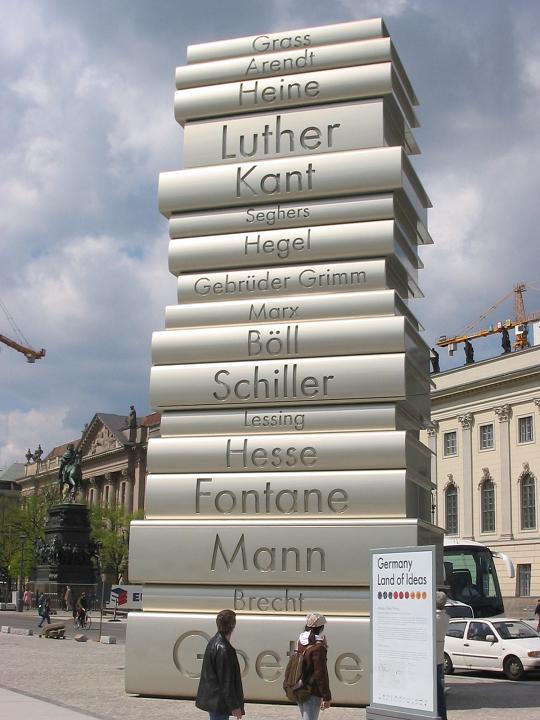
"What gunpowder did for war, the printing press has done for the mind."

The Walk of Ideas designed by
Scholtz & Friends to celebrate
the invention of modern printing.
Wendell Phillips lived during the 1800's so he saw the outcomes of this Renaissance technology. The ability to communicate had always been essential to the influential people of any time period. Even more important, however, was the ability to immortalize their words. Painstaking methods, such as carving into solid rock, were employed so that a ruler could "live on" beyond his death. How else would we know of the great deeds they performed? When Gutenberg developed his printing press, suddenly it was easy to not only immortalize, but also spread one's ideas. Without it, the extent of a great mind's sprezzatura in speech and writing would have been lost or limited, as mentioned by Kekoa in our salon discussion.

On the other hand, maybe some ideas should have been lost. Violent revolutions and reformations grew out of humanistic ideas that spread quickly with the ability to mass produce writings. Dictators and despots controlled the masses with propaganda. Many lives were lost and countries were left in shambles, such as France after its revolution.

A Life Worth Living

Socrates said, “The unexamined life is not worth living,” a quote shared with me by Spencer in our class. I’m not sure whether or not Socrates realized the foundation he himself was creating through his philosophies to allow human kind to look back on history – life – and examine and learn from it, but he was doing just that. This idea of looking to the past and returning to previous sources is what allowed for the blossoming of the Renaissance period. We always talk about the Renaissance as a time period of new ideas, new thoughts, new inventions, new art, new literature. But these new and great thinkers had to look back and acknowledge all of the hundreds and thousands of years of work that had been done before that to give a foundation for this change and reformation. Erasmus did this as he wrote his “Discourse on Free Will.” He referred to the Bible several times when talking about the nature of man and salvation. He also quoted Ciseraux, demonstrating his “ad fontes” – returning to sources – in a spiritual, as well as academic sense.


So, we look to the past to gather information. But then what to we do with it? Do we keep it the same? Do we keep it to ourselves? Or do we share it? Do we collaborate with it and then expand it and make it better? The explorers of the High Renaissance period (Columbus, Decartes) recognized that in order to share information and continue collaborating and learning, they had to brave the waters of the many oceans to explore new worlds. We learn from Montaigne in his “Of Cannibals” essay that his travels to Brazil caused him to broaden his perspective of a cannibalistic people. It also caused him to re-examine his European way of life.

Through our “Salon” discussion, Jesse Bunton suggested that no one understood better than the Protestant Reformationists that information needed to be spread to everyone, especially the common people. Information was held in the hands of the clergy as they read their Bibles in Latin and then dictated to the public how religion worked. But when Martin Luther posted his 95 Thesis, in direct opposition to the Catholic Church, he was demanding that more be done with the information that was available. Johann Gutenberg made this possible with his invention of the printing press in the 15th century. Suddenly, Bibles were being printed in a language that the majority could understand. This continued to spark new ideas as people learned more through reading and the newfound widespread accessibility of information. They began to re-examine the ways the Catholic Church was running their lives and decided to make a change, which evolved into Protestantism.

These ideas spread through new forms of communication, which we see has also changed over time. In the days of Socrates, the people relied on oral rhetoric – the spoken word. Through the creation of the printing press, ideas were spread through the written word. The use of written communication was beneficial for fast and broader access to ideas and literature, but it lacks the ability to better express tone and other rhetorical tools that come through oral communication. But the written forms of communication have provided the information that new generations are able to study and look back on.

Upon finishing this unit. I started to think about how in my own life to apply these principles of “ad fontes.” Do I look back at past sources? I am here at a university with unlimited access to archives of information – work that has been created, research that has been done – in my field. Am I going to just go through the motions of my schooling and let those opportunities to learn and grow wash over me? Or am I going to dive into the waters, explore new worlds, past and present, and determine if my life is worth living?


Gutenberg the Sprezzaturist


“He who first shortened the labor of copyists by device of movable types was disbanding hired armies, and cashiering most kings and senates, and creating a whole new democratic world: he had invented the art of printing.” – Thomas Carlyle, Sartor Resartus

In the spirit of sprezzatura, I submit that a quote discussing a major figure of the Renaissance, even if the quote comes from a novel published in 1836, is significant enough to be counted for the quote requirement. Plus, this quote, shared by Madison P during our groups on Monday, helped enlighten me to an aspect of the Renaissance that I previously hadn’t thought of before. As Petrarch said in his essay “To Homer,” “I am very eager for knowledge,” and the Carlyle quote provided me with some knowledge. 

Societal Success: From Renaissance to Reformation

            “Movable type helped disband the world’s armies,” said Jenna. Then she expounded, informing us that the quote from Hugh Latimer during the Northern Renaissance. Our small group pondered her point while we sat, analyzing its relevancy to a seemingly simple prompt: what best captures, or signifies, the period in Europe’s history from Early Renaissance to Reformation (roughly 1350 C.E. to 1700 C.E.)? While I loved the imagery that her quote summoned—that the power in words can be “mightier than the sword,” as Edward Bulwer-Lytton later coined it—my inner realist began to whisper doubts.
            But, did the world’s armies really disband,’ I thought, perplexed. Should we, knowing history’s subsequent death tolls of numerous civil and world wars, embrace Movable type as the greatest indicator of social success during the Renaissance and Reformation? If not, what could possibly capture the successful social transformation that did occur during that period? Was it a name, or a text? Was it an event, or a place?

Monday, February 2, 2015

That We May All Be A Part Of THE CENTAUR

“He who lives everywhere, lives nowhere” So said Charles J. He said this in response to my point that sprezzatura is in and through all things in the renaissance. It made me ponder as to the home for each concept, as well as which one is chiefest among them.

I now want to compare the renaissance to a centaur.