Showing posts with label Renaissance reflection. Show all posts

Tuesday, February 3, 2015

Stone Cut Out of the Mountain

"And the stone that sits on the very top
Of the mountain's mighty face--
Does it think it's more important
Than the stones that form the base?"

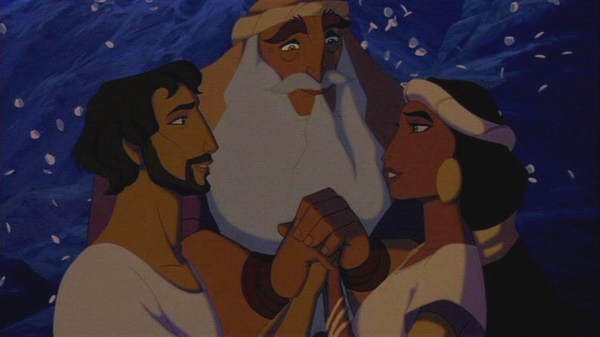
Ryan W. quoted the lyrics to this song from The Prince of Egypt in passing, but they described a good part of our group's salon conversation.

I was over there thinking (basically), Well, that top stone has no good reason to think it's better than the base! The base is EVERYTHING. Back to the sources, that's what the Renaissance was all about. Re-naissance. Re-birth. How can there be a rebirth if there was no regular birth?

The Ripple Effect

What a piece of work is a man! how noble in reason! how infinite in faculty! in form and moving how express and admirable! in action how like an angel! in apprehension how like a god! the beauty of the world! the paragon of animals!” – Hamlet, William Shakespeare.

In my mind this quote helps sum up the ideas and beliefs of humanism. Shakespeare lived in the late 16th century, near the end of the time period known as the Renaissance but I feel as though he was in touch with Petrarch who lived a couple hundred years before Shakespeare. Petrarch’s ideas and writings, which ultimately earned him the title of “Father of Humanism,” caused a ripple effect (idea shared by Ryan) which would propagate throughout time affecting everyone it touched.

 The Renaissance was a time of discovery, a discovery of man’s capabilities, of creativity, art, independence, revolution and more. It is so amazing to me that such a simple word, the Renaissance, can be used to describe such a vast and crucial period of time. The Renaissance was the conduit from the Middle Ages to Modern History, a period lasting from the late 14th century to the 16th. It was not just one event but a culmination of events. Imperative events that have shaped our modern world. The notions that they could “recover the past and return to sources” was a great beginning. Learning about what once was helped them understand what could be. Because of this new mindset men began to feed their curiosity with exploration of new and exotic places. This facilitated them with a way to grasp onto a new idea, that there is so much more out there beyond the little bubble of where they live. There was much land to be explored and knowledge to be uncovered.

With the spreading of humanism and rhetoric, the minds of men began to be opened and to become aware of their own ignorance. During the Middle Ages there was not much independent thought, creativity or growth and a lot of that was due to the church keeping the people in the dark. Not allowing them access to the scriptures. But as certain men’s minds began to become uncluttered they took a stand. Men like Erasmus and Luther who desired reform within the church. And let’s not forget Tyndall who translated the bible into English and Gutenburg who invented the printing press which made the bible and other books more readily available to an even larger group, such as plough boys.


The men of the Renaissance, Petrarch, da Vinci, Columbus, Machiavelli, Luther, Erasmus, Shakespeare and more, are men who I believe were inspired by the Lord to help mold and shape the world through their philosophies, their art and exploration in preparation for the restoration of His gospel. It was a movement or maybe just an idea that started hundreds of years ago and rippled throughout time to create the perfect incubator for a new beginning for the Lord’s gospel. I invite us all to study and appreciate these men, their actions, their words and the events that took place during this time period to help us better understand God’s eternal plan.
A Life Worth Living

Socrates said, “The unexamined life is not worth living,” a quote shared with me by Spencer in our class. I’m not sure whether or not Socrates realized the foundation he himself was creating through his philosophies to allow human kind to look back on history – life – and examine and learn from it, but he was doing just that. This idea of looking to the past and returning to previous sources is what allowed for the blossoming of the Renaissance period. We always talk about the Renaissance as a time period of new ideas, new thoughts, new inventions, new art, new literature. But these new and great thinkers had to look back and acknowledge all of the hundreds and thousands of years of work that had been done before that to give a foundation for this change and reformation. Erasmus did this as he wrote his “Discourse on Free Will.” He referred to the Bible several times when talking about the nature of man and salvation. He also quoted Ciseraux, demonstrating his “ad fontes” – returning to sources – in a spiritual, as well as academic sense.


So, we look to the past to gather information. But then what to we do with it? Do we keep it the same? Do we keep it to ourselves? Or do we share it? Do we collaborate with it and then expand it and make it better? The explorers of the High Renaissance period (Columbus, Decartes) recognized that in order to share information and continue collaborating and learning, they had to brave the waters of the many oceans to explore new worlds. We learn from Montaigne in his “Of Cannibals” essay that his travels to Brazil caused him to broaden his perspective of a cannibalistic people. It also caused him to re-examine his European way of life.

Through our “Salon” discussion, Jesse Bunton suggested that no one understood better than the Protestant Reformationists that information needed to be spread to everyone, especially the common people. Information was held in the hands of the clergy as they read their Bibles in Latin and then dictated to the public how religion worked. But when Martin Luther posted his 95 Thesis, in direct opposition to the Catholic Church, he was demanding that more be done with the information that was available. Johann Gutenberg made this possible with his invention of the printing press in the 15th century. Suddenly, Bibles were being printed in a language that the majority could understand. This continued to spark new ideas as people learned more through reading and the newfound widespread accessibility of information. They began to re-examine the ways the Catholic Church was running their lives and decided to make a change, which evolved into Protestantism.

These ideas spread through new forms of communication, which we see has also changed over time. In the days of Socrates, the people relied on oral rhetoric – the spoken word. Through the creation of the printing press, ideas were spread through the written word. The use of written communication was beneficial for fast and broader access to ideas and literature, but it lacks the ability to better express tone and other rhetorical tools that come through oral communication. But the written forms of communication have provided the information that new generations are able to study and look back on.

Upon finishing this unit. I started to think about how in my own life to apply these principles of “ad fontes.” Do I look back at past sources? I am here at a university with unlimited access to archives of information – work that has been created, research that has been done – in my field. Am I going to just go through the motions of my schooling and let those opportunities to learn and grow wash over me? Or am I going to dive into the waters, explore new worlds, past and present, and determine if my life is worth living?