Showing posts with label post assignment 11. Show all posts

Tuesday, March 24, 2015

Darwinism at work.

Social-Darwinism - I'm a fan, generally. It'll probably get some folks fired up, but I honestly believe that it does more harm than good. Even so there are times when I question the rightness of progress at the expense of tradition. Reading this speech was one of these times.
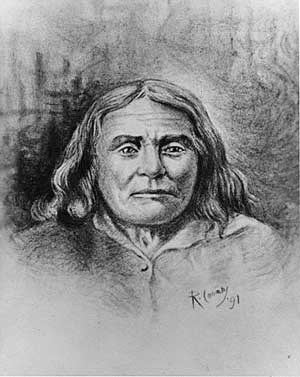
 Chief Seattle saw the continued downfall of his people coming, knew that it was inevitable, and approached the problem pragmatically. “It matters little where we pass the remnant of our days. They will not be many.” He realized that his audience - much like I- would hold little sympathy for the plight of his people if presented in a light of self-pity, instead he appealed to the sense of awe associated with things beyond complete human comprehension – nature and deity. His use of imagery is beautiful – though to echo Spencer Muir, I’m not sure how much of that is his original work – and evokes the awe one feels in the presence of nature, as his final overture was directly tied to a sense of something greater.  
He appeals to deity, without falling into a begging stance – again attempting to evoke a contemplation of something greater – “Your God makes your people wax stronger every day.” Furthering this with references to those who have passed on “Your dead cease to love you and the land of their nativity.” Ultimately he collects all the threads in his final words, offering a request to the Whiteman, and a sort of consolation to his people. “There is no death, only a change of worlds.”

The speech was beautiful to read, and even though I was reading it for analysis I felt my emotions swell: respect for a man who saw what was coming and didn’t shy away from the reality, sorrow for the passing of a great people who knew and lived and were so much. He made even me, a staunch supporter of social-darwinism, question my views.

The chief thing is to keep the chief thing the chief thing


Recently I attended stake conference. A general authority visited for the conference and admonished all those in attendance that "the main thing is to keep the main thing the main thing." Its a memorable phrase and one that evokes straightforward thinking. Its begs us to realize that simplicity is key.

“It was we, the people; not we, the white male citizens…” – Susan B. Anthony

“It was we, the people; not we, the white male citizens…” – Susan B. Anthony


Two women came together to form a powerful team. Susan B. Anthony and Elizabeth Cady Stanton. These two lived in a time when women were seen as the inferior sex and they had enough. The founded the National Woman Suffrage Association, they gave speeches, they marched and protested in order to be heard. They were opposed the 15th amendment, which would give African American men the right to vote, unless they added women’s rights to vote.

In 1872, Susan B. Anthony decided to lead a group of women in a march to the polls in order to vote in the presidential election. “This march set the pattern for the use of civil disobedience and subsequent court action and to attract attention and adherents.” These women were not about to back down and they proved that through their actions and their words.

Anthony and Stanton both gave powerful speeches that would have given other women the courage to stand up and fight for their rights. They both addressed the gentle power that women could bring as opposed to the blind dominance that men fought for. Some examples from Stanton’s speech are:

“The male element is a destructive force, stern, selfish, aggrandizing, loving war, violence, conquest, acquisition, breeding in the material and moral world alike discord, disorder, disease, and death. See what a record of blood and cruelty the pages of history reveal!”

“There is a striking analogy between matter and mind, and the present disorganization of society warns us that in the dethronement of woman we have let loose the elements of violence and ruin that she only has the power to curb.”

“Whatever is done to lift woman to her true position will help to usher in a new day of peace and perfection for the race.”

Susan B. Anthony addressed how the “oligarchy of sex” would negatively impact the home.

“this oligarchy of sex, which makes father, brothers, husband, sons, the oligarchs over the mother and sisters, the wife and daughters, of every household— which ordains all men sovereigns, all women subjects, carries dissension, discord , and rebellion into every home of the nation.”

They were reaching out to the women to call them to join the cause. They inspired many women who stood up to fight as suffragettes but it would be a long battle. The National Woman Suffrage Association was founded in 1869 but women would not gain the right to vote until the ratification of the 19th amendment on August 18th 1920.


Monday, March 23, 2015

All Things Share the Same Breath

Chief Seattle gave a famous speech in January 1854 in what is now downtown Seattle, when he was in his late fifties or early sixties. Dr. Henry A. Smith, a settler and amateur poet who was present and detailed notes at the time, transcribed it. But Smith didn’t speak Lushootseed, the language in which Chief Seattle gave the speech, and he waited 30 years before he transcribed his notes about the speech. Smith’s “Chief Seattle” speech, as he rendered it from his notes, contains 19th-century rhetorical elements that make it sound like he created some of it. Smith admitted in his introduction to the speech that his version of it was “a fragment of [Chief Seattle’s] speech, and lacks all the charm lent by the grace and earnestness of the sable old orator, and the occasion.”

Although Chief Seattle directs his speech at the “white man,” his audience for his speech can be found to also be for his people as well. He tells his people to not fight, for “[they] would have everything to lose, and nothing to gain.” Chief Seattle uses many persuasive techniques in his speech including powerful imagery, striking similes, cautionary notes, and an ominous tone conveyed in parallel structure.

An example of power imagery and a simile is found when he compares the roles of the white men and his people: “Some grim Nemesis of our race is on the red man’s trail, and wherever he goes he will still hear the sure approaching footsteps of the fell destroyer and prepare to meet his doom, as does the wounded doe that hears the approaching footsteps of the hunter.” This creates a greater sense of vulnerability for his people, and makes the white man sound incredibly dangerous.

Many genocides and wars contributed to the 19th-century era that possibly could have led to this cautionary speech. He was well aware that Native American Tribes were not surviving well amongst others in the US, and he wanted to change that. Through his ominous tone, he conveys his message well and his speech becomes famous for providing his views on how all men should live, share, and survive in the natural world.

Seattle and His Chief Audience

Chief Seattle must have had ideas of the genocides occurring throughout the world when he delivered this speech. Considering that Native American tribes were being obliterated by the United States, and many other nations were being wiped out by other imperialistic world powers, no hope existed for Chief Seattle to fight. The only hope he had was to try to get the “white people” to have enough fear and respect for the natural world so that they might allow the “red people” to live on in peace.

One of the most effective rhetorical strategies Chief Seattle uses is to utilize similes to connect his people to the natural world. Phrases such as “our people covered the whole land as the waves of a …sea cover its shell floor,” and “our people are ebbing away like a fast receding tide” help the audience to connect this tribe to the natural world, something that the chief is trying to get them understand.

Chief Seattle recognizes that the end is near for his people, and his audience is not just the white people. He is considering making a peace treaty with them even though some of his people want to fight on. He is trying to teach them that they can live on through this natural world too. Indeed, he uses antanaclasis to show those who would fight what will happen to them—that their hearts will turn as black as the paint on their faces.

In the process of trying to convince the white man to let them live in peace, he is also convincing his people to allow themselves to live in peace. This was a man who knew how to control his audiences.

Wednesday, March 11, 2015

Kropotkin the Picture Painter

(I'm so sorry, I completely forgot about this post yesterday, but still wanted to write what I observed in Peter Kropotkin's An Appeal to the Young.)

In the second half of the 1800s, "slavophiles" emerged in Russia. They were rebels who fought against the government in hopes to prevent it from catch up to the West's modernization. This caused a disconnect among Russians in understanding why socialism was so important. In 1861, Tsar Alexander II granted emancipation to more than 20 million serfs nationwide. These two factors, societal confusion about modernization and a drastic increase in the lower class, created a perfect storm for Kropotkin to start a revolution fighting for socialism. It was necessary then more than ever.

Kropotkin uses a very defined format, weaving the reader back and forth through logos and pathos until he pricks the reader's heart at the end of the piece. His primary audience is young professionals, those who have just graduated from college. He takes them through their different professions by painting the "real" picture of what each of them will deal with on a daily basis.

To the doctor, he writes, "In a dark, cold room you find the sick woman lying on a pallet covered with dirty rags. Pale, livid children shivering under their scanty garments." His descriptive language and the imagery used makes all of these professions seem much less glamorous. To the aspiring lawyer he paints a situation in which both sides seem to need the lawyer's help. He writes, "Which side will you take? For the law and against justice? Or for justice and against the law?" The use of "you" makes each situation much more personal, and the compelling questions cause the reader to think, "What am I fighting for? Am I fighting for anything? Or am I only pursuing this profession for my personal gain?"

In doing this, Kropotkin helps the reader see his or her priceless potential to move forward the socialist revolution. He ends each section with an if/then statement to help the reader realize the potential affects on society he or she could have: "if you analyze the law and strip off those cloudy fictions with which it has been draped in order...then your contempt for the law will be profound indeed."

His descriptive imagery and excellent use of pathos are just two of the many reasons why I especially enjoyed this piece for the Russian socialist revolution.

Tuesday, March 10, 2015

In the midst of his enemies


On December 11th, 1964 in New York City Che Guevara spoke before the 19th General Assembly of the United Nations representing his home country Cuba. In that speech he spoke strongly against the very country hosting the assembly - the United States of America. In the midst of his enemies he made it very clear he was not afraid. Che spoke his mind and put forth his grievances with little thought for political correctness. It was a show of power for a little nation to stand up against a much larger and stronger nation. It was a show of determination. And it was a show he knew the world would be watching. He audience was not the United States - his audience was the people of Cuba and the world.

Tuesday, March 3, 2015

The Search for New Religious Tolerance

Navigating tensions surrounding any topic never became easier by ignoring them. It's time for the United States of America to make religious tolerance an effective part of its education. It's time for new applications of religious tolerance.  


Millennials of all lands, Vote!


There are many issues with our current system of voting, but one of the primary ones is that there is a restriction on who can vote. People who do not have the time to stand around in seemingly endless lines aren't allowed to vote. The idea that people should vote because they have the ability to vote is a priceless enlightenment ideal, but it needs to be updated to the modern age.

Monday, March 2, 2015

Has Social Media Made Us Less Social?

One night when I was surfing Facebook, Snap-Chat, Instagram, etc., I realized how much it actually controlled my life. You don't even realize until you think about how much you are actually using them. After surveying some people that I knew and also didn't know, it came to my attention that this is a real issue. So I proposed a changed frame of reference to not rely on social media as much. This would allow us to build stronger bonds and relationships with those around us in route to building a better world. Enjoy!