Wednesday, October 1, 2014

Profile for Persuasion: Once Upon a Time Fans

Main characteristics and values
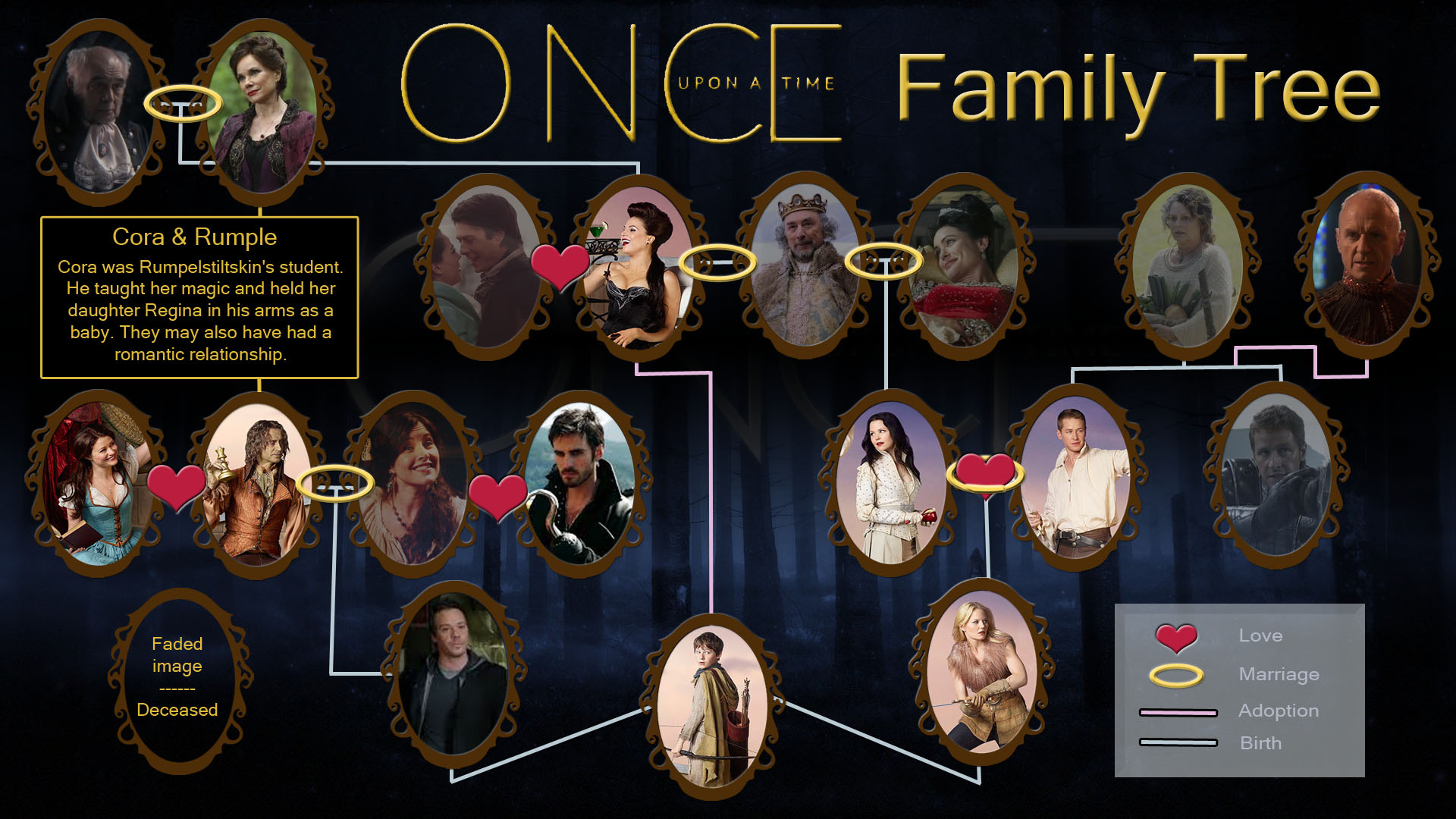
Once Upon a Time fans are people who enjoy watching the show Once Upon a Time and anticipate the new seasons and episodes.  They come from all age groups but the show is related to youth culture with the fashion and music in the show.  They are attracted to beautiful people as most of the stars in the show are highly attractive and young.  Once Upon a Time is a show about broken families coming together in the most difficult of circumstances so the family is highly valued by these fans.  They enjoy twists in the plot and surprises.  They enjoy knowing back stories and forming their own opinions about the goodness in each character even those that may seem villains. Good versus evil is apparent in the show and the good is always valued over the evil.  The end does not justify the means.  Another value of these people is the concept of “happily ever after” and "true love." They are intrigued by looking at fairy tales in a new light.

Likely/Unlikely to persuade
Once Upon a Time fans are likely to be persuaded to pay attention to anything that involves fairy tales and high moral values.  It can reference a character or a choice that is made by a character in the show.  They are unlikely to be persuaded by anything that goes against standing up for the family since that is an important aspect in the show.  Also anything that encourages bad morals, ends badly, or uses sensuality or swearing would not be persuasive to them.

Test case: Once Upon a Time fans and attending a play

Once Upon a Time fans could be convinced to attend a play if it was about high morals, families or even a rendition of a fairytale.  I feel that they would be interested in seeing a play like Wicked that shows a character usually depicted as evil in a different light.  

Everyday Conversation to Convince a Crowd

In the Funeral Oration of Pericles, many different forms of rhetoric are employed. I didn't recognize most of them when I first read it, as I was mostly focused on form and the classic appeals. After reading “Rhetoric” by Aristotle, I was able to point out a lot of other devices.
One of the devices that I found used was enthymeme. I didn't realize how incredibly common it was in normal speech! Trying to find examples of this in the text, I found some examples where major premises are kept and where they have been omitted. Take, for example, this line from Pericles: “To me it seems that the consummation which has overtaken these men shows us the meaning of manliness in its first revelation and in its final proof.” Here, the premise that courage and gallantry (which was stated several sentences previous and in a different context) is manly.

Reading this text again, I also noticed the very epideictic as well as deliberative aspects of the speech. It is epideictic in the sense that Pericles is talking to a large crowd and praising the men who fought. It is deliberative in the fact that he is exhorting future measures. He is calling the families of these
men to action- either calling to the mothers to have more children or calling to the children and men to stand up and show pride in their city by fighting as well.


Pericles also uses his own testimony to add credibility. In the first few lines he speaks about having a first-hand witness or reliable second-hand testimony of the accounts of battle. Pericles says “I have described nothing but what I either saw myself, or learned from others of whom I made careful and particular inquiry.” If this isn't a direct proof of testimony displayed, I don’t know what is!

Parts Make the Whole

        I agree with what Hailee said in her post about Pericles’ funeral oration being deliberative in nature. I want to add to that by showing how his advisory speech flows with the use topics of invention.  Specifically, I want to show the use of division.
        Just as Aristotle breaks down happiness into its parts, Pericles’ oration emphasizes the parts that make up civilization.  He attributes their success and greatness to “the spirit in which [they] faced [their] trials and also [their] constitution and the way of life which has made [them] great.”  He emphasizes their courage in battle, freedom and equality due to democracy, and recreation as an escape valve for the pressures of life.   
        Amazingly, Pericles puts an interesting twist on his description of Athens.  He proudly declares that “each single one of our citizens… is able to show himself the rightful lord and owner of his own person.”  He goes on to accredit the power of their city to the individual.  This use of division of the whole into parts is very powerful and persuasive.

Memeology

To respond to Courtney's and Adam's posts:

Courtney, your examples of cause and effect are also great representations of the almighty enthymeme, which I had no idea happened so often in oratory, writing, and everyday life. Let's take a look at a couple that are different from the ones you mentioned:

1) In paragraph three, Gorgias says that
  • Helen's father "was in fact the god...Zeus"
so she
  • "was the foremost of the foremost men and women." 

Because everyone in ancient Greek society held the view that the gods were greater than man, and Gorgias knew that, he leaves out the premise "gods are the foremost of, or better than, all mankind" (in this case, the middle premise).

2) In paragraphs 18 and 19, Gorgias discusses how

  • perfect bodies are "a pleasant sight to the eyes"
and
  • Helen "[took] pleasure" in seeing Alexander.
Again, because Gorgias understands the knowledge his audience has--about the story of Helen in general--he need not add "Alexander had perfect abs" or whatever he would have added (also the middle premise).

Now, as Adam says, we're not really persuaded by this stuff. Gorgias unfortunately didn't have any knowledge about US, about this new and different audience, and our feelings and views. Because of this, he couldn't tailor his enthymemes to appeal to us (kind of going into the topic for the next post). Gorgias was, however, incredibly aware of his audience of ancient Greeks. Thus, his speech would have been more (though maybe not entirely) persuasive to them. Interestingly enough, we still understand the enthymemes Gorgias uses because the story of Helen and the ways of ancient Greeks are still known topics today. Plus, it's easy to determine the middle premises because enthymemes are so familiar to us anyway. (So familiar that we hardly notice them).

Well Which One Is it?

In reading the many posts already on display, I saw two very distinct opinions in regards to Pericles’ Funeral Oration. In one corner, the opinion that the oration was based upon deliberative branch of oratory while in the other corner we have the champion of funeral orations…. (Drum roll please) the epideictic branch!

In the post, “The Master of Disguise” Hailee Richards goes so far to as to “classify Pericles’ Funeral Oration as a deliberative piece…” (Also see “Things Not as They Appear”). Others on the other hand seem sure that this speech is one of epideictic oratory.

So… Which one is it?
Could it be… both?


In an earlier post by Macey Richardson (“HPR: How Pericles Rhetoricized”) she expressed that on occasion Pericles used elements of deliberative rhetoric to persuade the Athenians to build up their great city. With this attitude in mind I desire to briefly dissect how both branches of oratory and how their coined methods can be a powerful combination.

As clearly noted within his speech Pericles praises his city after which he praises the warriors of the city. Within this praise, Pericles essentially states, “Athenian City is the best (accompanied with examples) and we have grown up in this city, therefore we are also the best.” This being said, he never claims that the people of the city are the best but it is so obvious that there is no need to do so. This is a powerful method to prove a point that we know as enthymeme.

This being said, Pericles does not remain in the present but continues to speak of what is good and unworthy as well as what is advantageous and disadvantageous in the future. Let’s see an example of this transition. Pericles states, “This, then, is the kind of city for which these men, who could not bear the thought of losing her, nobly fought and nobly died (praise). It is only natural that every one of us who survive them should be willing to undergo hardships in her service (good and advantageous).”


Brilliantly done to persuade his audience, Pericles deserves credit for such mastery of each branch of oratory and elements. In closing, I believe although epideictic in nature, his speech contains all three branches of oratory. Possibly a better question than “which one is it?” may be, “how does each branch work together to persuade an audience?”

Even the Weak are Strong. Even the Ugly are Pretty.

Before I get deep into this post, I would like to preface my post by addressing the fact that I am looking to take a different twist on these two excerpts. I am going to make a brief analysis of a connection between Pericles’ funeral oration and book one of Aristotle.

In chapter 9, Aristotle states that “for purposes of praise and blame, the thing to do is to take attributes that approximate the ones that are present as being the same things….. And each person is always to be taken as having what is best from among the attributes that go together.” He gives us various examples like the arrogant person being symbolized as a great, extraordinary person and the wasteful person as a generous person. With that being said, we know that the form of oratory that is typically utilized to give praise or blame is the epideictic oratory. Though Hailee Richards made great points in debating that Pericles’ oratory was a deliberative one, I would argue that this validates the fact that it was an epideictic oration through and through.


Pericles knows exactly what he is doing. We have background knowledge that he is the leading statesman in Athens and has great influence among the people. I think that as he speaks, it is clear that he is trying to magnify the good things of Athens to make them seem overall better than what they really are. He obviously gives lots of praise to the soldiers and every time he mentions them he takes more of a “sacred” tone, now that they have passed away. However, I find it interesting that he uses Aristotle's take as a way to not only motivate the people but build their self esteem. I would go as far as to argue that building their self esteem is going to take a hit at the pathos appeal because everyone feels good when they are being praised. 

Topics of Invention prove Helen's Innocence

From the beginning of the "encomium of Helen" Gorgais uses the comparison topic of invention, specifically the similarity and difference subtopic.  Gorigas explains compares a well-manned city to a beautiful body, a soul full of wisdom, and an excellent deed. By using these  comparisons, we the audience can get a glimpse into the what the Greeks valued and thought were of a higher value. It also shows us the thought process and the reasoning behind his argument that Helen is innocent; he first states common truths that society would accept.

Bringing up her heritage and naming her parents, Tyndareus and Zeus, tied in the testimony topic of invention, especially the supernatural subtopic. Calling upon gods or deity is exactly what this topic of invention id defined as. It looks past reasoning and uses the existence of an all-powerful being to explain the discourse of events. Gorgias uses Helen's parents and their power and beauty, that was then passed onto her, as a reasoning behind her infidelity. She could not help it if men looked to her with absolute beauty and lust, she was born with it and there is nothing that shoe could have done differently that would have changed the outcome of the situation.

In conclusion, Gorgais uses these topics of invention to help defend Helen and make it known that she was not to blame. This is the exact objective of the judicial oratory which is clearly evident in this encomium. Gorgias is looking to past events in order to defend Helen's case. Although Helen was not alive at the time that Gorgias wrote his encomium, he is making an effort to avenge her, and bring justice to her name by pleading her casse to the public, and persuading them to believe that she is innocent and should not be blames for the Trojan War.