Showing posts with label posted by Jacob E. Show all posts

Sunday, April 19, 2015

Brother, can you spare a dime?

My call to change is that the NCAA should allow certain athletes to be paid. I say certain athletes because I don't think that it is possible to pay all athletes right now but in the future I would hope that all collegiate athletes could  be paid.

For all of my life I was opposed to paying college athletes. It wasn't until last year, when a point guard from the University of Connecticut caught my attention. His name was Shabazz Napier and he helped lead his team to win the national title in men's basketball.


 In an interview Napier told members of the media that he often went to bed starving despite having a university meal plan. According to the University of Connecticut's student-athlete handbook, student athletes were allowed three meals in any residence hall from between 7 a.m. and 7:15 p.m. But for Napier, this plan could not simply provide enough nourishment for his body. It was at this moment that I realized that many of these athletes come from the poorest of backgrounds and can't afford the simple indulgences like McDonalds or a Wendy's. I felt for Napier and I thought that it was simply not fair that he would go to bed starving because he couldn't afford to buy food but the University that he played for would make millions of him and his teammates. 

Tuesday, March 31, 2015

Show me the money

My midterm call for change was on why we need to start paying certain college athletes. College athletics is a multi-million dollar industry. Universities that are part of a power 5 conferences make millions of dollars in t.v. revenue. Other sources of revenue includes tickets sales, jerseys and other merchandise. This is a sick and twisted business and something has to change. Here are some ways of how I think that some of principles that we've talked about connect with paying collegiate athletes.


  • Conservatism- When college athletics was originally set up it was an opportunity for students to get some exercise and compete against other universities. Now, college athletics is so much more. It is now a billion dollar industry and a major source of entertainment for this country. Universities are making way too much money off these athletes and are unwilling to start paying athletes. They are stuck in their ways and a time for change seem unlikely. 

  • Nationalism- It seems like since these athletes were kids they ad a sense of pride for a certain university. For example, Rudy was obsessed with Notre Dame football and the only way that he was going to be happy was if he got the chance to play for them. It's the same in our society. Parents, teachers and other opinion leaders brainwash these young kids into thinking that they will only be happy and successful if they play for certain universities. The pride factor plays a very important role in college athletics. 

  • Utilitarianism- This is the current policy of the NCAA. The idea that not paying athletes is for the greater good of the game is simply a lie that the NCAA and the Universities are trying to convince everyone to believe. 
I am sure that there are more principles that I could tie into this topic and if you can think of any please leave a comment. I would love to hear your ideas. 

Tuesday, March 24, 2015

Chief Seattle the wiseman

When I think of Chief Seattle I think of someone who is older and has seen a lot of terrible things in his life. I'm sure that when he was younger he could have never imagined his people would face extinction. Like the buffalo, the native americans were vast in number and lived entirely off the land but they were both almost completely wiped out because of the early settlers. In his own words he describe it like this “our people covered the whole land as the waves of a …sea cover its shell floor,” and “our people are ebbing away like a fast receding tide”  

I think at his point, Chief Seattle had to think about utilitarianism. Seattle, knew that his people were dying and that the only way to prevent full genocide was to have a positive relationship with the Americans. Although this may have been an unpopular idea among many in his tribe, Seattle had to worry about the great good of his people rather than just a couple of people who may have disagreed. 

Also, I think that Seattle had to apply liberalism to help save his people. He now knew that the only way that he and his people could survive was to have the help of the U.S. government. And he looked to the government to help protect their natural rights. He had also probably realized that violence was not the answer to their problem in this circumstance but rather they could look to the laws of this nation to protect them. 

This speech teaches us the value of persuasion and how one man can make a difference. 


Tuesday, March 10, 2015

Thomas Paine's Common Sense

On April 19, 1775 the revolutionary war began after battles in Lexington and Concord.
With no army but a few brave men the colonist took a stand against England.  Almost a year into the war the Americans were struggling and the war was not going well. England was a massive powerhouse and had an army that was well trained and fit for battle. The Americans on the other hand were just starting to form their own country and their army consisted of farmers and small militia. The Americans were losing and many began to lose faith in this nobel cause. However, thanks to man named Thomas Paine this all changed. 

Paine was born in England but came to colonies a year before the war began. He did not have much of a formal education but he learned to read and write. When he arrived in American he argued that the colonist should not simply revolt against against taxation. But rather, they should completely separate themselves from England so that they could have complete freedom. He expanded upon these ideas when he wrote a pamphlet called Common Sense.

In Common Sense, Paine argued that there are natural rights that each person is born with and that these rights cannot be taken away. These words that Paine wrote were simple yet profound and both the educated and non-education could understand them.

Paine used a vituperation argument to attack the English's monarchy and logically stated that all men are born equal and that no man has the right to establish his family as presiding over others. And even if a person was deserving of certain honors, his children were not deserving and that this person had no right to pass these honors on.   

The American soldiers were tired and many were considering leaving the continental army. The before the battle began, General Washington had Paine read this section of his pamphlet out loud to his soldiers. 


"These are the times that try men's souls: The summer soldier and the sunshine patriot will, in this crisis, shrink from the service of his country; but he that stands it now, deserves the love and thanks of man and woman."

These words were so emotional and inspiring that the soldiers stayed. Later that night, they crossed the Delaware river and were victorious in battle. This was a turning point in the war and much of this credit should be given to Paine. His words helped found our nation and he helped inspire those to soldiers to endure on. 


Thursday, February 26, 2015

To pay or not to pay

To pay or not to pay? That is the question. After speaking with Sterling Randle and Alex Clark , the sports editors for the on campus newspaper, I learned that there is not one clear answer on this issue. Randle is fully supportive of paying athletes and feel that it is simply not right that athletes are not compensated for jersey sales. However, he does not believe that it would be possible to pay all college athletes. Clark on the other hand feels that athletes already receive a free education which is more than fair in his mind when it comes to compensation for athletes. He also thinks that if schools were to start to pay athletes then this would diminish collegiate sports. 

"If we start paying athletes then I think it will destroy college athletics," said Clark. I think by paying athletes, college football would become the NFL d-league. This would mean that all the good athletes would go to the schools that are willing to pay the most and the smaller schools would not longer be able to compete with them."  

Here is a video against paying college athletes.


On Reddit, I thought one person made a very good point in support of paying athletes. 

"While they(athletes) are being compensated for playing by being given a scholarships you have to realize that they do not go to school, play their given sport, then go to bed only to repeat. Education is not money. While a scholarship has significant value, it cannot be exchanged for money. A student who comes from a poor family cannot use the "payment" of education to help feed his family, buy clothes, or other things, and if he tries to borrow money from anyone for this purpose, he and the school are struck with sanctions and suspensions. Unlike other college students, they do not have time to get a job, or paid internship to help pay for these things. Then is the problem of how much. I believe they should be given reasonable compensation. Ways to do this would be for them to get a cut of revenue, or seek endorsements."

Here's a video in support of paying athletes. 


I think that this is an issue that needs to be changed but I don't think that there is one right answer to this problem. However, I hope that someday college athletes can be paid for their merchandize. 

Tuesday, February 24, 2015

The College Athletics Cash Cow

Often in college sports, there are stories of a athletes coming from nothing and making it all the way to the collegiate level. Every fan loves these stories because they embody everything that sports represents. Unfortunately, these stories aren't as happy as they seem. 

College athletics is a multi-billion dollar industry. In 2010, the collective revenue of 15 of the highest-grossing football programs was more than 1 billion dollars. That's just 15 school out of 347 division 1 schools in the United States. In an article by ESPN, it showed a list of the top 75 schools royalties in retail collegiate-licensed merchandise from July 1, 2013, to June 30, 2014 was over 4 billion dollars. I'm just talking about football but I'm sure that many other sports bring in lots of money too. Yet, the athletes that play for these school will never see one dime of these outrageous profits. Why is this?


For one, many high level officials feel that it would be immoral and unfair to pay some athletes more than others when they both worked very hard to get into school. Others, say that there just isn't enough money to pay the athletes. 

Both of these arguments make no sense, in the workforce the most qualified receive higher compensations and it should be the same in sports. If one athlete is better than the other than they deserve higher accolades. Also, how can there not be enough money when many of these schools are making millions off these athletes. Oh and I forgot to mention that college athletes aren't allowed to receive anything for free or they can face suspension. But universities have no problem getting easy money from many of these athlete.   

If someone creates something that other people value then they should be rewarded for it. Many schools sale thousands of jerseys and yet the athlete doesn't receive even a small percentage of these sales. This is simply not right! I'm not saying that we should pay all college athletes because I think that athletes are extremely lucky to receive a free education. However, I think that athletes should at least receive a percent of their jersey sales just like they do in NFL. I don't the answer to this problem but I do know that it is a problem that needs to be changed.   


Saturday, February 7, 2015

Disaster in Baños

It had been a long and great two years. My parents had flown into Guayaquil to pick me up from my two year mission. I had dreamed of this moment for long time and when arrived it almost didn't seem real. I remember seeing my mom's happy face when I met her at the bus station and it is memory that I will always treasure.

For the next couple of days we went around the city seeing places that I had served in and touring the surrounding areas. We then we flew into Quito and made our way to Baños. The city of Baños is located at the base of a volcano and it is famous for its waterfalls and for its hot springs. I had always wanted to go there because just four years earlier my parents were there picking up my brother who had also served in Ecuador. They had always talked about it and told us how beautiful it was.

While we were there we decided to stay at a hotel that was owned by a German couple that was located high up on the mountain. The next morning, when we woke up we noticed that it was pouring rain so we decided to stay indoors. About twenty minutes later, we heard a loud crash and we felt the floor beneath us start to shake. We all sat there for a couple of seconds not sure what had just happened. Then after a couple minutes, we began to hear screaming and siren.

We quickly jumped in our car and drove to see if someone was need. When we arrived to the source of the sirens we found nothing but chaos. To our astonishment, there had been some volcanic activity and the debris had completely destroyed a nearby village. There was about one hundred people there trying to get the village but the police were not letting any closer. Everyone knew that the police were just doing their job but it didn't matter these people were just concerned about their families' wellbeing. Tensions were high and it looked like at any moment it could break out into a scene of violence.

Before things got too out of had, we decided to head back to the hotel. It broke my heart to see these people and the concern and fear on their faces. The next day, we found out that many people had lost their lives from this natural disaster. It is a moment that I will never forget and was a confirmation to me that in times of disaster social order can disappear.

Tuesday, February 3, 2015

Thank Heavens For Humanism

 “Humanists recognize that it is only when people feel free to think for themselves, using reason as their guide, that they are best capable of developing values that succeed in satisfying human needs and serving human interests” Isaac Asimov.

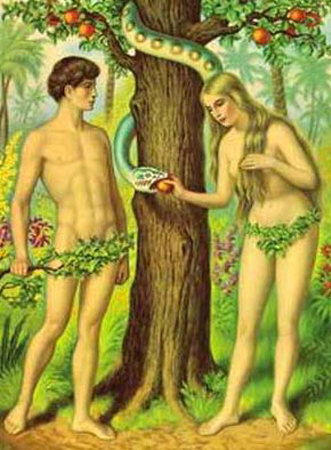
In our discussion group about What a Piece of Work is Man: Humanism and Rhetoric, Braden compared the birth of humanism to the story of Adam and Eve. He said that they were like children, lost and with a small capacity of knowledge.    
It wasn’t until they had partaken of the forbidden fruit were their eyes opened and a thirst of knowledge was born. In the early stages of the renaissance, people were surrounded by ancient pieces of art and remnants of some of the greatest civilizations that the world has ever known. At this, time people had a very limited knowledge architecture and art. It wasn’t until the philosophers of Turkey came to Florence did people gain a thirst for knowledge.

Humanism gave humans self-worth and gave them a sense of confidence that they could be whatever they wanted to be. Martin Luther, the father of the Reformation, challenged this idea. Luther felt that man was lost and that it was only through faith and the grace of God that man could be saved. In my opinion, I think that Luther makes a good point; we are lost without the grace of God. However, I also believe that it is also through the works of man plus grace that we can be saved.

Humanism has had a great effect on the world and it continues to influences our society. It helped establish the idea of recognizing individuals’ greatness and this idea still holds true today.
For example, last Sunday millions of people from around the world tuned into watch the Super bowl. Almost everyone sat on the edge of their seats to see which team would come out on top. We watch movies about extraordinary people just to get a glimpse of their lives and spend large sums of money to hear musician play. Our society loves recognizing others and their individual worth. This can all be traced back to humanism.


As humans, we liked to be recognized by others for our work.  In the last couple of years, I have become an amateur photographer. Each photo that I take and share on social media has a little bit of myself in it. If I share a photo and it doesn’t get a lot of likes then I usually take it off social media because that means that people don’t think that it’s a good photo. This is why humanism was so important to the renaissance and is even more important to our society today. It pushes us to create and achieve greatness. Without it, we could still be living in the dark ages. 

Tuesday, January 27, 2015

Suffering For Salvation

I'm alone and I'm lost in the middle of a desert with no water. Every step that I take makes my mouth feel drier and drier. I keep telling myself that there is probably an oasis on the other side of the that sand dune but there never is. This is my worst nightmare come true and I have nothing else to do but suffer until my body withers away into nothing. This is how I feel when I read a sermon by John Calvin. Calvin gave this sermon in the streets of Genvea, "which was the center of his labor, where he hoped to establish a more rigid moral discipline and to spread the faith". 

I imagine that he often had to use fear of suffering to help convince people to follow him. Most people during this time were probably not very highly educated so he needed to focus on something that they could understand and that was the suffering of man. Of course, Calvin does quote scripture in his sermon but this was because he was highly devoted to the scriptures and it helped maintained his credibility.  

Because Calvin was a protestant, he uses an inner method to become closer to Christ instead of using an outward method like the Catholic church used. This method was through the suffering and percussion of man one could become closer to Christ. As I mentioned earlier, I think most of these people at this time knew a lot about suffering because of all diseases and other factors that made life terribly difficult during this time. Through Calvin's teachings, people felt a sense of hope in knowing that their suffering was not in vain and that someday they could receive salvation.   

Tuesday, January 20, 2015

Some Rules Are Meant To Be Broken

Some rules are meant to be broken! At least, that's what my public relations professors says. In PR, students are taught how to strategically solve problems using a book called, A Matrix Approach to Public Relations and Marketing. The Matrix provides guidelines and rules to help one successfully approach a problem. This is our "bible" in public relation. Every time we start a PR campaign we look to the Matrix to guide us and help us along the way. The only problem is that the Matrix is just a broad view of the PR industry and doesn't contain all of the answers to the problems that  PR professionals face. Thus, this is why sometimes you have to think outside the box and break some of the rules that you've been taught.


I think something very similar happened with Luther and Erasmus. During the renaissance the idea to seek for new knowledge was resurrected and both Luther and Erasmus embraced it. They were both God fearing men and knew the bible to be the word of God. However, they had several questions about the bible and about the Catholic church and its practices. At the time, those who questioned the church and its practices were severely punished. Thankfully, they were brave enough to stand up for their beliefs and to their surprise many people agreed with them.


Although they did not share the same exact view on religion, both Luther and Erasmus paved the way for many other influential people and helped them think outside the box. In fact, if it hadn't for both of these great men then there might have never been a reformation and we might still be in an apostasy. But lucky for us, they were able to think outside the box and break some of the rules.      


Saturday, January 17, 2015

Of Facebook

In Montaigne’s Of the Cannibals, he argues that cannibals, without Christianity and civilization, were just as advanced as Western Europeans. This was seems quite shocking because these "savages" didn't even know about such important things like, math, reading and writing and other basic skills that most elementary children are taught. Instead, they relied on their basic instincts and the laws of nature to govern their society and it worked. 

Now for Europeans at this time it seemed impossible to live without things like, fine clothing, wealth, precious medals and education. During the dark ages, many of these things were lost but thanks to the renaissance they were rediscovered and now seemed essential to life. People without these things were considered savages and were greatly looked down upon. 

In many ways our society is like the Europeans' at this time. It now seems like it's super important and essential to have a nice tv, a smartphone, a laptop, Facebook and other entertainment devices. And don't get me wrong, these are important thing but when they dominate and control our lives they become a problem. For the longest time, I didn't have a Facebook because I didn't really see the value in it. And every time I told someone that I didn't have one they looked at me like I was some kind of freak. I don't think they realized that life was possible without it. I eventually ended up getting one because I was sick of peoples' responses when they found out that I didn't have one. But in many ways, I wish that I hadn't got one because I feel like I've lost a personal connection with many of friends. Now instead of calling a friend up to see how they are doing I just check Facebook. 

I think that this was one of the key elements of Montaigne's argument is that many things that seem essential to our lives aren't really that important and that we can easily live without them. Also that we should worry more about those around us instead of less important things like Facebook. 

Tuesday, January 13, 2015

A Book From A Friend

Not too long ago, I volunteered for the Google passport event here in Provo. I was assigned to help out at the Pioneer bookstore on center street. While I was there, the owner and I became friends and he asked me what kind of books I like. I told him that I'm not much of a reader because I usually get bored with books. He then snuck into the back of the store and after about a minute or two he reappeared with a book called Tuesday With Morrie in his hand. He told me that he thought I would like this book and that it was gift from him. I thanked him for the book then I went on my way.

That night, I had a hard time sleeping so I  decided to start reading the book secretly hoping that it would solve my sleeping problem. As I began to read it, I became mesmerized with the story contained within its pages. For those of you who don't know, Tuesdays With Morrie is about a terminally ill professor who share the knowledge that he has gained over his life with one of his former students.

At one point in the book the professor explains to his student that none of the materialistic things in this world matter and that the most important thing is devoting yourself to loving others. It was at this moment that I realized how true this is. I mean, I know that they teach us this stuff in church but it this was different and it gave me a desire to be more of a caring person. I'm glad that the bookstore owner gave me this book, I feel that in many ways it has changed my life.


Thursday, January 8, 2015

Humans Are Great

 For many years, especially during the dark ages, human worth was not very highly regarded. In the medieval times, artists solely created works that dealt with religion, and creations outside of this genre were not well accepted. However, during the renaissance this all changed thanks to men like Francesco Petrarch who challenged this way of thinking. 


Petrarch lived in Italy during the commencement of the renaissance. He was a scholar, a philosopher, a poet and most importantly he is considered the father of humanism. Humanism challenged the idea that art should strictly be about religion and it dared artist to create more realistic depictions of humans. Humanism also brought forth a thirst for deeper knowledge and to know more about the earth and how it functions. 

Satan often uses lies to make us feel that God does not love us and that our worth is minimal. I believe that this was one of Satan's many lies that was used during the dark ages. By diminishing the value of ourselves, education, art, poetry and other creative works, important things became unimportant and the humans of this time remained stagnant and lost. But thankfully because of Petrarch and other great men we can now see the value in others and most importantly in ourselves. 


Tuesday, January 6, 2015

Connecting with Colombia

In my life I dreamed of going and visiting Colombia. I am adopted and when I was 11 months a wonderful family brought me home to Utah. I grew up in Bountiful my whole life and I was one of maybe two kids in my entire high school that wasn't Caucasian. My parents always taught me about my pioneer ancestors and made me always appreciate the faith and courage of these faithful saints. However, I always felt a slight disconnect because technically they weren't my "real" ancestors.

Shortly after I came home after my mission from Ecuador, I had the opportunity to travel to Colombia and visit my homeland.  While there, I was able to learn more about my ancestors and the people of Colombia. One occasion that I will never forget is when we went and visited the Gold Museum in Bogotá.


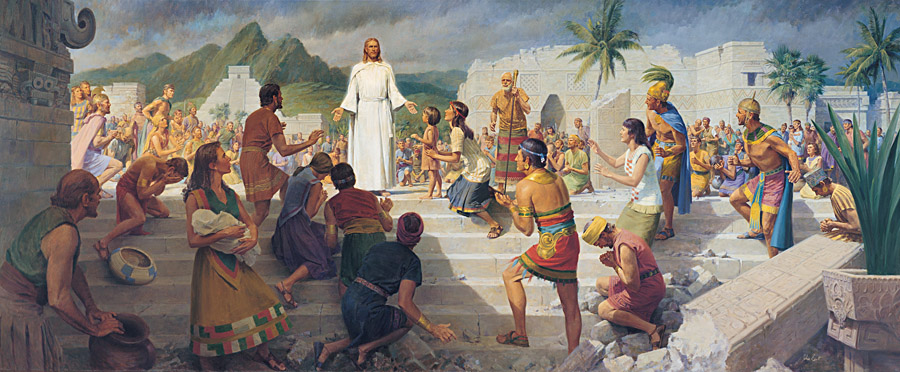
The museum is one of the largest gold museums in the world and has over 5,000 pre-hispanic gold artifacts. It also has special exhibits about the Incas and the Incan empire. One of exhibits talked about an Incan legend of a white man dressed all in white descending from sky. It was at this moment, that I was realized that they were talking about when Christ came and visited the people of Nephi. A sudden sense of peace filled my heart in knowing that the people of the Book of Mormon are my ancestors. It is memory that I will never forget and will always treasure.