Showing posts with label Assignment post 7. Show all posts

Friday, February 6, 2015

You've Only Got One Mother

Look at that attitude!
A few months back, I had recently returned from my mission, and (happy to have her go-to babysitter back) my mom decided it was a good time to head off to Oregon to visit her parents for a week. While she was gone I was to (in addition to my already busy work schedule) play mom for my 10-year old sister. And so I made the quick transition from Sister Bauss to Mama Bauss.

At first, things went smoothly enough. For the first two minutes that is. I’d force myself to wake up every morning. I’d struggle to make her a lunch amidst complains of “I don’t like Cheez-its” and “yogurt is gross” and “but I had a PB&J sandwich yesterday!” Then there was the dramatics of getting her to get showered and dressed—who knew a 5th grader could be so picky with outfits! She was putting Meryl Streep in The Devil Wears Prada to shame!

Tuesday, February 3, 2015

Is it good or evil?


“What matters is what you do with what you know.” – Susan

I feel that statement has many applications in our lives, whether we be preparing for our careers or future families.  In this class and our analysis of rhetoric, it seems that we can effectively incorporate this ancient knowledge into virtually every aspect of our lives.  Whether we are giving speeches, reports, writing to our employees or bosses, the principle of ad fontes appears in the adoption of the ancient thinkers' works and their incorporation into our modern communication. 

Contrast and Causes

The Renaissance really wasn't that awesome. 

Maybe I'm sabotaging my grade by thinking that way, but hear me out. 

The main underpinnings of the Renaissance and Reformation really weren't 'new'. The Greek's had celebrated the individual thousands of years before, Humanism wasn't a groundbreaking concept. Exploration had occurred previously - heck, the Vikings had found the 'new world' hundreds of years before. The Reformation was an outright attempt to return to the tenants spoken by Christ that had caused similar religious upheaval 1400 years before. What was Sprezzatura except an attempt to regain the intellectual culture fostered in the ancient civilizations. Even the printing press, while truly amazing, was simply an enabling tool, allowing for greater propagation of these rediscovered ideas. 

True, most of the buttresses of modern society can be traced to ideas that were rediscovered during the Renaissance - they were at best caretakers of the ideas. Why so much fuss? 

Well, as our good friend Erasmus liked to say:


"In regione caecorum rex est luscus."
"In the country of the blind the one-eyed man is king."
(Adagia, III, IV, 96)

Or, as I like to say:


"In a box of black crayons, even a gray one seems bright."

You see - the achievements of the renaissance weren't really groundbreaking when considered as part of history as a whole. But when considered against the backdrop of the Middle and Dark ages (though I maintain we give them a harder time than they deserve) the age really begins to shine. 

"In essence the Renaissance was simply the green end of one of civilization's hardest winters."
 (John Fowls, 1969)

It's when the ideas that make up the reformation - from Humanism to Sprezaturra - are considered against the backdrop of 14th century Europe that they truly begin to shine. The Bubonic Plague had swept Europe, leaving a third of the populous dead in it's wake. Centuries endured in the uncertainty and insecurity of the feudal system proved a stark background for rediscovered concepts of individual worth and achievement. The slowly tightening hand of catholic oppression and corruption made the reformation shine as few other religious upheavals do in our history books today. 

It was the severity of the winter that made the spring so sweet, when in reality the spring was not terribly remarkable in and of itself. 

When I think on the renaissance I think of that one-eyed man. That these men were brilliant - but no more brilliant than we are today. It was simply that, when cast against the proper backdrop, the ordinary becomes extraordinary. 


"How far that little candle throws its beams!"
(Merchant of Venice, Act V, Scene I) 


Thank Heavens For Humanism

 “Humanists recognize that it is only when people feel free to think for themselves, using reason as their guide, that they are best capable of developing values that succeed in satisfying human needs and serving human interests” Isaac Asimov.

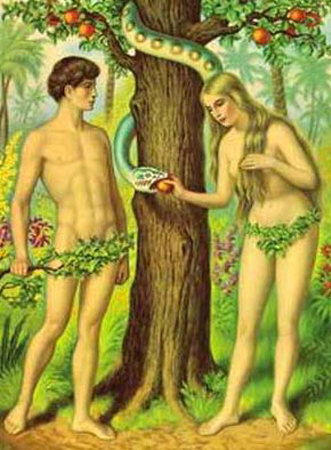
In our discussion group about What a Piece of Work is Man: Humanism and Rhetoric, Braden compared the birth of humanism to the story of Adam and Eve. He said that they were like children, lost and with a small capacity of knowledge.    
It wasn’t until they had partaken of the forbidden fruit were their eyes opened and a thirst of knowledge was born. In the early stages of the renaissance, people were surrounded by ancient pieces of art and remnants of some of the greatest civilizations that the world has ever known. At this, time people had a very limited knowledge architecture and art. It wasn’t until the philosophers of Turkey came to Florence did people gain a thirst for knowledge.

Humanism gave humans self-worth and gave them a sense of confidence that they could be whatever they wanted to be. Martin Luther, the father of the Reformation, challenged this idea. Luther felt that man was lost and that it was only through faith and the grace of God that man could be saved. In my opinion, I think that Luther makes a good point; we are lost without the grace of God. However, I also believe that it is also through the works of man plus grace that we can be saved.

Humanism has had a great effect on the world and it continues to influences our society. It helped establish the idea of recognizing individuals’ greatness and this idea still holds true today.
For example, last Sunday millions of people from around the world tuned into watch the Super bowl. Almost everyone sat on the edge of their seats to see which team would come out on top. We watch movies about extraordinary people just to get a glimpse of their lives and spend large sums of money to hear musician play. Our society loves recognizing others and their individual worth. This can all be traced back to humanism.


As humans, we liked to be recognized by others for our work.  In the last couple of years, I have become an amateur photographer. Each photo that I take and share on social media has a little bit of myself in it. If I share a photo and it doesn’t get a lot of likes then I usually take it off social media because that means that people don’t think that it’s a good photo. This is why humanism was so important to the renaissance and is even more important to our society today. It pushes us to create and achieve greatness. Without it, we could still be living in the dark ages.