Showing posts with label post assignment 9. Show all posts

Tuesday, March 10, 2015

Trottin' with Trotsky

What a mustache.
It came to pass that I went to the temple with my ward instead of doing my blog post on time. This may or may not be a call for pity. (Is it working?)

Leon Trotsky's real name was Lev Davidovich Bronstein, but the lack of consistency in his identity didn't seem to affect his ability to stick to the truth when he predicted the future. Trotsky's The Proletariat and the Revolution is an outline for the working class to use as they rise up against the government. Political riots had broken out in 1903-4 as a result of dissatisfaction with the government (with the failed Russo-Japanese War and other general stupidness), but the working class had abandoned their revolutionary cause. So Trotsky came in to revive the efforts.

To map out the proletarian revolution, Trotsky uses a great deal of anthypophora (i.e. asking questions and then answering them himself). This format is an appeal to logos, even if it isn't as sound as a syllogism or some statistical proof. It is clear. It is concise. It is simplified. "How do we do this? Why, we do this." Very appealing.

This clear-concise-simplified-ness is backed up by pleasant pockets of lists and repetitions. Trotsky uses a great deal of "we ought"'s as nails to hammer in his message. It's an indirect way of commanding that builds Trotsky's ethos ("Hey, I've thought this through. I have enough authority to say we should do this.). It also smothers his argument in a heap of oughts, each one richer and more convincing than the one previous.
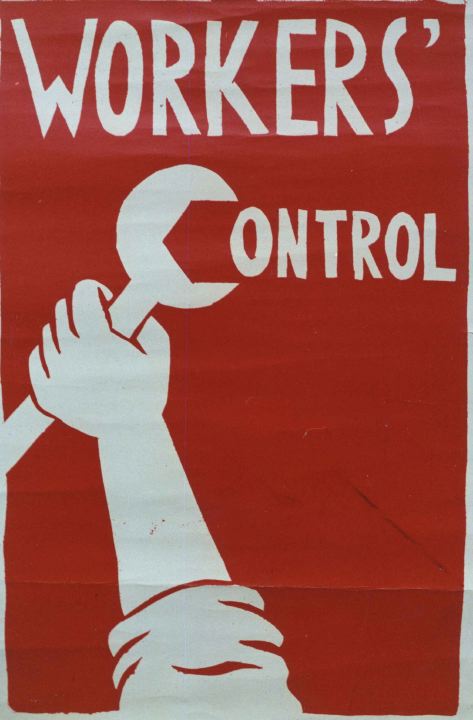
That's what I do with
my wrenches.
The most powerful of these repetitions comes at the end of Trotsky's Proletariat. He gives his revolutionary forces a name and a cause: the NATIONAL CONSTITUENT ASSEMBLY! (Sounds fit for a comic book, don'tcha think?) Then he uses more oughts and more powerful directives leading up to a wonderful, flourishing finish: "We ought to carry on the most intensive propaganda in the army in order that on the day of the strike each soldier...should know that he is facing the people who are demanding a National Constituent Assembly."

AND THE CROWD GOES WILD!

Trotsky's words aren't the most pathos-sparking, but his direct, low-style speech is incredibly attractive to the logic. The proletariat must have taken his words to heart, too, because the revolution turned out almost exactly like his roadmap. I guess all a revolution needs is an outline to run with--and then the runners to run with it.

Tuesday, February 24, 2015

To Heck With the Open Web!


You're probably not a web developer so you may not fully understand my rage regarding this issue. When I say "open" I mean open source with open processes for developing technologies. To heck with that! It may sound good to most but I promise you its holding us back! The internet is great and I personally love to make great things on it. But because its so great and everyone uses it we can sometimes get stuck using old stuff that doesn't really work as good as the new stuff.


Being "Too" Smart

                Actuaries have a running joke about the accounting CPA exam in which they claim “CPA” stands for “Can’t-Pass-Actuarial-Exams”. As an aspiring actuary I think that this joke has some actual weight to it, in the sense that passing actuarial exams is a very difficult process. The actuarial exam process is the reason why many people don’t ever consider pursuing a career in actuarial science, and why a lot of people haven't heard of an actuary. However, I have recently heard it wasn't always like this.


                The exams used to be a lot easier. In turn, more people passed the exams and became credentialed actuaries. Because of this there were more and more actuaries that didn’t really know what they were doing on the job, but had become credentialed by memorizing a few formulas. The organizations that administer the exams have “solved” this problem by making the exams now a days ridiculously hard. It is common knowledge that to have a chance at passing an exam you must study 100 hours outside of your class time for every hour of that specific exam. My knee jerk reaction to the difficulty of the exams is to demand a change and to make these exams easier, but recently I have realized there is a larger issue at hand.


An unfortunate dogma I've felt in the Actuarial field
Actuaries write these exams. There is without question somewhat of a “pride” factor that has caused these exams to evolve into what they are today. There is a sense that those who make up the Society of Actuaries want as few as possible to make it to the top credential. Making the exams easier isn't going to change this way of thought. Actuaries everywhere need to embrace those who may be slightly less mathematically gifted but still work hard enough to become a practicing actuary. 

Credibility on the Internet

While the amount of money and time put into shopping sight unseen had increased with the introduction of internet vendors, the thought behind the spending has not, and this is a problem. Someone in the late 1800s ordering a stove from the Sears catalog could depend on the reputation of the company in a way that someway putting their credit card information into an obscure website cannot, and yet they make the purchases with the same amount of trust. Studies have shown that 88% percent of online shoppers will trust a review like they would trust the recommendation of a friend.

Monday, February 23, 2015

How You Doin'?

“Hey how are you doing?”
“Good. You?”
“Yeah good!”

As human beings, what makes us ask and answer this question? We know the response (usually good even though they may not be), and we know they usually ask us the same question back (and we usually answer back with good). These casual conversation starters are modern day dogmas that we have become accustomed to because that’s what everyone else does.

The question becomes, where was the changed frame of reference that got society to resort to such meaningless casual conversation starters. Researching this topic, I came across an example of the 1950's cartoons where the Beaver family would always ask everyone how they were doing and get a bright and enthusiastic response or something that led to comedic drama. I imagine back around those times and before, they didn't ask how someone was doing and expect good as an answer all the time. It was more comprehensive and understandable so another person could actually know how exactly that person was doing. Today’s way of asking this question is more an acknowledgement of someone's presence rather than the actual question. Sometime between then and now, a changed frame of reference set us up in this automatic process.

A lot of times when I do this, I really don’t care how the person I’m asking is really doing. It’s usually someone I see in passing or occasionally. I think many people can agree with this. The question is, how do we liberate ourselves from this accepted authoritative regime? It’s one that will seem to continue unless society as a whole contributes to the idea that this is pointless and to only start conversations with people if we actually care about the response.

I Didn't Vote

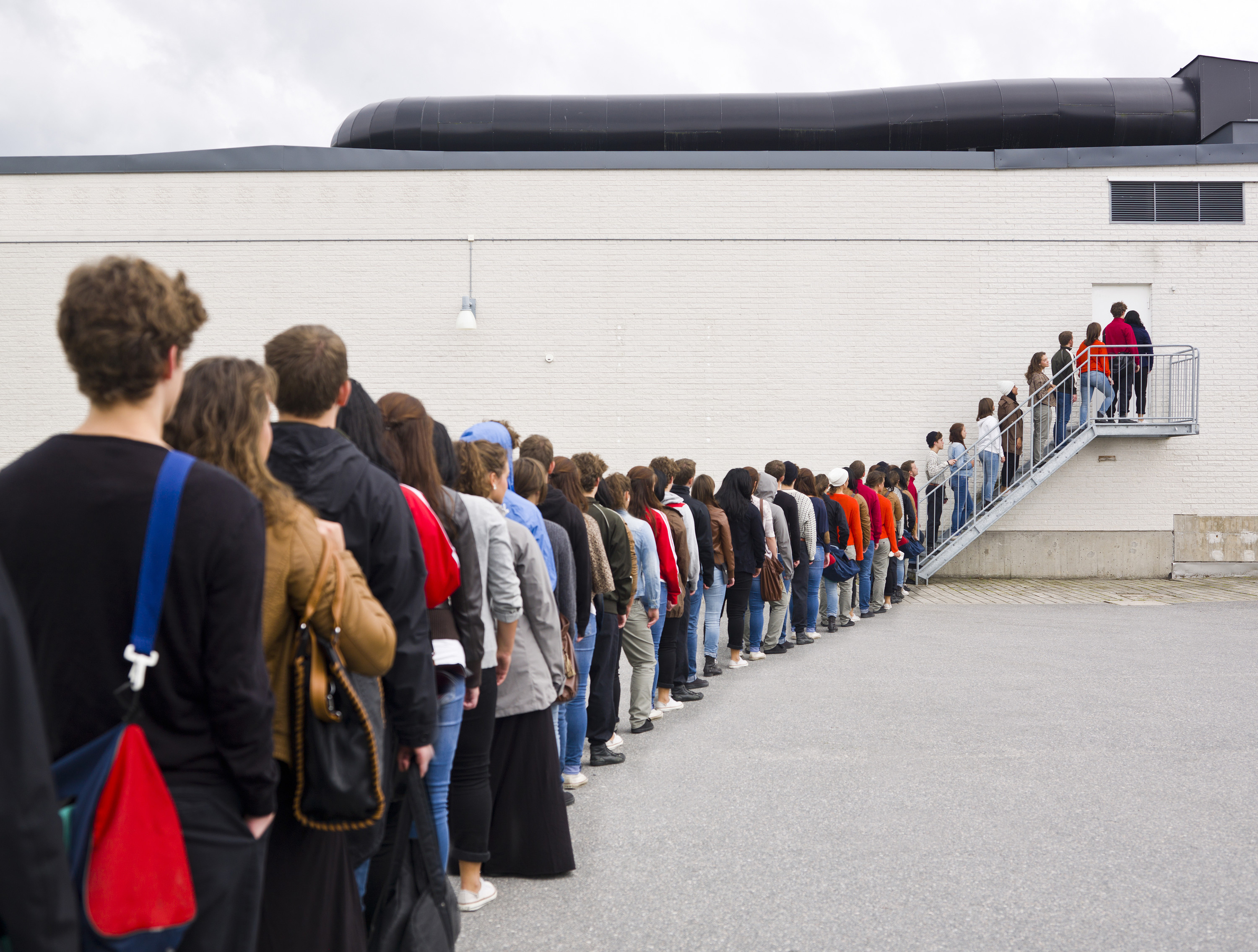
November 4, 2008, I walked into my local Department of Motor Vehicles branch to do what a good American citizen does, vote. After making it through the door I saw a line that seemed to be longer than any I had before encountered. The wait to vote was well over an hour. So I did the unthinkable, I walked back out the door and went on to other activities.

But, is it all that unthinkable? Every election millions of voters never show up, never cast a ballot, and never vote. For me, it was a convenience issue. I didn’t have the time to wait in line for hours, and I think millions of Americans have similar issues. The system is simply too out dated to accommodate them.

The system made sense for hundreds of years. You show up, cast your ballot, and your vote is registered—they had no better way. But we do. We have a better way at our disposal. The internet is doing incredible things in areas such as business, communications, and even banking. Many people who do not vote today because they do not have the time would be able to vote because they can do it virtually anywhere, and with only a few clicks online. Thus, millions of those who didn’t have the time would now be able to vote.