Why I believe we as a society are becoming increasingly intolerant all in the name of political correctness, and how I feel we need to change to prevent this intolerance from further spreading.
I never back
down from a challenge. As expected I have received a lot of pushback to my new
ideas surrounding the certification of actuaries from a couple of actuaries who
have been around the block a few times. As I previously discussed in my last post, I feel that actuaries in general have a mentality about them that is
almost unavoidable in feeling “smarter” than others. I have felt this in myself
from time to time as I tirelessly work and sacrifice my time to pass actuarial
exams. When I do pass them. I too can sometimes become “big-headed”. It is a
vicious cycle that needs to be stopped.
This semester I have had the
opportunity to take a class from a visiting Actuary. His class is amazing and
his insights are great, as there aren't any fellowship actuaries currently
teaching at BYU. I asked him what he thought about the exams, and if this dogma
of being “smarter” than others existed, and was leading to the difficulty of
the exams. He quickly shot me down, and stated that the exams are not a product
of a better-than-the-world mentality, and that they have to be difficult to
ensure actuaries know what they are doing. A response I expected as Joe’s comment
suggested.
I also messaged an actuary on LinkedIn
who is in a group with me titled, The Entry Level Actuary. He responded almost
identically to my teacher, saying that no such dogma existed among professional
actuaries, and that the exams should be harder if anything else.
So was I completely wrong? Perhaps.
But I think it is also fair to suggest that those I talked with about this
issue have a skewed frame of reference in which they would be unlikely to
respond in any other manner than in which the one they already have. These were
two men who had sacrificed many hours to take 8-10 actuarial exams, sacrificing
time from family, friends, work, and school work to accomplish professional
goals. They aren't about to say that the exams they sacrificed over are too hard, and especially that they are hard because of some kind of poor mentality among
actuaries.
The world is changing, and because of
this there are more people out there that could be actuaries but can't because
of an outdated thought about the requirements. Actuaries of the future need to change their frame of reference and see that more can be done to allow those
who are able to be actuaries to become certified.
As I continued to think about my topic of political correctness and the way it affects our society, I discussed with some acquaintances about what they think the main cause of or problem with being politically correct is. Based on my last blog post, I believe that political correctness is being taken to an extreme and is encroaching on personal freedoms of speech and expression, and can be used as a crutch by certain groups or political parties.
The feedback I received from people varied. Several had my same viewpoints. Two people felt that political correctness is useful in society to prevent minorities from feeling isolated, and that the pros of what political correctness is trying to accomplish outweigh the cons that we see today. However, I feel that the idea of being politically correct is being hugely abused.
After discussing this over with the people I chose, it seems that politically correctness comes from this feeling of entitlement that our generation seems to have. This leads to pride which causes people to feel very offended by something if you say it in "the wrong way." Our society is trying to prevent intolerance but is thereby being intolerant of others for their ideas that may seem intolerant. It's one big irony. One of my acquaintances expressed how political correctness is an "insidious form of censorship which only serves to push the limits of societal norms further away from that which we know to be right because we might be perceived as being mean."
So how do we change this? How do we make sure that people aren't saying harmful things or creating stereotypes, but not get our panties all up in a wad when someone has a difference of opinion, or a political party is pushing for a certain standard. And the truth is, I'm still working on that. As of right now, I don't know if there is a tangible way to cool the fire everyone is stirring up that is political correctness. It is an ideal our society needs to reach as a whole. But we could start by drawing a line. Don't make Paula Dean grovel for forgiveness because she said the "N-word" 20 years ago when it wasn't considered a bad word. That was 20 years ago. Let the past be the past. We need to look to the future. We need to teach at young age the idea of truth mixed with tact. Speak the truth in a tactful way. As my friend stated, "My conclusion is that people should strive to be straightforward yet tactful in all instances. That is how Jesus Christ taught and we should inevitably follow his example."
As we interact with one another, we
generally find ourselves declaring our university majors, political
allegiances, and religious affiliations.
As we do so, we are not only joining groups of like-minded people, but
we are also indulging the human impulse to identify and label ourselves. And by doing so, we necessarily separate ourselves into groups comprised of “us”
and “them.”
In the act of labelling others,
we often lose the nuances of people’s personalities and opinions. Many of society’s
ills can be traced back, at least in part, to the oversimplification of issues
through the process of labelling. Political
gridlock, religious intolerance (Jesse B), conflict over political correctness
(Rachel M and Chloe M), and the disdain that often exists between academic
disciplines are often the result of oversimplifying people and problems through
labeling. (Jenna P). Problems arise when, upon meeting someone, we assign them
a label—like "English Major," "Utah Mormon,"
"Rebublican," "White," "Gay"—and immediately
allow our predetermined views of such categories of people to skew our view of
them or their opinions.
By trying to label ourselves, we can
inadvertently limit our own thoughts, opinions, and even identities. Often we seem to discard all other aspects of
our identity when we try to conform ourselves to some preexisting label. For
instance, one who self-identifies as pro-choice may feel
compelled to adopt other generally associated policy positions in the pursuit
of ideological purity. Thus, the supporter of the pro-choice platform may ultimately
feel pressure to support marriage-equality and permissive drug laws.
This kind of labelling is
ultimately a form of social tribalism. In
the sophisticated social structure in which we now live, this overly simple
tribalism is no longer necessary. Society is safe enough for people and
positions complete with complicated nuance. However, if we persist to engage in
simple labelling, we will continue to manufacture differences and force
unnecessary conflict.
Actuaries
have a running joke about the accounting CPA exam in which they claim “CPA”
stands for “Can’t-Pass-Actuarial-Exams”. As an aspiring actuary I think that
this joke has some actual weight to it, in the sense that passing actuarial
exams is a very difficult process. The actuarial exam process is the reason why
many people don’t ever consider pursuing a career in actuarial science, and why
a lot of people haven't heard of an actuary. However, I have recently heard it
wasn't always like this.
The
exams used to be a lot easier. In turn, more people passed the exams and became
credentialed actuaries. Because of this there were more and more actuaries that
didn’t really know what they were doing on the job, but had become credentialed
by memorizing a few formulas. The organizations that administer the exams have “solved”
this problem by making the exams now a days ridiculously hard. It is common
knowledge that to have a chance at passing an exam you must study 100 hours
outside of your class time for every hour of that specific exam. My knee jerk
reaction to the difficulty of the exams is to demand a change and to make these
exams easier, but recently I have realized there is a larger issue at hand.
An unfortunate dogma I've felt in the Actuarial field
Actuaries
write these exams. There is without question somewhat of a “pride” factor that
has caused these exams to evolve into what they are today. There is a sense
that those who make up the Society of Actuaries want as few as possible to make
it to the top credential. Making the exams easier isn't going to change this
way of thought. Actuaries everywhere need to embrace those who may be slightly
less mathematically gifted but still work hard enough to become a practicing
actuary.
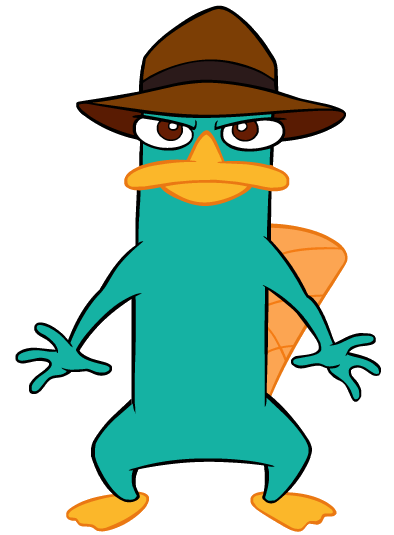
Watch the video first, because you won't understand the title or any of my clever puns until you do.
*Spoiler alert* My post will have a lot in common with Jenna's. But this is a big deal. And we call it,
CREDENTIALISM!
Chances are, you've been slave to this platypus at one time in your life or another (even if you're like Jenna and Jerrick, and aren't right now). So many people go through school, go through internships, go through jobs, only for the diploma. Only for the extra bullet on a resume. Only for the chance to gain the position they actually want.
And this cannot be right! Besides the fact that we are supposed to gain knowledge for our personal benefit and to "go forth to serve," the world is different now. People aren't just looking to see that you have a diploma. They want to know that you extended yourself--that you took advantage of the opportunities in your life and developed skills and experience.
Mind you, maybe you develop those things by doing an internship or getting a different job. That, however, is a different thing altogether. Doing something for more purpose than the diploma or the resume is good. Doing it solely for the credentials? Bad.
I could cheat my way to that diploma. Or, better yet, with our new, easy, and convenient friend the internet, I could just print off a diploma and give it a fancy frame. Doing things for the credentials does nothing for society and nothing for you in light of all the new jobs and masters degrees out there. You won't be able to get that cool job or that cool position just because you have a transcript and a loaded cover letter. You'll just be giving in to the platypus.