Showing posts with label vice. Show all posts

Saturday, January 17, 2015

That Politeness is One of Those Virtues

A wise Montaigne once said that virtue "has its bounds...which, once transgressed, the next step is into the territories of vice."

And boy was he right.
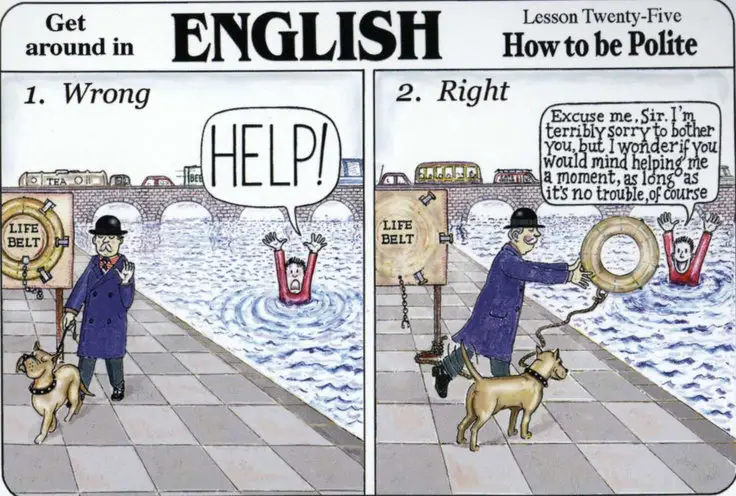
This is one of those situations in which you shouldn't have to be polite.
Surely you recognize this case study with friends at a restaurant:
One of them (let's call her Julie) realizes she forgot her wallet, so the others offer to buy her dinner. She says sweetly, "Oh, no, you guys don't have to do that!" The others insist, but so does she. She doesn't want to impose. Dear Julie has been taught to be polite...even to a fault. So she utterly refuses. She smiles and laughs over your sweet pork quesadillas and chicken salads as you all sit at the table, content to use her place for extra napkins and crinkled straw covers. On the ride home, though, her stomach growls loudly, and nobody says a word.


Sure, it was nice of Julie to consider the pocketbooks of her companions, but there comes a point when everyone would just feel better if you weren't so polite. (Especially the kid in the backseat whose bulging coin purse was burning a hole through his back pocket.) Doesn't that border on impoliteness, even--refusing to accept the politeness of others?

Yet we can't give up politeness all together, even if it is "a poor man's virtue," as Diane Setterfield once said. What if Julie had instead demanded that someone buy her dinner? What if that someone was you, and you remembered that you were a poor college student whose wallet contained your last twenty bucks until next paycheck? I guess you could have done away with all politeness, too, and refused to pay for Julie's dinner. But that wouldn't have solved anything.

So the real question must be, then, where are the bounds of virtue? How can we know where they are? If we can't let our politeness, generosity, cleanliness, go as far as possible, then...where should be stop them?

Saturday, November 1, 2014

Conflict Issues and Special Topics of Invention in Psychology and Social Work.

Point of Conflict in Psychology and Social Work:
            A typical conflict in psychology and social work, especially in my job at the prison, is determining “blame” or reasons behind events and conflicts of openness. There is a sort of battle between what the client thinks (which is often unhealthy or irrational, especially when dealing with the inmate population) and what the therapist is trying to convey.
           
Topics of Invention in Psychology and Social Work:

            When thinking over situations and circumstances, it is common for people to blame the victim, circumstances, or their past for their problems instead of being proactive and open about their roles in the situation. As psychologists and social workers, our goal is to empower the client and help them recognize that they have a lot of power in their lives. Here is a good example of a typical conversations:

Therapist: Tell me about your crime- what you did and why you did it.
Inmate: Well, I abused _____, and I think it was because of the I was abused when I was younger and ____ was asking for it the way that she/he did ______ and I was just trying to teach (or many other excuses).
Therapist: Many other people were abused, but did not become abusers. Can you tell me why you chose to victimize ____?

Analysis:
Almost every interaction between the therapist and the inmate involves persuasion in trying to get the inmate to think in a different way and accept some sort of reality. We, as therapists and social workers also try to get the inmate to search for empathetic feelings. Here, the therapist is trying to get the inmate to accept the vice in the situation, whereas the inmate is trying to point out the virtue in his or her actions.
The therapist may use several topics of invention (such as morality) to emphasize the inmate's affect on the situation.

Tuesday, September 30, 2014

What is beauty? Why does it matter?

This entree will largely agree and coincide with the two previous entrees written by Jessie and Joseph. I was struck by Aristotle's discussion concerning the definition of beauty, and that largely the purpose of epideictic oratory as a rhetorical form was to give form or point out what was beautiful around them by praising virtue or to do the same with the opposite; vice. Aristotle describes that which is beautiful as beautiful simply because it is. He provides many examples of noble characteristics that we may or may not possess as things of beauty; he describes them as things of beauty because they benefit the community at large. The virtue that I feel is the most powerful that he mentions he describes as "Greatness of soul..." which he says inspires men and women to do other virtuous things that uplift others.

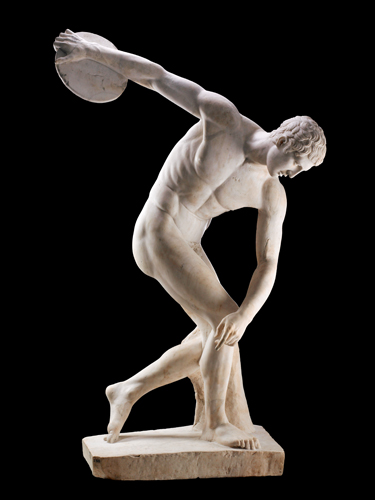
What use was this thing? You can't really make
anything with it or grow food on it, why did
the Greeks love stuff like this so much? Simply
because it's beautiful!
I feel that the purpose of Peracles' oration was to lift the people he was addressing to a higher "greatness of soul", so that they would be inspired to do more virtuous or beautiful things. As Jessie and Joseph discussed, Peracles used wonderful epideictic oratory in order to praise Athens and the men who fell defending her; he employed masterfully the special topic of invention that Aristotle classified as virtue, or that which he believed to be beauty. Fortunately history provides us with perspective, and as Professor Burton pointed out in class, all of the things that Peracles stated became realities which have come to define the ancient Greek civilization. Aristotle, in this case, was right; a man who was known and trusted by his audience employed epideictic oratory in order to praise and inspire, and the people were inspired. This wasn't the only speech that inspired that ancient civilization, but it is a typifying example of one. If people trust you enough they'll believe what you say, your beliefs are your reality, a man who is trusted like Peracles can alter reality through rhetoric. (I don't know how sound that syllogism is, but I tried...)