Showing posts with label nursing. Show all posts

Wednesday, December 9, 2015

Nurses Voices: The Scrub Life

Kami could not wait to finally start working at the hospital.  Sure, she’d done nursing shifts as a nursing student, but she’d graduated and now she would get to stay in one place and be able to really make a difference in the lives of her patients.  A year passed by and Kami was already exhausted.  This is not the life and career she had dreamed of.  She spent 12 hours a day being ordered around by demeaning, demanding doctors, running around without having sufficient time for each of her patients.  As she spoke to the manager, he just nodded and then went on with his life.  “I cannot go on like this,” she thought, “Something needs to change.”   
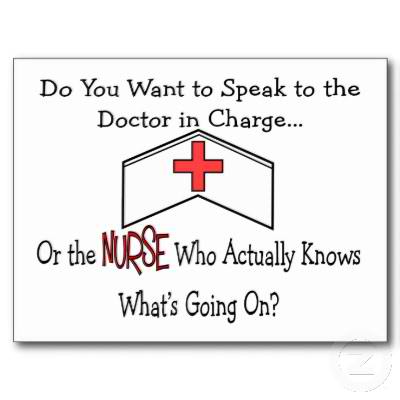
Kami’s story is a nursing story among thousands of others, all with a similar message.  Nurses are not given sufficient voice in defending their rights and giving new ideas.  Isn’t it only fair that those who work the closest with the patients should at least be able to speak for themselves?  Although many improvements have been made over history in the field of nursing, the lack of voice that nurses hold in hospitals, physician’s offices, and other healthcare facilities has scarcely improved, and nurses should hold an equal say alongside with doctors, chief nurses, and hospital administrators.        
History of Nursing: What can we learn?

Nurses are trained individuals who care for the sick.  It is a practice that has existed for hundreds of years.  It’s been through all sorts of changes and developments, especially of the last couple of decades.  Earlier nurses were educated by locals, or family members, and would usually stay with a specific person in their home.  Some of the wealthier families would have a nurse who would stay in the home and really get to know the needs of the patient.  In the more recent years of history- specifically the 1800s until now, nursing has begun to really develop and become more of a specific profession that is highly sought after rather than just a partially educated helper.  
          

Tuesday, December 1, 2015

Annotated Working Draft of Final Project and Hot Spots in Nursing


  1. Communication and Persuasion in Nursing:
    I had always had the desire to help in the physical and spiritual healing of an individual.  As a nurse, clear and educated oral and written communication is crucial, especially because lives are dependent on that communication.  It’s also important to have honest and open patient/family to nurse communication in order to show professionalism and care.
  2. Storytelling in Hospital Care Nursing
    Oftentimes nurses will tell “stories” to help the new nurses and nursing students to understand what to and what not to do.  The story I told was a sad story about a nurse who worked too long and made a mistake with a patient, causing a preventable death.  The new nurses would be motivated by a desire to really focus on the people rather than just their routine job.
  3. History of Nursing  
    Nursing began with more of a holistic approach, and we are seeing today the recognition of how helpful that really was.  Educational training really exploded when Florence Nightingale and a few others began schools for nursing.  The students or “sisters” had a life similar to that of a nun and a servant- little pay, and no marrying- which relates to many of the difficulties nurses face today: being taken advantage of and taken away from family.
  4. Institutional Authority and Communication in Nursing
    This blog was about a nurse who wants to file a complaint about the long and strenuous working hours that nurses have, cutting it down from 12 to 8 max.  There are certain authorities that she must go through to be heard, as well as finding ways to unite nurses together to be heard.

Hot Spots

Hot Spot #1 (Field/Personal): Nurses have the opportunity to communicate with a variety of people; but as far as their voices being heard, it doesn’t seem like they are able to communicate effectively to authorities.  If we want good nurses, then they should probably have more say in decisions for nurses.      
Hot Spot #2 (Historical):  The history of nursing goes way far back and has developed tremendously in many aspects- especially in technology and nursing education.  One aspect in patient care, however, especially in communication and treatment with the patient in holistic care (taking care of the whole patient: body, mind, and spirit) nursing seems to have actually digressed.  

Tuesday, November 24, 2015

Institutional Authority and Communication in Nursing

Kami had just ended her third 12 hour shift of the week. As a 40 year old woman, the demand was harsh on her body.  By the 9th hour of the shift, she was usually dragging and praying for strength to finish the tasks at hand.  “I cannot continue on like this,” she moaned, “something needs to change.”

The next day at work Kami began talking to Tracy, one of her good friends and co-workers.  She discussed with Tracy her thoughts and complaints about the work hours for nurses- especially the lengthy shifts.  Tracy piped in, “You should write to the Utah Nurses Association (1. Authoritative Organization), they exist to be an advocate for nurses in Utah, and I’m sure if you wrote a letter and got enough people to sign it, they would listen to your complaint. Who knows, maybe they would even discuss it at the annual Utah Nurses Association Conference (3. Influential Event)?”

“Yeah, maybe.  I’m just not sure if I can get enough people to get on board with me to make a difference.”

“Well, you can start with writing an article in the Utah Nurse magazine- I know that’s how I stay connected with other nurses to know what’s going on with changes in our field and comments from other nurses (4. Authoritative Publication).  I think if people saw your bravery to stand up on this issue, they would want to join your cause.”

Kami pondered on what Tracy had said.  “You know, that’s actually not a bad idea.  Even though it seems almost impossible to change much in our behalf, it can’t hurt to try.”

Kami worked on her idea for the next couple of weeks, collaborating with other nurses about how to be heard.  She read through the endless Utah “Nurse Practice Acts”, and many of the other statutes and rules that applied (2. Regulation Standard).  She wanted to have all of it sent in and seen before the next Utah Nurses Association Conference, so they would take it seriously enough to have it submitted to the Utah Board of Nursing, which is held monthly, and where the real changes take place (5. Challenging Authority/ Changing Standards).  With all the support she was getting from nurses across the state, she knew their voices would have to be heard; even if it didn’t mean instant changes, the seed would be planted.

Friday, November 13, 2015

History of Nursing


Nurses are trained individuals who care for the sick. Caring for the sick started thousands of years ago- basically at the beginning of human existence as soon as sickness occurred. The aspect of educational training for nurses is of a more recent date. Nurses of the late 18th and early 19th centuries did most of their work in the home, which allowed them to more completely care for the individual- a more holistic approach- in a comfortable environment. Early hospitals were looked upon more as poorhouses, or asylums. Danette Barnes, my aunt and a nurse, commented that the biggest change in nursing during her her time in this career is the increase of focus on holistic nursing, especially patient satisfaction. They want to help them feel comfortable, at home, and support the family as much as possible. They are also focusing on more aspects than just the apparent problem at hand- which working as a nurse in a home allowed.

Florence Nightingale was one of the early leaders of education in nursing. Her story of wanting to become a nurse, implementing sanitation rules- which cut death rates during a war in Turkey from 42% to 2%, and starting schools and a college for nursing, was a huge building block in the history of nursing. Many others followed and set up nursing schools. The nurses were sometimes called “sisters”, and had a life similar to that of a nun. They were not paid and often had to do the dirty work and were highly taken advantage of. Kami, a family friend, expressed her strong feelings toward how negative the change of nursing has been over the last couple of decades. What used to be a fun, high satisfaction job, has now become an industry to work nurses in whatever way it takes for companies to earn more money. Because of the need for money, the nurses are taken advantage of and have to work 12, 14, and 16 hour shifts- often working nights, holidays, and weekends. “Forget being a mom”, Kami says, “you have to dedicate your entire life to the career.”

Sounds a bit like a nun to me.

It seems as though many of the problems that were “solved” in the past, were actually just pushed aside, or temporarily satisfied, but are problems we are still facing today. Rather than pushing me away from nursing, learning about it’s history helped me to recognize just how important this career is, and how people can stand up so that we don’t keep living in the past- but bring about change to have a brighter future.

Tuesday, October 27, 2015

Storytelling in Hospital care Nursing

Foreward:
In nursing, there is a lot of hands-on practice involved.  Nurses often learn from mistakes and successes either of themselves or of others.  These stories are usually passed down verbally, oftentimes by nurses who have worked for many years.  The stories are often told with a specific emphasis on what many nurses do wrong- or what they did right that was crucial.  They help new nurses and students to learn what to do and what not to do.  


I made up an example of a story of a nurse Sarah with two viewpoints  


Example Story:
  • A nurse who already works at the hospital might tell a story of another nurse who had messed up, hoping to convince the new nurse not to do the same thing.


  • Story: “Sarah was working late one night, completely exhausted- she’d been working for 24 hours straight and with no breaks.  She’d covered a shift for a friend and was in her last hour before she had to go home.  All night she’d been running from place to place and she was exhausted.  Sarah knew she should be making her rounds one last time before the next nurse got there, but the patients were all fine just a half hour ago, they’d be fine.  She sat for a bit, allowing her legs to relax and passed on the charts to the incoming nurse.  As she was heading out the door, she heard a scream.  One of the patients, Eric, was on the floor, lifeless.”   


Analysis:
As an incoming nurse, or a student studying about nursing, there are many errors that are pointed out in this story to help persuade the nurses to be on their guard, giving 100% until the end.  It also persuades nurses to be smart about their working hours- focusing on the importance of the patient.


Retelling the Story:
  • If the nurses telling the stories really want to persuade the new nurses to work better, they should focus on love and care as a motivator so they’ll keep pushing even when they don’t feel like it.


  • “Eric was about 5 years old when he was rushed to the hospital because of a heart malfunction.  He was the youngest of 4 brothers and sisters who loved him very much.  He had been in the hospital for about 2 months.  There was excitement Eric’s family’s home as they knew he would be coming home in just 2 short days.  They couldn’t wait to play with him and just hug him.  Little did they know, after that night they wouldn’t get to see their brother again- something that could have been prevented had Sarah, one of their favorite nurses, made her last rounds that night (had he been helped immediately, he would have survived.  The family came into the hospital with tear stricken cheeks.  Eric was gone.  Sarah sat, helpless.”  

This focus takes more of an approach on the family and allowing those feelings of loving the people to help persuade the nurses to be at the top of their game, and not allowing themselves to slack off. They think of what good can happen if they do their job.  Everyone gets exhausted, but they need to recognize lives are at risk here.  Stories can also help more people to want to go into the profession of nursing when the nurse does do her job and saves a life.

Friday, October 23, 2015

Communication and Persuasion in Nursing

I remember many experiences growing up where I would come upon the scene of an injured individual- bleeding or in some sort of immense pain- and get really anxious because I didn’t know how to help.  I’d never felt so helpless as I watched- wanting to give comfort, but having no idea what actions to take.  As I began to learn more about methods and procedures of basic aid, I was filled with satisfaction knowing that at least in some small way I was giving assistance to the individual and bringing some comfort to their mind and body.  I think that most people in the world have an innate desire to want to help people.  There comes a certain satisfaction in being a part of the healing of an individual- coming to their aid in a moment they need it most.  


Everything that Nurses and medical workers do is built upon good, clear communication.  There are many times when the life of an individual depends on it.  No matter where the communication is taking place- a hospital, the sight of an accident, a doctor’s office- it is important that things are stated clearly, confidently, and in a timely manner.  Most of the time, the communication is done orally, a nurse speaking to a patient or a doctor, but there are forms of written communication as well. The nurse must adjust his or her way of speaking depending on the person receiving the message.  It’s obvious that to a doctor they would speak with professional words and medical terms- stating all of the facts and risks.  When it comes to speaking with the patient or the family of the patient, they would “dumb it down” in a sense and maybe not go into as much detail- striving to comfort them while also being realistic.   


There are many different situations where communication occurs.  When first getting to know the family, the nurse needs to really build his or her ethos.  This family is putting a lot of confidence in them and the nurse needs to show they are trustworthy and professional, as well as being a good listener.  They can give a lot of comfort and reassurance in a time when people are in the most fear and anxiety.  It’s interesting, however, because they must also speak in a way that doesn’t show guilt for mistakes or allow too much hope or dependency on the medical workers.


I’ve come to find out that nursing really is founded on being a master of communication; without it, nothing runs. Lives depend on it.